Simplify your logistics with scalable, tech-driven solutions tailored for Indian businesses. From warehousing to last-mile delivery—grow faster, ship smarter.
Selling a product is an art and that cannot be complete with an apt description that sells it right away. You need to master the writing of product descriptions because without mastering it you cannot possibly convey the details about your product to your customers. The key to the product description is to keep it simple as well as catchy. Some writers tend to use big words and idioms to ornament the description so that they can make the product more appealing, but on the contrary, that is the same thing that makes the description more complicated and least appealing to the customers. Let us see six simple ways in which your product description can promote product sales.
Keep your focus on a single category of the audience
It is always better to keep all your focus on one category of customers.in this way you can have more and more focused operations only on the targeted audience and this will make your product descriptions more precise and apt. This will increase the sales of the product too. You need to place yourself as the decision-maker or the buyer of the product and after analyzing their buying patterns start writing the product description. Optimizing your product page is really important. Try to get in the heads of your customers and figure out what they want to know about the product and what aspect of it attracts them the most. Try to keep the sentence structure and language as simple as possible. Try avoiding long paragraphs and unnecessary facts that take up a lot of space. Customers only look for some highlighted elements that can convince them enough to spend their money on buying that particular product. You need to be very tactical while writing a product description if you want to engage more and more customers. Always remember that the description should crisp and precise yet catchy.
Make a list of the features
This is one of the primary elements that need to be included in the product description. Customers mainly search for the features that the product has. If you can tactically place the features along with suitable notations to back up the feature, then your product can be sold. Therefore, you need to make a list of attributes and features the product holds. If you can write the features in points then it will be more visually clear and accurate for the customers. Customers usually won’t read long paragraphs. They mostly read the descriptions that are highlighted within the entire content. Therefore, you must keep the feature part completely highlighted in the product description. This part will drive customer engagement and increase sales by a huge profit margin.
Add more adjectives to your product description
Adding adjectives can be beneficial as it attracts the customers more. Using attractive adjectives that are not complicated and are very crisp and precise will catch more and more attention. The entire usage of adjectives to highlight the product depends on the product itself. You cannot use any adjectives with the absolute intention of making it attractive. You need to keep the adjectives true to the product. Choose the adjectives that will drive in more and more customer engagement. You need to use adjectives very strategically. You cannot go all out with the adjectives and use only a few yet effective phrases. Always remember that the adjective used should define the product. It should not be used in a generalized form.
Add more and more relevant and good quality images
Customers are mostly attracted by visual images that the content part of the description. It is very important to include good quality images in the description that are relevant and true to the product. Moreover, adding some good quality images enhances the overall product on a huge scale. Customers are often skeptical about the product and by seeing an image they get a better idea of what they planning on buying. You can small key points at the side of every image. This will make the product more attractive to its audience. You can little details of each feature of the product and can adjust relevant images according to the features. This will not only drive sales but also can increase the popularity of your brand. As you know images speak much louder than words. In today’s busy schedule, a customer mainly focuses on the images than actually reading the entire product details.
Stack up more products that are similar
It is a great strategy if you are selling multiple products that similar to the product for which you are writing the description. While showing and writing the product, you can show a list of similar products that can also be brought along with that particular product or can be brought as an alternate option. You can little details about the product so that the buyer can buy from a similar option even if they are not satisfied with that particular product. This will keep the customers from going somewhere else for buying the same category of products. However, it is to be noted that this is only possible if the product message is properly conveyed. This will increase the overall sale of your brand. Here you can rule out your competitors, as you will be providing similar products so that the customers can check out your brand products only if they are not satisfied with a particular product. This is very beneficial for your business.
Include relevant stories
This can attract your customers considerably. If you add some relevant mini-stories along with product description, then the customer will find it attractive and buyable. This can increase the margins of product sales on a huge scale. Try telling stories about how the product came into force and how the development of the product followed from there, including details about the personnel that is involved and included in the value chain. You can also add stories about how the sales of this product can influence even the bottom line individuals that are involved in the product making, you can also add details about how the product is tried and tested, etc. These are some of the key stories that can influence the sales margins as well as the profit margins.
Conclusion
The product description is one of the important parts of a product. You need to be good at writing product descriptions so that the product can be easily sold. The more precise and crisp the product description will be, the more it will attract the buyers. You need to know all the elements that can make a product description to the point and yet attractive enough to drive sales. Writing general content is way different from writing a product description. In the description, you cannot go on and on about the product in long paragraphs. You need to be strategic and tactical in writing product descriptions and highlight the attributes that will target the audience.
This pandemic has been harsh on the economy. The economy has suffered great losses at the hands of the virus outbreak. Many start-up companies are brought to a point of shut down. The logistics industries are seeing its worst days. Almost fifty percent of the 12.5 million large, medium, along with smaller commercial vehicles are forced to shut down their engines due to the coronavirus outbreak.
There are no loaders, no divers, and no un-loaders, to provide support to the $200 billion of the logistics industry. Research says that this COVID-19 situation is not going to be any better any time soon, so it is better than India buckles up its supply chain system and go forward in being completely digital. The government has done its part by forming a logistics committee and now it was time for the companies to go into action in scaling the logistics responses towards COVID-19 for days to come.
The societal and human impact of the coronavirus outbreak will be immense and even though we seem to be in an early stage in to, India seems to decline every day. We are at a stage where we cannot prevent the virus from spreading and it is going jeopardize every community and every sector of the society. All we can do is to come up with ways that can hold on to the economic balance.
5 tips in which start-ups can survive this pandemic
It is said that many great start-ups are often created at the time when the market is facing its downturns. Survival is important.It is obvious. If you fail to survive, there is no point in being upside. The most important and the primary thing for a company is to survive. Therefore, every point that is being discussed below is about the survival of your company. You need to put away all your glory plans of becoming a great company and just focus on surviving at this point. If you don’t survive, then there is no point in molding your business into something great. However, it a lot easier said than done. Let us get into the suggestions that might work out for start-ups:
Cash holds the primary importance
Mainly start-ups tend to shut down not because of lack of plans or ideas, but mostly because they run short on cash. It is very important to formulate a plan that will keep your cash intact. You need to put a hundred percent effort into this plan. You need to very aggressive on the plan and you need to act quickly because early action will be way more impactful than the later actions. Make sure that you have enough cash for at least 12 months and you are going to need it anyways. Even if the virus situations get better, its turmoil will persist for a long time especially for start-ups.
Do not focus on raising money
Investors will invest in the companies irrespective of the situation. However, they will expect a much smaller round which comes in smaller valuation, and in such companies that don’t need huge amounts. Funding of the existing companies is most likely to stall due to the sudden market downturn coupled with business disruptions. Even if the investors and VCs continue investing money, it will trigger the triage mode that is the investments will be done in selected companies only. Due to this mode, many good companies will also lack in finance. You can almost assume that this situation will persist even after the COVID-19 outbreak, and due to this M&A is most likely to be dried up. If you get lucky, then you can expect some angel investors to invest in your company but that too at a huge price and this will be possible only if you can last your money this long. You should always be transparent and prudent with your shareholders in these situations by communicating them with both the good and bad news.
Revenue might be curtailed
In this time most companies, small businesses, as well as the government clients, will enter into the survival mode. If you are providing with service or products that are needed or are mission-critical, you can estimate that your revenues will defer for at least six months minimum. You can expect some of your cancellation clauses to be exercised if they have cancellation clauses attached to them.
Downsize
It is a very difficult decision but it is also inevitable. As we are at a point where survival is at stake, many companies have to go back to just the essentials. If the companies need to survive, the salaries have to be slashed to at least fifty percent of the original amount. You need to cut all the contract helps that is possible to be cut. Cut the sales and marketing spend until your consumers are back to their normal lives are willing to buy once more. You need to remember that any cuts that are made early will have a lasting impact than the cuts that are made later on. This influences your cash balance and your cash horizon as a whole.
Stay alert about the inflection point
Like everything in life is very unpredictable, so in this situation. However, as almost all bad situations, this shall pass too. It is difficult to visualize what the market and the country will look after this whole outbreak is over. Nevertheless, if you are a company that can survive this, there will be huge opportunities that are awaiting. All you need to do is survive, and the rest will be assured.
Conclusion
The pandemic has brought down the economic crisis and all we can do about is turn the current situation to our advantage. The above suggestions can help the companies in their survival trait. You need to remember one thing, that making money is not an ideal option now. You mainly need to focus on surviving.
After the most recent update by the Ministry of Home Affairs (MHA) on 30th May 2020, declaring a partial unlock of the progressing lockdown, they have additionally reported significant relaxations in specific regions.
The restriction on the transportation of unnecessary things has been lifted from all regions in the nation. These incorporate locales that go under the Red, Orange, and Green zones as determined by the GoI in the letter dated 30th May 2020, gave by the Ministry of Home Affairs.
No eCommerce conveyances are permitted in the containment zones.
We would like to let you know that iThink Logistics will continue the transportation of non essential things in the Red, Orange, and Green zones (ALL ZONES) from 8th June 2020.
On the off chance that you need to continue transporting with us, contact your Key Account Managers at the most punctual so we can mastermind pickups. In case you don’t have a relegated account director, connect with our help group at sales@ithinklogistics.com we’ll put forth a valiant effort to get you on target.
Some important courier guidelines
Courier Partner Guidelines
The pickup time for FedEx is 2 PM and you can demand pickups till 12 PM. Generously help out pickup operators and get ready shipments as needs are. Likewise, FedEx will complete contactless conveyances and Prepaid shipments to evade COVID-19 transmission.
Shipment Processing
The delivery procedure continues as before. You should simply sign in to your record and update orders like before
Delivery of both essential and non-essential things is open from 20th May 2020 for each one of those dealers who have serviceable pin codes endorsed by our partners.
You can continue the transportation of nonessential things in the red, orange, and green zones.
Kindly keep your shipment prepared at the hour of pickup to maintain a strategic distance from any postponements or operational pressure.
Keep the necessary administrative work and receipt handy at the hour of pickup. Kindly mention the classification and items on the mark when delivering essential goods.
Follow headings spread out by the GOI and keep up appropriate measures of cleanliness and disinfection.
Our courier partners
Delhivery Surface (500 GM, Standard 5KG, Lite 2KG)
Please note that due to the global pandemic there might be a delay in response from the iThink Logistics support team. Shipment might also be delayed due to national lockdown. We are strictly sticking to government regulations to ensure the complete safety of everyone.
We will abide by the guidelines of the local administration in every region that we operate to ensure maximum protection of everyone involved.
Connect with us online on support@ithinklogistics.com to get faster solutions for your issues and concerns.
Our services will resume as normal after the lockdown is lifted. Till the time we request you stay at home and practice social distancing.
At whatever point you consider doing eCommerce business, you should normally consider warehousing, delivery, and satisfaction suppliers as these are interconnected and the most essential part of any eCommerce business. In any case, finding a fulfillment provider that suits your necessity may not be as simple as it seems to be. Therefore, if you are prepared to make that jump in outsourcing your orders, you should very careful while choosing a suitable partner for our business ventures. The process of outsourcing the order fulfilments can be a cost-effective approach to save time to concentrate on your business and fulfill the developing need for your items. It could likewise be your defeat. Select an inappropriate fulfillment provider and you’ll wind up with a multitude of disappointed clients – in addition to the notoriety that might be difficult to fix.
Numerous fulfillment organizations guarantee the world but they do not convey the same. Less careful suppliers commit expensive errors whether its transportation items or an inappropriate area, or picking off base stock, or under-revealing harmed and lost items. In case you are not cautious, you can lose control of the client support and returns process.
There are loads of difficulties while choosing a fulfillment provider, however, they aren’t inconceivable. Picking the correct fulfillment house requires an extraordinary arrangement of due persistence. All things considered, these organizations will get, store, pick, pack, and boat your items and enormously affect the overall purchase experience of the customers.
Choosing a proper fulfillment provider is perhaps the hardest decision an eCommerce organization needs to make. It is as of now hard enough to maintain a gainful business all alone. Planning the satisfaction viewpoint that incorporates getting, pressing and delivery of your items is substantially a critical activity that will just develop as your business develops. Consequently, it is ideal to redistribute your fulfillment tasks to somebody who has a great reputation in this specific field. It will not only just lower your general fulfillment costs, but also will extend your scope and assist you with developing into more up to date business.
6 most important questions you need to ask your fulfillment provider
The most important questions that you need to ask before hiring a fulfillment provider are:
How reliable are they?
The value of your business is directly proportional to your ability to supply products to your consumer. In case of any default, your organization will endure. Buyers have become used to faster conveyance. Customers nowadays have very little patience with wrong items or delayed packages. That is the reason why picking the correct fulfillment provider is so significant. You need a fulfillment provider that is dependable and provides with commendable services. Trusting the vendor isn’t sufficient. They need to have clear approaches to the books that state how they intend to secure you.
Try to inquire as to whether they offer proper inventory accuracy along with the guarantee of orders. With these guarantees, the merchant agrees to cover the discount measure of the item, if stock is harmed or lost. If the service provider fails to meet the request terms, the order accuracy guarantee comes in action, paying for the shipment and some extra amount for the inconvenience faced.
Have a close look at the accuracy rate and the way the merchant measures it. A 98% accuracy rate dependent upon the number of boxes delivered could be higher than that of a rate that is dependent on orders sent, and this incorporates mistakes. Moreover, request clients to provide references to approve any sort of accuracy claims and to check the general experience of different clients.
Do they understand what category or type of product you are offering?
No fulfillment provider is similar. Every one obliges to various organizations. If there is an item that needs exceptional fulfillment requirements, you should locate a specialist in this specific field. Suppose you sell glass puppets or some sort of electronic gadgets. How the packaging and shipping procedures are so important for your organization?
Before choosing a merchant to find out what kind of clients they are familiar with dealing with and how they handle their picking, packing, and delivery needs. Is the environment suitable in case you are selling PC parts? In case you are selling transient products, do they store the items in a temperature-controlled warehouse? How would they guarantee delicate that items would be safely delivered to the customers?
Can they integrate properly with your inventory system?
One of the advantages of working with a fulfillment provider is that orders requested on your website site or via any sale channel, id directly sent to the vendors. However, this can only happen if the fulfillment provider company has the correct innovation set up for the entire procedure. Without appropriate integration between your shopping basket and the stockroom, it can turn into a transportation fiasco. To affirm the innovation is acceptable, ask about the logistic supplier’s IT frameworks.
You need to know how IT perspectives are dealt with. Do they have an in-house IT group that works with you to guarantee fruitful coordination? Does the firm give a testing situation to ensure everything works before going live? Is there progressing backing to support you if issues emerge? Remember to ask about the charges related to integration and technical support. It will fluctuate starting with one fulfillment provider then onto the next.
Is their security is top-notch?
Security ought to be the most important topic of discussion while talking with a potential fulfillment merchant. Sudden fires, robberies, and different unfortunate situations can occur which can have a huge impact on the inventory. You need a partner that pays attention to security. Pick fulfillment providers that have the proper technology for tracking activities through surveillance cameras, have abundant reinforcement power sources in case of a catastrophic event and can give 100% uptime. A force blackout in North Carolina won’t make any difference to clients in New York. If they can guarantee you with the above security facilities, then move on with the next question.
Employee theft is an additional issue that can pose a possible threat to warehousing. To ensure your stock, see whether your potential fulfillment provider vets its representatives. They should have a verifies check on the staff background and their origins.
Why their location is suitable for your business?
The element of speed is very important while transporting items across the globe. The location of the fulfillment provider’s warehouse will help you determine how easily and quickly the deliveries will be completed. If the primary part of your business originates from the West Coast, it would not make any sense for you to hire a fulfillment provider that is located in New York. Additionally, think about the growth and development that your business will make by hiring that particular fulfillment provider. The closer your items are to your clients the better the administration will be.
Will they provide proper customer service?
Slip-ups occur, even to the best of organizations. How well your logistic partner copes with that makes all the difference. Before picking a partner, you need to see how it manages requests concerning orders. If the fulfillment provider is not able to handle those sorts of issues, it ultimately bails on your organization’s profits and growths. If the fulfillment supplier offers that kind of administration, the procedure for taking care of customer complaints is significant. It just takes one terrible discussion with a client assistance representative for you to lose even the most faithful client.
Even if you do not need your fulfillment provider to provide you with proper assistance for your customers, it is still very crucial to know what degree of help that your group will get. Do they offer a solitary purpose of contact to address your inquiries concerning stock and requests? Do they direct normal record surveys with your group to guarantee quality guidelines are being met? The degree to which administration is given to your group will be a colossal determinant of the general accomplishment of your redistributed relationship.
Conclusion
Fulfillment provider organizations can be an extraordinary method to set aside cash and spotlight on developing your endeavor. However, not every situation and organization is the same. Pick an inappropriate one and your business will face great loss. To maintain a strategic distance from that, ensure every aspect and point that is suitable for your business. If you succeed in choosing the most suitable fulfillment provider for your enterprise, then your business is bound to be successful. It is one of the pivotal parts of your business operations. Any wrong decision can turn your business upside down. Therefore, go for that provider that is embedded with all the requirements for your business. It is very easy to choose any fulfillment provider but the outcome of any default will fall upon your business and not on the fulfillment provider. therefore, make your decision very carefully.
Ecommerce business, also known as electronic trade or web business alludes to the selling of products, purchasing, and administrations utilizing the internet along with the exchange of cash and information to execute these business procedures. However, it also portrays any sort of business exchange that is made or encouraged through the web. While e-business refers to all parts of working, an internet business or online business refers to the exchange of enterprises and merchandise. The mobile e-commerce business is a quickly developing new road of e-commerce that is for the most part determined by the growing business sector and impact of cell phones and recent smart devices associated with shopping on the web. Ecommerce business has developed to make items simpler to find and buy through online retailers and commercial centers. Autonomous specialists, private ventures, and enormous partnerships have all profited by e-commerce business, which empowers them to sell their products and enterprises at a scale that was unrealistic with conventional disconnected retail.
To date, eCommerce has been entitled to great success by outsourcing fulfillment. If you are good at outsourcing fulfillment, then you can help your business grow at a faster pace. However, there is a silver lining in discussing and choosing a fulfillment company. Not every fulfillment company is made similarly. Every fulfillment providers offer different services on the fulfillment of orders. There are many factors that you need to consider before getting on with the process that is the monthly volumes of the order, the locations of your targeted customers, and last the category of product that you sell.
What do you mean by an eCommerce fulfillment provider?
The entire process of eCommerce fulfillment includes the operations conducted for delivering an item. This process consists of activities like processing orders, receiving inventory, packaging, storing inventory, and shipping. The eCommerce fulfillment provider is expertise in these activities and services.
Benefits of 3PL eCommerce fulfillment services
Third-party logistics eCommerce fulfillment plays a vital role in supply-chain management. The council of Supply Chain Management Professionals (CSCMP) said that third-party logistics provides various services for customers which increases the overall profit margins of the organizations. These services are merged by the provider for better usability. The third-party logistics companies provide the following services: transportation, cross-docking, warehousing, packaging, inventory management, freight forwarding. The overall growth and development of the expansionary policies and the complete growth in the e-commerce market were undertaken by the big FMCG organizations. This has enabled the start-ups of the logistics aggregators in the country to overcome the leaps and bounds. All thanks go to the immense demand rates for the e-commerce courier facilities. However, for continuous growth, the logistics firm should overcome the strict demands of stringent service agreements along with efficient deliveries at the same time.
The current economy we hold, 3PL companies seem to be doing quite well. The managing consultant of New York James Morton allegedly says that 3PL Company has raised its margins since 2009 and the revenue numbers suggest the same. He also says that there seems to be a rebound in the economy and that rebound seems to be the third-party logistics industry. There are several reasons for choosing a third-party logistics company. It has been seen that as companies tend to grow and develop more, the need for the warehouse spacing increases beyond the company’s holding capacity. In that case, a third-party logistics provider can be a great help in such spacing issues. However, other companies can face issues like increased transportation costs and higher capital requirements for vehicles and equipment. Third-party Logistics Company often provides you with a large fleet of equipment and vehicles at a much cost-effective rate. Then comes the large U.S based business looking a way out for expanding their business into the Canadian market. A 3PL provider can be the ultimate solution for all such scenarios.
Other reasons for choosing a 3PL company include issues with order fulfillment, problems related to customer services, returns, issues with order tracking, inventory management, technical services, and many more. The more such problems surfaces in the business, the more a company needs a 3PL provider.
Promotes to cost savings
A 3PL provider specializes in logistics. Thus, automatically they will have many more networks than your firm’s supply chain. As they specialize in logistics, they will have extensive contacts and networks, better influence at the time of negotiations, and can serve better to your customers. All these can reduce the overall overhead costs.
You can focus on the main competencies
Outsourcing logistics will help your company to focus on the primary competencies instead of the non-core areas. This will allow your company to have a complete taste of the logistical benefits without wasting the internal resources.
Gain scalability and flexibility
One of the major benefits of having a 3PL provider is that it provides your company with a base of scalability and flexibility. This allows you to utilize the distribution and supply resources regarding the current market situations. Therefore, when your company will face a sudden down sale, then there will no extra investments or unutilized resources. Moreover, when there will be a surge in demands, your company can easily upscale.
Enables market expansion and business growth
The primary function of the 3PL firm is to help companies to expand their growth by providing them with access to a market where their presence is not that establishes or strong. If you can manage inventory in a new market without any extra expense, then it can save a lot of money for your firm.
Better customer satisfaction
All the above benefits will promote to one thing that is better customer satisfaction. A 3PL provider helps you in providing better services, timely deliveries, and overall greater brand reliability. This tends to satisfy customers, which happens to be the primary objective of every business.
Get expertise from professional supply-chain officials
In today’s era, a global market is a busy place and you can hardly surface any expertise for your internal requirements. However, a third-party logistics provider can provide you with the same and even better. A 3PL has the experience and knowledge in all the major aspects including transport documentation, international compliance, import/exports, economic regulations, and many more. The businesses that are planning on expanding their reach to the international markets can benefit a lot from the 3PL service providers. They will help you to identify and rectify the costly delays, cycle time issues, and the whereabouts of the new region.
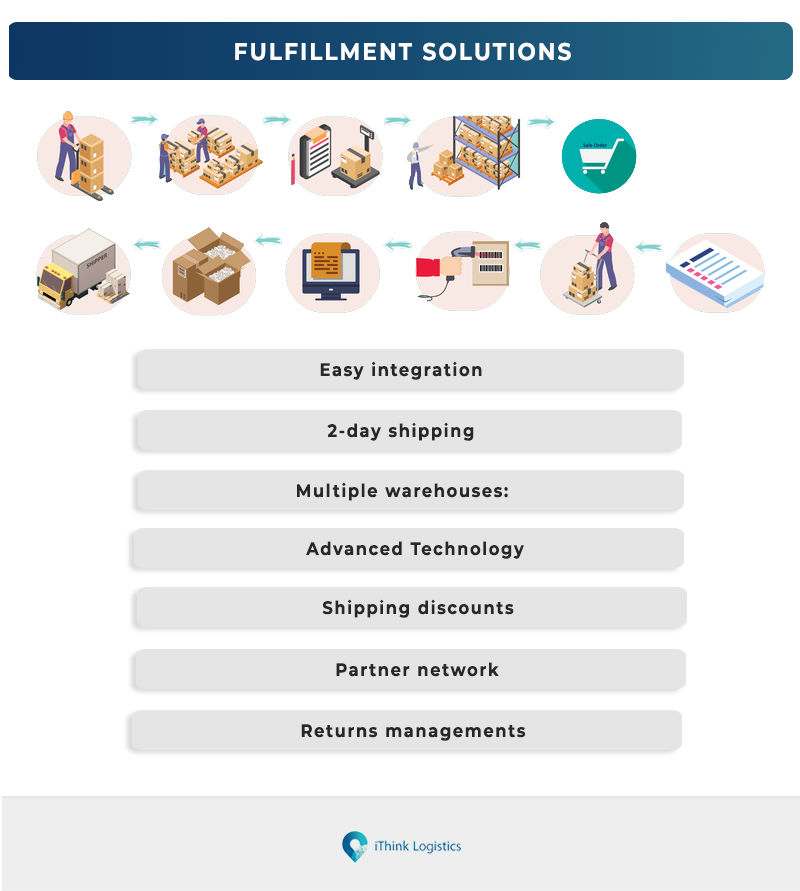
Fulfillment solutions for your eCommerce business
When you are considering a third-party logistics for sourcing, the services required are beyond the general pick, pack, and shipping. Let us discuss some of the solutions:
Easy integration
The integration process must be very smooth and easily accessible. This is mainly important to manage your online store. A proper third party logistic partner will help you manage your online purchases. You can easily integrate with the websites and marketplace with the help of the APIs. The APIs help in fetching data from your website to save the orders in to make the shipping possible and accessible from the respective platforms. This helps in keeping your orders intact and prevents any loss from happening. Many third-party logistics streamline integration of online stores. If the integration process runs smoothly, the entire setup can be done at a faster pace without even involving a developer.
2-day shipping
The best and most efficient way of competing in a competitive market is by providing your customers with 2-day shipping options. Customers nowadays are very attracted to the faster shipping process. Many third-party logistics provide a 2-day ground shipping for a particular order that is being shipped near the inventory place. With this great solution, vendors can add a 2-day shipping option to products that are being placed in the store shopping cart. If this option is displayed only when the customer enters the zip code, then only it can be made dynamic.
Multiple warehouses
Location plays a pivotal role when it comes to delivering the products at a faster pace. If you choose a third-party logistics that have multiple fulfillment centers, then your shipping can be done efficiently. You can avoid shipping to the expensive shipping zones by reducing the traveling distance of a package. This can also effectively reduce shipping costs and transit times. Logistic operators provide you with a unified platform that enables you to process return orders from one specific location. Many logistics aggregators have at least ten more operators at their back. Several platforms are providing many different logistics aggregators. You can choose the most suitable aggregator for your business. You can choose the best provider for your pick-ups and deliveries and you can opt for the most cost-effective option. This makes your job quite easy and you can get access to all your orders and returns in a single platform. It is better to choose a third-party logistics that have fulfillment centers at major cities and hubs. If you have access to prime locations, vendors can target more and more customer engagement.
Technology
Third party logistics that is enabled with the technology combines the eCommerce fulfillment service along with the order and inventory management technology. This automates the entire fulfillment process and provides complete visibility of the whole process. It is easier to connect the online store with the system if the third party logistics is efficiently embedded to technology. This publishes a two-way information flow. If you do this, you can check on the inventory levels in real-time. You will also get access to transparent, accurate, and reliable data.
Shipping discounts
Fulfillment providers often partner with important shipping carriers for negotiating bulk discounts. This helps the vendors to cut down shipping costs at a considerable rate. It advisable that you do your complete research before you try to understand the total fulfillment costs. The total fulfillment cost includes warehousing, receiving inventory, packing, shipping, packing, and other extra services.
Partner network
There are many pointers that you need to understand for running a successful business in the eCommerce industry. You must choose an appropriate third party logistics that can pair up with a popular eCommerce solution company. A third party logistics which well-connected can provide with much more business opportunities that go beyond the fulfillment support.
Returns managements
A 3PL operator can make the return processes easier. Logistic operators have multiple service partners which make it easy for them to access and manage all the orders accordingly. The first thing you need to do is to choose a suitable partner for the business operation to be done. Then in the next step, you can directly place the return orders, as the platform is fully unified. You should never restrict return orders, as the accessibility to pin codes can be very difficult for a single carrier. Logistic operators have multiple service partners which make it easy for them to access and manage all the orders accordingly. The first thing you need to do is to choose a suitable partner for the business operation to be done. Then in the next step, you can directly place the return orders, as the platform is fully unified. You should never restrict return orders, as the accessibility to pin codes can be very difficult for a single carrier.
Conclusion
If you own an e-commerce based company, then you should opt for logistics service providers or 3PL firms. They will not only help your organization for providing timely deliveries but will also help in gaining customer loyalty. In this era where technological advancement is reaching heights, your company will need that boost which will enable you to complete more and more timely and efficient deliveries. This will help your business to grow and develop. Ultimately, the most important thing is to choose the most suitable fulfillment center for your company. You will need a provider that can accompany your business with proper integration and technology. You can partner with many leading fulfillment companies. Some of the leading companies that can provide you with proper requirements are ShipBob, Red stag fulfillment, Rakuten super logistics, Fulfilment by Amazon, FedEx fulfillment. However, considering the recent data, ShipBob is one of the leading fulfillment centers among all the mentioned above.
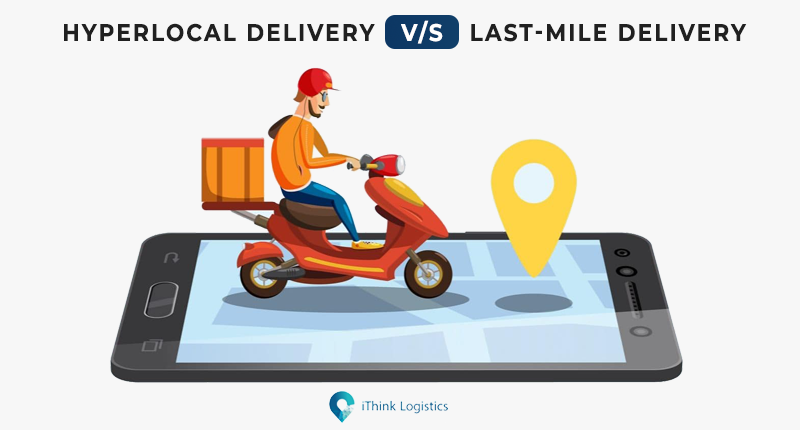
The eCommerce industry is as huge as it seems. It is one hunk of an industry and it several wings underneath it. Therefore, there many terms that hold relevance in this industry. Often we get confused between terms and tend to use them in an interchangeable pattern. Last-mile delivery and hyperlocal delivery falls under such terms. Maybe these terms are quite similar when it comes to their functions but slightly differs when it comes to their functionality and specifications. However the end goal of both the terms is quite similar i.e. getting things to be delivered at a faster pace, tamper-proof, provide for the best consumer experience for any sort of business.
However, for understanding which delivery model you need to strengthen more, you need to know the exact difference between the two terminologies. Let us discuss the same.
What is a last-mile delivery?
Usually, a last-mile delivery fleet of a particular courier company takes care of these types of deliveries. Specific delivery agents carry the particular package on their vans, bikes or any other means of transport to deliver the package to the authorized customer. The actual definition of last-mile delivery is the transportation process of a particular package from the central hub to the exact location stated by the customer. It is the final wing of a fulfillment process followed by the eCommerce companies. There is no exact product category when it comes to last-mile deliveries. Any item except the grocery or food items is delivered. There is no restriction on the weight of the item. Here the items are charged based on volumetric measures of the package.
What is hyperlocal delivery?
Hyperlocal delivery is a delivery process where packages are delivered directly from the seller to the consumer. In these delivery process, a particular courier agent picks up the specific product from the accurate seller, then deliver the package directly at the consumer’s doorstep. The whole delivery process is limited to a specific geographical area and the deliveries are usually completed within a few hours. There is some product category in these deliveries. Any item that weighs more than ten to twelve KG cannot be delivered. You have to maintain a weight restriction in this type of delivery.
The key difference between the hyperlocal delivery and the last mile delivery
Required time for the delivery
The maximum time required for completing the last mile delivery is around 12 to 16 hours. If the customer gets a message from the eCommerce operator that the package will be delivered by that day, then the customers can expect the product to be delivered within 13 to 16 hours or the next consecutive business day. Many times when the area is quite big similar to that of metropolitan cities, then the delivery might take more than 16 hours to reach their customers.
On the other hand, in hyperlocal delivery, the delivery agents aim at delivering the package within 2 to 3 hours or 6 to 8 hours max. Since, the geographical area limited, so the ground to be covered is way less than the last mile delivery and thus the deliveries take much less time in the hyperlocal model in comparison to the last-mile delivery model.
Delivery responsibility
The entire responsibility of the last mile product delivery lies in the hands of the courier agent assigned by the authorized courier company. The end-to-end procedure is taken care of by a single partner
On the other, in hyperlocal delivery, the entire delivery is not someone’s sole responsibility. The responsibility can be taken by the delivery company or the seller’s fleet, which is entirely employed by him.
Delivery area covered
The delivery area is not limited when it comes to last-mile deliveries. The delivery guy can cover even a distance of 30 KM for delivering packages on time. The delivery area in the last mile deliveries is usually determined by the location of the main central hub for transportation.
However, in the case of hyperlocal delivery, the delivery area is quite limited and much smaller than that of the last-mile delivery. The maximum distance of each delivery is completed within a radius of 5 to 15 KM. Sometimes, the delivery can be conducted as a form of intra-city where a distance of 20 KM or more can be covered.
Volume and weight restrictions
In the last-mile delivery, no restrictions are provided on the packaging. The entire amount is charged from the seller depending upon the volumetric weight of the package. In the last mile delivery, the delivery charges are inclusive and no extra amount is charged from the seller.
On the other hand, in the hyperlocal deliveries, a restriction on the weight of products is to be delivered. The maximum weight that is allowed is 10 to 12 KGs. As the delivery agent is responsible for carrying the entire package on their two-wheeler or three-wheelers, they bound to be careful about the package weight. If somehow the weight tends to exceed the designated numbers, then an extra amount is charged.
Products delivered
There can be any sort of products in the last mile delivery. For instance, there can be several products ranging from cutlery, fridge, television, cosmetic items, clothes, accessories, cooler, etc. There is no specific category of item that is delivered through the last mile delivery process. However, grocery items or food items are generally not included in this.
On the other hand, in hyperlocal delivery the area is limited. Therefore, it generally takes less time to carry out deliveries. The category of products that are delivered through this process includes medicines, grocery items, food items, small containers and tiffin boxes, and many as such.
The relevance of hyperlocal and last-mile delivery in recent times
If we look at the present situation, when the entire country is under the commencement of lockdown, both last mile, and hyperlocal deliveries have a pivotal role to play. Due to this outbreak, the entire buying pattern has changed. As the eCommerce industry is facing a major halt, only essential items like medicines, grocery items, healthcare equipment, food items, pet supplies, and many as such are made available for the people. In some areas are entirely shut down and people are strictly not allowed to step out from their houses. These are the areas where eCommerce is very essential.
Some of the courier companies have recently started delivery essentials across the nation. Therefore, in this case, the courier company’s last-mile delivery process should be very good and should be top-notch to ensure that the delivery agent, as well as the customer, is completely safe. Protective equipment like surgical masks, surgical gloves, sanitizers, and other essential safety items should be provided and made available. After keeping everything in mind, the timing should also be maintained. The delivery should be conducted within time so that the customers do not have to wait for their items.
Some people are buying essential stuff from nearby local shops. In this situation, the hyperlocal delivery can also be a game-changer. After the commencement of complete lockdown, people are not allowed to go to shops or places where there is a possibility of social gathering. Looking at the present state of the country, we are running at a high risk of getting affected by the virus. In these times, it is better to stay completely quarantined. Thus, it has become impossible for individuals to purchase essential items like grocery or food items, healthcare, and medicinal requirements, etc. Sellers can adopt the hyperlocal delivery system for delivering essential items to their customer’s doorstep. As the hyperlocal delivery system, is not that popular in India, a fast track method can be adopted.
Conclusion
In this mad technology era, there is a lot of engagement in the eCommerce business that can provide you with online access to their items. Customers expect their items to be delivered as quickly as possible. You can call it a revolution or a diversion of time but technology has taken a huge leap. Therefore, people have adopted all the latest ways of lifestyle. Now customers prefer to purchase their item online rather than visiting the traditional stores and that is why both hyperlocal and last-mile delivery process holds a lot of relevance in recent times.
Both the delivery systems are quite relevant and very essential in this difficult time. If you adopt the delivery systems, you are bound to see the success of your business. These delivery processes are not relevant in this pandemic but also after this ends. Our eCommerce industry has seen a lot of development since the “delivery at the doorstep” is made viable. Therefore, you must give equal importance to both the delivery systems. If you plan to adopt the hyperlocal delivery process, you need to have an excellent last-mile network. Both the delivery system is functional together. Therefore, hyperlocal delivery is like a micro-arm or an essential subhead of the last-mile delivery.
Warehouse automation is becoming popular as every warehouse manager and company look forward to improving production and efficiency, streamline operations, and cost reduction. However, different people hold on different opinions about what warehouse automation is. Starting from the use of robots to automated processes, automation of a warehouse is all about automated technologies that ensure the increase in the productivity, profitability, and many more.
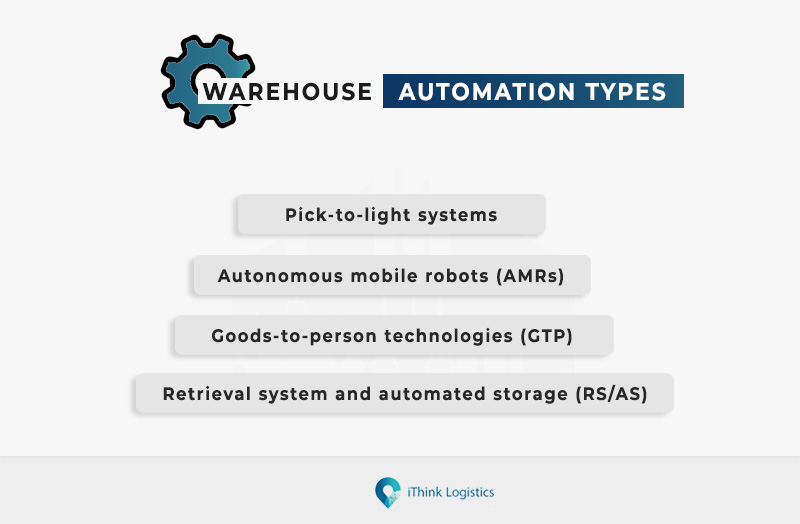
The automation process of the warehouse can be done in many different ways. Any warehouse that needs to fix their bottom line can get a lot of advantage from automation of their particular warehouse. Let us see several ways of warehouse automation:
Goods-to-person technologies (GTP)
These solutions allow bringing the specific item to the worker instead of the worker traveling to pick the same item. Warehouses that are built with the GTP systems tend to retrieve or enter orders from a central database such as the ERP. Then the equipment with automated processing in it locates the particular item from the entire warehouse and brings the same in the picking area. Typically, the rates of GTP exceed the rates of a manual warehouse. Therefore, companies opting for the GTP system can effectively reduce their fulfillment cost and operating cost and improve service levels.
Retrieval system and automated storage (RS/AS)
The retrieval system and automated storage is a type of GTP technology. This particular technology helps in bringing out the goods from the warehouse and then again can easily place them back to the storage. Normally, warehouses that leverage the retrieval system and automated storage pair them both with a particular warehouse software that manages the entire process and assists the workers of the particular warehouse in processing the orders.
Pick-to-light systems
In these systems, the operators scan the barcodes. During the scanning process LED displays to prevail to guide the operators towards the accurate storage location and indicates the exact amount of products that need to be picked up. Then the picked items are carefully placed in specific containers and then the completion of the task is approved by the operators by pressing the button at the nearby display. This display starts displaying in every operator’s zones which directs them to the consecutive picking location.
Autonomous mobile robots (AMRs)
Autonomous mobile robots (AMRs0 are mainly used in particular eCommerce situations related to fulfillment where their high labor requirement and the high volume requirements are addressed. These particular robots work with the warehouse staff by traveling through the entire warehouse and then finally meeting the manual pickers to the time their totes are full. Then they transport it to the pack station. Many other autonomous mobile robots tend to use trays, vacuums to pick up totes, and boxes from the warehouse shelves and dropping them to a digital robotic cart.
Westfalia- one of the popular warehouse automation service provider
We are already familiar with the regular and normal functionalities of a warehouse. However, the modernized warehouses are not like their predecessors. They are a complete package of highly revolutionized and evolved automation systems which also makes it the pivotal part of the supply chain. In recent times, the activities of the warehouse include palletizing, cross-docking, knitting, identifying products, tagging, and lastly storing the products in the most suitable way that is possible. According to the president of Westfalia Technologies, Dan Labell the warehouse is the last frontier for the reduction of any kind logistics costs and long-term distribution.
Trading tools of Westfalia
As Westfalia remains to be ahead in the automation trends of the warehouses, their trading tools help companies a great deal. The trading tools help the companies speed the product flow and reduce the cost. This has huge implications on the warehouses generally. Let us look into some:
Robots
Robots have a great deal of impact on the material handling of Westfalia designs. The company uses particular articulating robots that are manufactured by a huge global industrial robot manufacturer known as the KUKA Robotics Corporations and a leading manufacturer of robotic palletizer known as Fuji Yusoki. Westfalia tends to program the robots, however, it is the operator that adjusts the settings and adds patterns to it if they are not sophisticated enough. They program the robots for mainly doing the palletizing and for de-palletizing layers. Robots are also used by Westfalia to re-palletize and de-palletize layers on the retrieval system which is framed in a way that it can automatically create the “rainbow pallets” i.e. the various layers of SKUs on every pallet.
AS/RS Systems
“AS” stands for the automated storage and the “RS” stands for the retrieval systems. Westfalia manufactures the retrieval system and automated storage of its own. Writes software of its own, and create controls and conveyors of its own. Westfalia manages to have immense floor space due to its absolute compact and high-density system. Here the retrieval system and automated storage can be framed much higher in comparison to the conventional or regular warehouses, and this saves even more floor space.
The retrieval system and the automated storage systems of Westfalia save labor by 99.9 percent accuracy and cause no damage to the products. According to Labell, the systems in Westfalia can handle almost 8000 loads of heavy products like paper along with standard weights pallets. These systems that are controlled by computers can provide quick access to a huge amount of information that can be retrieved by the logistics and warehouse managers by using certain web links. Labell says that the systems of Westfalia are made so user-friendly that even a person who has zero knowledge of computers can adapt to it easily.
Layer-forming palletizers
These are mainly used while using high-speed applications and during the conjunctions of handling bags when the quality of the pattern is very important. How are layer-forming palletizers any different from the robotic ones? The difference is that a layer-forming one can square up against every layer before it gets stripped onto the pallets (Note: This is true only in cases of bags only). On the other hand, a robot cannot do the same thing. As a robot can handle various multi productions at ones, it is considered too much more flexible. Robots can have quick access to various bags/cases at a single time, whatsoever cannot match up with the high-speed lines that are found in beverage industries. For instance-
According to Labell, deciding which palletizer is suitable depends completely upon its application. A warehouse with multiple lines and slow rates should opt for robotic palletizers, whereas a warehouse with single lines and faster rates should opt for layer-forming ones. However, the ongoing trend is more dominant towards the robotic palletizers. Labell says that it does not matter which palletizers we are choosing, safety always remains an issue. Certain areas may not be accessible even for a palletizer. For example- the cell of a robotic palletizer is very dangerous if it not protected properly with safety fences or with a laser protection device. Tag out or the locks out processes are implemented for human safety. It ensures that there is no human is present in the palletizing cells during ongoing operation.
Forklifts
The automated systems of the warehouse typically use the forklifts for loading trucks. However, sometimes counter-balanced trucks are also used for moving products that are received from the outside or at times when the manufacturing facilities are not implemented in the warehouse. It is important for the truck operator can communicate back to the warehouse management system, so the trucks are suitably equipped with proper RF equipment which helps in the communication process.
Conveyors
The air-chain conveyors of the Westfalia use a single motor for a length of up to 100 feet. It does not need any electric controls to get to the zero-pressure accumulation. This process is quite similar to the traffic jam concept. The conveyors are very cost-effective, as they require very less amount of controls to operate and the conveyors only need to two horsepower motor for 20 zones. During changing or marinating the pallet orientations, Westfalia transports pallets in various directions by using the right angle turntables and transfers. According to Labell, when you are using the turntable, the pallet orientation does not change because the pallet rotates at a 90-degree angle, and then the conveying continues.
Transfer cars
Transfer cars are mainly used for consolidating various pick-up and drop-off locations. This is similar to palletizing lines which is consolidated into one/two in-feed line to an automated storage or retrieval system. Programmable Logic Controller (PLC) is a small computer that controls every machinery. PLC is programmed for responding to conditions that are detected by sensing specific devices such as proximity sensors and photo-eyes.
RFID
This can be executed at three levels such as unit level, case level, or pallet level. The source of having long-term trends is having RFID tags at a specific level i.e. unit level. This allows you to track each product that the consumers purchase at a time. However, this remains to be cost prohibited, but industry experts suggest that there is a chance that the RFID tagging at unit-levels may grow in the future. These RFID readers are easily converted into automated storage or retrieval systems for determining pallets and the specific products on them. As the products travel journey through the rest of the supply chain, this information or data will come in handy. Labell adds that the RFID reader is an alternative way of identifying products with the requirement of any visual reference.
Pallets
The popularity of plastic pallets continues to grow with years. They are way easier to move on the conveyors when they are made automation friendly. Plastic pallets may be way expensive than the wooden pallets but in the captive systems, the plastic pallets prove to be way effective and even cuts out cot in the long run. Plastic pallets are also typically used in food applications; however, cleanliness remains an important issue in this matter.
Measuring the effectiveness of an automated warehouse
The primary goal of an automated warehouse is managing the product processing intervals and reduction of costs. Nevertheless, the question is how Westfalia manages to measure the significance of its technology and tools. Labell explains that Westfalia has a justification determining tool that helps them to identify the total present value and internal rate of returns. He also adds that it is very essential to use techniques of discounted cash flow for analyzing projects that have an existential life of 20 years or even more. Often companies never go back on using a conventional warehouse after they have operated with an automated one that works much better than the conventional warehouse.
Labell says that many automated warehouses sometimes fails to handle the work cycle only because they are not framed with specific qualities to handle the entire burden. However, some companies tend to view this matter as a negative aspect of the systems. Labell also adds that it is very critical to buy the most suitable system, as there are huge differences in the quality of different retrieval systems and automated storage. The storage or the retrieval machine holds the most value, as they are one of the primary equipment in the plant. If this equipment fails then the customer cannot ship any product. This is true for every automated warehouse that has a single system or retrieval machine. Almost 20 percent of the customers cannot ship products because of this particular reason.
Many automation techniques and tools are offered by Westfalia. This helps the companies to manage their processing timings and for reducing the costs. To make the automation of the warehouse to be most significant and effective, technologies and tools that are similar to the Westfalia should be used along with integrated data and trained warehouse staffs.
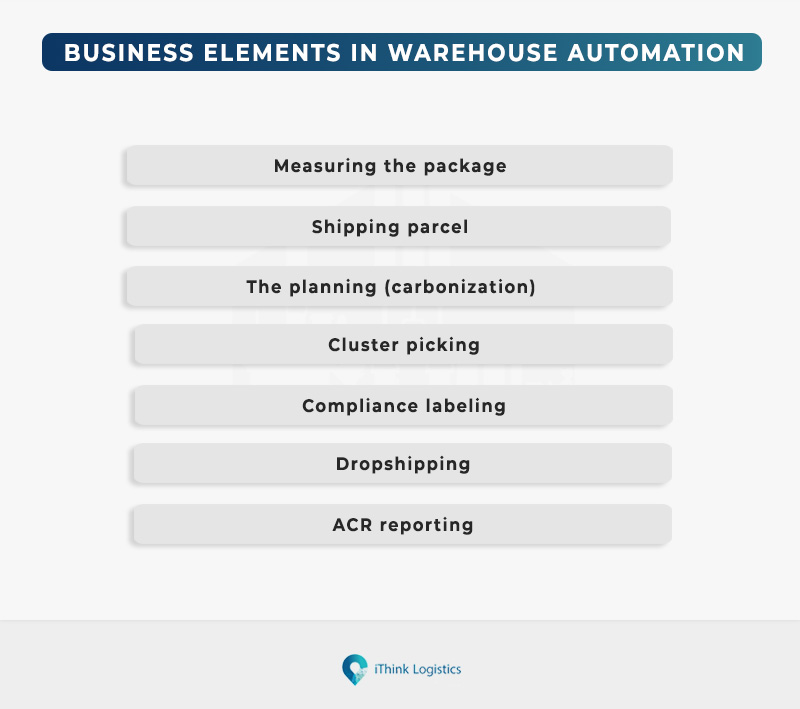
Essential Business elements in warehouse automation
A new approach to measure the package
To calculate the cubic size of the package and inches you need to first multiply its length, width, and height and then round up or down to the nearest whole number. This cubic size is then divided by the dimensional factor which is currently 166 for domestic shipments and 139 for international shipments. When determining the final dim weight, always round up to the nearest whole pound. It is important to note that this dimensional factor 166 is subjected to change. It is estimated that this change will impact approximately 75 percent of both businesses to business and business to consumer shipments. If your organization is not been impacted yet, it recommended for you develop a contingency plan and be prepared.
Shipping parcel
Shipping one-pound parcels in small cartons will not have a significant impact on your shipping rate. However, shipping those same one-pound parcels in larger boxes potentially excess space will result in higher shipping costs for those orders. Larger parcels are typically already subjected to weight ratings and should not be impacted.
The plan (carbonization)
As you start preparing your plan, you need to see what your potential options are. You can start by negotiating a better dim weight factor with your carrier’s factor. Increasing your dim weight factor will lower the cube rating for the orders. You can as it is and hopes your package gets better at selecting box sizes. You can try to slow down the packaging process to allow the packers more time to select box sizes and hope you get all the orders shipped on time. You can also add equipment to create custom boxes on demand or use a warehouse management system to select optimum carton sizes as part of the box book workflow. This practice is known as carbonization.
Cluster picking
Cluster picking can improve labor productivity and this process can be further optimized by having a warehouse management system to determine the best carton size to use for the order based on item carton or item cube characteristics. These practices are commonly referred to as carbonization and are available in a good warehouse management system. As mentioned earlier this approach ties in directly to helping a better management of dim weights.
Compliance labeling
As your customers become more efficient with their supply chains, they will start to make requests of you to help them streamline their operations. For example, Orders may require you to create shipping compliance labels and company-specific pack slips for drop shipments. This will mean creating customer and carton specific labels at different points in the entire workflow. If you are already dealing with big-box retailers, this should look familiar. Many trading partners today are providing specific directions GS1 shipping labels in terms of both the format and more specifically positioning on cartons. As a small business, you have a few options when working with these requirements. If you do things haphazardly, then you face the high probability of receiving chargebacks. This might be the option your customers hope you choose. Print labels in bulk and add labor to manage the labor location, application process, and equipment automation to print and apply larger order volumes or integrate flexible label generation options into the big workflow using a good warehouse management system.
Dropship
Dealing with companies as amazon, Walmart, Target, and Wayfair may require you to deliver orders created on their websites from your warehouse, which also known as drop ship. Dropship introduces a new set of compliance requirements for suppliers that can quickly become an operational constraint without effective system support. Characteristics of a drop shipment include shorter lead times for filling thousands of orders, erratic demand patterns with random spikes and order volumes, and significantly more parcel orders typically with low line and unit counts along with lower margins per order and residential delivery fees, possibly creating and sending EDI documents, and creating a retailer-specific tracklist report. Your cost of doing business as a drop shipper can be supported by a good warehouse management system.
A warehouse management system may also help streamline the shipping process to retailers. For example, for some amazon orders, you might be required to apply pro bill and routing information on carton labels, and the carton contents and weights are required to get the pro bill and routing information.
ACR reports
The ACR report is a sequel server reporting services report tool used to identify outbound carton requirements and specific carton contents in advance of orders being released for picking. The new workflow using the ACR report might have certain steps. You run the anticipated carton requirement report in Excel in one warehouse management system, and then go to the vendor portal to enter the carton’s shipment information, print the cart and ship labels and then pick the orders and apply ship labels during the workflow, and finally ship the order. You will notice that this approach could significantly reduce constant searching and matching labels to cartons and improve through capacities.
Dropshipping: An important business trend of warehouse automation and why is it so essential to adopt it
Our eCommerce industryis taking a modernized turn for every creative entrepreneur, known as the dropshipping. India is finally getting the hang of it and is effectively fragmenting their dropshipping businesses. Dropshipping is a unique technique where the seller does not need to deal with any of the inventories or manufacturing processes or the delivery of the orders that are placed. Whenever an order is placed the seller just has to inform the manufacturer, then the manufacturer will take of the rest. After being notified, the manufacturer packs the order and delivers it to the concerned customer. The seller does not even see the orders physically. This is very relaxing for the seller as he does nothing and at the same time makes a business out of it. It is strange but dropshipping indeed takes away the maximum pressure from the seller and provides them with enough time to strategize for the marketing tactics for the business.
Dropshipping seems to be a very simple type of business. However, it is not that simple and easy the way the web sells it to be. Various technical issues hurdle upon as soon as you get started with the dropshipping business. The most major problem of all is the creation of a suitable dropshipping platform. It is imperative to estimate the worth of an eCommerce business by analyzing the number of its stores being used in the dropshipping platform. Besides, it can be quite difficult to choose and commerce platform to develop your platform. Another debate that is to be highlighted is self-hosting and hostel platforms.
The plethora of eCommerce markets platforms available in the market is Woo Commerce, Magneto, Big Commerce, Shopify, Open Cart, and many such others. The dropshipping market is very competitive, and that is why it is difficult to identify the unique selling points. It is always a good idea to first have a good look at your business, and then only decide for the platform that you are willing to choose and whether or not it is feasible for the customers.
There is a lot of scope of this business in India, especially for those entrepreneurs that are newer to the industry. It is the most cost-effective way to start an online business. As internet penetration has been a great success in India, so will be an online business. Nowadays customers prefer shopping online rather than facing the crowd in the retail store. Therefore, it is a great opportunity to build your online presence. Dropshipping is a type of business that is not entitled to many risks and challenges because here you invest in products only when an order is placed.
Therefore, when it comes to the future of the dropshipping business, there is immense scope for it. After the introduction and massive success of Jio internet, India has come to a lot closer to complete digitization, and thus drop shipping business is bound to be a massive hit in the coming years. With the increase and easy accessibility of smart devices, more and more people are getting inclined to using eCommerce platforms for purchasing items at the comfort of their homes. This rise is only going to go upwards, as high-speed internet services gain popularity. Moreover, starting a dropshipping business in a country like in India is very easy. India, with its growing population and advancement in technology, is a great place to start your online business. All you need to accumulate suitable vendors who are selling products of your interest. You can approach them directly for the logistics needs.
Therefore, the importance of dropshipping has a direct pin down effect on warehouse automation. Dropshipping in the newest and the most popular trends and that is why it is so essential for every automated warehouse to adopt the trend. Dropshipping is the future of eCommerce and so on the business world.
The need for Automation of warehouse according to business trends
Today everything is online. The revolution of people has come a long way as toady everything is at your fingertips and that is driving automation. “Online” is driving automation. Ecommerce is one of the fastest-growing economies. According to research, online retail sales reached 262 billion in the year 2016 which is up 13 percent over the year 2015. They expect eCommerce to grow at a 9 percent compound annual rate through the recent years. Ecommerce is a primary catalyst for Omni-channel disruption and driving operational complexities in the warehouse, while web orders or web fulfillment can be a huge growth driver for your business. Sales and company owners will be excited about the new revenue potential. Your job is to manage these new channel opportunities profitably. A key channel in dealing with this for companies who have been focused on shipping to other DC’s via cases or pilots is the new requirement to ship each to direct consumers via a pick and pack operations.
Most major carriers supply what is known as dimensional or dim weight pricing to certain packages. Dim weight pricing depends on package volume to create a billable weight. The amount of space a package occupies in with relation to the actual weight. The carrier’s position on this is to better align the rates they charge with costs which influenced by both the size and the weight of the packages in addition to creating additional revenue for the carrier. The carriers hope to encourage shippers to re-evaluate their packaging and ensure a proper box selection when shipping to create a more efficient supply chain. It is more important than ever to gain control of your shipping process. You need to understand how dimensional weight is calculated and know when to make operational adjustments to minimize the impact.
Benefits
There are several benefits of warehouse automation. Some of the primary benefits are:
Increased speed
Warehouse automation helps in increasing the overall speed of the entire warehouse operations. As everything is automated instead of manual labor, the warehouse operative functions are way easier and quicker to process.
Maximizing space
As robots and automatic machines are involved, the inventory and stocked up pile are always kept in check. The inventory is regularly checked and arranged in its proper place. This results in huge floor space in the warehouse.
Superior inventory counts
As automated machines are involved in counting instead of manual counting, the counting process is quicker and more accurate. There is a very low chance of failure in this process, rather than the manual process that had higher chances of failures and incorrect numbers.
Improved safety
Automated machines do most of the difficult task which can be fatal for a human if there any wrong move is made. When it comes to machines, labor security is assured.
Conclusion
In recent times when practically everything is online-based and everything is being digitalized, a warehouse needs to be automated. Conventional warehouses are put of the trends. Warehouse automation can guarantee your business with huge profit margins and overall growth of the organizations. In these mad technological times, every business needs to have an automated warehouse.
Due to the outbreak of this global pandemic, many consumers are confined to their homes and thus they are not able to go to their traditional markets for goods or any sort of essential. Therefore, consumers have turned towards on-demand deliveries that will help them get their heir essential stuff at their doorstep. The logistical industry and businesses are thriving hard to create an on-demand hyperlocal business model so that the consumer’s requirements could be met.
This pandemic has changed the entire economic system. It has shaken the entire operative structures and retailers have finally changed their perception of the on-demand delivery system. In these difficult times, it is very important to grab on to any opportunity that opens up the door to any sort of growth or development. Retailers are not adopting the on-demand delivery system, they are suffering are a huge loss in their businesses. They are desperately looking for alternative ways to stabilize their business and the best option that seems so far is the option of on-demand hyperlocal deliveries.
What do you mean by the on-demand Hyperlocal business model?
This is a business model that tends to connect the offline local marketer and business holders to the customers via the digital platform. This platform helps the customers to order or purchase their essential items or services like healthcare items, grocery items, etc. at the comfort of their home along with easy access.
In the particular hyperlocal delivery model, the logistic service provider takes the request of the customer, fetches that particular item from any nearby shop, and delivers it to its suitable customer. During the whole process, the customers can track the entire process and even get real-time information about it.
Why hyperlocal demand deliveries are preferred by the consumers and the logistic providers?
Communities and localities have a desperate need for on-demand delivery services. These deliveries are mainly hyperlocal by nature and thus they can be catered to during immediate needs. The transaction process is also very compatible and easily accessible in these deliveries. A single transaction can be completed with just an hour in on-demand hyperlocal businesses. The other primary reason for trusting the hyperlocal on-demand delivery services than the non-hyperlocal ones is its actual physical presence. The physical attire of the stores makes it quite easier to attend to the customer’s grievances.
Logistics and deliveries do not mean the same thing for non-hyperlocal and hyperlocal businesses. Hyperlocal businesses don’t worry about things like long-distance transportation, warehousing, or logistics fragments. The only logistics that affects the hyperlocal businesses is the last-mile delivery. Around the locality, their businesses ride on the retailers. The reverse logistics is not that of a big deal for the hyperlocal on-demand business as they only operate within limited areas.
What exact services fall under the wings of the hyperlocal on-demand business model?
This business model is very cost-effective and affordable. It is quite convenient for people living in urban areas. Many services come under this business model. However, the primary service is to provide the most convenient and suitable delivery of items to the customers. There are some services listed below that come under the wings of the hyperlocal on-demand delivery businesses:
Personal residential and home care services
The services include salon services, beauty regiments, spa services, etc. May be these services do not fall under the absolute necessary list, but it is very crucial especially during these times when people are going through a lot. These services can provide the common masses with some sort of comfort.
Services related to food ordering
This is one of the most needed and crucial services provided by the business. People tend to order food almost daily. During this pandemic, this service is more relevant and crucial than ever, as people cannot physically go around to stores and restaurants for grabbing food.
Handyman services
These services include carpentry, plumbing, gardening, electrician, etc. These services can be beneficial both ways. Both the customer and the provider will be benefited. The customer will get its services and the person providing it can earn some money during these difficult times. During this pandemic, people cannot reach put to local service providers if they need any sort of handyman services. Therefore, it will be a great help for the customers if they can get a hand on plumbers or electricians at their fingertips.
Healthcare services at home
These services include baby care, caregiving, senior care, etc. During this time, it could be both difficult and overwhelming to take care of kids as well as senior members along with all the household work at hand. People will find it crucial to hire some sort of assistance during this time. Therefore, if they can hire personnel at the comfort of their home, it will not only be helpful for them but also be very beneficial for your business. Even if you charge some extra money on the services during this time, people won’t hesitate much before taking it as they can hardly manage to find some other better service during the pandemic.
Services related to grocery delivery
Due to the commencement of social distancing, the common masses are avoiding the crowded traditional market places. As the stocks at their home are not lasting for long, they are ordering groceries online. This is one of the primary reasons that the online grocery delivery business is seeing immense growth in their profit margins. It is the best time to take your grocery business to an online platform.
How to set up your business around an on-demand hyperlocal delivery model
Investors and logistic businesses have been eyeing this model as a very profitable business venture. They are aiming to provide customers with the best online purchasing experience by providing their respective needs and desires. Logistic companies that plan on adopting the hyperlocal model, they should probably launch their business by following some traditional patterns. The patterns should be process-driven. The following steps need to be followed for building the model:
First, you need to select your industry depending upon its market size, development potential, probable competition, and as such.
Then you need to identify the particular niche of the industry, and then target your resources and market. Identifying the niche is very crucial because your whole business development can fall or rise upon that particular decision.
Form a strategy that can help you market the services you are providing. However, this should be done only after you have determined your target audience.
Build strong connections and partnerships with delivery companies and local businesses. You must have a proper partner to support your business.
Then you need to plan out your revenue flow depending upon the commissions that are earned from the particular merchant partners and the delivery charges received from customers.
The final step is to find a suitable technology partner or an app development service for building an on-demand delivery app.
How technology is benefiting the hyperlocal on-demand delivery models?
Logistic companies that are planning on adopting the hyperlocal model aims at improving customer services and their shopping experiences. Technology plays a pivotal role in insulating that.
Ways in which technology helps logistic companies:
Countering the traffic congestion
Customers from various localities have various needs. Urban traffic makes it very complex for conducting hyperlocal deliveries. If you can make proper use of technology, then you can plan better routes that efficient and time conserving.
Bearing the costs of free delivery
The hyperlocal businesses get their revenue from two primary sources: one is from the commission that is earned from the merchants and the second is from the delivery charges received from the consumers. However, customers nowadays are very sensitive to additional delivery charges and expect free delivery on purchase. Along with that customer also expects flexible delivery. Catering to such demands can take up cost in the last-mile delivery. Therefore, automation is the only remaining option that can help you sustain the costs related to free shipping.
Easy access to allocating delivery zones
Automation helps your business to find suitable and sustainable delivery zones. It can help you find suitable routes that do not incur the last mile delivery charges. Moreover, it is very difficult to assign each delivery zones when there are thousands of orders from various localities.
Maintaining the efficiency of the fleet
For any hyperlocal logistical business, it is very important to maintain the productivity and efficiency of the fleet. In this mad technological era, suitable technology is the only significant option for marinating the efficiency of the fleet. The optimization of the delivery routes can help in the reduction of extra costs.
Conclusion
The success in logistic business lies in fulfilling customer needs and desires. The hyperlocal business industry is facing difficulty in fulfilling customer’s expectations of rapid delivery at their doorsteps. Without technology, it is difficult for logistic companies to cope up with these on-demand deliveries and that is why they need a proper business model for it.
If you are into an online business, then it can be difficult to determine accurate ways of charging the shipping costs from your clients. This can be tricky because the ample amount of eCommerce stores that are available do not provide that element of consistency. Some questions are bound to cross your paths i.e. whether you should offer free shipping to your customers or whether you should charge the shipping rates based on the weight of the items and lastly will you be capable enough to maintain the profit margins.
These are the most common questions that bother all online business holders. In this content, we will highlight the common problems faced by online retailers and their consecutive solutions. The shipping rates that you offer will depend on the type of industry you are working in, the type of items you are delivering, and the estimated sales value of this item.
Before getting into the problems, we need to highlight how you should determine your shipping cost.
Determining the shipping costs
You must estimate and calculate your shipping cost before you set the shipping prices that you will be charging your customers. This is how you can determine the shipping costs:
Handling
The first and foremost thing that you need to assess is the average time needed for you to pack an item that you want to sell. This process will be easier if you calculate considering less number of items. You need to identify the exact number that is required for packing a single item and then divide those numbers by 60. As you get the number, multiply it with the hourly rate that you might consider paying your employees. If you do not have employees for measuring the same, you can consider the minimum rate that you will consider paying.
Packaging
After handling, you need to identify the average amount required for arranging the materials needed for packaging like the tapes, boxes, cushioning items, and many more. You should always have the exact numbers while determining the amount you need for packing a single item. Nevertheless, if you are selling fewer items you can precisely consider $1 for your packaging.
Postage
After the packaging requirements are fulfilled, you need to move on to the postage requirements.Here you need to calculate the average package weights and dynamics. Then place the same numbers in a shipping calculator for assessing various locations where you might carry out your shipments. If most of your clients will be in India, then test out different locations in India to identify the average cost required.
After you get all three of your numbers and then add them up to determine your final cost excluding the fees and taxes. You will have the average shipping cost according to each order and then you can finally set the shipping rates for your online business.
Shipping solutions
There are mainly are several ways in which you can manage the shipping rates of your company. However, we’ll be discussing the foremost common solutions:
Free shipping
In this shipping, you deliberately get hold of the shipping and don’t truly charge your customers for the delivery.
Flat-rate shipping
In this shipping method, you set one rate for each order no matter the load, quantity, or size.
Price-based shipping
In this method, you set the shipping rates in line with the full cart price. This shipping system is typically framed into a tired system. Here the shipping worth ought to be supported by the full cart price of the things purchased. The price will fluctuate concerning items that are being added. However, the tiers can continuously be outlined by the worth of the item.
Weight-based shipping
In this shipping process, you set the shipping price of a particular item ordered according to its weight and dimensions.
Real-time rate calculators for shipping
The shipping cost is calculated in real-time via specific shipping carriers like UPS, FedEx, etc.
Sometimes you can consider combining any of the options mentioned above. For example, you might offer free shipping on items that are above $100 but charge an extra weight-based amount for orders that are less than that.
Calculating the average shipping value for your products
The initial step is to work out a variety which will be a possible shipping rates for every one of your products. You need to choose an appropriate carrier and you need to set the dynamics of the product that you are going to be shipping across. This may appear tiresome work, but you cannot avoid it in any doable manner. You have to do this when you ship a product.
After you are done figuring out the weight and size of your product, go to your carrier’s website and log the destination zip code of the areas. Be sure to select both the rural and urban locations. Your carrier might charge more for the rural areas even though they are geographically much closer. After getting into the Nitti gritty of it, you will understand the trend. Then it will be easier for you to determine what your average shipping cost will be for each product.
Calculated v/s Flat rate
A flat rate means charging the shipping rate that has been pre-set whether it is free shipping that is being offered or the shipping rate that is charged for all the orders that are placed. Calculating shipping is different from the flat rate. It is not decided or set for beforehand. It is set considering different variables such as the weight and dimensions of the item, the total price of the item, and the destination where the item is to be delivered.
There are advantages and limitations to both rates. There have been several types of research and assessment on which of the rates are better when it comes to the whole profit margins of the company. It has been found that the calculated shipping rate is better when it comes to increasing cart abandonment.
When the customers are shopping on your online site they tend to make two consecutive decisions- whether they want the products or items that you are selling on your site, two whether they are willing to pay the price that you are offering on that particular product. These are the two major decisions that you need to go through. You have to be very tricky in such a situation because for every extra decision you ask your customers to make; you will lose one significant amount of them. For instance, while your customers are checking out and they see a shipping rate that is been charged for the item, they will tend to think again about whether they are willing to pay the shipping charges and whether the other stores will charge them with the same or less amount. These last-minute decisions can make you lose customers.
Mostly big retail companies do not charge the exact amount that is required for the shipping, so the customers never have an actual idea of the shipping rates. Many retailers tend to offer free and discounted shipping rates and therefore customers always expect to get some kind of discount every time they shop. This is a great strategy because the retailers that are offering such discounts are not losing the money instead they are recouping the amount from elsewhere. Maybe they are increasing their profit margins by increasing the product’s sales price or they have realized that offering free shipping has increased their sales and they are making huge profits in the sales volume.
“One size fits” all solution
It is essential to mention there is no such solution that will be fit for any shipping rate problem that you might face in your company. If you are in a small company and you are dealing with a small base audience, then it is advised that you look at what your largest competitors are doing. Then test out each shipping rate to find the one rate that suits your company and balance out the profit margins of your firm.
However, most online retailers should their shipping rate to $5. This seems to be a safe spot for the shipping rates. Any amount less than that will not bring you any profit and even additional sales would be worthless. Moreover, any amount higher than $5 will drive your customers away and they will search for other alternative platforms for shopping.
Conclusion
The most successful online eCommerce stores have tested various shipping rates and have selected the right shipping rate that suits best their company. If you are a beginner in the industry, it is advised that you should start at a safe margin by offering a $5 shipping charge per order. However, do not settle on the price rate. Use your inbuilt testing feature for testing various price structure that is suited for your store and works best when it comes to balancing out the profit margins.
The warehouse is one of the most important parts of running a business. Ensuring proper maintenance of the warehouse should fall under the top priority list. This is crucial for the business. It is essential to make sure that your warehouse is clean and safe so that the employees don’t get sick or your stock doesn’t sit in unclean surroundings. Anyone that has worked in a warehouse knows how dirty and unsafe it can get if not maintained properly from time to time. Thus, taking preventive measures is very essential to maintain the safety of your employees and the stocks. Here are 10 tips to maintain the warehouse environment:
10 tips to maintain the safety and cleanliness of your warehouse
Make a cleaning schedule and update it accordingly
The primary duty of maintaining a warehouse is to keep it clean regularly. The space in the warehouse is huge and thus it gets dusty easily. Therefore, you must maintain a cleaning schedule to clean your warehouse at regular intervals. This will ensure that your stocks are safe and the employees working in the warehouse are working in a safe environment. This also reflects the overall value your company possesses. Areas like the shelves and small storage areas should be cleaned and dusted every single month. This is a must to do to avoid items and packages from becoming isolated or damaged.
Clear out the bins daily
The dustbins of the warehouse should never out of check. They should never overflow with litter. If the bins are not cleared out the visitors and the employees of the warehouse might dump litter to other places where they shouldn’t. This can cause inconvenience and hazards for both the warehouse and the people working in it.
Give each employee separate areas to clean
The best way to ensure that all the areas are maintained equally is to assign each area to individual on-site. A picker can be assigned to areas like shelves or conveyor belts. This means that each worker has to work in their areas diligently without making a mess before leaving that will require any further clean-ups. If this schedule is carried out regularly then it helps with workload a lot better and makes every significant shift efficient.
Clean on the go
If the machinery is not working properly at other times, then it doesn’t matter how clean you keep your warehouse during the scheduled cleans. It is very essential that the staff clean litters such as metal items and metal shavings. They should be advised accordingly to maintain the firm standards and keep the area free from hazards. If after an operation is taken care of, the left overstock must be tidied up and kept in proper places before it turns into an accidental situation in the warehouse.
Keep your cleaning supplies ready for the employees
You cannot just expect that your employees will keep the warehouse clean and safe without giving them the proper equipment that is needed for the same. If you make them search for different cleaning equipment every time they go into the shift, it will automatically put them off from cleaning the warehouse properly. Walking long distances for a single dustbin during the shifts is not only a waste of their time but also yours. If the employees are assigned to wiping out jobs or for clearing out the litter, you need to make sure that they are provided with suitable cleaning supplies.
Turn the inventory more often
The stock that has been piling on for a long time that not only becomes obsolete and costly for the warehouse to hold but also becomes a primary element of accumulating dust that can lead to hazardous complications. The stock that has been piled for some time must be cast put from the warehouse space. This saves a lot of warehouse space. You must always keep your stock up-to-date so that there is no piling up dust around the warehouse corners. You can also rent out some warehouse spaces for keeping stocks as such.
Floor labeling
Floor labeling is very essential for every warehouse. It is particularly designed to keep the sectors organize and for identifying stocks easily. If you have the proper record of each isle and if you have the detailed data of the stocks contained in those isles, then it will be way easier for you to access the stocks. This will not only save an ample amount of time but also will make assigning the areas to clean to each employee much easier. As each aisle or area will be properly labeled, the employees will be clear of the portion assigned to them.
Barriers
Barriers are very much required for any warehouse to ensure the complete safety of the employees and staff. Barriers can also help you strict access to certain vehicles like forklifts. This keeps the warehouse organized and clean at the same time. There are various types of barriers like pedestrian barriers, crash barriers, bollard systems, column guards, and racking barriers.
Recycling
It does not matter whether you are a big firm or a small chain business; recycling is the most vital part of any industry. This is the most you can do for your environment while running an organization that can cause harm to the environment. Recycle bins should be made available at every firm so that employees don’t go on dumping litter any time they want to throw some kind of litter. This ensures that the supplies that are being used during the operations are reused instead of being replaced. Doing something for the environment is becoming more and more important, considering the recent state of the environment. It is our duty as a citizen of the country to do our part for maintaining the environmental balance.
Re-evaluate and review company structure
The complete evaluation of the business including the structure, management, and the employees, should be done minimum twice every year. It is important to evaluate your employees and assess them based on their efforts that are putting in for your firm. You need to assess whether the management is capable enough to meet the ongoing demands and whether the internal structure of your company is beneficial for the firm or not. The most important part of your company is evaluating the health and safety sections. Any accidental incidents that have occurred should be covered and a considerable amount should be provided to the staff as compensation. Lastly, the preventive measure should be framed to avoid similar events.
Conclusion
The warehouse is the most vital part of any company.it holds the maximum importance as the entire stock-keeping depends upon it. Starting from the raw materials to the finished goods, everything is stored in the warehouse. In other words, the entire business operation depends upon the activities in the warehouse. Therefore, it is your prime duty to keep your warehouse clean and safe; this will not ensure the safety of your workers but also will ensure the proper operative functions of the firm. You should be very particular about your warehouse environment. Thus, the above-mentioned tips should be followed so that you can keep your warehouse safe and sound.