Simplify your logistics with scalable, tech-driven solutions tailored for Indian businesses. From warehousing to last-mile delivery—grow faster, ship smarter.
Looking for home-based business ideas in India? Well, you are in the absolute right place. Whether you are a student, a retired person, a housewife, or a person like me who got frustrated with their 9 to 5 job, I am writing the answers for everyone.
The possibilities are endless. There is no one particular reason why 90% of the population is not happy with what they do.
Being a middle-class girl who travels on public transport every day, I get to hear multiple rants from people of multiple age groups and gender. Either it is how bad the job market is, or how they are not happy with the one they have.
Leaving a secure space and going after building one’s own brand takes a lot of courage. And here I am to give a thumbs up to everyone who is taking their first step and getting started on researching various home-based jobs.
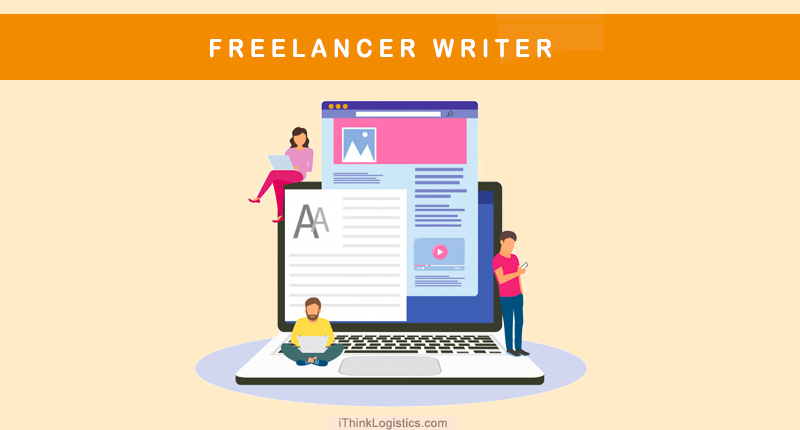
If you have a good grip on your writing skills, then this is the job for you. The demand for good web or SEO writers is on the higher side right now. And the best part? You can sit at home and get clients from ALL over the world.
Of course, you need to have a good grasp of grammar and current SEO knowledge to be able to fit into this job. You can work for clients, work on building your own brand, apply for copywriting works and many more.
You can sit in a cafe, or go on a country hop around the year. But remember, whenever you are opting for a writing job, you must have a good analyzing skill. You must do every bit of research that you need to do, to pin down just the right things.
Freelance content writing requires effort and dedication. Now AI has raised the stakes too for them. clients run any draft through an AI checker to confirm your work is original. Getting a loose end with this might lower your impression in front of your valuable clients.
Other than this, if you have expertise in any particular niche, you can sell your own e-book over amazon and other similar sites.
2. Advertising consultant
There are thousands of businesses across the world, who want to sell their products, but don’t know how to market it. If you have good knowledge of marketing strategies, you can definitely go for this home-based business.
You can start your own advertising consultancy and make it a good business option for you. There are a lot of companies who look for good advertising consultant. You can campaign your service and build your reputation among some of the big brands across the world.
Being an advertising consultant you can plan out creative and effective online campaigns for your clients. Proper platforms like social media, online apps, email newsletters, SEO are some of the most popular forms of marketing right now.
Helping brands to acquire business through these platforms can be a good business option for you.
3. Affiliate marketing
This is a good business that can bring you a good amount of money. Setting up an affiliate marketing program for different brands can get you a good amount of commission.
It is a process of promoting a product or service, where you get a commission every time the company gets sales from your end. From every sale that will be initiated from your personal blog or page, you will earn a percentage from that.
This is a convenient business option where all you need to have is a computer and an internet connection.
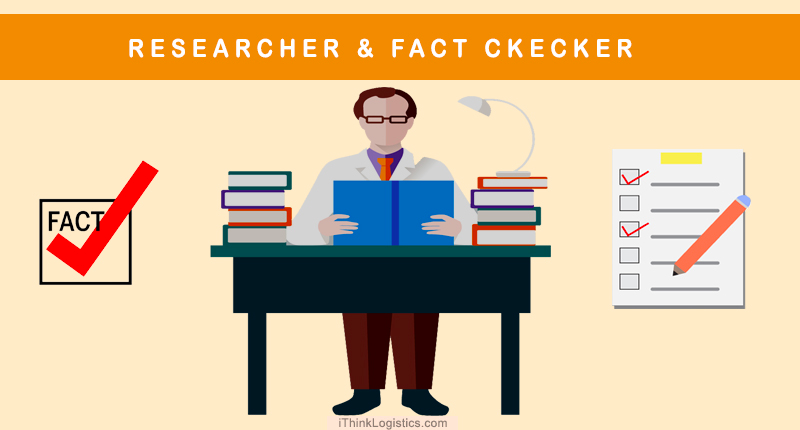
4. Researcher and Fact checker
The need for a proper researcher and fact-checker is vital than a business can realize.
Not every business understands that they need fact-checkers, but as meer, it might sound, properly researched facts are more than important to run a proper business.
You as a professional fact-checker that provides service to all sort of business professionals, scholars, academics, lawyers, etc and make people aware of the importance of the job.
This can be a really good profession. But you need to stay organized and open to communication. Lack of proper communication can lead to confusion, and you might lose potential clients.
5. Social Media expert
Yes. You heard it right. The platform that you are crazy about and scroll through the whole day can become a legitimate job for you.
All the famous business tycoons all across the globe spend thousands of bucks for marketing their product on social media.
People hire social media managers on a regular as well as a freelance basis to take care of their business page. If you know how to stay updated with brands and their competition, post relevant content and reply to customers properly, you can actually get 40% of your business from there.
So if you are familiar with a thing or two about social media marketer, then just ahead and get your name out there.
Trust us. It will be worth it.
6. YouTuber / Vlogger
You would be lying if you say that never in your life have you thought about leaving your job and becoming a YouTuber.
Being a massive superwoman fan myself, there was a time when I actually aspired to become a YouTuber and just forget about taking up any 9-5 jobs.
Well, I gradually ended up becoming a blogger. But If you are passionate enough to capture your own experiences, then go ahead. Make people fall in love with your experience sharing capabilities. Make your own youtube videos, become an influencer and make the best career for yourself.
Even though you can’t expect to earn money from the very first day, but this will help you to build your online presence.
You can put forward your platform as an advertising page and ask people to collab with you. This will eventually lead to money coming in and you will have a good authority established for yourself.
7. Graphic Designer
It is true that there are a lot of people who work as freelance graphic designers, but there are far more website designing and marketing companies that require graphics on a daily basis.
So if you are a designer with a creative mind, this field has an ample number of opportunities for you. Be creative enough with your business model and do something nobody else is doing.
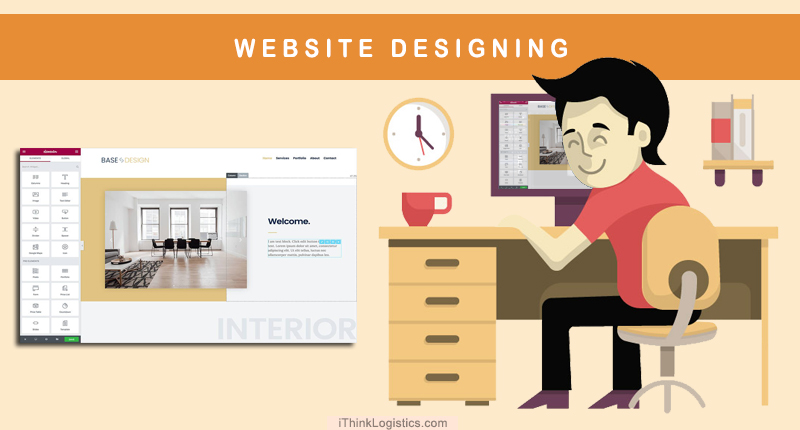
8. Freelancer Website DESIGNER
If you are a creative person with web design knowledge, then this is a wonderful job opportunity for you.
Either you can start your own company, or you can approach clients who need a website of their own and work as a freelancer.
This is a highly trending sector and you can market yourself through online advertisements.
Over time, you will have a good grip on the work and you will be able to create a strong identity as a website designer.
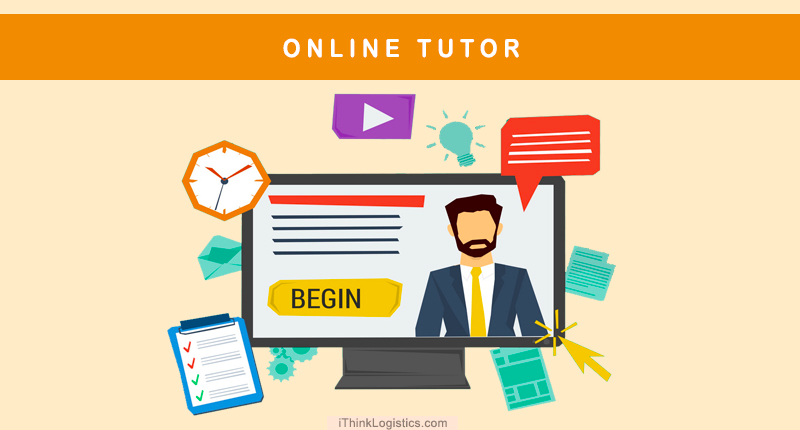
9. Online tutor
If you are someone who adores educating and have an interest in specific subjects, you can begin your very own online tutorial classes. With a small personalized classroom, you can sell online courses that will benefit hundreds of students across the country. There is a high demand for good quality notes and recommendations over the web. You can grab this opportunity and start with your own home-based source of income. You can undoubtedly support students via telephone or video communicators like Skype.
10. Data Entry
Well, this might not be the most lucrative job for you, but if you are a newbie trying to make it to foreign education by earning some bucks then data entry is really worth a try. By sitting in your own comfortable space you can start earning as much as you want. If you already own a good laptop, you’re pretty much all set.
11. Language Interpreter
If you know multiple languages, then this is the job on our list of home-based business ideas for you. As an interpreter or translator, you can support organizations and customers in various ways. You can interpret articles, official statements, digital books, or other composed work. You may likewise decipher recordings, digital broadcasts, or add to global shut inscriptions for an assortment of visual items. Additionally, you may interface with global organizations to serve as an interpreter for gatherings or provide over-the-phone interpreter services.
With involvement in more than one language and access to the web, you’ll be astounded about how expansive your home deciphering business can broaden.
12. Travel Planner
If you are a regular reviewer in sites like TripAdvisor and Yelp and are a well-traveled person yourself, then you might extend your travel expertise to others as a home-based travel planner. You can use your experience and help people to plan and book trips. You can help people in managing hotel reservations, flights, excursions, create itineraries, offer tailored recommendations and many more. You might even start a travel blog while you’re at it.
13. Phone Case Printing Business
There’s a huge growing market for mobile phone accessories and plenty of handmade sellers are earning thousands of bucks through this phone case printing business. The various sites that you come across on Facebook were at one point some individuals who decided to invest his/her time and money in this. So if you think you can do it, then you can definitely to look forward to establishing a successful business in the future.
14. Pet Sitter
Are you an animal lover? Then you can definitely try being a pet sitter.
Through this profession, you will get a lot of time to spend around animals and will also be able to help families who struggle to keep their pets in creches while going out for vacations. It’s an easy way to get paid, especially if you’re an organized and trustworthy individual with a reputation for or history of animal care.
15. Interior Decorator
Always love to keep things in their place? And have an eye for composition, organization, and feng shui?
You can start by contacting your local furniture stores and other shops and then gradually move on to get good deals, in designing apartments and other commercial interiors.
16. Event Planner
Are you the planner in your house for every social event? Do you love coordinating food, drinks, invitations etc? If that is so, then maybe you can take this talent of yours to the next level. Think about it. This can be a great home-based business idea. Start exploring and no one can stop you from being your own boss.
17. Photographer
Have a passion for photography? Then what are you waiting for? Take out that DSLR and start hitting the road. Hundreds of photographers all around the world are earning in millions with their photography business.
If you want to venture into this, you can market your services and look for clients who need professional photography for weddings, graduations, engagements, or other events.
Supply Chain Management (SCM) can be defined or expressed as the range of activities that are carried to maintain the flow of goods and services from vendors to its clients. This was the simplest way of putting the meaningtogether while anyone asks, is one of the most important operational aspects of every business today.
To explain further, Supply Chain Management circumscribes a broader range of activities that are inclined towards planning, controlling and executing a thorough process of acquiring raw/processed item and then distributing it to its users. This includes a chain of process or rather can be called stages that are connected and interdependent to maintain a balance between the demand and supply in a business.
SCM includes a broader area right from demand planning, production, sourcing, inventory management, transportation, and storage. Not to forget, returns of excess and defective products. The expansive complex of SCM is today fueled with most modern and advanced technologies simplifying operations and giving a steady hand to humans in progressing throughout the business goal.
Successful businesses rarely deny to the unmatchable benefits that can be leveraged through Supply Chain Management. Having a clear and focused idea of your inventory, the rate of demand and the future predictions can save you big times at managing the shelf life of your inventory while maintaining a steady flow of supply and demand.
The importance of keeping a close track of your supply chain can be well seen while making any hard and fast decision regarding the production line up, current inventory status, procurement and delivery of products. Having the right idea about your inventory and the current state of demand allows you to understand customer behavior and therefore take better decisions. Well, the first advantage comes in terms of fluent production at a lower cost of operation.
Now, it also makes it easier to catch the problems in the total supply chain and brings more transparency into the demand line up. That being said, with the evolution of eCommerce Logistics and market fluctuations across the globe, it is more crucial for businesses to focus on the steady flow of their supply and logistics transportation.
Understanding Supply Chain
A SCM involves layers or stages involving the entire life cycle of finished products right from the start until the item is delivered to its end users. Moving of the raw materials, maintaining the supply of raw material into the production line up, storing of the finished product, managing the inventory and then distributing the products to the customers.
The demand for the product in the market is all that drives the supply chain of a business. Imagine a business as a vehicle, the demand for the product/output keeps it running while you need to maintain the steady flow of fuel and deliver the product/passenger to its customer/destination. Now throughout the process of taking the order and then running up your business to supply to the demand are all interlinked together. The need for supply doesn’t come once while addressing a current consignment (demand).
So, for a particular business, the chain starts with noting down the demand and then extracting the raw material and preparing to process for the end product. In the process, the first supply comes into the picture where a business needs parts, spare parts and other necessary materials that are required to keep the production line up working. Here the business and the supplier remains interdependent upon the suppliers. The manufacturing stage requires certain extra materials like spare parts, additional materials, and other overheads.
On proceeding further, once the good is manufactured, the next stage of a supply chain is storge. Company warehouses or private warehouses is a common way of managing your end products before finally sending it to its end users. This adds up to a total of three stages of supply for addressing a particular demand.
Now to make it more cost-efficient and maintain an effective flow right from the point of origin till the product is shipped out, supply chain management comes into the picture. Now that you have the basic blueprint of the supply chain, let’s move ahead to understand more on Supply Chain Management.
SCM Concepts and How to Manage Supply Chain
The concept of Supply Chain Management was not too far until the global business started growing and business started on understanding the need for marking a command on to their customer service. As trade flourished and business started growing across the globe, demand started to rise high. That being said, enterprises started to look for more resources to keep the business up and running to meet the demand. Either this or the market rivalry pull you down. This consequently resulted in emerging suppliers that also resulted in making the supply market more demanding and the loop continues to grow since 1990.
The concept of Supply Chain Management was clear right from its incursion that demands upstream and downstream management of the material flow, final products, and information among four major entities, namely the supplier, company, resellers, and end-users. The basic principle upon which SCM depends include,
Segregating customers based on their product needs and then making the supply chain stages adapted to each group maintaining the business flow.
It’s a great weapon to strategically place the logistics network for the most profitable group of customers gaining more traction.
Demand planning results in the best when merged with active predictive analytics.
Listening to market signals carefully to utilize profitable opportunities for managing the supply of raw materials is a skill that is needed.
The threat of supplier has to be reduced keeping the options wide and acceptable. This will indeed result in giving opportunities to bargain and therefore keep the overall supply cost at its minimum.
Gathering and storing relevant and up to date information about the current state of inventory, customer demand, upcoming marketing surge is highly crucial, playing a major role in decision making.
Deliver the right product while having a return policy for the customers. This is a much-needed policy to be kept for managing the supply chain of any eCommerce business.
Supply chain management cannot be the job of any single person in the organization. Many hands and minds are needed to work in steady synchronism throughout the process to develop an adequate sense to manage the supply and logistics needs. Though addressing all the segments more efficiently could have never been possible with advanced analytical and technological support.
Importance of Supply Chain Management
It has been since 1990 that business leaders have confronted to the need and significance of Supply Chain Management, as being an integral part of the business. Among the most noted and easily derived importance that SCM serves to include,
Boosting your customer service level
Business maintaining a proper SCM structure delivers the quality product with correct assortment. Believe me, people trust a brand who delivers as promised.
Efficient knowledge of your supply chain helps in managing the logistics well enough. This makes it deliver the product to the customer right on time.
It is not unlikely that all the products that are being delivered will be perfect. Sometimes it happens that faulty products or extra items need to be returned as packaged back to the seller. Efficient SCM ensures your after-sale support and helps in retaining your customers.
Reducing Operations cost
Holding costs for suppliers has always been an issue as it increases the overhead investment into the business and also reduces the chances of clearing the current stock while aiming for fresher ones. So, efficient supply and demand chain management ensures that the flow of goods and items are properly carried without the chances of getting stagnant. This results in a reduced overall operational cost.
Selecting the right supplier and managing to drive in quality resources reduces the production cost. As spare parts and raw materials supplied to the business is of the best quality, chances of overheads are reduced. Also, an efficient and productive supply chain ensures that the raw materials are supplied to the production line up at times of high demand, therefore, engaging in better production performance.
Efficient supply chain, therefore, improves the overall financial position of the business. Saving at least a dollar in any bulk packaging shipments can result in a huge income of profit in the overall.
Improving the overall operational performance
When the supply of raw material is fast and is done right on time, the performance of the operation increases. Effective supply chain management ensures that the flow of input and output of a business is steady and not much hindrance is forged into the process.
Also, as the overheads get reduced, more amount of finished products can be made from the same amount of raw material and supplied to the customers. This results in better customer retention and therefore increase in the brand value.
The benefits and perks that can be leveraged from a successfully incorporated Supply Chain Management structure are not yet over. Proper implementation of human resource and technology at every stage of the product life cycle makes it easier to enhance the business’s approach towards delivering better quality products.
How Supply Chain Works and Main Function Of Supply Chain Management
The functionality of any business’s supply chain can be best explained through understanding their product life cycle right from the supply of raw material to the distribution of end products. Though the scenario may vary based on the industry, the basic concept remains the same. Let’s take an example of any garment like Zara to draw a picture of all the important stages of the Supply chain.
For Zara, the initial steps start with procuring the raw materials or fabrics (only in 4 different colors) that are cut and designed in-house. This is the first stage of supply. All the suppliers are near the fast and efficient delivery of raw materials.
The designed and tailored clothes are then rolled out to the manufacturing unit where the apparels are ironed, tagged and packed. Overnight trucks and logistics support to deliver the products within the country and freights are assigned to ship the consignments across other countries. This explains the third stage of the supply chain when the end products reach to various retails outlets and then to the end-users.
Next, to this, the last stage that needs to be kept in mind is the after-sales service to the customers. This might include a return of excess or defective products that are then shipped back to Zara’s in-house team. This was the last stage of the supply chain and the cycle continues.
Now at every stage, the information and data for the supplies, use of resources and shipment of packages to different customers plays an important role in understanding the behavior of the supply and demand that the business has at any given time. The major functions that are played by supply chain management are,
Integration
The crux part of your supply chain would be the integration process which is meant to coordinate and communicate to support efficient workflow and derive timely results. This function includes the involvement of vivid technology platform or software that facilitates communication among the entire chain of entities involved in the supply chain. The goal is to keep constant communication and keep updated data on procurements, utilization, and deliveries of consignments.
Operations
Supply chain plays a key role in the overall business operations that happen day-to-day in the business. The daily supplies and production rates are all dependent on supply chain efficiency. Also, these functions deal with having a clear knowledge of the inventory and understand the current marketing fluctuations to order or stock up the inventory for further operations.
Purchasing
Making critical decisions on raw material procurement, taking down orders, or managing purchases becomes more difficult if you do not have a clear idea of the current data on the supply chain scenario. Supply chain management plays its next function here. It readily supports decision making and facilities better management of procurements, purchases, and deliveries.
Distribution
Businesses that need to maintain a business relationship with their wholesalers, retailers, and customers need to manage their logistics. The last broader function that SCM plays is in managing logistics and distribution.
Today advanced analytical software or intelligent platforms are doing most of the job of data keeping and managing a humongous part of the business operations. You just need to sit back and keep an eye on the reports that this software prepares and plan accordingly.
The Basics of Supply Chain Management Processes
So, here we are. We have learned about the supply chain, how it works, its functions and have proved its significance in running an efficient business operation. Now, a simple brush up on the basics of supply chain management. As stated by Lambert and Cooper, any successful supply chain management process involves changing over from managing a single individual process to integrating management into the entire supply chain process. The basic key process of a supply chain include,
Customer-relationship management
Demand-management style
Customer-service management
Manufacturing-flow management
Fulfilling orders
Product development and commercialization
Supplier-relationship management
Returns management
Now every process is unique in its terms but plays a combined role in integrating supply chain management into the supply chain of the business. Therefore to sum up the basic stages that are involved in a supply chain management process, the model includes,
Plan
Source
Make
Deliver
Return
Building up an efficient chain of operations that includes a fast flow of resources into the business, manage suppliers, manufacture the products, deliver them at the right time to the customers and also managing the return policies. However, it all starts with enterprise resource planning and comprehending the threats of suppliers and buyers in the market (Porter’s Five Force analysis).
Managing Supplier Relationships
With the evolution of supply chain management, another popular term came into reference, i.e. Supplier relationship management (SRM). SRM can be defined as a systematic approach towards managing, driving and maintaining constant terms with the suppliers. This depends on the market of operation. Accessing the suppliers, their contribution to the business as a stakeholder, and developing a sound strategy to maximize on the supplier’s performance.
The definition of SRM varies from business to business and across multiple industries based on the requirement and availability of suppliers. The typical objective of implementing SRM into the business operation is to maintain a streamlined business process between you and the supplier. This results in a mutually beneficial relationship with the supplier who is at the forefront of supplying fast, less expensive and quality products to the business.
Four Elements of Supply Chain Management
The sequence of processes that constitutes the supply chain needs to be included in the altogether while planning for supply chain management to give the optimum result. It is important to manufacture the product and distribute it to the customer. The more a product stays in the warehouse, more are the chances of losing the shelf life of the good. So, never fail to pay attention to the four crucial elements of supply chain management that includes,
Integration of the framework into the supply chain process
Long term success is always a prior goal for every business. And the only best way to achieve it is through effective planning way ahead. Similarly, the first major element of a successful supply chain management is planning for the integration of the new measures into the business and successfully integrating them. This must be justified with an efficient flow of communication and collaboration between all the entities involved in the entire supply chain of the enterprise.
Supply chain operations
Not along a planned framework would contribute to a successful supply chain management. Efficient day to day operations proves to be the backbone of the entire system. Today modern operations are more addressed towards the changing market scenarios and business have found a way to keep up their business operations through lean management. All together they add up to the second important element of supply chain management.
Deciding on the suppliers/sources
Obviously, your business operations and planning would not work without the proper flow of production. Managing the suppliers is another major entity that deals with confronting the suppliers and ensuring that the best of materials, raw products, and goods are constantly supplied to the business to ensure proper running of the business.
Distributing the business commodities
The next major element of a successful supply chain management is distribution. After a product ends up on the shelves of the shops or outlets, the final distribution to the end users estimates the demand for the product in the market. An adaptable and efficient distribution network ensures that the products are not kept stagnant in the warehouse thereby reducing the overall operational cost.
Supply Chain Risk Management
Risk is associated with every sector of business and forms an unexpected and inevitable occurring that can pull down any business from its current state of success. It is crucial to address risk keeping at higher priority as they can turn the game within a moment. Supply chain involves all major functions in business thereby encompassing a range of risks and challenges. Here is a list of 10 major challenges that today hinders the progress of any successful chain management.
Based on many expert reports and worldwide surveys, the potential ways of mitigating the risks or at least keep the management aware and prepared for any unexpected challenges down the road.
Knowing your potential suppliers in the market.
Make sure that the right resources and materials are supplied to you.
Pay for what exactly you have received.
Prevent or resolve disputes with your suppliers effectively. They might come in handy at times of need.
A Better Way to Manage Supply Chain & Manufacturing Operations
In regards to locating a better alternative for managing the supply chain, it is essential to start adopting a plan that is demand-driven and based on a robust business model. With real-time insights and demand assessment, the entire view and effectual responses to risks can be mitigated and ensured at the same time. The potential threats of suppliers running out of business, political disturbances, natural disasters, and manufacturing fluctuations can be curbed with proper adjustment done for pricing and promotion strategies.
The following step to the aforementioned would be adapting to an agile supply chain that connects with quick planning and collaborative integration of the same. With the executives having a broader understanding of the market demand, and the possible risks, they will be proficient in familiarizing themselves with the current market opportunities in the supply chain.
Careers in Supply Chain Management
With the rising demand for supply chain management and its associative robust functionality with the logistics industry, the growth is even more prospective from the career angle. Based on current statistics of career opportunities in supply chain management, almost 68% of the fresher and experienced candidates are playing important designated roles in various sects of the logistics industry.
To attain a career in SCM, the basic educational qualification that is required is a bachelor’s degree. For higher positions, employers will seek a professional or master’s degree.
The candidates who have just passed out or in their last year of graduation can also opt for having a career iin this field by enrolling for internship opportunities and would have a first-hand experience of the field. Apart from these, there are also degree programs in logistics and supply chain management.
The Future of Supply Chain Management
Digitization is one of the foremost things that come in the discussion while predicting the future of supply chain management. With artificial intelligence and more advanced technologies to be introduced in SCM for the coming future, the overall structure of this industry is going to be even faster-paced, vigorously competitive, and an omnichannel business environment.
Conclusion
The dynamics of the supply chain management is going to be revolutionized with such technologies coming in that focuses on maintaining data accuracy, transparency, and flexibility. Manual errors, delay processes and faulty in supply chain ledgers are no more in the present or future pages of this industry. Potential market risks are being combated in proficient ways and the linear equations of a wide-spreading circular supply chain is an indeed prospective visualization for the future.
In this digital era, most people prefer making their purchases through e-commerce sites such as Snapdeal, Amazon, Flipkart, etc. Customers are addicted to online shopping because of fast delivery, quick access, heavy discounts, and feasible payment options. People are more than comfortable purchasing their favourite items just at the click of a mouse or through their mobile phones! So if you are a business owner who wants to become a Flipkart seller, then this blog is just for you.
Here, we are going to show you how to create your own seller account in a STEP by STEP process.
So without further delay, let’s get started.
AStep By Step Guide on How to become a Flipkart Seller
Step 1
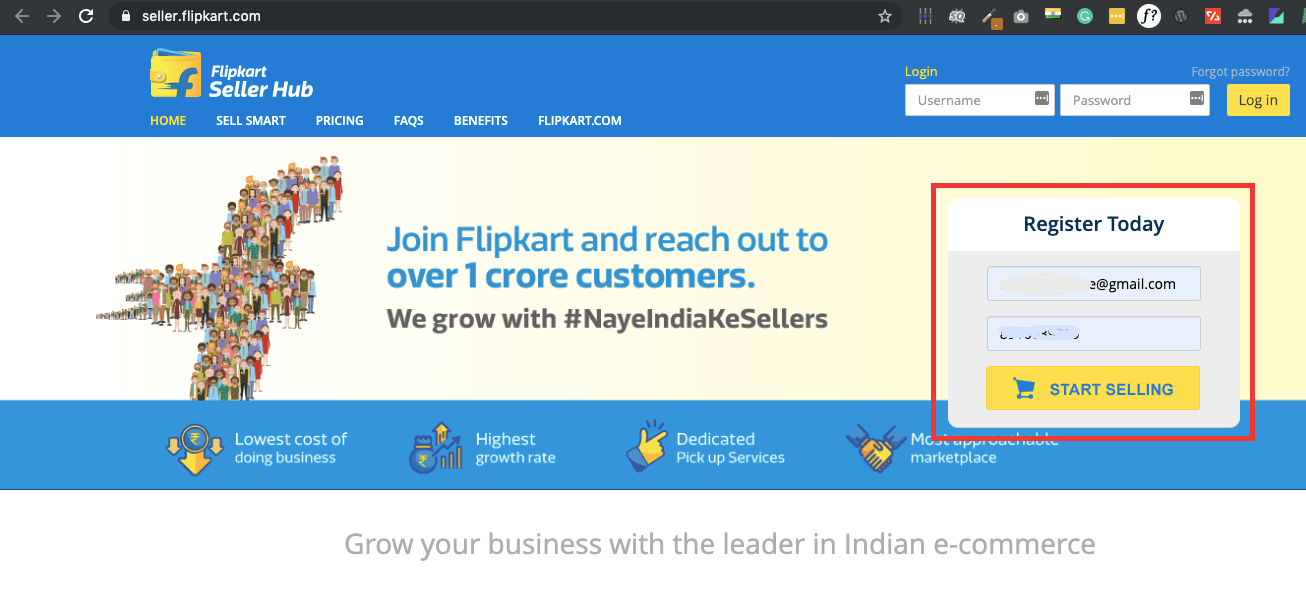
Go to seller.flipkart.com. A similar panel will appear. Go to the section of “Register Today”. Click on “Start Selling”.
Step 2
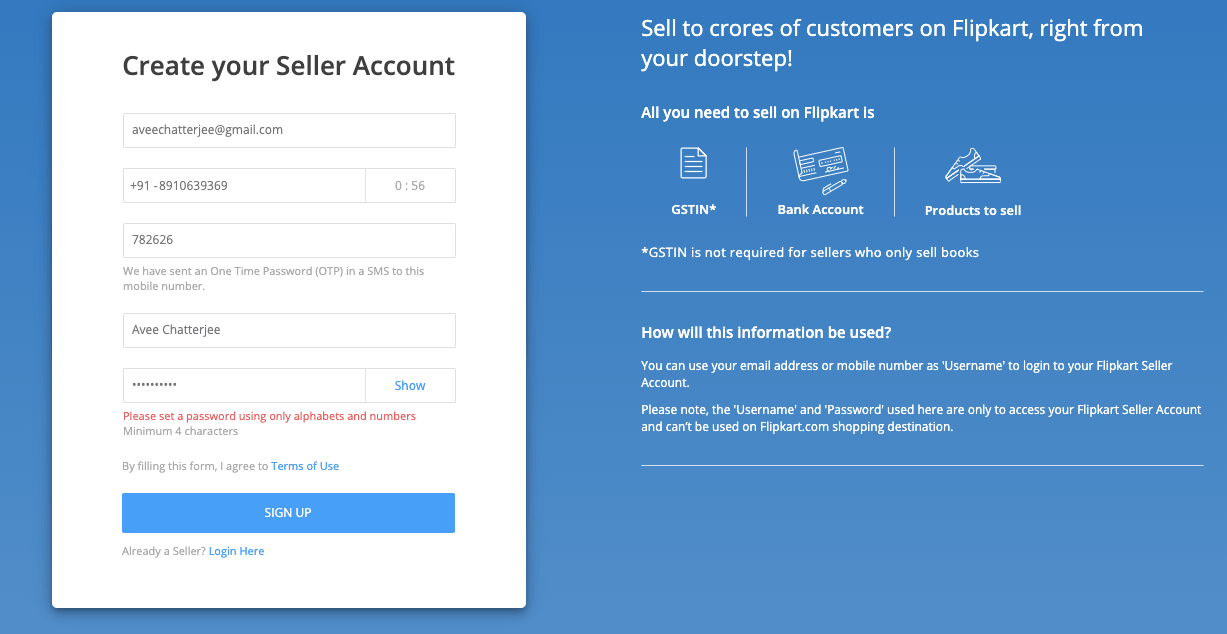
Once you do that, you will be redirected to a page similar to the one given below. Fill in all the necessary details on the seller account form and click on “Sign Up”.
Step 3
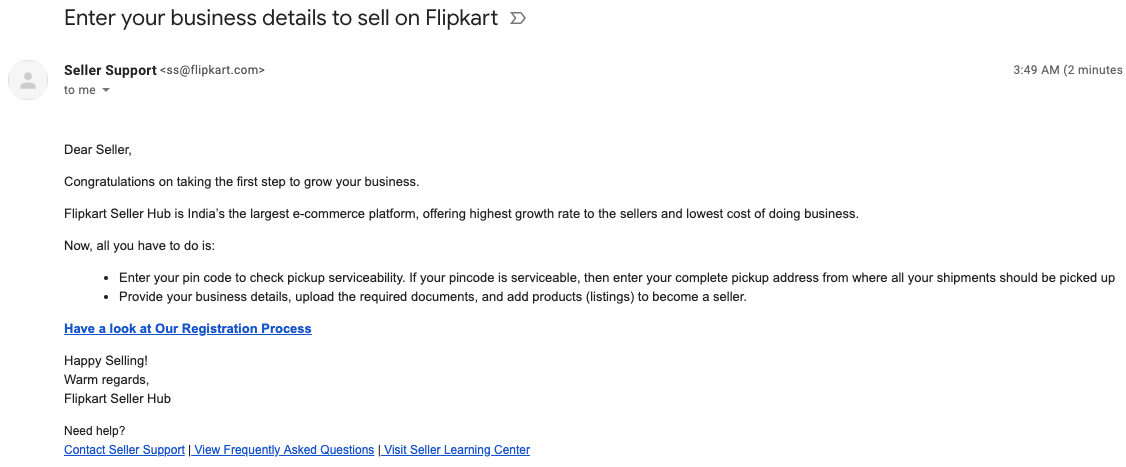
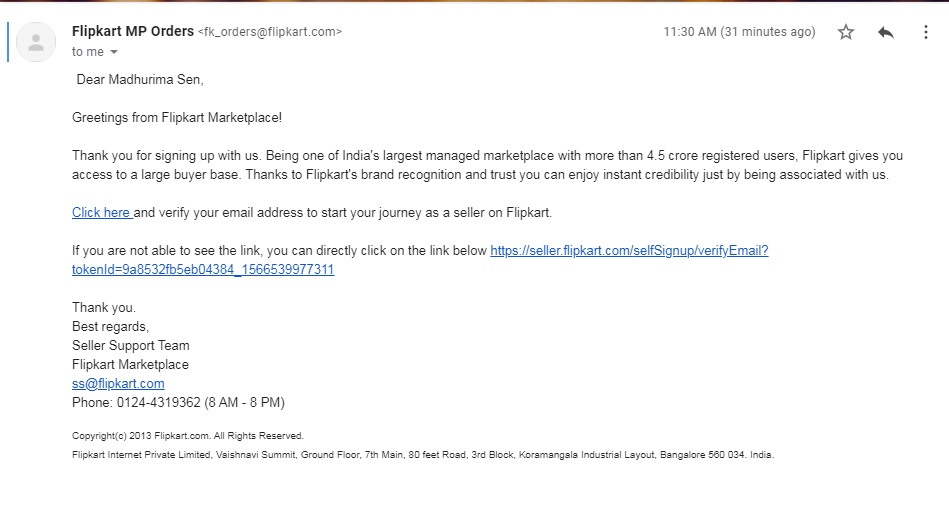
Once you enter the details, you will be receiving an email similar to the one given below. This means you have successfully registered yourself with Flipkart. Now move forward to the next step.
Step 4
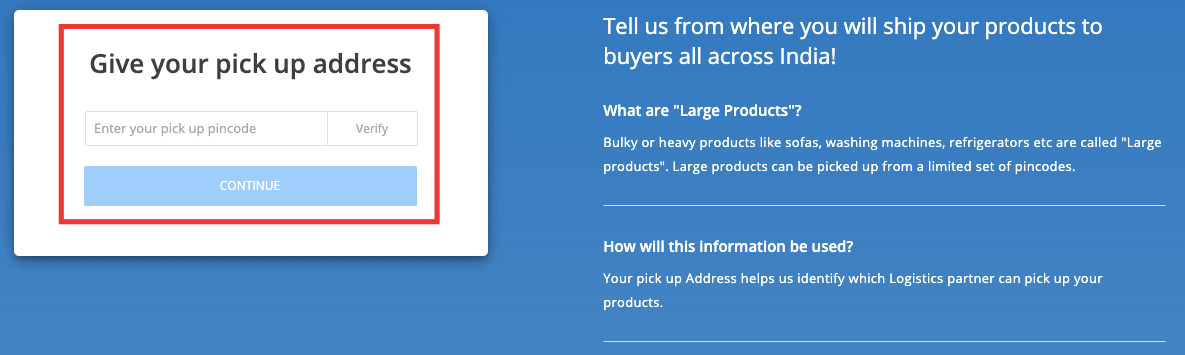
After you complete step 2, you will see a page similar to this. Enter Your pin code and click on “verify”. After pin code verification you will have to enter your pick up address. Once you do that, click on “Continue”.
Step 5
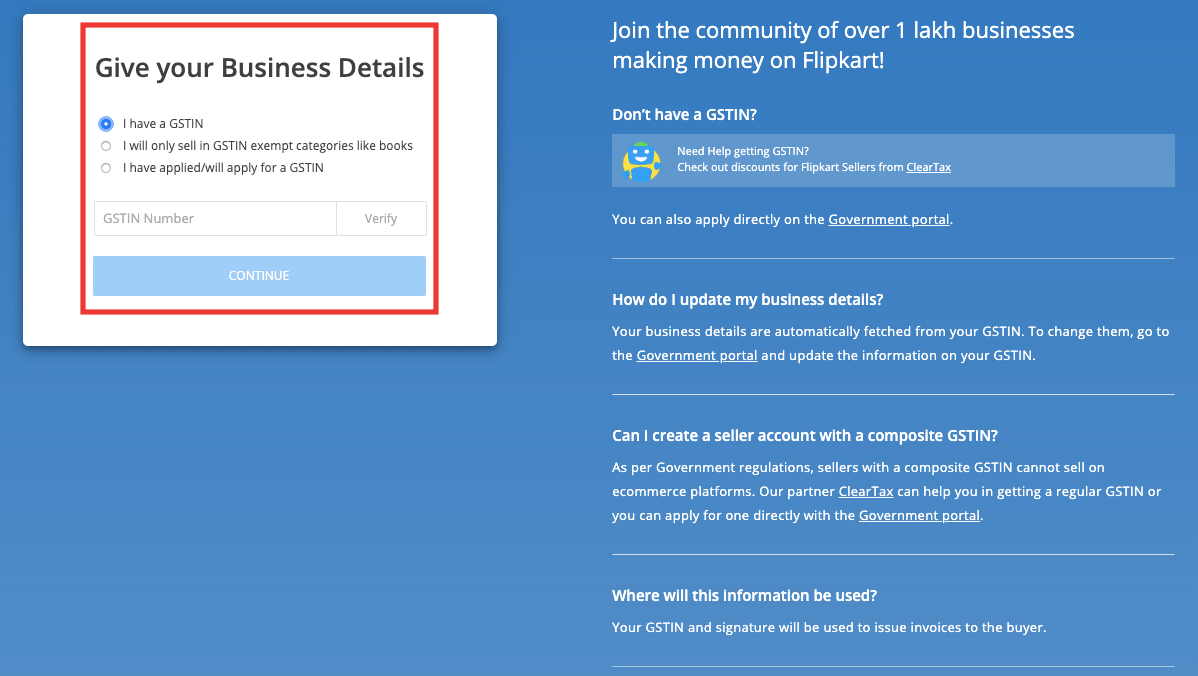
Then you have to enter your business details and select your convenient Option. Click on “continue”
Step 6
You will then be redirected to the bank page. Select on your convenient option and click “continue”
Step 7
You will receive a similar verification mail. Verify your email and get started with your online selling.
Step 8
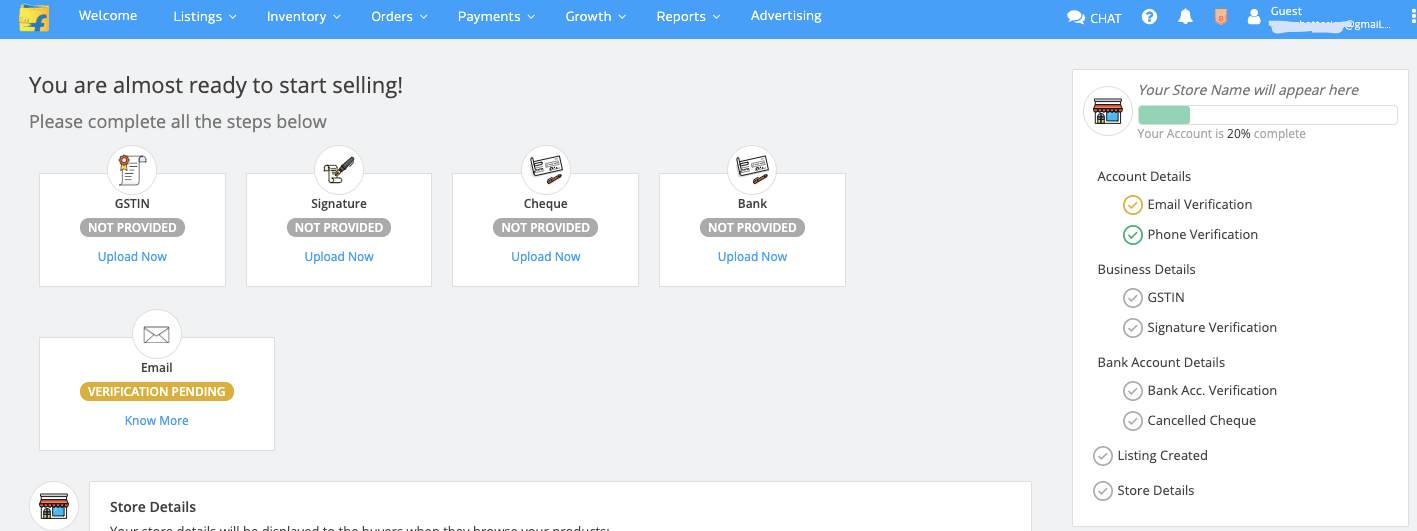
After you verify your account, you will be redirected to this page.
Step 9
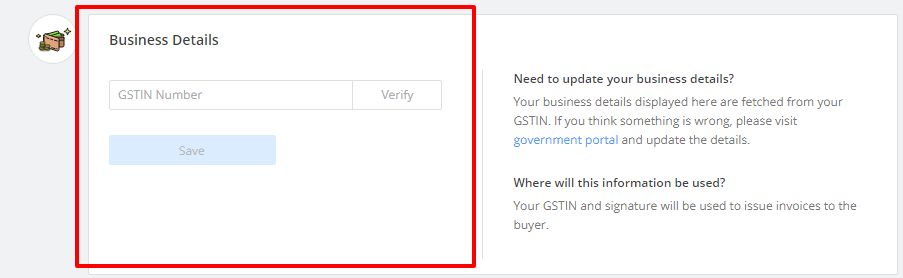
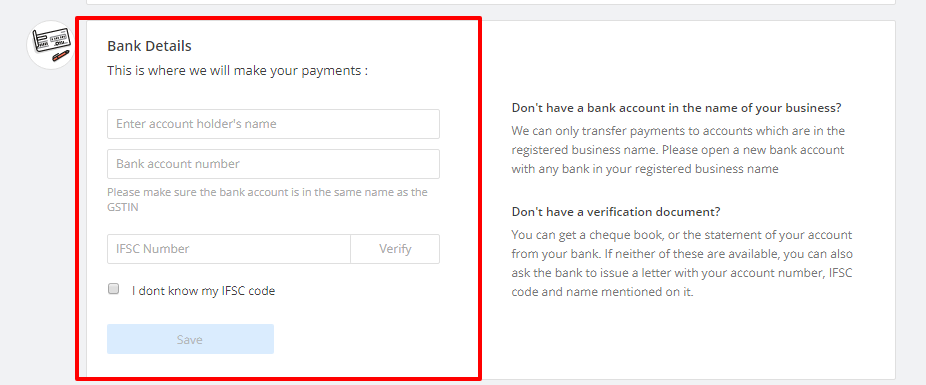
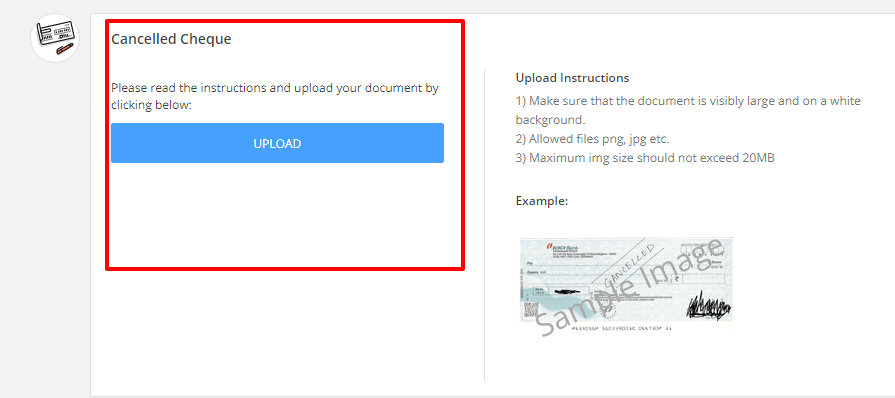
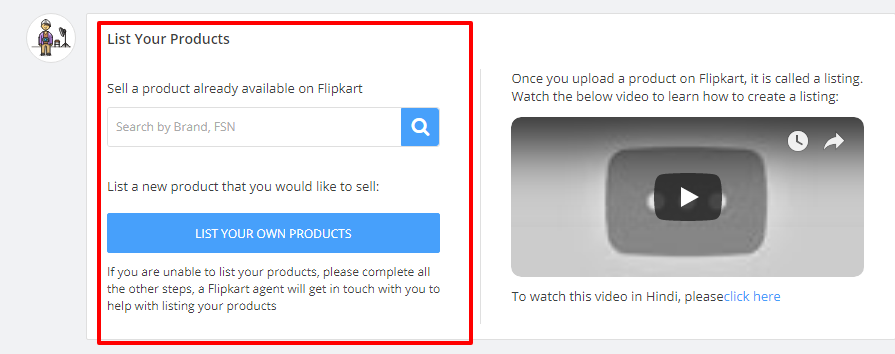
Fill up these categories and move on to the next step. Upload a scanned copy of every document as well.
Fill up the name of your store
2. Your Business Details
3. Your Virtual Signature
4. Your Bank Details
5. A photo of a cancelled cheque
6. List of products you want to sell.
Step 10
That’s it! You are done. Once you provide the details, you will be officially eligible to sell products on Flipkart.
Once done, you can start listing your products as per your business.
Step 1
Click on Listing. A dropdown will appear. Click on “My listing”
Step 2
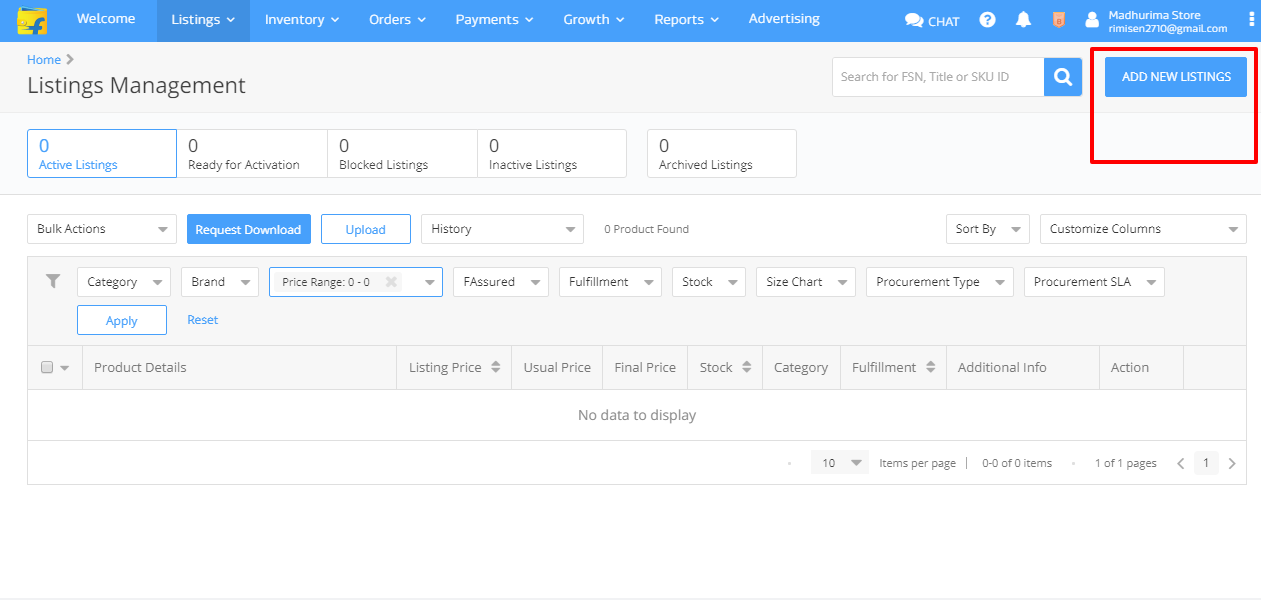
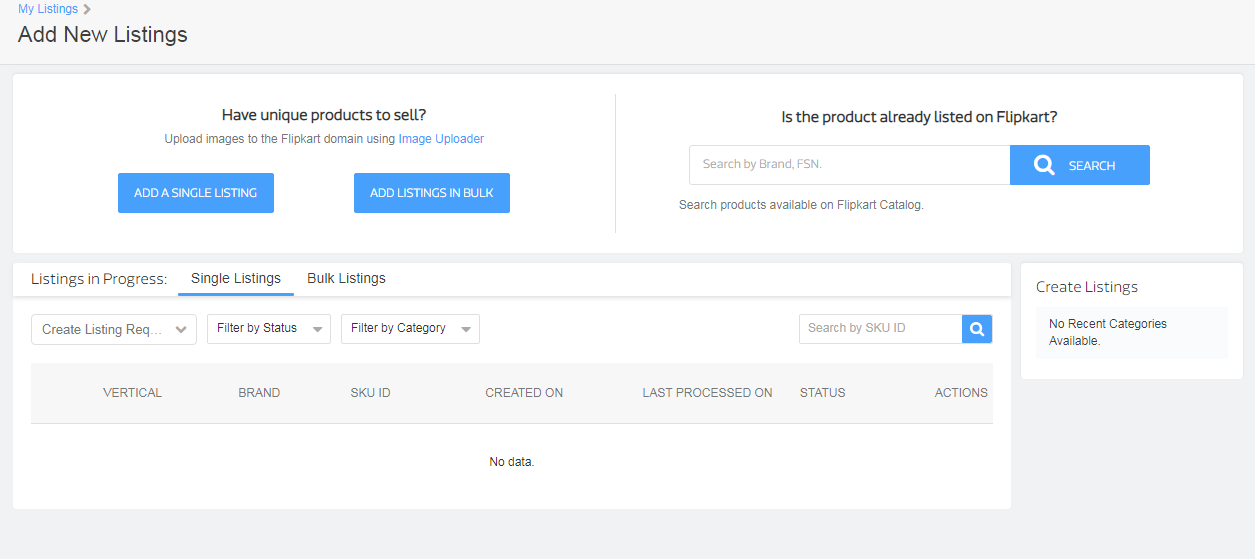
You will be redirected to a page that will look something like this. Click on “Add New Listings”
Step 3
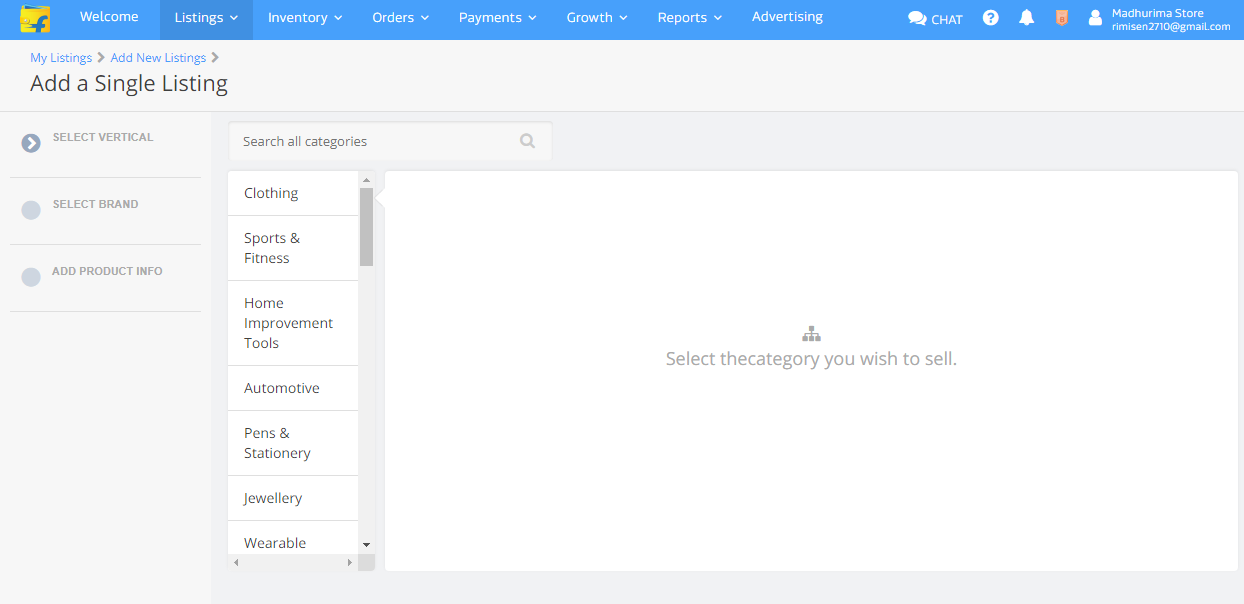
Once you click on that, a similar page will appear. You can upload an individual product or you can upload products in bulk.
Step 4
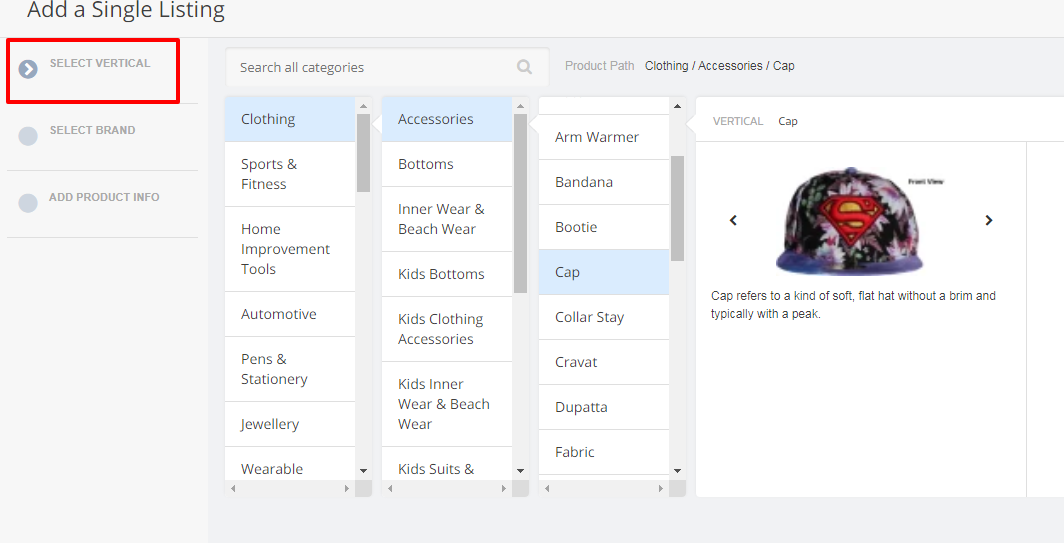
If you click on a single listing, you will be redirected to
For Single product
Select your desired product category, gradually move on to selecting the brand and then provide your product info.
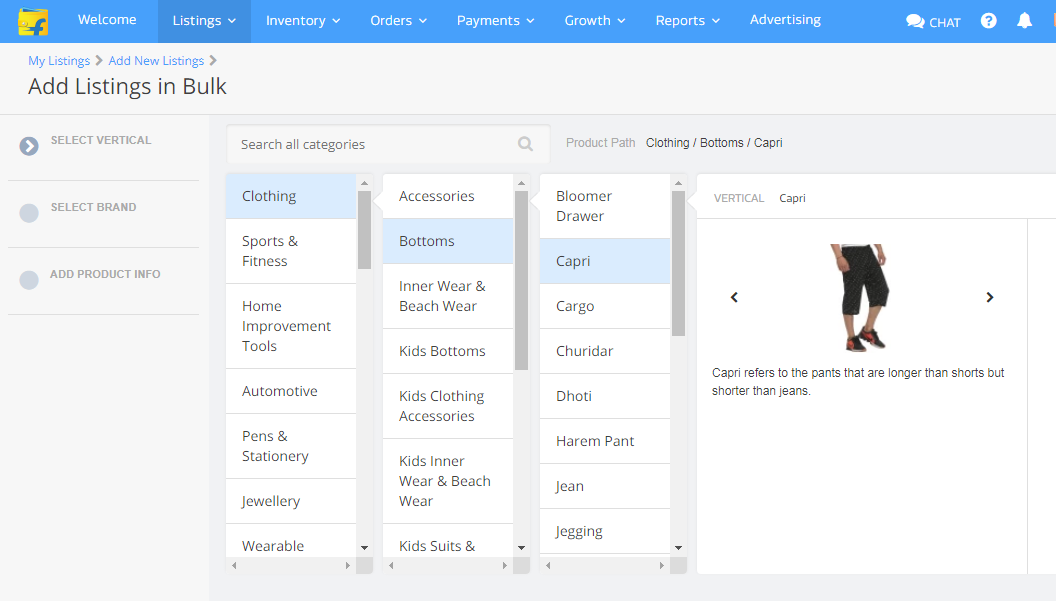
For Bulk Product
For the bulk listing, you have to follow the same procedure
Step 5
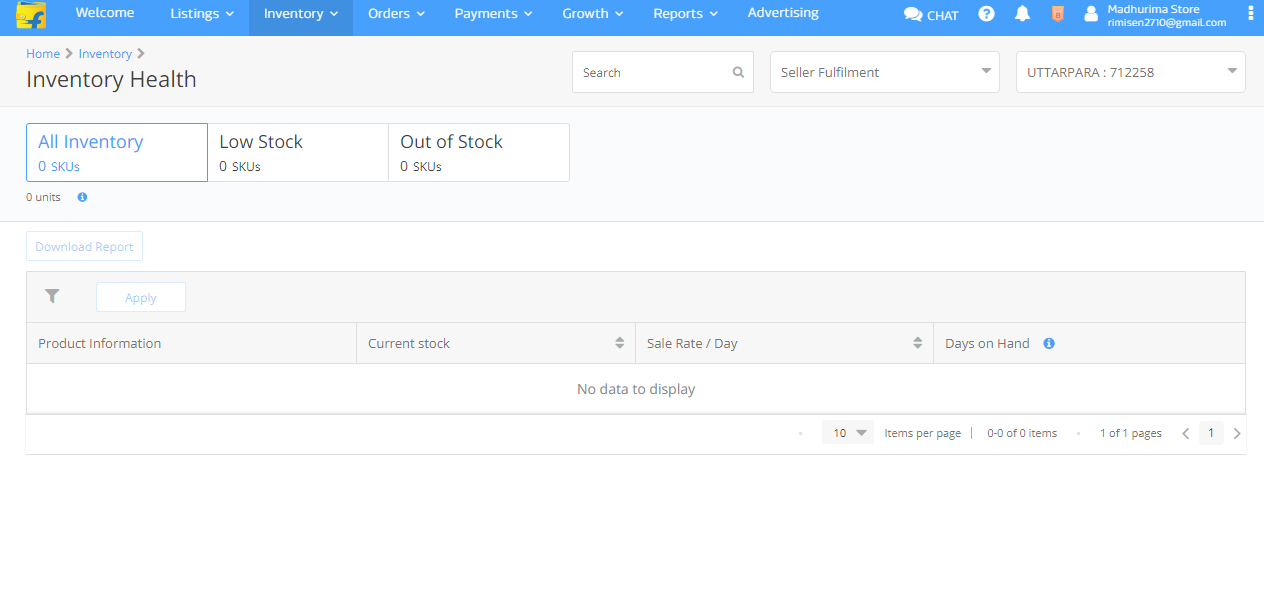
After the product is uploaded, you can check your inventory, by clicking on the “check Inventory Health”. You will be redirected to this page.
Tracking Orders in Flipkart
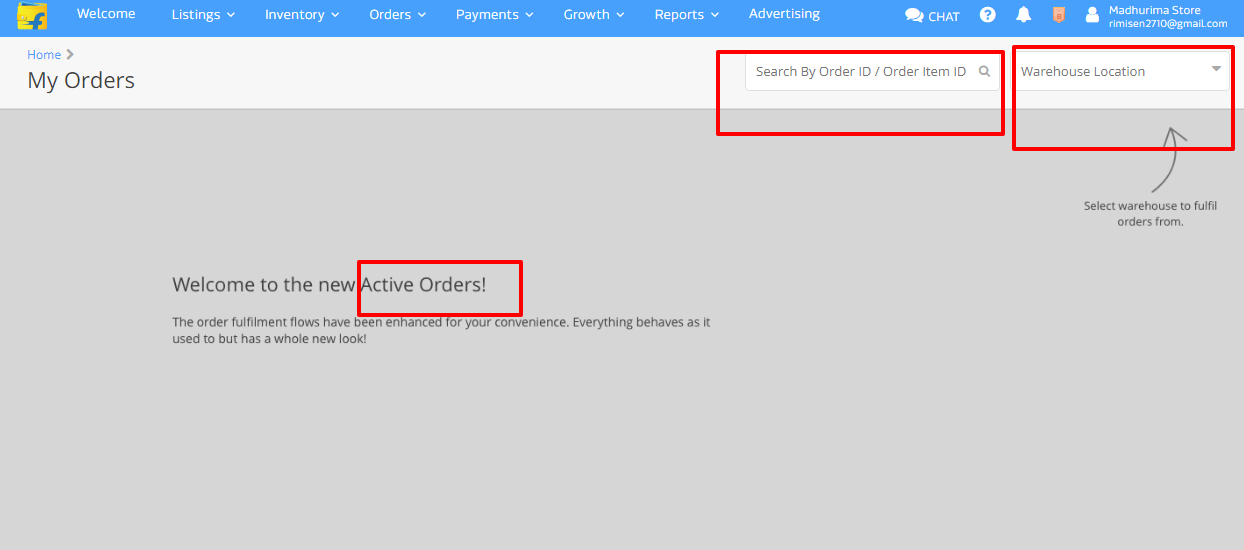
Once you start getting customers through Flipkart, you can check your order status. Go to the “Order” section and you can see your:
Active orders. You can check your orders through the warehouse location as well as by entering order ID.
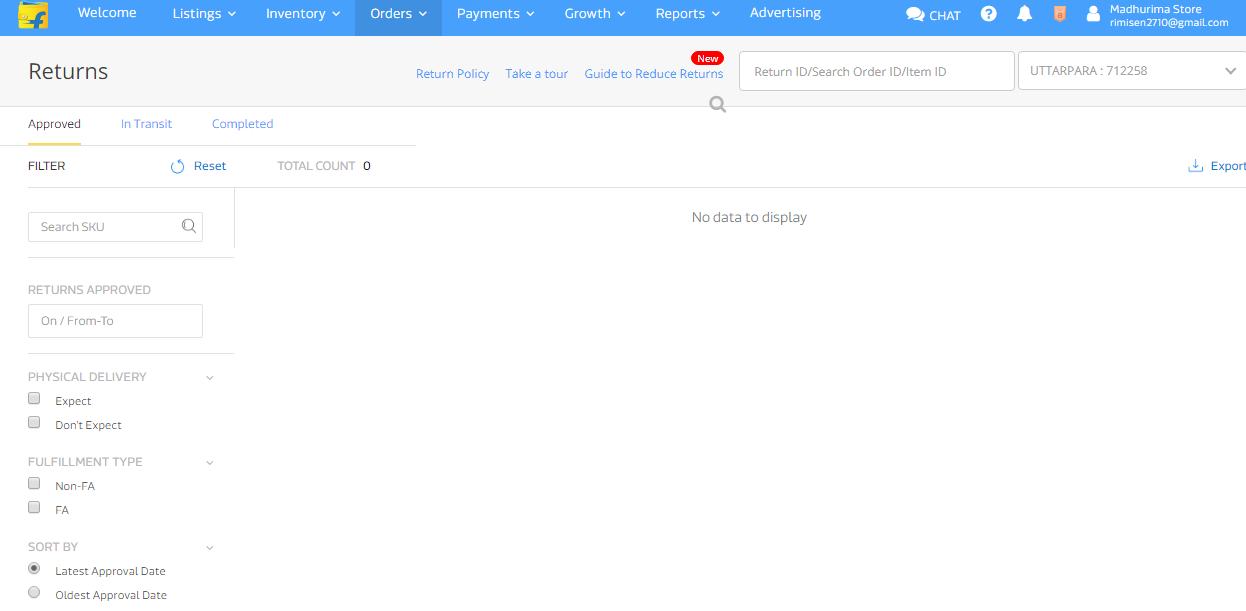
Your Returns. You can check your returns by clicking on the return tab. You will be able to see a page like this.
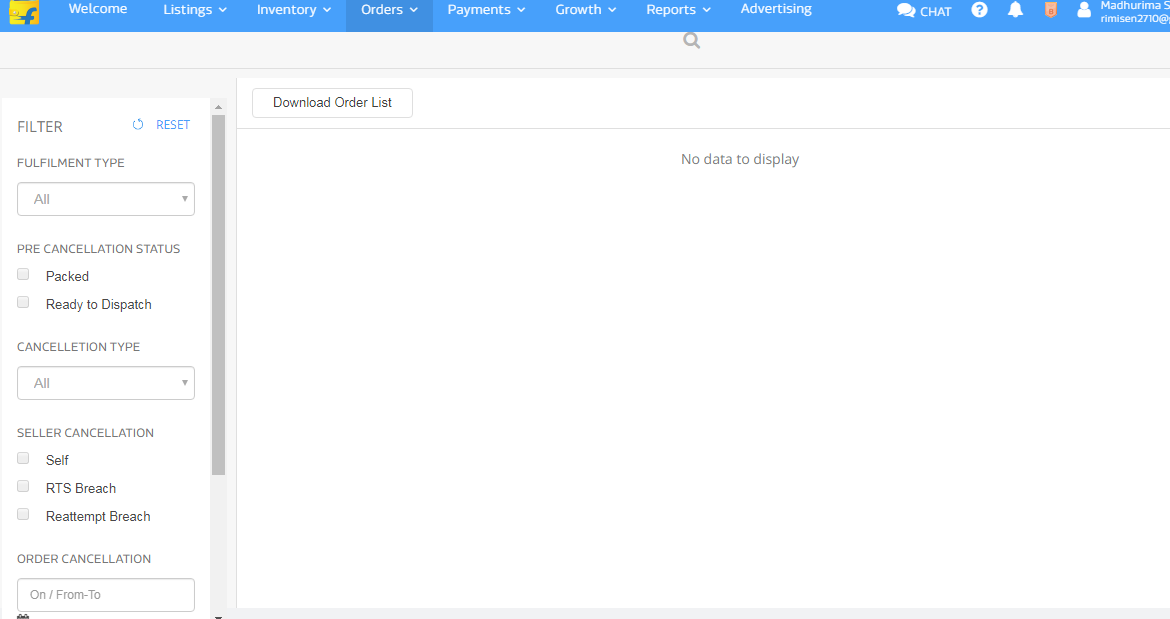
Your Cancellations. Check your canceled orders from the cancellation tab.
Understanding the Payment Dashboard
The Effect of the Digital Era
With the e-commerce sector growing at a massive rate, the customers no longer need to hop from one store to another to find what they need. It is needless to say that the e-commerce industry is booming like never before. Thousands of people are switching to online shopping from the conventional way of shopping because of the benefits. Customers are even purchasing important everyday items such as groceries, medicines, electronics, etc. online. This leaves plenty of scope for sellers who want to make the most of these online platforms.
One of the leading e-commerce sites these days is undoubtedly Flipkart. With a wide array of products and attractive rebates on their products, the company managed to serve around 2.6 crores of registered users in the financial year 2013 to 2014. In 2016, this market-leading e-commerce store sold products for around $2.4 billion. What more? This diverse company ships over 50 lakhs parcel in 30 days and get around 80 lakhs page visits regularly.
One of the best qualities of Flipkart is that it has been there since 2007 and hence, is trusted by both customers as well as sellers and the company manages to deliver to even remote places.
So, if you want to dig into this great platform, or explore Flipkart for selling your unique items, then this is the right blog for you. For a seller, Flipkart is certainly the best bet.
Becoming a seller on Flipkart
Don’t worry as we have got you covered. In this blog, you will get detailed guidance that will help you become a Flipkart seller. Please scroll down to know more.
So whether you want to sell lifestyle goods, electronics or fashion apparel, Flipkart is the right choice for you because your products would be seen by so many prospective customers.
Advantages of becoming a Flipkart seller
If you sell on Flipkart as a partnership firm, then you can sell a wide variety of goods and you have the chance to sell more.
Secondly, buyers can even pre-book the items.
Your customers would get the products on time, thus, you will be on their good books.
You can attract your customers through lucrative combo offers or discounts.
You can optimize your earnings potential.
There are other reasons as well, about which we will talk later in this blog.
As of now, let us discuss the steps that are needed to start your business on this site.
Here are the steps you need to go through to start selling on Flipkart. Pay heed to the following points as you need to complete every step to start your business. Do not skip any step. Take a look.
Information Required for Selling on Flipkart
So if you are keen to make the most of selling on Flipkart, then you need to sign up on the Flipkart Seller Registration homepage. It is quite an easy process. You can sign up here by providing some basic information such as name, e-mail address, phone number, business address, business registration deeds, products you want to sell on Flipkart, bank details along with supporting KYC documents, GSTIN registration documents, etc. You have to prove that you are an original and active business entity.
Once you have furnished and met the requirements of providing your information, it is time for you to give them other important information related to your business.
Business Information for Selling on Flipkart
You can sell as a sole proprietorship company or as a private limited company – it all depends on your choice. There are other choices as well, about which we will mention below. Let us enlighten you about the same.
If you are selling on your name, then it would be automatically perceived as a Sole Proprietorship business, which means that it is not easily transferable, the business cannot have partners or investors, does not provide limited liability protection to the promoter, is not really scalable and also has restricted ability to get bank loans.
If you choose this mode, then you have to provide certain documents such as identity proof, bank account statement that is registered on the Flipkart payment gateway, PAN card, passport, Voters ID, Drivers License, any other photo ID card, a letter from a significant Public Authority or Public Servant verifying identity.
For address proof, you can give a telephone bill that is in the name of the Proprietorship firm, an electricity bill in the name of the Proprietorship firm, a bank account statement which is in the name of the Proprietorship firm, the letter from the employer, ration card, lease or license agreement or letter from a significant Public Authority or Public Servant verifying identity.
Flipkart as a Private Limited Company
This mode provides limited liability protection to promoters, allows easy transferability, you can take partners or investors if you want, allows fast scale-up of operations, etc.
For the same, you need to provide identity proof such as a copy of Certificate of Incorporation of Private Limited Company, copy of Memorandum of Association, company PAN card and address proof such as company phone bill, the electricity bill of company, lease or rental agreement, etc. This is a more favoured method of selling on Flipkart. Most sellers opt for this way because of its various benefits.
You can also sell on Flipkart as an LLP or Partnership Firm.
Nevertheless, it is suggested to register an LLP (Limited Liability Partnership) while you sign as a Flipkart seller. This would work in your favour as the same provides limited liability protection, easy transferability, different legal entity and other documents needed to sell on Flipkart. Identity proof required for the same includes partnership registration or LLP Incorporation Certificate, partnership deed, power of attorney given to a partner or an employee of the LLP or partnership firm to transact, PAN Card of the partnership firm or the LLP, a document identifying partners and the individual holding the Power of Attorney with their photographs.
Moreover, you will also have to furnish your address proof which can be firm or partner’s telephone bill and electricity bill, any valid document confirming the address of the partners and the person holding the Power of Attorney, lease or rental agreement, company electricity bill, etc. This is also a great way of becoming aFlipkart seller.
Lastly, you must know about selling on Flipkart as a Trust & Foundation.
If you want to sell on Flipkart as Trust & Foundation, then you need to furnish documents that will prove the legal identity of the Trust/ Foundation and the address of the same.
Register for Taxation
Once you have registered a Flipkart Seller Account, you have to specify the type of business you want you run. And after that, you need to submit the following things:
Business Name
PAN
TIN
TAN
Name of the bank
Bank account number
IFSC code of the bank
Start to Sell on Flipkart
After all these procedures are completed correctly, you can start with your business. If you are serious, you can earn quite a handsome amount from it.
You need to list your products for creating a Seller account. The platform even gives you the option to upload pictures of your products so that the customers get a vivid idea of the same. You also need to update the price and stock count.
Flipkart can help you by giving you access to industry experts, who can guide you through this process. The experts can even take high-definition, clear and bright pictures of your products so that they look attractive to customers. Make sure that the items look presentable and appealing on the website. View your products from a consumer’s point of view.
Use the Flipkart dashboard to market your products. This feature would ensure a higher rate of conversion if used correctly.
Once you receive orders from customers, ensure that you pick a courier facility with good ratings so that your products reach your customers on time. Check the ratings of the courier partners before you pick one.
The best part about selling on Flipkart is that you can expect to get your payment within 7 to 15 days after-sales. This is one of the best facilities provided by this industry-leading e-commerce website.
As a seller, you can also have access to a network of lending partners. If you have the willpower and a clear strategy, you can easily expand your business within a few months.
However, some of the challenges that you need to deal with are a return, tracking the orders, et al.
You will need to agree to all tax laws that apply to the e-commerce domain. One of the most important things which you need to do related to this is filing your GST returns on time.
So these are the few steps to start selling on Flipkart.
As mentioned earlier, we will now talk about the main benefits of being a seller on Flipkart.
The first and foremost reason is that you can reach out to around 10 crores of registered users in India from your comfort zone.
Since bank accounts are linked to the Flipkart seller account, the payments are quickly and easily transferred to the seller’s bank accounts. And every seller wants quick and accessible payments.
The best part about the entire process is that a seller is not responsible for shipping it. The company, i.e. Flipkart, will provide dedicated pick-up service who will pack and dispatch the product and ensure that it reaches the customer.
If you are a Flipkart seller, you will also be able to enjoy certain initiatives and reward programs, such as reduced commissions, etc. You can get some lucrative offers if you are a registered seller on Flipkart.
Flipkart also has a Seller Protection Fund (SPF) to protect the sellers against fraudulent activities.
You can also choose the products after you have done your market research. Check if there is adequate demand in the market of the products or not. If not, then you can of course move on to the next best option. There are plenty of items that you can sell, such as skincare or cosmetics, apparel, accessories, electronics, daily necessities, baby products, home and kitchen items, etc. You need to take your pick carefully. Once you select a product, ensure that you know everything about it such as features, advantages of using, etc.
When studying the demand, you should check the existing stock of products, reviews, and ratings, sellers selling the product, etc.
We hope that by now you are convinced to be a seller on Flipkart. After all, you can earn a handsome amount every month without any kind of hassles and stay within the comfort of your house. You do not have targets as well, which makes it even easier for Flipkart Sellers. You do not have to worry about the shipment. They will send courier companies to pick up and send the parcel to your customers.
But again, not everyone is a successful Flipkart seller. Do you know the tricks to become a successful seller? Many sellers can’t make it big because they don’t have a fixed goal and a clear plan in their heads. If you don’t want to fail, you must give enough time to research and find out the possible areas where you might go wrong.
With plenty of competitors out there, you need to figure out what will work the best for you. You need to take strategic moves so that the conversion rate is high and you get meaty profits.
You need to be patient as well.
So here are a few tricks for you that will help you achieve success on Flipkart.
Firstly, do your due diligence. Once you have your business idea ready, you need to ensure that the idea holds enough potential. If you are confused, you have to give yourself a second thought.
You have to get a clear idea of your target customers, who are you catering to, who are your competitors, if your idea is different or not, the demand for your customers, cost and potential return of the same, et al.
Next, you have to plan your finances as well. You need a certain amount of money to cover the initial expenses before you start making a profit by selling on Flipkart. A few things that you need to take care of include insurance, licenses, and permits, legal fees, marketing, inventory and trademarking, etc. Note them down so that you can plan your finance accordingly.
You also pick the right business structure so that it is feasible for you. Do not pick a random structure without doing thorough research about how every model works. A right business structure can change a lot of things. Otherwise, things might get unnecessarily complicated.
Benefits of choosing the right business structure?
A. It will help you keep the expenses within budget.
B. It will also allow the business to be flexible.
Once you have chosen the ideal business type (all of them are mentioned above), it is time to choose a business name. You can read a few blogs and articles to get an idea about how to choose the right name for your business. Get the domain name if possible.
Things to Keep in mind while selling on Flipkart
Get the complete paperwork
When you are getting into this world of Flipkart selling, make sure that you complete the paperwork with due diligence. Do not try to skip any step. You also need to get a few business permits and licenses (depending on the business type and location). You can ask other sellers or visit Flipkart to know about them.
Make sure you have submitted all official documents
Once all of the above steps are completed, go official. If you have a checklist, then ensure you cross off all the points, i.e., business structure, name, registration and permits, trademarks and patents, licenses, copyrights, PAN, bank accounts, etc. It can be a little tedious but it is absolutely worth it.
Try to sell uncommon products
If you want to sell your own products, you need to make sure that it stands out in the crowd. Choose your manufacturers carefully. And if you want to sell the products of other brands, then get the best deal from the wholesalers.
Avoid selling fragile items
To stay safe, do not pick items that are too brittle or fragile. Also, if you have storage issues, then pick small items as they would need a smaller space. Always make sure that the items are in stock so that you can meet the demand of your customers.
When you are choosing the products, go for the ones with a good shelf life as otherwise, you might end up making a loss because your items might expire.
Try to participate in events
You also need to participate in exciting events such as Spike Sales. These events give you the chance to make the most of the product categories. You can attract a lot of buyers during these times. This also happens because Flipkart also invests in running TV commercials, etc. To be highly successful, make sure you are taking part in these events. You can also become a top seller in Flipkart by reaching out to more customers.
Keep your packaging attractive
Also, you must keep in mind that customers love good packaging. They value the same and you have to ensure that the overall appearance and appeal of your product is premium. The products must also match the images and the description given on the site. Invest in good e-commerce packaging so that it not only looks good but is also safe while in transit.
This way, you can show your dedication to providing supreme quality to your customers. This will lead to more sales, good reviews and ratings. You can gain customer loyalty easily through these small yet essential steps. Every time you ship your products, make sure that they are packed in supreme quality packaging, which will impress your customers.
Post Advertisements
To boost your total number of sales, you can post advertisements for your products. You will get visitors through this and the conversion rate would be higher as well.
Create a campaign for your products to see an uptick in your sales value. If you do so, Flipkart will show it as one of the featured products in the related pages. Buyers would thus, click on the ads and would buy the items eventually. This is a great way to achieve success in Flipkart selling.
You also need to keep a check on the inventory. You should personally be involved when it comes to inventory. Especially during the major sales periods, you should stock up your items in sufficient quantities so that your customers aren’t disappointed.
Maintain a transparent relationship with your customers and follow all the business ethics so that you can quickly achieve success on the platform. When it comes to product returns, see the issues and ensure that the same doesn’t repeat.
When it comes to tax, pay them on time so that there are no issues. If you cannot understand the same, go through as many blogs as possible and visit Flipkart to get a vivid idea about the rules that you have to follow.
You should also avoid seasonal items such as coats or knitwear so that your sales don’t suffer throughout the year. You have to be very smart to become a good Flipkart seller. It is not
And here are a few more important points for you.
Who can sell on this platform?
The answer to this very common question is everyone. As long as you follow all the above-mentioned steps and choose a good business structure, you are good to go.
As you already know you can sell apparel, consumer electronics, makeup and cosmetics, lifestyle goods, bathroom products, jewelry, home decorations items, shoes, home appliances, etc. on Flipkart. And here is a list of items that you cannot sell.
You have to understand that online marketplaces are quite competitive. If you choose any product, there is a high chance that there are a few sellers who are already selling it at more or less the same price. It is not noted that there is any kind of huge price difference. So when you are selling a product, make sure that you do your research well and then only quote a price. If a customer finds that he or she can get the same product at a lesser price from any other seller, they might opt for the same.
How to Set up Pricing while selling in Flipkart?
You have to sell them at reasonable prices, pay charges to Flipkart and still make a profit. So how will you do that? Well, you can do that by choosing the right wholesaler and by setting the right sale price.
Be very tactical in this because you have to pay Flipkart a part of the amount as a commission (which is mainly based on the product), a fixed fee, courier charges, and collection fee if the shipment is sent on a cash on delivery mode of payment as well as GST on all of the above charges. You don’t want to run your business in a loss, right? So ensure that you make smart plans to become a good Flipkart seller.
Find out the products that are mostly sold on this platform. Try to get the products at the cheapest possible price without compromising on the quality. Buy in bulk to save more.
Get a warranty from your supplier so that you can provide a warranty for your customers. This way, they will be able to rely on your brand with ease. This simple tip can help you go a long way when you are selling on Flipkart. Otherwise, you might end up in a loss. There are some buyers who will just return products even if there are no flaws and you will have to find other ways to sell it again. This can be frustrating and can take a toll on your profit margin. You have to pay reverse shipping as well.
Conclusion
Now that you know it all, we hope that you will be able to succeed as a registered Flipkart seller. There are multiple benefits of starting this business but there are some challenges as well. As long as you love to take up challenges, this is the right path for you. You just need to plan well and move ahead. You need to be a smart seller. The industry of online shopping websites is booming so you can have a very bright future in this domain. Best of luck!
Individuals behind inventory network coordination frameworks are continually searching for better approaches to diminish expenses and make their tasks progressively profitable. If you want to know how to improve customer service in the logistics industry, then this blog is for you. Read on
In the quickly changing financial atmosphere, we have today, such activities are getting to be basic for remaining over the challenge. While there are alterations that can enable organizations to set aside cash, shockingly, similar procedures can frequently be utilized to render better support and more prominent consumer loyalty.
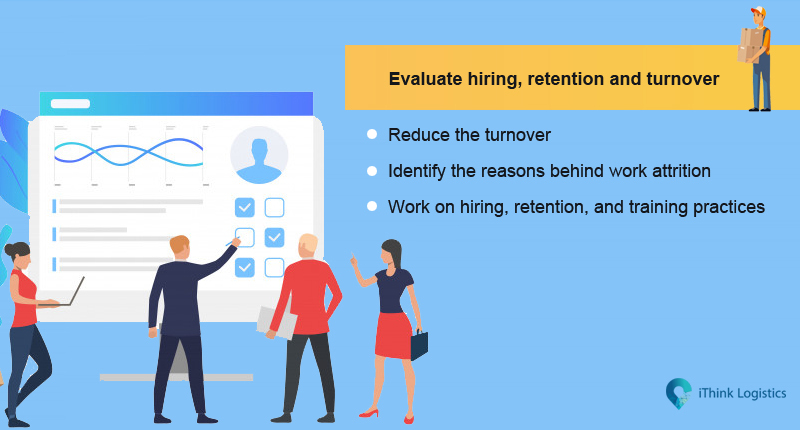
Evaluate hiring, retention, and turnover
Work is frequently the biggest cost after outbound cargo in the stockroom. Your objective ought to be to diminish the turnover, so you have to distinguish the explanations for work steady loss and possibly high turnover rate. Maybe your organization’s employing, maintenance, and preparation practices are deficient to give you a streamlined flood of work, basic for activity tops.
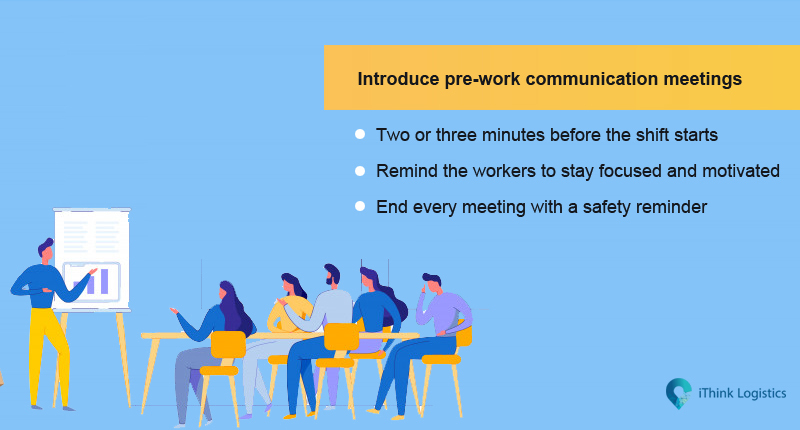
Introduce different PCMs
Holding pre-work correspondence gatherings (PCMs) with your transportation activity or stockroom representatives a few minutes before shipping is a decent route for meeting objectives for the afternoon. These gatherings are particularly helpful if you have a bustling day ahead. With this process, you can remind the labourers to remain engaged and motivated. Make it a training to end each gathering with an ongoing update.
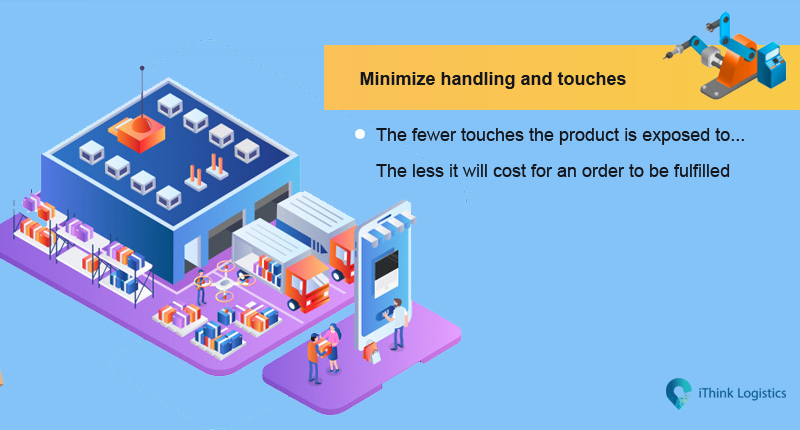
Try to minimize handling and touches
The rule is basic. If you present your items to fewer contacts, the less it will cost for a request to be satisfied and transported. So as to improve client administration, your team needs to streamline the store network coordination activity and apply the accepted procedures. This will help the business to decrease dealing with and contacts.
Try to facilitate seamless picking and packing
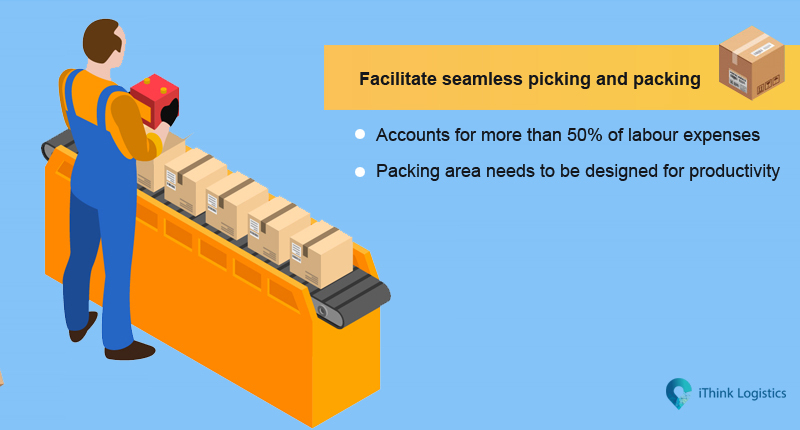
It shouldn’t be a surprise that the labour expenses in a supply chain account for 50% of the total cost. You have to decide is whether you are utilizing the packing technique with the best coordinates for your order requests. Your packing zone should be overhauled for efficiency, with promptly accessible containers. You must take a look at embeds, height adjustment changes stuffed containers takeaway, and so on.
You must consider on-demand packaging
Endeavours in right-size bundling are progressively basic to inventory network coordination that ever. The dimensional weight has turned into an industry standard. With on-request bundling, a machine cuts the boxes for each request from different layered cardboard. The advantages of on-request bundling include decreased bundling and transportation costs, improved maintenance. This has turned into an undeniably significant thought for different clients with an e-commerce business.
Focus on advanced slotting
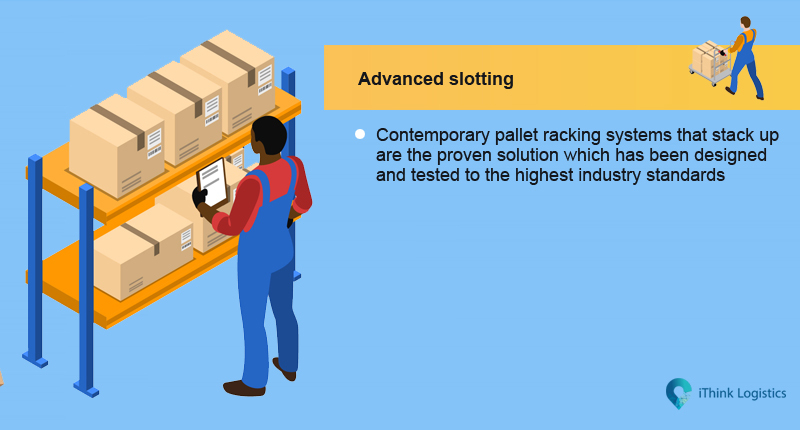
Powerful slotting solutions can decrease your supply chain logistics labour prices for choosing, replenishment, and putting away. As a cornerstone of a streamlined logistical operation, present-day pallet racking systems stack up is the validated solution. It has been designed and tested to the best industry requirements. Increase the garage density to quickly dispatch a large single SKU (single keeping unit). Put the ordres in the deep racking structures which should be clean to get through a dual pantograph or sliding fork. This type of solution is best for small agencies that supply in excessive volumes.
Use available resources more productively
This has been an expression that we’ve heard quite often in an inventory network chain. Through an expert opinion, your inventory network coordination activity will turn out to be progressively beneficial by enhancing the format, expanding the item stockpiling and staff productivity. Neglecting to meet these fundamental prerequisites regularly prompts expanded expenses of the distribution centre activity. Without the physical extension, each distribution centre can expand its present limit by abusing that limit all the more viably.
Select transportation modes and routes carefully
You can make investment funds on multi-piece shipments that don’t include a full bed on the off chance that you utilize the little bundle transporters. By contrasting little bundle with LTL carriers(less than truckload) or LTL to truckloads, you can see the value distinction for different weight and zone break focuses. This thought is particularly intriguing for id showcase shippers, where changing the directing and method of a shipment can satisfy fundamentally.
Make sure you have a vendor scorecard
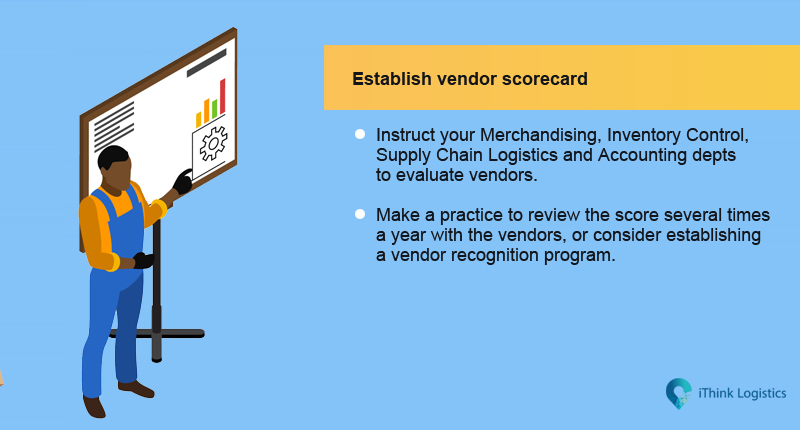
Educate your Merchandising, Inventory Control, Supply Chain Logistics and Accounting divisions to assess merchants. They ought to incorporate deals, edge, on-time conveyance, repeating issues, and so on. Make training to audit the score a few times each year with the merchants, or consider building up a seller acknowledgement program.
Increase information visibility
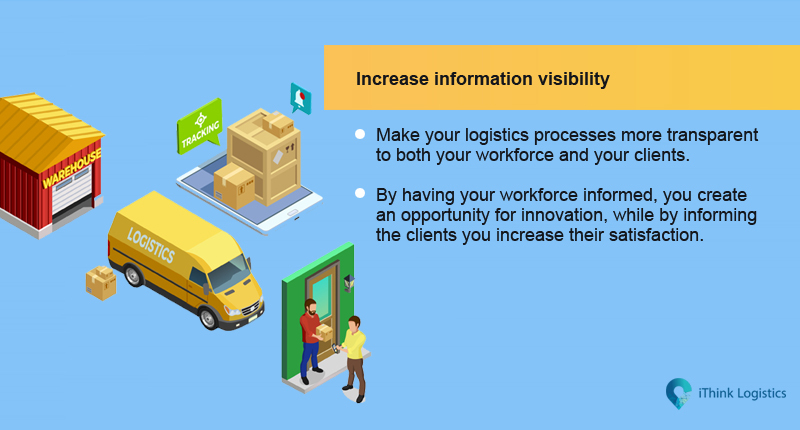
By wiping out moderate, untrustworthy spreadsheets, you need to make your coordinations forms progressively straightforward. This needs to be done for both your workforce and your customers. If you want to know how to improve customer service in logistics, then this is what you need to follow. On the other hand, you can expand data sharing by exploiting huge information investigation. You can estimate inventory network measurements and include your workers in discovering problem areas in the framework. Educate your workforce, so that you make an open door for advancement and work towards a better customer service
Conclusion
These are the absolute best tips for lessening costs and expanding consumer loyalty. You must carry out a careful examination of your present inventory network coordination activity. You can prompt huge reserve funds, which empowers you to build your turnover limit, efficiency, and space without physical extension. Follow and work on customer feedback to work on the functioning of your logistics even better.
In case you have any doubts, feel free to let us know in the comment section below.
As the new e-commerce rule strike in, Amazon has been forced to remove a series of products from their website. Various vendors who are at an equity stake are prohibited from being sold through, by different online retailers. This far-reaching impact is highly affecting the economic sectors that have drawn billions of dollars as a foreign investment. In order to give a fair chance to everyone (especially the Indian companies) and to prevent the downfall of small businesses, this rule has been implemented. There have been other sides of this rule as well, which states that the retailers will not be able to make deals for selling exclusively on one particular platform. For example, if Amazon is making something of their own, they won’t be able to sell it on their site. This will only be applicable for small to medium-sized e-commerce enterprises.
The Previously Present Drawbacks
Indian e-commerce has been carrying out this heated argument in the last few years. The fact that small business can’t even establish their presence due to a lot of unfair rules, has been a topic of argument among different businesses.
Certain retailers used to have added unfair advantages where they owned exclusive rights for their product selling. Even though all the major e-commerce sites along with Amazon is talking up against this rule, but the products have started to disappear, on the non-compliance towards the same.
For example, the section of clothes from shopper stop are no longer appearing on the list, even though the Amazon owns 5% of the company. Other than this, certain echo speakers, home cleaning goods and other customized product section have also shown a significant reduction in their count. Flipkart has also shown certain negativity towards this rule but later agreed upon complying to it.
The broken business of e-commerce
If you are someone who is in this e-commerce business for a time now, you must have realized that this platform isn’t a very fair place. Certain brands are getting the bigger portion of the pie just by setting a few business barriers. They are owning up exclusive rights to sell products. The startups are lagging behind in the process, and they are having a restricted boundary. Be it a direct consumer brand or a middle man, the newbies are not getting the chance they deserve.
After the implementation of the new rule, this scenario will probably witness a turnaround. Now everyone will get a fair chance and the dealings won’t be staying restricted to one vendor.
The Effects of the Phenomenon
The Traders
A lot of traders have often complained that certain e-commerce giants have made unfair use of their buying power. This made the place an unfair platform for trading. After the announcement of this newly revised e-commerce rule, a lot of traders has expressed their deep satisfaction. They have also said that this a great step to clean the greatly violated e-commerce market. Nearly 25 million small businesses compose the whole e-commerce platform. These small scale businesses are getting their fair part, according to this new rule by Narendra Modi.
For the consumers
This is a piece of great news for the people in the business. However, various studies are predicting a major possibility for consumers to face collateral damage. In the last political session, the Indian ministry announced to treat all vendors equally. The rule will be barring different seller from featuring a product exclusively on any particular site. Thus the giants like Amazon and Walmart are prohibited from selling their own products. But on the other hand, all the Indian consumers are most likely to be affected negatively by the same. As the discounts and offers are soon to disappear, the product availability may reduce to a great extent. The leaders have kept the broad spectrum in mind before implementing this rule. It is just waiting and watching for all the Indian consumers. There is time to understand what the future of e-commerce holds for them.
The first party logistics sector is growing by leaps and bounds around the world. India is no exception. In fact, the country spends about 14 percent of its GDP on logistics and related activities. This is much higher than the 8-9 percent of GDP allocated by most other developing countries as well as many nations in Europe.
The Growth of the Logistics Sector
Much of this rapid growth in the logistics sector has been driven by the arrival of e-commerce in India. Since more people are buying things online, there is an increasing need for fast and reliable shipping and courier services. This process quickly delivers the purchased products to the doorstep of the customer.
Factors affecting the growth of e-commerce logistics
In the modern world, many online sellers depend heavily on such courier and delivery services, with their entire business model being predicated on the viability and efficiency of the logistics and shipping sector.
A good logistics provider can enhance the reputation of the online seller, improving customer satisfaction and maximizing customer loyalty. In short, the quality of logistics and shipping – such as speed, reliability, logistics cost, and safety – can heavily impact the bottom line of an e-commerce company. Choosing a good logistics provider can also help sellers avoid losses caused by damaged goods and delayed deliveries.
Misconceptions and a Lack of Awareness
Despite the rapid growth, this sector has experienced over the last few years, there are still quite a few misunderstandings and misconceptions about what the 1st party logistics sector actually is, what logistics providers can offer businesses, and what different types of business models this sector comprises of.
This is because the business of logistics is complex and multi-layered, and can be hard to understand if you are an outsider looking in. Moreover, regulations and business norms vary between states and countries, so the logistics sector in one country may operate in a slightly different manner than that in another nation.
All of these factors combine to create a certain amount of confusion and miscommunication, wherein the expectations and preconceptions of clients may not always be aligned with the ground realities at any given time.
The Importance of Understanding the First Party Logistics Industry
However, if you are an online seller, you cannot remain in the dark about the drawbacks of the logistics business. This is because of the quality of shipping and logistics will greatly impact your customer service and satisfaction.
In other words, even with a great product, you cannot hope to retain your customers and gain their loyalty without a great logistics network to provide timely and safe deliveries. With that in mind, let us dive into the subject and try to understand the various elements and layers of the logistics and shipping industry.
The Components of the 1st Party Logistics Industry
At some point or the other, we’ve all heard the phrases ‘first party logistics’ and ‘third-party logistics provider’. And while we do have a vague idea about what all of it means, we don’t always understand the minute differences between these concepts and what they can mean for our business.
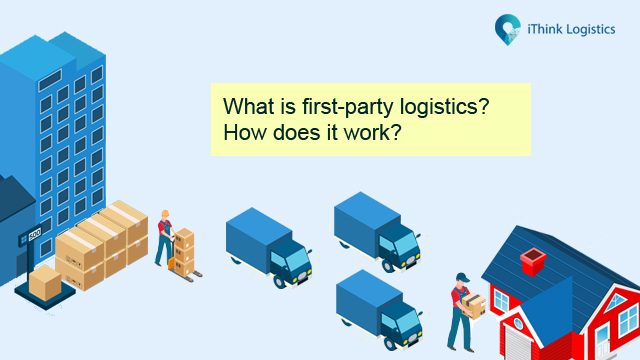
A first-party logistics provider is essentially either the manufacturer of the product or the consignee. That is to say, the shipping, storing, and transportation is done either by the manufacturing company itself or by the buyer. The buyer, in this case, can be either the final consumer of the product or a retailer purchasing supplies from a wholesaler or manufacturer.
Whatever might be the case, the defining characteristic of a first-party logistics provider is that there are no middlemen involved in the process of shipping. So, you might now be wondering, how does first-party logistics work?
In this model, all logistics are handled internally by the manufacturer or the consignee. In other words, either the seller or the buyer must internally invest in a fleet of trucks. This is done for transportation, warehouses for storing the goods, tracking and supply chain management technology, packaging equipment, etc.
Why Some Businesses Opt for First Party Logistics?
This can be quite an expensive route to take. The company in question will have to set up and operate an entire, independent logistics department. After that, they need to invest in all the relevant software, equipment, and gadgets.
This is the reason why, in recent years, third-party logistics companies have become so popular among online sellers. Many of them find it impossible to fund all the logistics operations internally.
However, first-party logistics is sometimes still used by large companies and manufacturers. These people have their own well-established distribution channels and networks. Older companies which emerged and grew before the age of the Internet also often make use of first-party logistics. They have established their distribution networks before the growth of online selling. Hence, they already have functioning logistics networks, which diminishes the need for outsourcing.
Moreover, large companies involved in first-party logistics can take advantage of economies of scale. This is unavailable to smaller businesses and startups that are new to the market.
As these large organizations have already established an internal logistics department and made the investments necessary to set up wide-ranging distribution networks, the 1st party logistics (1PL) approach might actually be more economical for them than outsourcing to a third-party provider.
The Ideal Logistics Set-Up for Small Businesses and Startups
This, however, is often not the case with smaller online businesses and Internet-based startups. When starting out, few businesses have the resources to set up their own distribution network from scratch. This is done to manage an entire logistics department. Most online sellers would buckle under the financial burden of such an undertaking, or go into massive debt to finance it, which might hurt the long-term viability of the business.
This is why, for those who are just starting out, third party logistics providers can offer the perfect alternative. A 1st party logistics partner can help you take advantage of the economies of scale enjoyed by bigger companies, at less cost. Moreover, you will be able to share the expenses and liabilities with all the other clients of the 1PL company.
Conclusion
In a nutshell, a 1PL company can enable you to avail all the advantages of a large distribution network. Without the initial investment, you can set up a first-party logistics system.
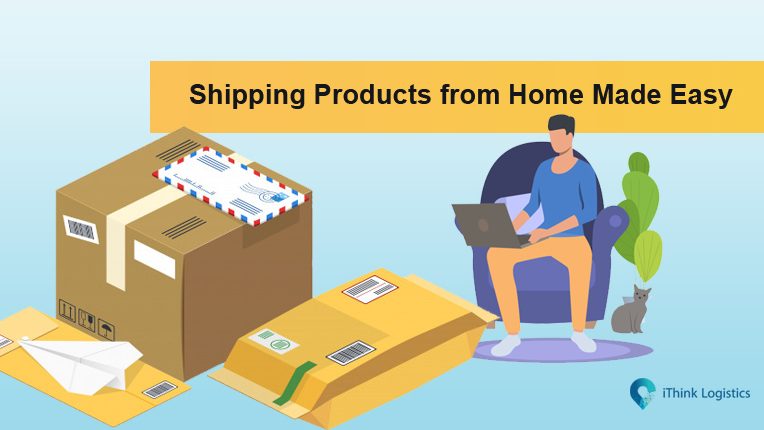
In today’s era, everything is digitized. We as a people are more dependent on online regiments than on the traditional ways of dealing with things. E-commerce has become one of the most thrashing business segments in recent times. That’s why shipping products from home has been taken into consideration.
With every technological evolution, common people are being more accustomed to the idea of making their purchases online with the full comfort of their particular homes. With such a pervasive idea, the small business enterprise is getting hang of the whole concept and how they work and so they are finally catching up the pace in this industry.
The most essential process of any sort of e-commerce business tenure is shipping. This is the most significant and primary part of e-commerce business and without shipping an e-commerce business is incomplete. Therefore, in order to ensure that your pre-shipping endeavor is paid to a full extent, the first thing you need to do on your part is to make your shipping processes perfect.
How can you make an actual plan of your shipping processes in India?
First, the question comes why you need a shipping plan?
You need a shipping plan because if you are doing private label products and you are doing for fulfillment by saying Amazon, you need to ship products into the Amazon fulfillment center. In order to do so, you need to create a shipment plan so that Amazon knows what to expect with your inbound shipments.
In addition, once you complete the shipping plan you will be given shipping labels that need to go on each one of your shipping cartons. These will identify the shipping cartons for who they belong to and what is inside when Amazon receives each shipment.
Then comes the question, when do you need to create a shipping plan?
In order to create a shipping plan, you need you first need to create a listing for your products otherwise you cannot create a shipping plan. It is highly recommended to create a shipping plan early in the process while you are still doing product research before committing to the product.
Find out if there are any possible restrictions on your product as far as having to go through any hazmat reviews or if there is any category or product restrictions with your product. When you create a shipping plan these issues may pop up. Therefore, you can take care of them right away.
More importantly, once your supplier has started manufacturing and you have an ETA of when it should be completed, you should create your shipping plan prior to the completion date. Therefore, you can have a shipping plan and all the shipping labels ready for your supplier so there is no delay with your shipment.
Inventory placement option
Now before you complete your shipping plan there is a setting in seller central that you need to be aware of and it is called inventory placement option. Typically, your supplier will ship your products in multiple shipping cartons and therefore when you create your shipping plan, the center is going to split up your shipment so that it goes to several fulfillment centers around the country.
Because of this reason, a lot of beginners think that they can save on shipping by having all their cartons shipped to one fulfillment center. You can do that by changing the inventory placement option in cellar central.
Various methods of shipping in India
There are various methods of shipping followed in India. Some are:
Courier agencies
You can use this method if you are low on the workforce. Here several companies or agencies take up the courier responsibilities under them by aggregating and compiling many well-known courier services under them. Some of the well-known courier companies in India are Bluedart, FedEx, Ecom express, iThink Logistics, etc.
There are certain agencies that manage these courier services under them and tie the know courier services under them. You can simply approach them, a particular person will be sent to your home for the product pickup, and later it will be shipped to the customers accordingly using any of the above platforms. For this particular method, you need to provide a cancel cheque and your respective pan card.
Direct courier services
The second method you can use is that you can directly contact the courier companies like DTDC, Aramex, First flight, FedEx, Blue Dart and as such. You can directly email any of this company and they will give the proper details of any documents required. Then they will send their particular delivery person.
This could be really cheap but this can also little problematic as there will be confusion on whether your customer can avail of the particular company’s services and whether they are subscribed to the same company as you are and etc. but this particular issue doesn’t arise with the previous method.
These are the main two processes that you can avail for the shipping process. After deciding the method, you would prefer for your shipments, you could make an actual plan and proceed further with that.
What are the ways that you use for shipping products from home to customers?
With a few key points to the process, you can easily excel in the process and gain your customer’s trust.
The way the packing of the box is done makes a huge difference. You need to have different types of packing with different variety of products you ship.
For example, fragile items need to be packed lots of stuffing and ample bubble wraps, to avoid any kind of breakage. Similarly, another variety of items might require some kind of space while being packed.
The main point in this is that you should provide your item in a presentable and attractive way so that the customers get fully satisfied with your product. Packaging plays a very important role in shipment.
Go for different packaging specifically corrugated pads or some kinds of secure fold mailers for particular kinds of products.
Always go for convenience and choose a friendly shipping carrier that properly meets your budget and does not go overboard. You can always contact local shipping companies depending on the kind of product you want to ship and their cost.
Always be clear on the constraints that you want to impose on your customers. This includes free shipping or chargeable shipping of the products. Any policies regarding this have to be stated separately.
Shipping rates should be calculated and stated from beforehand based on the following attributes like packing size, package weight, insurance, and departing country.
Once everything is set and ready for the shipment to your customers, you need to stay very active with your shipping carriers. If you take good care of every step and be professional at the same time, you can meet your customer’s expectations with ease.
Free Shipping strategies
After we know how the products works, now it is very important to know how strategies your shipping processes. The key to successful shipping with all the conformity to your customer’s requirements is to know the strategies behind it. Questions you need to consider before strategizing your shipping processes:
You need to know how to set up your shipping rates so it will calculate the right rate depending on how many products are in a shipment and exactly where that shipment is going.
What if some of the products are bigger and better than other products in the competitive market.
What if we offer ground two-day air or next day delivery options? How can we set that up?
The main key points to remember for shipping products from home
Shipping carriers
Online retailers have several options on how to ship their packages. Off course, that everyone is well aware off many major shipping carriers. Each of these carriers offers opportunities. There are many carriers that offer up to 60% on domestic shipments and 25% on international shipments. Depending on the size of your operations, you might be eligible for discounted rates that go up to 50%on certain services of FedEx and UPS. If these are your preferred carriers.
Pricing strategies
The most common shipping strategies are the three laid down strategies. These are free shipping, flat rate shipping, and live rate shipping calculations. It is understood that free shipping is a shopper’s favorites. In addition, it has been researched that this particular shipping is more popular and valuable. Because, this gives the customer the ultimate satisfaction.
Shipping optimization tips
The foremost thing is to learn how to make your shipping profitable. Once you do that, that is when the shipping optimization comes in. the following steps are to be considered:
Firstly, you need to establish a baseline that is trying comparing conversion with and without free shipping offers.
Create a threshold that is you need to increase the minimum order values to test the improvements of the margins.
Set restrictions that analyze the positive changes. Offer free shipping and that too on selective products which seems profitable.
This will help you streamline shipping for your online business.
Conclusion
So that’s some of the basic ways to ease out a shipping process. How do you ship your products? Do let us know in the comment section below.
Why there is a need for artificial intelligence in logistics?
The world of technology is growing at a massive rate and the entire urban populace seems to be energizing with it. Each business sector around the globe has implemented advanced technologies in each strategy they use, in their business model. Thus the dominance of the technological hyperspace leaves no room for doubt. Speaking under the context of technological advancement and its all-pervasive role in multiple businesses, the concept of artificial intelligence in logistics stands out as an inevitable subject.
Here is how artificial intelligence has been implemented in logistics.
To be brief about explaining artificial intelligence, it defines as the theoretical and developmental aspects of computer-controlled systems. They are competent to execute tasks including visual perception, translation between languages speech recognition, and decision-making. The unique aspect of artificial intelligence is its proficiency in doing tasks with much more capability and potential than a human brain.
The current world of global business networks is thriving on the grounds of advanced artificial intelligence operated tasks and actions. It is one of the latest progressing industries is the logistics industry.
Growth of Artificial intelligence in Logistics
The role of artificial intelligence in logistics is unquestionably demarcating a significant and central role of operation. The latest statistics surveyed in the logistics industry clearly reflects a high demand for logistical requirements. This is done to meet such escalated market demands.
The core functionalities of this industry are getting complicated and absolutely data-driven. The steady reckoning of data-driven applications is already visible in streamlining logistical operations on a global scale.
As an equivalent factor, the supply chain of the logistic industry is parallel responsible for the growing application of artificial intelligence in logistics.
Based on detailed research on the aforementioned, it has been revealed that with the execution of data-driven and self-directed supply chains resulting from the implementation of artificial intelligence has generously contributed to the industry.
Due to such advanced levels of optimization in logistics, the future of the logistics sector is predicted to highly digitally-optimized. It is also positive in terms of generating revenue.
When the discussion is related to the anatomy of the usage of artificial intelligence in logistics, it becomes a prerogative to cast light on the efficiencies offered by it in regards to areas of predictive demands in the present and future market and network planning in logistics companies and businesses.
The advanced offerings of AI including recording accurate demand assessment, forecasting upcoming trends and potential threats and capacity are something that is to be truly treasured in this heightened world of technological dominance.
Logistic business owners now can clearly visualize the number of total vehicles required for transport and dispatch them to the locations where the stimulating demand is high and expected. This advancement empowers them to reach the correct leads by consequently contributing to significantly lowering their operational costs.
Beneficial Aspect of AI
The beneficial aspect of AI performing the tasks in a faster mode and accurately than a human brain is where the costs and time-taking hassles automatically diminish and therefore resources can be optimally used within least time taken.
Fetching in-depth market research and analytical study on the artificial intelligence logistics transportation in the present scenario, here are a few of the most trending possibilities and potentials of artificial intelligence in logistics:
AI in Advancing to Locate Quickest Delivery Route
In regards to the mounting demand for delivery of the respective parcel in the shortest time taken, the logistics industry had a different set of challenges before the inception of artificial intelligence applications. However, after the progressive implementation of artificial intelligence in logistics and supply chain, the labyrinth of delivery operations have simplified effectually. From analyzing of information to completion of deliveries, AI suffices all needs productively in real-time and irrespective of real-traffic issues.
Logistics Services Empowered with Smart Voice Assistance
That’s correct. The brilliance of artificial intelligence has its segmented grounds of an application for voice assistance too. Coming to the logistics industry, this stands out as a real good efficiency propeller.
To make things even clearer and easier to understand, AI automated voice assistance guides the customers to track their placed orders with their logistics partners and can directly get updates on the same. In case of any issues, the customer can straightaway call for assistance without much further delay in getting an adequate response.
A world that is already counting immeasurable digital footprints every day, AI in logistics is one such example of an absolute technological boon in our lives and the nation as a whole.
Automated Self-Directed Vehicles
The far-reaching ad expanding the vision of AI is accommodative in terms of all kinds of all experiments that can be done for moving up to the next level of genius implementation. AI in logistics offers the assistance and empowerment of automated and autonomous vehicles.
Features such as road autopilot, lane-assistance, and the aiding brake, formulates the dream for autonomous vehicles even more for the logistics industry. Speaking of this, AI helps in enhanced driving systems and therefore allows for low fuel consumption.
It is truly appalling to know how algorithmically designed codes can manage such heavy-duty operations with twice the efficiency and management authority than a human brain.
Smart Automated Warehousing
The possibility of running a large warehouse with the help of robots driven by AI is no myth. It is actually, a fact registered in England. The high-end operational capacity of a logistic company has been driven absolutely in an automated manner. This was possible only with the implementation of artificial intelligence.
To be practical and straight to the sub-head mentioned above, AI-driven automated warehouse is competent in many tasks. For example in meeting tasks such as moving, lifting, and sorting delivery items all by itself. The enhanced vision of AI in the logistics category is all about learning and evolving to pace ahead of operations effectually.
With such speed and innovations happening every day regardless of what may come, it is no longer than we are yet to witness complete autocracy by AI in the logistical warehouse operations including identifying and organizing inventory administrating quality control and much more irrespective of the intervention by human oversight.
Enhancing Supply Chain Reliability and Integrity with Blockchain
With the multiplying problems related to supply chain on a regular basis, reports have been recorded of facing issues with efficiency, reliability, and security. Speaking in the context of logistics, this problem becomes even more relevant and reliable.
The onset of artificial intelligence in logistics brings with itself the boon of blockchain. Data engineers have not just studied and analyzed but also accepted the proven worth of blockchain in improving issues that are subjected to key supply-chain transactions.
For logistics, the application of Blockchain simplifies the supply process with the smooth and ease the execution of storing delivering and auditing operations.
The progress of Artificial intelligence in Logistics 2019
The overall concept of AI in logistics has so many laddering sub-branches that in return compliments the work to which it has been applied to.
With the world getting over-dominated by the brilliance of technology, the data reliability is becoming a glowing reality. With such fast progress of AI in logistics in 2019, it has been well-estimated that the invasion of artificial intelligence in the logistics industry will cover functionalities and operations of the back office too.
Under this, the already well-performing digital transactions will be an added advantage and enhance the technical paperwork actions.
The complete network of algorithmically set data can be vouched for its accuracy and speed. It is ideally perfect for regulatory requirements, and the weighing contribution to the elements in regards to operational efficiency.
Quite naturally, due to such high efficiency, artificial intelligence is already an existing reality for banks, accounting firms, and insurance sectors, with its competency to streamlining data and processing other operational activities.
Smart Roads for Infrastructure Growth, Traffic Improvement, and Road Safety
There have been major things that have to be absolutely on-point. There has been 100% maintenance of road safety without even a single flick of compromise in the logistics industry.
Coming to the kernel point of discussion, the technologically advanced mode of artificial intelligence can be proficient. It is contributing to infrastructural growth, traffic improvements, and road safety.
Imagine a single-handedly, automated technology is competent to do anything and everything that can be experimented or imagined to do! The concept of the Internet of Things (IoT) is the crucial subject here.
The broad definition of IoT says that the objects or devices that have built-in web connections and can proficiently exchange data among themselves.
To relate to this definition in a better way, here are few example. The technology that was first introduced as GPS-enabled dog collars, smart refrigerators, smartphone-controlled lighting, and ventilation etc.
Coming to logistics, the entire development happening of self-driving vehicles is another practical application of current AI-based trends. These systems are controlled by IoT and thus are completely responsible for the data managed systems to which it operates.
Vehicle Telematics: the Logistical Weapon for Streamlining the Supply Chain
As the literal meaning of the word goes, the practical concept of the word is something even more competent. Telematics can be defined as the intricate term that goes through multiple aspects of long-distance telecommunications and directly connects with the big data industry.
With the modernization happening tremendously, thedigital hyperspace is going through a regular evolution. The term telematics has a much-digitized reference these days.
It is directly bridged with the usage of GPS-enabled vehicle operational data, used for logistical deliveries. To understand how the concept of telematics works, it can be explained in terms of heavy-duty vehicles that are responsible for shipping bulk deliveries.
These vehicles are outfitted with Electronic Logging Devices (ELDs) and are open direct tracking in real-time. With such implementations of Telematics, logistics managers do not find it cumbersome anymore to locate efficient driving routes for deliveries. Thus, a lot of cutting down on delivery time is achieved and in-time delivery is no more a challenge.
Additionally, it makes things easier for assigning the right people and resources to the right job. When it comes to satiating operational improvements, telematics caters to the specified requirements there also.
Opportunities seem to be boundless with artificial intelligence. It enables machine learning tracking devices can find out the similar patterns of deliveries and the routes.
The already collated operational data can be leveraged usefully to formulate massively creative and effective solutions. This will commit to combat against all the present and upcoming logistical problems in the future.
The Bottom Line
To be crisp in the overall value matter of the discussion, the enlarging dominance of technology has been proven. There are more enhancements upcoming for the logistics industry.
The already massive growth in the logistics industry as of 2019 is itself a testimony of the fact that the future holds more wonderful things to await for.
Some set of people are not that welcoming for such speeding technological changes in the logistics industry. Nonetheless, no matter how you make the changes, the growth of logistics with artificial intelligence is absolutely complimenting.
Seeing and mapping such signs of progress in AI, data engineers have already vouched for more range of supporting technologies. This shall take over the complete domain of the global supply chain by storm.
The Possible Future of Artificial Intelligence in Logistics
Although there are still a lot of improvements needs to happen in the execution of AI in logistics. But the infant stages of multiple-intelligence applications and algorithms, yet the potentials are truly high.
When compared to the existing technologies, the current methods and functionalities in logistics is indeed a productive form of welcoming technology.
All we await to see is the world’s brightest engineers continuing with their progressive developments on AI. The supporting technologies along with it, is increasing rapidly, to generate a mind-boggling revolution in the logistics industry.
With more and more tech-powered innovations in the logistics industry, we shall move forward to the new heights of global supply chain operations. It is expected to witness absolute eradication of complex and unmanageable tasks and challenges.
Conclusion
Comment below about how artificial intelligence has transformed your business. For further queries on logistics services, sign up below to receive newsletters on the latest logistics industry.
Moving goods from one place to the other may sound easy enough, but it is far harder than many people imagine. So standing in 2019, here’s how you can choose the right logistics company for your e-commerce business.
If you are looking for a logistics service provider, you probably know this. Choosing a 3rd party logistics company in 2022 is no easy task. Making this choice in the right manner will require careful research, thorough consideration, and some extensive number-crunching.
This is because a modern logistics service provider does much more than just moving products from place to place and making deliveries. A logistics company is responsible for planning, controlling, implementing, and tracking the movement and storage of products and information from point A to point B.
The 3rd party logistics company must also bear responsibility for the safety and security of the goods being transferred within a supply chain. In fact, everything that happens to a product within the point of manufacturing and the point of delivery falls under the purview of the logistics service provider.
Why You Might Need a 3rd Party Logistics Provider?
Choosing the right 3rd party logistics company in 2019 is of vital importance for e-commerce and FMCG businesses. The logistics service provider that you choose will have a profound impact on the level of customer experience and satisfaction that you can generate. Moreover, the efficiency and cost-effectiveness of your entire supply chain will depend heavily on the logistics service provider company that you opt for. It is a major 3pl logistics selection criterion for any e-commerce business.
There are various types of logistics companies that handle either the entire supply chain process or a certain part of it, such as warehousing, transportation, or tracking software. So, depending on your needs, you can either go for a company that handles all of the logistics functions or just a few of them.
In India, the need and demand for logistics service providers have grown by leaps and bounds since the emergence of e-commerce and online selling. Online sellers have extensive and complex supply chains and hence need reliable and efficient logistics companies to coordinate the movement of products and make timely deliveries to customers.
In 2019, the e-commerce sector is on a growth path and the need is greater than ever before!
The elements of a proper supply chain can include shipping, transportation, security, storage, product handling, management, tracking, packaging, distribution, and deliveries. Not only that, the logistics company also has to take care of the additional corollaries to the supply chain process, such as regulations, taxes, and licenses. Coordinating all these functions in an efficient and timely manner, without exceeding the budget, is what the best logistics providers are known for.
Plenty of Options, But Only One Right Choice
This is why choosing the right 3rd party logistics partner is such a critical decision. Performing all of these functions in-house can be very costly and time-consuming, as you will have to hire and maintain an entire logistics department just for this purpose. This can be hard to do, especially for smaller online sellers or startups who have yet to become established players in the market.
This is where outsourcing certain supply chain functions can be supremely beneficial. Many providers of logistics for e-commerce startups offer very economical rates as well as efficient and timely service.
There are many options when you think about how to choose a logistics company for your business. But you need to know that not all of them will be the right fit for you. Below is a list of some of the things to consider in logistics. When when you are planning to outsource the process to another firm you should do it right. Keep track of these factors and you will grow your business further.
Characteristics of the Best Logistics Providers
When you choose a logistics company to work with, you want someone who will be able to deliver your products to the customers on time and in perfect condition, while upholding the standards of your business.
They are your representatives when interacting with the customer, and they must do you credit and uphold the reputation of your firm. The long-term success of your business and the loyalty of your customers will depend heavily on this one business decision or choice you make.
Mentioned below are some of the factors that you should consider when you set out to choose a logistics company.
Capacity and Coverage
Different companies have different needs and requirements when it comes to capacity and coverage. So in order to make the best choice, you have to analyze exactly what your needs are in this area. What amount of goods do you need to transport, and to what areas do they need to be transported? You must match your needs with the right logistics provider who can meet them.
If, for instance, you need to make weekly deliveries to certain cities in the western states of India, then you should pick a logistics provider that has an established transportation network in those states and a fleet of trucks that can effectively make the deliveries.
If, on the other hand, you make deliveries around the country, then you’ll need to choose a logistics company that has distribution networks in all parts of India. The number of goods you need to deliver and the frequency of the deliveries will also affect this decision, as capacity requirements will vary with every business.
Customer Service
You also need to determine the type of customer service that the logistics firm is willing to provide. This is perhaps the most important 3PL logistics selection criterion because of the quality of customer service they provide. It will profoundly impact your relationship with them. This is not something that is easy to understand from the outside, but you must do the necessary research. The company should be responsive and has effective problem-solving mechanisms in place. They also need to manage fluid lines of communication and prioritize customer service above all else.
Doing your homework in this regard will definitely pay off in the long run. So be sure to ask for references and testimonials from past customers. You can prefer those who operate in similar industries as you and have some of the same needs. After talking to some of their old clients, if you find that their customer service has been excellent, then you can decide. You can understand that they have an efficient and well-documented process that will most probably continue for years to come.
Experience and Stability
Another important factor to consider is how much experience the third-party logistics provider has and how stable their organization is. Regardless of the complexity of your own supply chain, it is always better to go with a logistics company that has a few years of experience at the very least.
Not only will this ensure that they thoroughly understand the industry and can deal with any problems that crop up unexpectedly, but it will also mean that the organization is relatively stable and not likely to shut down or go out of business at a crucial time, leaving you in a difficult predicament.
Moreover, the logistics company will be liable for the safety of any goods or products it is delivering on your behalf. If any high-liability incident takes place, and the logistics provider is unable to withstand the financial blow, the liability will in effect shift to you, thus jeopardizing the financial prospects of your own business.
Speed and Reliability
Customers these days are less patient and more demanding than ever before. Earlier, we had to dress up and walk to the nearest store to buy something that we needed. Now, all we need to do is click a button on a screen, from the comfort of our bedroom. E-commerce companies around the world are competing to make consumption easier than ever, and it is the job of logistics service providers to make their promises a reality.
Hence, choosing a 3rd party logistics company in 2019 is all about the speed and reliability that they can offer. You need to opt for the fastest e-commerce shipping to ensure on-time deliveries and always satisfied customer service. The products also need to be delivered in excellent condition, as the cost of replacements and refunds can be very high if any damage occurs en route. Hence, you must take this into consideration when choosing the right logistics firm for your e-commerce startup.
Price
Price is, of course, a huge factor when it comes to choosing a third-party logistics partner for your online business. However, it is important to keep in mind that the price should be commensurate with the services being provided. This means that the lowest price doesn’t always entail the best service.
No business is going to run at a loss or give you something you haven’t paid for. So, if the price being quoted is exceptionally low, you must rethink. It might result in subpar service, low reliability, and transparency, or other problems down the line. Cutting corners in terms of price may cost you later in the form of damaged goods and angry customers.
Other than this, you should ensure to never pay more than the value you are getting in terms of service. Compare the prices quoted by different logistics to find the one that fits both your requirements and your budget.
Conclusion
The most important things to consider when you choose a logistics company are mentioned above. Other factors that you should keep an eye on are the technology used by the company, their area of expertise, and their overall safety record. Making the right choice will help you keep your customers happy and your business profitable for years to come.
Which logistics company do YOU use for your business? Do let us know in the comment section below.
According to Novonous, a Bangalore-based market research organization, India has a logistics industry and logistics aggregators of worth $300 billion. The country spends almost 15 percent of its GDP on expenses related to transportation and logistics. This is a far greater amount than the 8 percent that most other developing nations spend on this industry.
Further, the logistics market in India is expected to expand at a rate of over 12 percent by 2020. This growth will be driven by the retail, manufacturing, e-commerce, and FMCG sectors, which have themselves been growing quite fast in recent years. The Indian logistics and logistics aggregator industry is expected to be worth $301.89 billion in 2020.
The implementation of the Goods and Services Tax (GST) has provided a major boost to the logistics companies in India. It has allowed the industry to reduce costs and improve profit margins by optimizing their operations and setting up large warehouses in every region of the country. This is possible because courier companies in India no longer need to pay different rates of indirect tax in different states, which makes inter-state delivery logistics much less cumbersome and costly.
The growth in the e-commerce sector and the expansionary policies were undertaken by FMCG giants. It has also helped logistics aggregator startups in India to expand by leaps and bounds. Thanks to the growing demand for e-commerce courier services. However, to keep growing, logistics firms also have to meet the strict demands for quick and efficient delivery with stringent service level agreements.
Moreover, innovations are essential for companies in this sector, as is keeping pace with the ever-evolving technology. The demand for greater reach, faster shipping, and lower costs never ceases, and a courier company in Mumbai or any other part of India must keep innovating in order to meet and exceed the expectations of its clients and customers.
The Role of a Logistics Aggregator Platform
Considering how fast this sector is growing, it is important to get a good understanding of exactly what a logistics aggregator company does and what its roles are in the e-commerce space. Typically, a logistics aggregator provides e-commerce shipping solutions in India and around the world.
A group of agents from this company might be responsible for processing all the operational components such as storage and transportation. They might be required to sort the products into categories, store and warehouse them as needed, and then to package and ship the goods safely when an order is placed.
They are responsible for all the steps required to get the product safely into the hands of the end-user or customer. After the job is complete, the logistics aggregator gets a commission for the services provided.
Many such startups serve as logistics partners for e-commerce in India. This is because the e-commerce sector relies heavily on logistics aggregators and would collapse without the aid of courier services which are used to speedily and cost-effectively ship the products to buyers.
Logistics companies also operate several warehouses and fulfillment centers around the country, where these products are stored until the final delivery. From there, they are responsible for safe storage, proper packaging, as well as transportation for delivery. They provide all the logistics required to keep customers happy with timely and safe deliveries, in return for a processing fee or percentage commission.
The demand for these services is on the rise, and logistics startups in India are riding the wave to grow exponentially with every passing year.
Why Hire Logistics Aggregator?
If you own or manage an e-commerce or FMCG company in India, then hiring a delivery logistics provider is almost a must. This is true for a number of reasons, including the growing expectations of customers. The goods and services will be delivered to their doorstep within days of the order being placed. So, if you want to retain your customers and expand or grow your business, then you must learn about the top logistics aggregator platforms in India, before selecting the one that best suits your needs.
No business or company can go it alone forever. To increase profitability and maximize customer satisfaction, you need to have the right partners. Third-party logistics providers can help you free up your company’s resources in terms of time and manpower, which you can then use to manufacture better products or provide better service to customers. As a result, many of the most successful e-commerce companies are opting for logistics outsourcing in order to optimize their supply chain and improve organizational efficiency.
Benefits of hiring a logistics aggregator
Mentioned below are 10 important benefits of hiring a logistics partner for e-commerce in India.
Reduced logistics costs
The 2016 State of Logistics Outsourcing Report stated that over ninety per cent of third-party logistics users agreed to outsource the logistics side of their business to a reputed logistics aggregator. Over seventy per cent of the respondents agreed that the use of a logistics aggregator platform had helped them reduce overall logistics costs.
No investment in distribution infrastructure
The third-party logistics provider you will be hiring has already invested money to build warehouses and set up transportation systems for the shipping, storage, packaging, and delivery of goods. Hence, you don’t need to spend on creating or setting up this type of elaborate distribution infrastructure. The costs are shared across all the clients that the logistics company serves and don’t have to be borne by any one company or business.
Lower systems investment
The top logistics aggregator platforms have advanced systems for the management of warehouses and transportation vehicles. This will allow your company to avoid spending capital on software programs and other digital products needed for maintaining elaborate logistics management systems. While you will need to pay a little for these overheads, the cost will be shared between many clients and will therefore never become a major financial burden for your business.
No fleet maintenance required
The right shipping aggregator company will provide you with an option for dedicated contract carriage. This will allow you to avail the benefits of a private fleet without having to purchase trucks, hire drivers, maintain equipment, and manage compliance and liability issues which could lead to fines, lawsuits, etc. All of this will help you save a lot of money without compromising on the timely and safe deliveries that your customers have come to expect.
Economies of scale can be leveraged
Third-party logistics providers also enjoy substantial economies of scale. This is because they are responsible for storing and transporting the products of numerous companies. Hence, they have lower operating costs per unit of delivery since they can bargain effectively with courier companies due to the large volumes being transported. They leverage their aggregate freight spend to ensure that per unit expenditure is lower for their clients.
Sharing of freight costs and liability
Truck aggregators in India and around the world can arrange for full truckloads of goods to be transported at once. So even if your company simply needs to deliver a handful of packages to a particular destination, the aggregator will have other clients who need to make deliveries in the same area. Hence, all of these products will be delivered in a single shipment, helping you save money by sharing the costs of transportation and delivery. Plus, if anything goes wrong during transportation, such as an accident or mishap, the liability will be borne by the shipping aggregators you have hired.
Manage fixed and variable costs
The number of goods ordered and the number of deliveries you need to make might change from month to month and year to year. It’s impossible to constantly adjust the amount of labour hired and the number of warehouses rented in accordance with the changing demand and supply conditions and distribution volumes. A third-party logistics provider will save you the trouble of constantly adjusting the space and labour you need for distribution. Hence, you won’t need to pay for more resources than you need at any given time and your distribution costs will always be parallel with your revenue stream.
Better access to new markets
When entering a new market (such as a new town or state) you will have to build up your own distribution capability from scratch. This includes buying fleets of trucks, renting warehouses, hiring and training delivery personnel, etc. All of this can take a lot of time. In contrast, a reputed provider of e-commerce shipping solutions in India can help you quickly enter a new market and sell your products to customers in an area where you have no logistical capability or infrastructure. They will store your inventory, make deliveries on your behalf, and interface effectively with your systems.
Scale labor resources cost-effectively
A third-party logistics provider can help your company by hiring temporary workers as needed and managing a virtual workforce that will allow you to achieve goals in a cost-effective manner. This way, if you have a sudden spike in orders, such as during a festival, you can handle the extra load in an economical manner. A good logistics aggregator platform will allow you to avoid adding a permanent monetary burden by hiring full-time workers who might be redundant during the rest of the year.
Better performance
According to the 2016 State of Logistics Outsourcing Report, 83 percent of companies that have hired the services of third-party logistics providers report improved service outcomes and customer satisfaction levels. The internal resources of your firm might be limited, but a company providing e-commerce logistics across India will be able to marshal resources from around the country to meet stringent deadlines and make timely deliveries, satisfying even the most demanding customers.
Therefore, we can say that hiring a top logistics aggregator company in India will help you continuously improve your service while minimizing expenses. Most successful logistics companies have dedicated teams of operators and engineers who analyze and optimize logistical processes and systems on a constant basis. Partnering with such a company will free up your time and money to focus on your core business, which will, in turn, allow you to improve your product or service and win more customers over time.
Which Are the Top Logistics Aggregator Platforms in India?
The logistics sector in the country is booming and there are many logistics startups in India looking to change or monopolize a specific segment of the delivery and shipping business. Some logistics companies deal only with shipping, or solely with air-freight, trucking, or e-commerce logistics.
On the other hand, some of the best companies in this sector offer clients an integrated logistics platform as a one-stop solution to all their logistical problems and requirements. India is geographically humongous and has a great population density, with over 15,000 pin codes spanning the country. Thus, logistics providers who can cover a large geographical area at affordable rates are greatly sought after. Some other characteristics of a good third-party logistics provider are:
Speedy deliveries
Multiple payment options
Timely pick-up of returned items
Comprehensive return facilities
Safe and secure packaging
Comprehensive insurance for shipments
Trained personnel
Quality logistics software and database
Maximum pin code coverage
Efficient support department
Mentioned below are some logistics aggregators that can provide you with all these facilities and more.
Shyplite
This is a tech-centric logistics aggregator that caters to the logistical needs of online sellers through a B2B SaaS platform. It enables the e-commerce company to automate much of the logistical tasks for better productivity, greater efficiency, and lower costs.
Ship Yaari
This company provides logistics and back-end solutions to e-commerce organizations. It specializes in international supply chain management as well as planning and procurement activities. It also has multiple courier partners and handles over 2000 shipments per day.
Vamaship
This is a company that offers shipping, ocean, and air freight to e-commerce companies serving a geographically large market. It makes deliveries in almost 200 countries, apart from India. It offers competitive pricing and is known for its in-depth efficiency analytics.
ShipDroid
They offer a single-point interaction system with e-commerce clients and maintain a great deal of uniformity when dealing with multiple courier partners throughout the entire logistics process. They make deliveries in over 600 Indian cities and have an efficient accounts and billing management system.
Ezytruk
This is a data-driven logistics aggregator that operates on an IoT platform. It connects carriers and shippers for the efficient transportation of goods in real-time. It offers great transparency in shipments and clients can get real-time data on demand. Their cloud infrastructure is also highly secure.
iThink Logistics
It is also an e-commerce logistics aggregator in India. We offer fully automated shipping and supply chain management solutions with complete transparency. We have a system of easy integration for online sellers with automatic synchronization and order-tracking facilities. With multiple channel partners, they offer fast and reliable service encompassing over 29,000 pin codes around the world. We are one of India’s fastest-growing e-commerce logistics solution provider.
So, now that you know a bit about the best logistics aggregators and e-commerce courier services in India, you must be wondering exactly what services will be included if you decide to partner with a third party logistics provider. To help you get rid of any confusion in regards to this subject, we have listed some of the essential services that a third-party logistics provider can offer your business.
What Are the Major Services that a Logistics Aggregator Platform Can Offer?
Transportation
From trains and trucks for land travel to ships and airplanes, a shipping aggregator company will help you deliver goods to your customers in a timely, safe, and cost-effective manner. They sometimes work with courier partners or may even have their own fleet of trucks and delivery vans in different parts of the country. They have also decided on an optimized route for transportation, which helps increase efficiency and reduce confusion.
Warehousing
The best e-commerce logistics aggregator in India will also offer warehousing solutions and most of them own their own warehouses in various parts of the country. These warehouses cover different distribution areas and act as a safe and secure storehouse for a variety of products. Once the order is placed, the product is retrieved from the warehouse and shipped to the customer’s address. The third-party logistics company will also provide inventory management software for keeping track of the goods stored in their warehouses.
Freight Forwarding
Sometimes, you may need to make a delivery in an area where the logistics aggregator does not have any infrastructure. In that case, they engage in freight forwarding, which is to say, they contact another courier company in the area and hire them to make the delivery on your behalf. Hence, the logistics aggregator will essentially serve as a medium for you to hire the people or services you need in a timely manner so as to maximize customer satisfaction.
Concluding Note
The process of supply chain management is neither easy nor straightforward. For small online businesses and companies, setting up a dedicated logistics department might be too expensive to be feasible. This is when hiring the services of a logistics aggregator or a reputed courier company in Mumbai and other parts of the country might prove useful. It will allow you to grow your business and focus on optimizing your key deliverables without spending much time worrying about logistical issues and problems.