iThink Logistics | Blogs

Categories
E-commerce Logistics

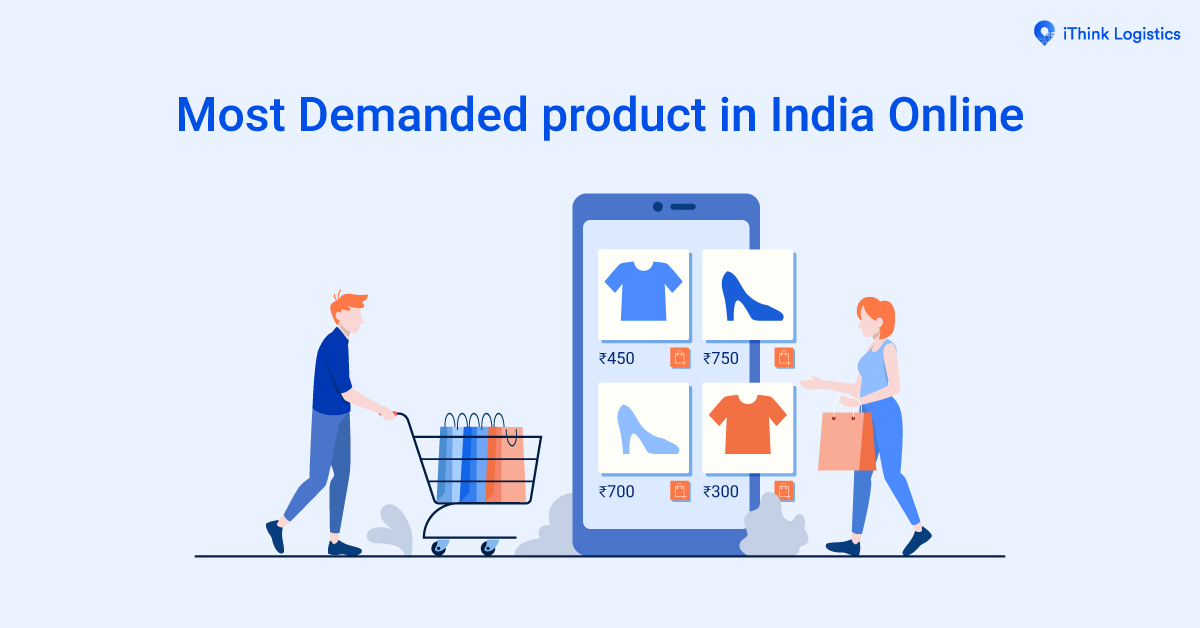
Top 10 Most Demanded & Top Selling Products In India Online

With the ecommerce industry in India expected to grow to US$ 200 billion by 2026, you can only imagine the scale of operations going on now. As a matter of fact, the market grew by 38.5% in the year 2020 alone. From local and international giants entering the market to small and regional players going pan-India, you name it, and it is sold online. Wondering what products are selling the fastest? Here is a round-up of 10 bestsellers! 

Top 10 hot selling products

Clothing

The likes of Myntra’s End of Reason Sale is one of the reasons why clothing has gone from being a popular item sold online to being at the top of the table. Grabbing nearly 35% of the market share of all online sales, apparel isn’t just much loved from sale to sale, but also throughout the year.

Social media is another factor that has played a pivotal role by making people conscious of what they wear, what they don’t and what they repeat. Staying on top of trends is indeed paying off well for ecommerce retailers in the business of clothing. 

Cell Phones

Mobile phones have gone from being a medium to communicate to being one of those things you just can’t leave the house without! In fact, you can’t even be in the house without one. With remote working on the rise, the need to stay connected, be seen on good cameras and have long battery life has resulted in high sales. More so, the mobile being often sums up our world within it. From payments to emails to calls to video streaming, our lives are led via our mobiles.
Undoubtedly, making it a high demand product. People are easily able to compare one phone with another and get the latest news on new launches right from an ecommerce website. Couple that with offers like free warranty, discounts, etc., available online, and you’ve got yourself a rewarding business. 
Stationery and Books

If there’s one thing the pandemic has taught us, it is the fact that we humans need to be constantly occupied in order to never get bored. And one of the best ways to do so is by losing oneself amidst the pages of a book. No wonder the lockdown has increased sales of something that we already love. From new titles to old classics to reprints to limited editions, ecommerce has made book buying a lot easier.

Comparing prices and reselling is also one of the reasons for the rapid rise of books being sold online. And with traditional brick and mortar bookstores listing themselves online, this trend is all set to expand. Not to forget the love for quirky stationery that has turned graphic designers into full-fledged business owners selling their own brand of custom stationery. 

Electronics

If you thought a mobile phone was popular, you’re just at the top of the iceberg. There was a time when owning a landline, refrigerator, and air conditioner marked your status. And now is a time when youngsters and seniors alike are chasing all things smart – smart televisions, smartwatches, smartphones, smart portable devices like Amazon Echo, Google Home, etc, and even smart homes!

The pandemic has increased this buying with the rise of work from home. The need to own a personal laptop. Wifi devices, printers and more have paved the way for the online electronics market quite well. 

Footwear

A man may be known by the shoes he wears but a woman can never have enough shoes. Footwear completes an attire and stylish footwear elevates one. While slippers, shoes and sandals have always ruled this segment, fancy heels, boots, etc are soon making their way keeping in mind people’s affinity for international trends. Sites like Myntra have over 5000 styles of footwear listed. No wonder they say it’s paradise! 

Jewellery

While many people still prefer buying jewellery from a store and be physically present to look, feel and buy the product, the times are changing. Working professionals who aspire to own jewellery may not have hours to dedicate to jewellery shopping. More so, in-depth zoom in, mention of the cut, carat, colour, and quality, alongside quick, safe and transparent delivery is what helps people often compare their pieces online. 

Beauty and personal care

The likes of Nykaa and their quick success has made it clear that come rain, shine or even a pandemic, nothing can stop Indians from looking and feeling stylish. Creams, face washes, moisturisers, face serums, body oils, body mists, lip balms, gels, etc have become extremely popular all thanks to frequent sales, cheaper online deals, free gifts and an increasing variety. 

Toys and Games

A child can never have too many toys. A lesson that many ecommerce companies are profiting from. Especially with the kids learning from home, free time has considerably increased. And with working parents, the convenience of buying toys online and getting them home-delivered has spurred the growth of the toy segment in the right direction. Speaking of working parents, even young adults are loving board games, especially when staying indoors has become the new cool. 

Home Decor

Curtains, cushions, covers, bedsheets, showpieces, rugs, carpets, lights, frames, and whatnot, who doesn’t love customizing their space to their liking especially when crazy deals are available online! Famous home decor game-changers like Ddecor and Welspun SPACES have also joined the online race. Truly, spoiling the consumer with a host of beautiful choices! 

Baby care products

New moms are already pressed for time with the newborns keeping them awake, tired and super busy. This is where the sheer ease of ordering baby care products online and getting them delivered right to their doorstep has come in handy. Not just baby clothes and toys, even baby food formulas and diapers are available for bulk buying online. 

FAQs

What are the trending products to sell in 2021 in India? 

If you’re deciding on how to enter the growing ecommerce market in India, consider selling public favourites like clothes, shoes, electronic appliances, and beauty and wellness products. 

What are the most demanded products in India? 

By far, the product with the highest growth rate and the largest market share of ecommerce business is apparel. With ample choices available like men’s clothing, women’s clothing, clothes for babies and children, fashion accessories and more, it is indeed a lucrative market to enter. However, we recommend carving your speciality by launching your own brand of unique designs or print or taking charge of the online sales of a popular existing brand. 

What are the most profitable products to sell online?

Apparel, skincare products, fitness equipment, household appliances, footwear and more are some of the most profitable products you can sell online in India. 

Categories
E-commerce Logistics

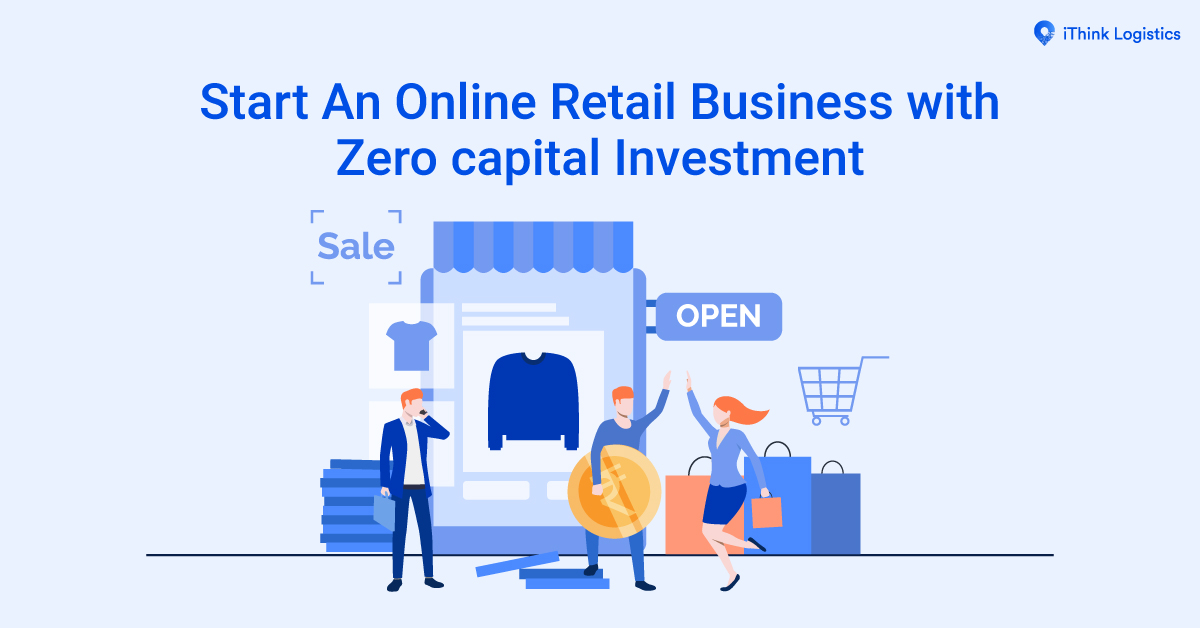
How To Start An Online Retail Business with Zero Capital Investment

Business is essentially about taking a risk…But even to take this risk, one needs money. 

While e-commerce has grown so much and so popular that you may not need as heavy an investment as a brick-and-mortar store could require, you still need money. 

However, there are certain mandatory expenses while setting up your own ecommerce store that can be controlled, reduced and sometimes completely eliminated. 

Starting an e-commerce business has become considerably cheaper thanks to various portals like Shopify, offering ready-to-use websites for just a minimum rent every month. Once your business picks up even a little, managing the rent isn’t a major problem. Therefore, you don’t need to wait around to accumulate lakhs of rupees. You can get started by setting aside some money for a few months and making your website. More so, you can also opt for a small business loan and kickstart a relatively low-risk e-commerce business. 

Follow these four steps for your next e-commerce business 

Select your products

The first and foremost thing you need to do is select the kind of products you want to sell. This is a major determining factor when it comes to cost. To give you an example, stationery costs less compared to heavy-duty furniture. So if you’re starting a business selling stationery online, all you need is a good printer, software to customize your products and some paper to get started. Another thing that benefits you here is that stationery is not an edible product which makes its shelf-life extremely long.

In the case of perishable commodities, if you don’t sell your products on time, they are simply wasted. From clothes to bags to books, you can sell anything online. But make sure that whatever you decide to sell has a long/decent shelf-life, the cost of manufacturing is less, or if you’re bulk buying, ensure you have good and reliable suppliers. 

Select your role

E-commerce gives you the benefit of limiting your role as a business owner. Depending on your product offering, you can decide to either be an end-to-end provider or a dropshipper. An end-to-end provider is required to manufacture/buy the products, list them online, market them, get sales, and deliver them to the customer’s doorstep.

On the other hand, a dropshipper is simply responsible for hosting a website and selling the products online. A dropshipper has to tie up with a third-party manufacturer/supplier who is responsible for directly packaging and delivering the product to the customer’s doorstep. Being a dropshipper saves you the hassle and cost of manufacturing, packaging and shipping

Build an e-commerce website/free online store

With websites like Shopify, building an e-commerce website takes only some minutes and relatively a lot less money. However, when you’re staring at an extremely low budget, you can opt for making a social media page of your business on any of the popular platforms. With Instagram having millions of users and shoppable posts alongside exclusive features for business accounts, we recommend posting product pictures on the social network for reach and awareness.

Being a customer favourite portal, it also gives you the opportunity to react closely with your audience. And the best part is that it’s free! 

Upload your products

Even amazing products often fall prey to bad lighting and low-quality photography that makes them come off as cheap or ‘knock-offs.’ This can be a deal-breaker especially when people can actually touch your product. While investing in a camera or doing a photoshoot works wonders, you can also use a good smartphone that you already have and take appropriate pictures of your products. Filters and in-built editing apps further help your products look great at the same time give your listing a personal touch. 

Define your customer radius

The smaller the business, the more cost you’ll have to incur with respect to shipping since you will not have the advantage of processing bulk orders on a daily basis. Therefore, clearly define your customer radius to ensure that all of them receive an on-time delivery. Shipping to places near your manufacturing unit/warehouse costs less compared to providing pan-India/international shipping. 

Select a shipping partner

You don’t necessarily have to select a shipping partner that is well-known internationally when your products will be delivered only within a certain radius near your manufacturing/supplier unit. There are companies that cater to deliveries in even remote corners of Indian cities/towns. So the defining factor here is essentially the cost. Choose a shipping partner that is fast and reliable to build customer trust.

Depending on the product you are selling, you can either handle the packaging on your own and simply get the products delivered by the shipping company or leave all the hassle to them from the beginning. However, in the second option, your products will be required to be stored close to the fulfilment centre of your shipping company or in the fulfilment centre itself. 

Pro-tip

Always remember that a product costs money to be bought or to be made. But, a service involves human effort that can be delivered first and charged later. Therefore, the investment becomes relatively less. However, please note that service providers often require expensive equipment which may take away all your budget. In such cases, avail EMI on equipment and ensure that they’re of good quality so that they can serve you longer. 

Categories
E-commerce Logistics E-commerce Marketing

How Does Online Shipping Work?

The touch and feel of a product can often be your bestseller or a deal-breaker. However, e-commerce doesn’t offer this advantage. As a matter of fact, it is one of the main reasons why shipping is crucial for an e-commerce business owner. 

With more and more competition, consumers are hoping for their product to arrive faster than the due date. And with each passing day, their anxiety slowly turns to resentment which may drive them away from your product or brand entirely. The golden word namely, ‘free shipping’ may seem like the obvious approach to your shipping strategy for winning over the hearts of your consumers. However, this is just the tip of the iceberg. 
Read on to know more about online shipping. 

How does online shopping delivery work?

List your products

First and foremost, list your products on a third-party marketplace or your own e-commerce website for your customers to see. Make sure that you mention the right titles, visuals and product descriptions. Don’t forget to set up a payment gateway for easy checkout. And most importantly, decide whether you’re offering only pre-paid orders or also providing cash on delivery. 

Research on shipping strategy

Most high-priced products have larger margins which allow the seller to offer free shipping. However, with products that are reasonably priced, this may not be possible. If you are sure that your product is unique and worth it, people are usually willing to pay a small shipping fee. You can also offer free shipping across all orders, free shipping on orders above a certain price, partially-free shipping, and completely paid (additional fee) shipping. 

Define your delivery radius

The most thing you have to do before signing for a shipping company is defining the radius. Depending on whether your products are possible to be delivered pan-India or internationally, pick a shipping partner. While there are companies that provide quick cross-border delivery, there are some that deliver even to the most remote areas of the country. 

Store products in the fulfilment centre

Once your customer places an order, it’s a ticking clock till the product is delivered to their doorstep. And as an e-commerce entrepreneur, you need to ensure that this process is as quick and smooth as possible. For starters, always prefer to have your products stored in a warehouse that is closer to the fulfilment centre of your shipping company for faster pickups.

You can also choose a shipping partner that provides storage in its fulfilment centre itself and save you the hassle. However, if your product has special needs, like perishable commodities, you may need to look at cold stages. 

Packing and Processing in the fulfilment centre

Once the shipping company gets an update of your product being sold, it immediately gets the order transferred, processed and packaged, all under one roof.  Check that you’re not overspending on the packaging and choose a shipping company wisely. 

Order is delivered

Finally, once the fulfilment centre gives its go-ahead, the shipping company is all set to deliver it. Most shipping companies have a large fleeting service including bikes, cars, scooters, planes, etc. Thereby leaving the hassle of delivery to them.

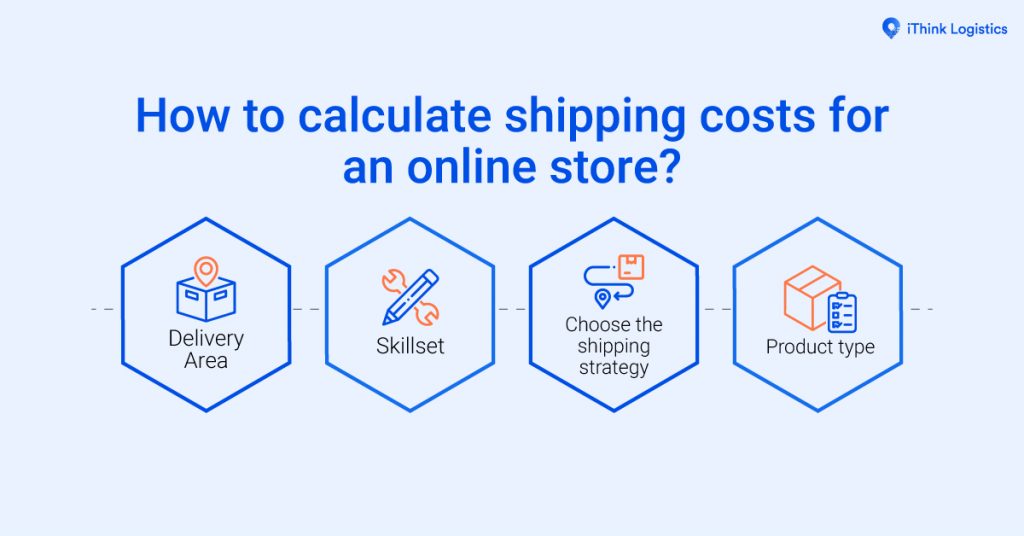
How to calculate shipping costs for an online store?

You might want to consider a few important points before finalizing the shipment part of your business model. 

Delivery area

To calculate the shipping cost, first zero down on the delivery radius. If you’re in the business of perishable commodities, it is advised that you keep your delivery radius small to prevent the product from getting spoiled in long transit. You can also deliver only within the city limits, state limits, country limits and even internationally.

However, the more inter-state and international your ship, the longer the transport and the more documentation you will need. All of which comes at an additional cost. However, one of the advantages you can get is that when you ship to a larger radius it is when you usually have a lot of orders, which can help you bring down your overall shipping costs. 

Skillset

Shipping is a complicated thing. From the storage to the processing to the packaging to the final shipment and delivery, your product will be passed through several hands and probably even machines. Ensure that you hire and train the staff efficiently to reduce discrepancies and mishandling of the product. The last thing you need is your product getting damaged or worse, destroyed in the fulfilment centre when you’ve spent all that money on marketing and advertising. 

Choose the shipping strategy

‘Free shipping’ is indeed attractive for a customer but not always the most viable option for a seller at all times. Always remember that digging too deep into your pockets for free shipping may end up costing you enough to shut your business down. So the most reasonable solution here is to offer paid shipping or a ‘shipping charge.’

This charge can range from nominal rates for closer distances to slightly higher rates for further deliveries. You can also offer a surge charge when a customer opts for express delivery. Because even this way the customer knows that you are keeping your word as well you are not increasing the cost from your end. It is preferable that you partner with a shipping company that offers you the benefits of large-scale shipping to further reduce your cost. 

Product type

The bigger the product the more packaging material and storage space it will take. Considerably, for smaller products, they can often be packaged with another one of the same kind as a bundle and save you some cost. However, small products may not always have the same value as a product that is larger. One more crucial thing to consider is the type of product.

Fragile products may require layers and layers of buffer space and airbags for safe transport, which in turn increases the cost of shipping. Therefore, first, determine the ideal way to package and ship your product and then decide where to cut costs. 

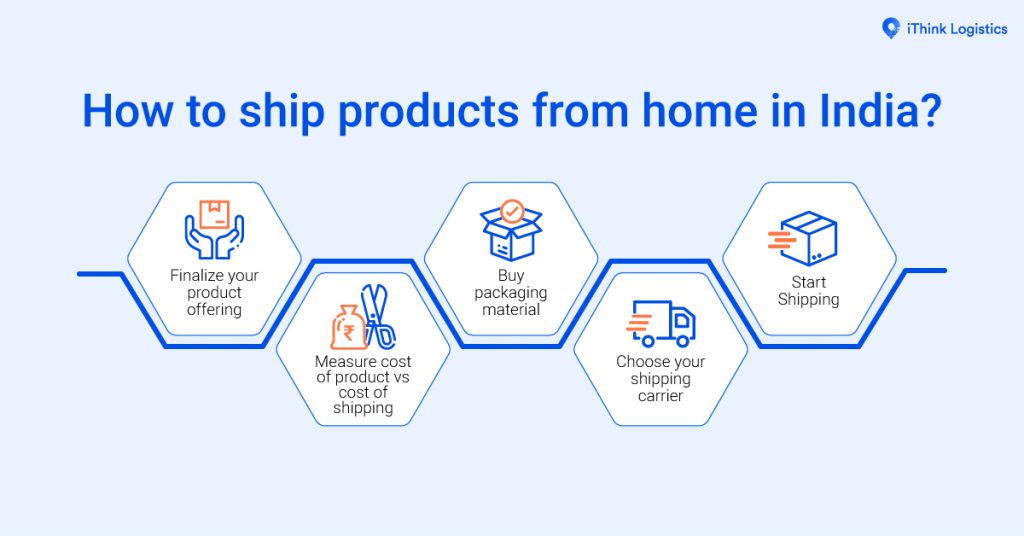
How to ship products from home in India?

If you’re a home business owner and require shipping, you can now do so in 5 easy steps. 

Finalize your product offering

Like we mentioned before, the size, weight, dimensions and fragility of your product determines how elaborately you need to package your product. 

Measure cost of product vs cost of shipping

If it’s a product of less value, shipping might get expensive. Therefore, reduce the cost by offering mandatory orders of a certain number of units to avail free shipping. For individual units, consider charging a shipping fee. 

Buy packaging material

From foam boards to cardboards to bubble wraps to scrap cloth, the biggest benefit of packaging at home is that you are in control. Depending on the nature of your product, choose the right packaging material, buy it in bulk and use it to manually package your product. By doing so, you will save the cost of additional labour but you will have to spend more time on your business.  But being a small business owner, that shouldn’t be a problem, right? 

Choose your shipping carrier

Big shipping companies are reliable and efficient. Smaller ones have more room for customization. Big companies often reduce costs because they ship multiple products in bulk. Small companies on the other hand tend to be budget-friendly in order to break even in the market.  To put it simply, each side has its advantages and drawbacks. Pick one that works best for you according to your delivery radius. Look for shipping companies that provide same-day deliveries, express deliveries, and next-day deliveries so that your customers don’t have to wait for long. 

Start shipping

As a small/home business owner, there are going to be ups and downs on the learning curve to successful shipping. So make sure that you convey in advance that shipping will take a certain number of business days. Do not provide express shipping unless you’re sure that your product is packaged and ready to be shipped. 

Conclusion

No matter how big or small your e-commerce business is, there is always a shipping company that will suit your needs. All it takes is taking your time, measuring your costs thoroughly, and not hurrying into the process. Timely and budget-friendly deliveries play a major role in building customer trust. So, choose wisely. 

Categories
E-commerce Logistics

How to Sell Products Online in India (Updated 2021)

It is a surprise that e-commerce has massively expanded all thanks to the convenience of shopping from home in a pandemic-stricken world. However, what you probably didn’t know till now is that you too can become a part of the million-dollar empire, all by starting your own business. In fact, it doesn’t even have to be your own online business. You can simply sell products online via an established e-commerce business website and still mint money. 
And how exactly will you do so? Let’s find out! 

Points to be considered while starting to sell online

Choose platforms you want to sell on

Amazon is by far the world’s most successful and largest online marketplace. While you can definitely consider listing your products there, also know what other options are available. You can be the master of your own business and not split profits with a marketplace by launching your own website. If you’re starting with a minimal budget, you can also consider opening an account on popular social media platforms because it’s completely free!

Thorough mapping of the cost

No matter where you decide to list your products, it all comes at a certain price. While established marketplaces give you the benefit of more awareness, they also eat into your profit shares. Hosting your own website has become quite easy and budget-friendly thanks to the likes of Shopify. And even social media seems lucrative because it’s free.

However, you must note that till your customers don’t go on your product page, there’s no buying happening. And to get your customers on your product page, you need ads and promotions that cost money.

It is recommended that you define your audience from day one and market your products only to them so that you don’t waste money in reaching the wrong audience. This is where digital advertising greatly helps.

Locking in on your product offering

Selling online is no longer a new trend. It has been tapped by hundreds of businesses that have made much from its potential. Therefore, your biggest takeaway here is the massive competition! It is vital to ensure that either your products bring uniqueness to an existing market, have the potential to create a new market, or offer customization. 

Identifying the customers & popularity of the marketplace

While established marketplaces do guarantee a massive audience, it is not always that this audience is your audience. To put it simply, a marketplace selling homeware may have lacs of users. But, it may not be the ideal place to sell your high-fashion brand. Even if both websites sell high-end products, it is unlikely for people to shop for fancy clothes from a website that sells a cookware range. 

Finalize your shipping/order-fulfilment plan

Some e-commerce marketplaces come with a contract that offers order fulfilment which makes the seller in charge of only listing the product and not worry about delivery at the door. However, even when you’re hosting your website, you can partner with various shipping companies to handle your logistics. All it comes down to is which service is the most cost-effective, quick and suited to your business. Please note that in the case of perishable commodities, you have to have your own cold storage or pick an order fulfilment centre that has one in it. 

Rules

The temptation to sell on multiple marketplaces definitely exists because each place has its own benefits and customer base, you might want to read the fine print before signing a contract. Do check twice for selling on rival marketplaces especially when adhering to sale prices and customer incentives. Also, consider the cost of hosting your product on one marketplace vs listing it on many. The cost is only worth it if the revenue lives up to the expectation. 

Advantages of selling online:  

Relatively low cost compared to physical stores:

When it comes to selling a product, the first thing you need is a place to sell it from. And these days, with websites like Shopify, making that place on your own e-commerce website is relatively more cost-effective than making it with brick and mortar. Plus the cost of maintenance and rent drastically falls when you’re hosting an online marketplace. 

Targeted marketing:

Selling online gives you the benefit of spending marketing money on only those leads that are extremely likely to convert. To give you an example, let’s say you put out a print ad about your brand new store in a plush mall. Lacs of people buy the newspaper with your ad and thousands read it. However, you never know who those thousands are and if at all they are the right audience. If your ad for baby clothes is seen by new parents, great.

If it is seen by middle-aged people with grown-up children, they are extremely unlikely to buy it which automatically becomes a wasted ad spend for you. However, selling online changes the game completely. Through the power of social media and analytics, you can make sure that the ads you run are seen only by new parents who are more than likely to make a purchase. 

Easier remarketing:

Remarketing is simply showing your product repeatedly to the customer that makes them highly likely to make a purchase sooner or later. Indeed something an online seller cannot do without. While running print media and TV commercials will bill up lacs or crores each time, digital remarketing is far more cost-effective. Remarketing also helps you gather a steady customer base that can be directly targeted for any launch or future expansion. 

Quick reach to your website/product:

The good thing about selling online is that people don’t have to walk up to your store. They just have to click. And digital media makes this clicking so simple that they don’t even have to type the website name anymore. Once you run ads, people have the convenience of simply clicking on the ad’s call-to-action and being redirected to your website in seconds. 

Easy upscaling:

Adding a new page to your existing marketplace is definitely less expensive than buying the neighbouring store to expand. Plus, you can easily make your website available to global customers and directly start marketing to them without dealing with the additional costs of setting up a store in the respective country. 

Disadvantages of Selling Online

Zero to no customer interaction:

While it may sound great to make money sitting behind a screen, it is not so great when it comes to building relations. Brick and mortar stores offer the opportunity to give people a full taste of the in-store brand vibe and a more personal experience with the help of sales representatives. Both of these are missing in an e-commerce store.

This may keep your customers from not making a definite decision or simply become one-time purchasers. And most importantly, customers will never try to contact your customer service to say how good their order is. They will only call to complain or get answers. Therefore, be ready to have your first interaction with them when they’re angry, upset, confused or disgruntled.

Delays with shipping:

No matter how user-friendly and quick shopping experience you provide to your customer, the journey is not complete till the customer doesn’t get the parcel in his hands.  And sometimes, delays in shipping are caused by situations out of your control like bad weather, traffic, short-staffed fulfilment centres, or more recently, a pandemic-induced lockdown.

While customers know they have to wait, longer than expected waiting time can spoil your name for your fault. It may altogether drive the customer to a competitor that may sell the same product but deliver faster. 

No actual contact with your product:

Unless you’re the manufacturer who visits the factory/workstation regularly, or a small business owner with the inventory right in your house, you’re having little to no contact with your product. More often than not, your products are stored inside fulfilment centres for quick processing, packaging and delivery. Therefore, you have no idea as to in what condition your product was shipped out. More so, you will also be blamed for physical damages to the product when they reach the customer even though the weather may have caused it. 

Conclusion

Selling online is highly competitive but also very lucrative. And whether you’re starting with more capital or less, you have ample opportunities to list your products. Amazon and Flipkart are excellent examples of marketplaces. Many small and regional businesses have boomed all thanks to the exposure they received via these giant marketplaces. So what are you waiting for? 

Build your e-commerce website today or start listing on one! 

FAQs

  • How to sell products online in India without GST

The truth is that irrespective of any product, you simply cannot sell online on any giant marketplace like Amazon and Flipkart without a GST number. However, there are some websites where you can, namely, Infibeam, Craftsvilla, and e-bay among a few. 

  • How to sell a product online in India for free

Whether you build your marketplace or list on one, there is a fee that you need to incur. However, a partially free option for you can be simply making an account on social media. The reason we say partially-free is because you won’t be charged to create an account and upload pictures of your products, but you will be charged to run ads that get the right users. 

  • How to sell products online successfully

While there is no one magical answer to this question, there are many possible solutions. Whether you list on an existing marketplace, open your online marketplace or sell through social media, it all comes down to your product being genuinely good, mapped marketing spends that get interested users on board, consistency, and quick delivery. 

  • How to sell products online from home? 

Why just home, with an e-commerce website you can sell your products while you’re on vacation! All you have to do is buy space on the world wide web for your website and operate it from just about anywhere in the world! 

Categories
E-commerce Logistics E-commerce Marketing

What is an eCommerce Business and How does it Work?

India’s eCommerce orders volume increased by 36% in the last quarter of 2020, with the personal care, beauty and wellness (PCB&W) segment being the largest beneficiary. This growth we were talking about since last year, and now data speaks up for itself. 

A lot of people are excited to start an eCommerce business. If your goal is to make money – then the goal should be a scalable and profitable business that lasts. It is vital to have a long-term vision for building an asset that brings out the best value to the market.

If you’re reading this blog, then you will get an end-to-end process of getting started with the eCommerce business and make it do wonders. And below is what we will cover in this blog…

There is nothing more rewarding than starting your business and watching it grow. You hustle and build it up, and no one can take it from you. When you think of an eCommerce business, it is even more exciting, as you can begin with minimal capital.

So what exactly is an eCommerce business?

eCommerce, known as electronic or Internet commerce, refers to buying and selling goods through the Internet and building up an online store with assets like website, social commerce, and affiliate marketing. 

This kind of business has become a vital part of modern-day living. Being able to walk through the countless products without leaving behind the comforts of your home, which genuinely makes eCommerce a convenient way to shop in a modern way.

Types Of eCommerce Business?

Now that you’ve planned to start an eCommerce business, the odds are that you’ll fall into at least one of the four different categories. Each of the categories below has its benefits and challenges, so know what bucket your ideas fit in well and think about the opportunities the categories might have for you:

Business To Consumer (B2C) 

Any business sells products or services to an individual consumer, e.g., buying a pair of shoes from an online retailer.

Business To Business (B2B) 

When a business sells goods or services to another business, e.g., a manufacturer selling goods to a wholesaler

Consumer To Consumer (C2C)

Any consumer selling product or service to another consumer, e.g. selling an old mobile phone on OLX to another consumer

Consumer To Business (C2B) 

In this model, a consumer sells their product or services to any business or organization, e.g. An influencer offers exposure to their online audience in exchange for a fee.

Before we proceed to how the eCommerce business works, it’s time to think back to how you stopped years ago. Where did your groceries, clothes, gadgets? Doing business has transformed the way we shop today and refined to what more is possible.

As businesses unfold, there are other five value delivery methods for eCommerce innovation. Look below:

5 Value Delivery Methods For eCommerce Innovation

Consider if your business model is a car, then the value delivery method is the engine. Here’s a catch! How will you compete to create an eCommerce business which is worth sharing? To make it simpler, we’ve listed below a few of the popular approaches taken by the industry leaders:

D2C – Direct To Consumer

This usually is for manufacturers, who cut out the middleman, a new generation of consumer brands that have seen rapid growth.

White Label & Private Label:

You can apply your name and brand to a generic product purchased from a distributor in’ white label’. Whereas in the ‘private labelling’, a retailer hires a manufacturer to create a unique product for them to sell exclusively. By opting for ‘private labelling’, you can lean on your investments in design and production and look for an edge in marketing and other sectors.

Wholesaling

In this approach, a seller offers its product in bulk at a considerable discount. Wholesaling, though, is a traditionally b2b practice, but many retailers have offered it to budget-conscious consumers in a B2C context.

Dropshipping:

One of the fastest-growing methods of eCommerce business is dropshipping. These marketers sell items fulfilled by a third party supplier, like AliExpress. Dropshippers act as a middle person or mediator by connecting manufacturers and buyers.  

Subscription Service:

Back in the time, publishing companies used a subscription model to deliver books to their customers every month. With a rise in eCommerce, businesses are going beyond the monthly subscription clubs. Today, every industry or brand has opted for subscription services to bring better convenience and savings to their customers.

After choosing the business model, the next step is to learn how the eCommerce business works

How the eCommerce business works

As we know, deciding on a product or service to sell is vital but what falls after that is what we’ve covered below:

A proper mechanism to accept orders:

  • Once a customer has browsed your online store and decided on what they would like to buy, then comes a process that accepts the order. It starts with software that runs the shopping cart. 
  • In addition to processing the order and updating the database, a shopping cart also looks after various tasks: 
  1. Computation of taxes
  2. To process the discounts and coupons.
  3. Adding the saved billing and delivery address of the customer
  4. Upselling
  5. To ensure the acceptance of terms and services and other conditions in case of a sale.
  6. Generating codes, invoice number, order number, tracking details etc 
  7. Giving various delivery options to the customers
  8. Redirecting customers to payment gateway

In case of ebooks or downloadable content, then redirect the customers to the download page.

A Proper Payment Mechanism:

In most cases, eCommerce transactions involve transaction money.

This process is conducted through software called a payment gateway. The payment gateway provides various payment options that accept identification details, such as credit card numbers, and authenticates customers using a password, CVV code, and other authentication factors.

Exshiptional Delivery:

We genuinely agree when people say that effective logistics is the key to any successful eCommerce business. So, it is vital to choose the right logistics partner that can help you deliver the goods to take care of products in the warehouse, which will help you save time and additional cost.

Better Customer Service To Up Your Business:

Every customer needs to be given the best service, from pre-sales to post-sales. Before the purchase, your customer might have queries related to the product not mentioned on the website. And after the purchase, a customer might have queries related to usage, enhancement, or repair. The whole process of customer service will decide if the customer will retain or look for another seller. Here you need to watch every step to grow your business and make it do wonders.

Reverse Logistics Needs To Be Looked After:

In today’s time, there is no product that is error-free. As a result, some products might be damaged, may have stopped functioning, or the wrong product must have been delivered. Such errors might result in a reverse logistics process. Reverse logistics means when the customer sends the product back to the seller, and this usually happens when a customer raises a return on the website or due to reasons.

Now that you’ve understood every detail about the eCommerce business, you might want to leave the blog here and go back to starting to work on the business idea, but we say, wait! Because it is essential to know the pros and cons before hurrying to start an eCommerce business:

Pros and Cons to start an eCommerce business:

Speed and Flexibility:

 One of the most significant advantages is that eCommerce businesses can be operated entirely from home or on any given schedule.

By using the tools available by online hosts and other eCommerce resources, setting up a store can be seamless and a quick process. 

Minimal Startup Costs:

Before the eCommerce business became popular, starting an offline business required huge budgets. But with the rise of eCommerce, business owners can set up the whole online store within minimal budgets. Even for wholesaling and drop-shipping companies, access to a large inventory of products is highly affordable.

24/7 Operation:

There is no 9-5 job for the Internet, and so online stores are always open. As a result, eCommerce owners can make profits even when they’re on vacation.

Competition:

One of the challenges of starting an eCommerce business is the competition. There are a million sites that the seller has to compete with for similar items. It can be a challenge to gain the share of the market from the existing business.

Time Consuming To Develop Brand Trust:

Consumers are sceptical of businesses that they haven’t made purchases with or not referred to. People are most likely to stick with businesses they know, which may be a task for startups to shift their focus from an existing brand to theirs. 

Technical Problems:

Even if there are various tools to set up an eCommerce business with shopping carts and payment gateway, websites might often stop working for various reasons that may impact sales.

Conclusion:

Starting your business online is a great way to begin. And we’re extremely sure about it. Also, the number of businesses growing online is increasing every year. The competition is fierce, but will it be more difficult? We don’t know what the future looks like, but our tasks remain the same.

If you implement this guide to begin your online business, then you will be heading to success. What is your business idea? How are you planning your goals to make it grow massive?

Comment your thoughts below!

Categories
E-commerce Logistics E-commerce Marketing

Importance Of Packaging And Labelling In eCommerce Marketing

Developing your own e-commerce website, spending money on marketing, getting customers to order, shipping, and providing doorstep delivery. Not to forget curating the perfect products to sell. Clearly, you do so much when it comes to running your e-commerce business. But then your customer opens the parcel only to find it not the one they ordered or possibly damaged? Something’s not right here. 
And that is probably due to bad packaging and labelling. 

Read on to know why good packaging and labelling is non-negotiable. 

Why Is It Essential To Invest In Packaging & Labelling In eCommerce

Importance Of Packaging And Labeling In eCommerce Marketing

Protection from the weather

In the massive and tropical homeland of India, dynamic weather conditions are something that we can’t escape. From the scorching heat to the severe humidity to the heavy rainfall to the unexpected storm/floods, if your parcel is not packaged well, the effects of il-weather will find their way inside it. More so, perishable commodities can overripe or completely rot due to adverse weather. In fact, it’s worse when fluids involved land up leaking and destroying the customer’s parcel as well their faith in your company. 

Protection from bad roads

Have you ever said “The roads are terrible!” or “The ride here was too rough?”  Potholes, long signals, overcrowded streets and smoke from vehicles make journeys difficult. And the truth of the matter is that, if you go through this, so does your package. Because at the end of the day, most of the shipment trucks and delivery men use the same roads as us. Now imagine your customer opening their much-anticipated parcel only to see it damaged! Clearly, a huge waste of effort on your part and not to forget, the loss of a possibly loyal customer. Sturdy packaging that can withstand the numerous bumps on the road and the possible falling of boxes will ensure that your product stays intact. 

Attracts the customer

Manufacturers tend to put their products in fancy packaging, not just for safety reasons, but also to catch their customer’s eye that is wandering along with the store. Since your products are sold online, this shouldn’t be a problem. But even the most popular online marketplaces are heavily crowded these days. So when a person searches for your product, they will also be shown the same product by other companies that can be tough to outrun with poor packing. As a matter of fact, even if you’re selling your products from your own website, good packaging is mandatory. Attractive packaging & Labeling automatically gets people to look at your product. And once you’ve achieved the first step, informative labelling is what will keep them invested enough to buy your product. 

Sets a brand identity

Before you reach the packaging stage of your business, you’ve probably gone through the identity stage of creating your logo and finalizing your brand’s colours. So when it comes to packing, why not use it to further your brand’s identity? Just like the bright red and silver tin cans of Coca Cola, the sea-green label of Bisleri, the bright yellow carton of Frooti, and the red food boxes of McDonald’s, even your packaging can create an identity for you in your consumers’ minds.  

Lives up to social media validation

The social media culture has made consumers even more conscious as to what they purchase. With shopping hauls being uploaded every other day and bloggers promoting products on their page, poor packaging is simply unacceptable. And if you’re in the gifting space, packaging can make or break your business. People are on the lookout for hassle-free gifts. Gifts that they won’t have to wrap once again. This is where fancy packaging can make them choose your product over your competitors. More so, if you’re in the food business space, people think twice before putting something on their kitchen shelves, let alone consume it. So you have to make sure that packaging is ‘good-looking’ to rest on your customers’ kitchen cabinet. 

Complements advertising effort/ provides brand reinforcement

You spend lakhs of rupees on advertising and marketing. And good packaging is what will greatly help your efforts yield better results. For example, Every ad for McDonald’s ends with their bright yellow logo on a red backdrop. Now when people see others eating from a McDonald’s food package, they see the bright yellow logo with the red backdrop and are once again reminded of the brand. Indeed a classic example of your package saving you advertising cost as well your brand getting space in your consumer’s mind. Please note that the brand colours play a big role in the packaging. Therefore, it is advised to establish and incorporate fixed brand colours in all your advertising platforms and packaging. 

Protection in other modes of transit

When your parcel is crossing the seas for days in a heavy container placed on a merchant ship, not having your products packaged properly is a deal-breaker. Delays in shipment by water are common. So ensure that your packages seal your products well, making them withstand the harsh weather and long commute. Also, if your products involve chemicals or some form of them, airtight packaging is essential to ensure that they don’t leak into the water causing harm to the environment in the event of unforeseen problems. Coming to air transport, just like our bags on a vacation, even containers of shipment get left behind at the airport for days sometimes. There is also the chance of your parcel getting interchanged with another one or worst case scenario returning to you after months. One of the things that help here is sturdy and airtight packaging that can at least protect your product from getting damaged. Secondly, with the label still on it and a completely visible return address, you can be more hopeful that your parcel will be returned to you. Thereby, facilitating order tracking. 

Protection from other packages

More often than not, you will notice your products being shipped in a container/truck/flight cargo along with products of multiple other companies. So in case, your product is fragile and not properly packaged, it is likely to get damaged by stacked and stronger packages around it. 

Easier tracking

Labels on packages often include the barcode of the product which can be scanned by the shipping company or delivery personnel to know the contents of the package as well as track the company and its return address. 

Less hassle with transit officers

In terms of international shipping and inter-state transport, your package has to be processed by the relevant authorities. Good labelling allows them to do so faster and reduces your customer’s waiting time when expecting a delivery. 

Provides a premium shopping experience

E-commerce shopping has become well-known for being a place to get good deals. Fancy packaging makes the product look more expensive, making the customer feel really good for having purchased it even on a discount on your website. Good packaging makes them know that you genuinely care about them and have gone out of the way to make sure that the product reaches them in perfect condition. 

Less chances of wrong delivery

While the packaging is essential, labelling is what will make your shipment reach the right destination. Large and broad labels with dark ink and big fonts enable delivery personnel to find addresses faster and not disturb the customer for directions. 

Less confusion for customers

It ever so often happens that the customer isn’t home to accept the delivery. This is when labelling saves the day. Because then even leaving the parcel with the building security ensures that it reaches the customer’s hands. 

More clarity for customers

A label should include everything from the exact order number, quantity and item name to the shipping address, return address, mode of payment and full paying price. When customers see this, it allows them to easily recollect the details of an order that they probably placed a few days ago.  It also allows them the freedom to open their package at their own time and not in a hurry because they are well aware of the contents inside. But that never really happens, does it? 

Conclusion

It is safe to say that good packaging and labelling protect your products and also ensure that they reach the right customer at the right time. While we won’t underestimate the importance of fancy packaging, we recommend doubling it up with a good old brown package that can withstand rough conditions. And yes, the extra taping, cushioning with airbags and cardboard definitely ups the cost, but it is essential to give the customer a safe, secure and tamper-proof delivery. 

Categories
Logistics

Same-Day Shipping: The Key to Customer Delight

Same day delivery is raging the Internet retail – and absolutely for all good reasons. Amazon’s profit more than doubled in the Jan-Mar quarter, thanks to soaring demand. If Amazon could figure out how to offer delivery in a matter of hours at a low cost, they could very well put retail stores out of business. 

But if you’re on the path of online business, then hop on and fasten your seatbelt as we take you on a ride to compete with big brands. Let us show you the checkpoints before we reach success.

There’s a sight ignorance and its advantages for consumers and brands/ companies regarding same-day delivery. But in recent years, the reduction in delivery time has lead to a very positive impact on e-commerce. According to a Go People report, almost 5 out of 10 consumers (49%) say that the same delivery is an added value when buying.

 There are various benefits of same-day delivery:

  • Improved customer satisfaction
  • Quick purchase decision
  • Save on shipment cost

Among others… But before we delve deeper into talking about benefits, it is worth understanding the definition of this type of delivery.

Same day delivery is what the name suggests; it delivers products in less than 24 hours, preferably within the same day. For example: If a customer orders with you in the morning and opts for same-day delivery, then by night (same day), your customer will receive the product. Does it sound exciting? Want to try out for your business too? Keep reading as we unfold on how to offer same-day delivery.

Setting up your business to not only be able to fulfil but also deliver the products within 24 hours can be overwhelming. But, the following tips below can make the process much simpler for you. So, here’s how you do it:

Put Your Website To The Test

To begin with, it all starts with prepping your online store, i.e. your website, to be able to deliver the products within a day. To keep your customer delight, you should first test your website if everything is working seamlessly. With faster shipping, you need to ensure your website loads quickly, Website should be able to handle the surge in traffic, listings of the products are perfectly done, and the checkout page goes through without any glitches.

Being specific is terrific

We always say be limitless with your business, but when it comes to same-day delivery, we say limit your reach! Try to limit your target audience/ customers you will be offering the same-day delivery.

Take A Hint From Previous Year’s Sales

Go back to the accounts book and check what trends from the previous year got you more orders. What are people’s buying habits? Which category of products has received the highest orders? What delivery option worked the best and, based on the calculation, keep the stock ready.

Make Your Business Tech-Savvy

Embrace the technology to make your business functioning simpler. E.g. you can use to TradeGecko to manage the inventory, while another tool, Channel adviser, can help with data automation and analysis.

Join Hands With A Reliable Logistics Company

If you’re a small or medium-sized business looking to save your overhead costs, opting for the right logistics partner can be a good choice. While choosing your logistics partner, it is essential to check if they can provide you end-to-end service, including shipping, customer service, same-day shipping an accessible dashboard to track details and many more…

Use Multiple Fulfillment Centers:

After deciding to choose your reliable partner, it is essential to assemble your goods near your customers. Opt for the fulfillment service with your logistics partner to make your delivery process go faster and simpler.

Organise The Process To Monetise:

There is no need to complicate things for your staff and you. Conduct an audit to under their tasks and try to streamline and align them with your logistics partner. This will help to make your order fulfillment and shipping process go much faster and seamless.

Keep Your Items In Order

Nothing can slow down the same-day shipping and delivery like an unorganised godown. Manage your inventory effectively or adopt the inventory management method such as slotting or improving your inventory turnover.

Bridge The Communication Gap

If you’re a dropshipping or manage your warehouse, it is crucial to maintain good communication with your courier and fulfilment partners.

Note: In case of dropshipping, make sure the vendor is reachable within seconds and have the order processing as soon as possible.

Transparency Is The Key

Customers are the king, Indeed! Set the expectation with your customers regarding the cut off time. For example, if a customer placed an order at midnight, communicate with your customer and inform them that they will be shipped the following day. By keeping things transparent with your customers, they know when to place an order with you for faster delivery.

Lastly, Network is Networth

As rightly said, it is not about what you know but who you know. Make the right choices with logistics partner, fulfilment partner and others to make your business functioning a lot easier. By having the right set of partners, you can count on having the fast shipping and delivery goals much more accessible to obtain.

For same-day shipping and same-day delivery, how many of the above points have you checked off in the list? Let us know. After prepping the list to set your business for same-day shipping, it is time to decide who can offer same-day shipping. Let’s find it out!

Every retailer who has an online business can offer same-day shipping to their customers. If you’re running a small business, you can head to your local courier service to offer same-day delivery. But it becomes your responsibility to make sure it gets packed there on time. 

In case you’re loaded with many orders and looking for a third-party logistics partner, then iThink Logistics is right here at your service. Typing up with a third-party logistics company can help to reduce the shipping cost and ensure faster shipping. 

When an eCommerce company ties up with third-party logistics, they can explore various shipping methods at different prices to know which best suits them. 

The best is that they don’t have to handle any of the eCommerce fulfilment themselves. 

Final Word:

Same-day shipping is a powerful choice, but some eCommerce sellers hesitate because of the cost. While there is a focus on getting orders, don’t forget to opt for better and enhanced courier options. That’s the best way to attract more customers and ensure more purchases. 

Before you leave, we have got a question for you? Have you given your customer the service of same-day delivery? If not, then what’s stopping you from doing it?

Categories
E-commerce Logistics E-commerce Marketing Logistics

A Guide To Help You Sell Handmade Items Online

You know artists who paint extremely well. You know creative minds who can give fashion a new name. You know home cooks who can give restaurants a run for their money. 

In fact, you even know jewellery makers who make funky and trendy earrings. Or perhaps, you’re one of them.
But you know what’s sad? You know your worth, your talent and your expertise. But the world is yet to recognise.
Appreciation from your loved ones is only going to fuel your passion. But, appreciation from the world is going to turn this passion into a full-grown business.
And we’ll give you the perfect guide to get started.

List products on a marketplace like Amazon/Flipkart  Sell on Instagram/Facebook Make your own e-commerce website 

Steps to help sell products online 

The world of e-commerce has gone from being a new player in the market to a giant hub of everything under the sun. From clothes to makeup to accessories to home decor, everything can be found online. But what helps you the most is that a majority of the things that are sold online can also be handmade. And if you have expertise in that, you have a wonderful business opportunity. 

Find your expertise 

In order to sell products handmade by you (or your staff) online, first, decide as to what you are going to manufacture and sell. If your product is unique, on top of being handmade, chances of getting noticed are higher as consumers constantly want something new or offbeat. However, if your products are not entirely unique, make sure that they have a special touch, a touch of your authenticity to differentiate them from others in the same category. 

To give you an example: Rajasthani craftsmen came together to sell clothing specially embroidered in their native designs. Once they finalized the products they would embroider on, their price range and their style, all they did was explore different platforms to sell. What started as a stall in a few exhibitions turned into multiple ecommerce stores where they currently list their products.  As a matter of fact, even textile experts from Gujarat started selling everything from clothing to everyday objects but with their special Ajrak print to stand out from the rest. 

Decide on manufacturing or procuring

In order to sell handmade products, you don’t necessarily have to make them by yourself. You can also procure them from skilled craftsmen and native experts while using your resources to list them online, advertise, sell and share the profit. All you need to do is find the perfect craft/art/print/style that is handmade and easy to extend in a variety of objects.  

Build your team

One must also know that e-commerce is known for fast selling. And knowing that handmade objects take time to be made, the customers are usually more patient. However, that patience eventually runs out and you can be left with angry customers if you don’t figure out a way to produce and stock more. Hence, it is important to make sure that your business doesn’t depend only on you for dealing with every aspect. Hire more people and train them to either assist you or take over some elements of your business on their own. 

Make your own website/register with an existing marketplace

To sell online, having a website with payment integration, customer redressal options and all the backend of an e-commerce store is a must. Depending on how small or big you wish to start, you can either make your own e-commerce website or list your products on marketplaces like Amazon, Flipkart, Qtrove, etc. or you can simply do both! Amazon Karigar is exclusively meant to sell handmade products. However, even making your own store is no longer difficult with the likes of Shopify to help you set it up in a few hours. Just make sure that you always choose your own unique domain name, so that it doesn’t affect your business when you switch e-commerce store partners from Shopify to maybe another one.   

Let’s give you another example: Many beauty brands started off by selling their products via Nykaa for better reachability and lower costs. However, with their products becoming more popular, they also started hosting their own e-commerce stores where customers can’t be distracted by competition and no vendor eats into their profits. 

Partner with a store, make your own store or do both. The choice is yours. 

Describe and advertise your products

While most businesses think of advertising as a luxury expense that they immediately cut to reduce cost, it’s actually a necessity. Big brands become big brands because of the successful and constant advertising. And for you to break into the clutter with handmade products, you already have an upper hand. Being handmade and not machine-made, you can capture the attention of your customers with advertising across social media platforms. Digital advertising/marketing comes with its perks. You are not blindly spending money on an ad to show to lakhs of people of which only a few hundreds are relevant. Digital marketing helps you define your target audience very well in terms of age, demographic, delivery radius, lifestyle and more. Hence with lesser spending, you can reach the perfect audience. Also, make sure that you describe your products and their uniqueness to retain the customers who come to your website. 

Select a third-party logistics partner 

You’ve made your own e-commerce store and you’re all set to advertise your products. However, you’re getting nowhere if your idea of deliveries is to manually deliver the product. This is only possible when your delivery radius is extremely small or your product needs to be hand-delivered, for eg: cakes. So to make sure that your products are delivered safely, properly and quickly, select a suitable third-party logistics partner to handle everything – pick up, processing, packaging, and delivery. However, when you partner with an existing marketplace, they often provide order fulfillment services through their own logistics chain. One of the biggest examples of this is Amazon Fulfillment Services that is available to all vendors who list their products on Amazon. 

Pros and Cons of Selling Handmade Items Online

Uniqueness of items:

While machine-made items ensure uniformity, handmade items lend a touch of authenticity. Because every handmade item is unique. Even skilled craftsmen who make the same products from time to time considerably improve their craft and churn out every batch different from the previous one. This helps products easily stand out. More so, handmade work is always considered original which further helps it differentiate itself from its competitors in the market. 

Easy customization and change:

A machine-made setup works in only one way and i.e., how it is programmed to manufacture products. However, handmade products give you the freedom to take up customized orders with ease. From embroidering names to carving special symbols, artisans are talented and flexible to accommodate requests, which in turn makes your products even more unique and your customer feel truly like a king. You can also easily change the product line as long as it suits you and introduces limited editions or new collections.

Environmentally-friendly:

Since machines are replaced by actual human hands, the load on the environment in terms of energy and emissions is considerably reduced. As a business owner, you can also use this as an important aspect to market your business. Many people are looking to reduce their carbon footprint through feel-good purchases that are easy on the environment. And your business of handmade items can easily take the limelight here. 

Issues with quality:

While handmade products are unique, they can time and again have a quality-control issue. To err is human and craftsmen or even you may end up making the occasional mistake that may cost your business anything from one ruined piece to an entire collection. 

High pricing:

While the market accepts the notion that handmade is generally more expensive, it can be particularly steep for customers in the case of very unique and time-consuming crafts. This in turn forces you as a business owner to charge higher in order to cover the cost of labour, raw materials, website, advertising and even your own profits. The higher the charge, the more limited your audience becomes. 

Low production volume:

Factory production allows you the benefit of mass-producing hundreds or even thousands of products in a short span of time, something that hands can’t provide. Handmade products are based on a craft, and craft takes time. Therefore, if your business really hits it off or you’re starting on a big scale, you will either have to employ a large labour force and pay overtime charges to keep your product offering a mix between factory products with a touch of handmade art. If your business permits, you can also take more time to deliver the products, but this might upset the customers. 

How to Price Handmade Items

The handmade industry is unregulated because you can’t simply put a fixed price on art. However, a good formula is to calculate your cost of supplies + per hour wages. Handmade product industries often pay per hour to their workforce working in shifts. Therefore, in terms of extra work, you will have to also count overtime charges as an added cost. But to break it all down simply, we’re stating a few points that you should consider while pricing your products. 

Delivery radius and charge:

While most traditional handmade items are made in rural areas since that is where a majority of the skilled craftsmen hail from, the market is usually urban areas owing to the high demand for unique and expensive handicrafts. Therefore, while pricing you must consider the transportation cost to the city and then to the homes of the respective customers in your chosen delivery radius. In case you are running a business of handmade products from your home or a place in the city itself, you should focus on the shipping charges to customers in the city and perhaps even pan-India. 

Special packaging:

Handmade items are often more delicate than factory products owing to their unique art and craft. For this reason, you may also have to incur expenses on special packaging that is suitable for fragile products. 

Time is taken to manufacture products:

Time is money, in the literal sense. Since these industries usually provide hourly wages, the higher the time taken to make a product, the more you’ll have to pay. Moreover, even skilled individuals don’t have control over certain aspects that are indeed more time-consuming and have various processes like dying, drying and more that take up a lot of time. 

Inventory and storage:

Like any other e-commerce business, even your handmade products must be stored somewhere. If it’s a home-run business all you need is a spare cupboard or a room. However, as any business grows, certain products have to always be in stock owing to popular demand. Also, you must consider keeping your inventory in a place that is closer to your shipping partner’s fulfilment centre, so that the cost of transportation is reduced.  

Cost of raw materials:

Lastly and most importantly, good handmade products require good raw materials which can become too expensive when not purchased in bulk. Depending on the popularity of your products, keep the stock of raw materials handy to reduce wastage of labour hours, increase efficiency and eliminate the high cost of last-minute purchasing. 

Do consider all the above-mentioned points when pricing your products.

Where to Sell Handmade Items Online

QTrove:

If your products are eco-friendly and healthy consumables, this platform is perfect for you. It specializes in selling natural and sustainable products from small scale businesses across the country. A website with over 5,000 products it has offerings across baby care, pet care, home care, personal care, food, beverages, and more. 

Craftsvilla:

Craftsvilla emerged from the simple fact that the artisans who put in their heart and soul in their crafts were paid the least, all thanks to lack of awareness of government schemes, inability to reach the right customers, unscrupulous middlemen, poverty, etc. Therefore, Craftsvilla started connecting local artisans to buyers in India and abroad through its e-commerce startup. From apparel to bags to home decor, it sells a variety of lifestyle products.  Craftsvilla specializes in selling products made with traditional art forms which sets it apart from much of its competition. 

Coppre:

Now, this platform has carved its niche in the space of all things made with metal. From popular copper bottles to all tableware, serveware and home decor, everything it sells reeks of authenticity and sophisticated craftsmanship in metal. It is one of the few marketplaces that take wholesale orders on a B2C website. 

Social Media:

Indeed one of the most powerful mediums to reach a vast customer base is social media. And more than anything, it’s free to register and start developing on your own page on relevant platforms. However, one must know that every brand has made its presence felt on these platforms. Therefore, to stand out or even get noticed by customers, expenses to run ads and promotions will have to be incurred. One of the biggest benefits is that once a customer follows/likes your page, they will be able to see your content organically. So, you can spend money on acquiring new customers instead. 

Conclusion

While selling handmade products online is not new, it is indeed a lucrative space for you to get started. However, make sure that your products are unique so that running ads on them yields good results. Also, it’s a must to ensure that your products seamlessly fit into the modern lifestyle. Because anything that is ‘different and yet functional always has the potential to make a name in a cluttered market. 

FAQs

How to sell handmade products on Amazon India?

Selling handmade products on Amazon India is very easy and you can do it in 3 easy steps. 

Step 1: Open an Amazon Seller Account by filling a form and submitting the required documents. 

Step 2: List all your products (no maximum limit) on the website along with their price and product details. 

Step 3: Run ads across digital platforms to drive users to your product page on Amazon. 

Do you need a business license to sell handmade items online?

Yes, you have to carry a Business licence to sell Handmade items in India.

Categories
E-commerce Logistics Logistics

What is a Fulfillment Center and its Importance

Back in the day, having a website was a big thing. 

Then somebody started offering services online. 

Then somebody started selling books online. 

Then came clothes, electronics, food…and practically the whole world.

And while the many benefits of the e-commerce business model have made it possible for business people to create empires, one true hero is never recognised. 

The one who fulfills the journey from ‘Place Order’ to ‘Order Delivered.’ 

The one who runs the show in the backend. The one who makes it all possible. 
The fulfillment centre. 

What is a fulfillment centre?

You’ve heard of shipping companies, logistic service providers, warehouses, inventories, supply chains and more. But what is this fulfillment centre? 

If we have to say it like an outsider, it’s a brick and mortar facility that has a lot of people, a lot of parcels, and a lot of movement. But as an insider, it is the hub of all the activity that goes on after a customer has placed an order until it reaches him. 

You already know that if an e-commerce website lists a product online for sale, it has to actually have that product. But a fulfillment centre doesn’t just keep an inventory/stock of the products. It also takes the responsibility of sorting the products category wise, processing the received orders, packing the products, and then shipping them to the customer’s doorstep. 

While physical retail stores have sales representatives do this behind the counter, e-commerce giants do this in large fulfilment centres. As a matter of fact, Amazon – the world’s largest marketplace also has the world’s largest fulfilment centre!

However, one must note that maintaining a fulfillment centre can go from convenient to costly in no time. Unless you have a big business or high margins, it is recommended that you hire a fulfillment centre rather than setting up your own. Since fulfillment centres cater to not just one but multiple e-commerce businesses, the cost of hiring them becomes relatively low. 


How are fulfillment centres different from warehouses?

A warehouse is a place where businesses keep their inventory. A lot of e-commerce businesses tend to have their own/rented warehouses where they stock up on all/best-selling products. 

On the other hand, a fulfilment centre is more like a distribution centre. It is the place where your customer’s order is stored, packed (after receiving the order)  and shipped from. 

To make it simpler, we’ve given a fun example. 

A warehouse is like a pantry in your kitchen. It is where you stock up and store all your food supplies for cooking later. 

Whereas a fulfilment centre is like having a cook in your kitchen. The cook is responsible for taking the food from the pantry, cooking it and serving it on a plate to you. All you have to do is hear the praises about the excellent food. 

Criteria to select a fulfillment centre?

Location

While e-commerce businesses often provide doorstep delivery to customers staying miles away, they must think twice before selecting a fulfilment centre. The real challenge here is to strictly define your shipping radius. Because ‘free shipping’ is a buzzword that is driving e-commerce businesses today. And the farther the fulfilment centre from your customers, the more expensive the shipping will be. So it is recommended that you choose a fulfilment centre and store your products nears to your customer.

Connectivity

Just because we want a fulfilment centre that is near our customers, we cannot expect it to be in the middle of a residential complex, or sometimes even within the city’s heavily populated premises. With more and more fulfilment centres being located outside the city, you must make sure to select one with easy and maximum connectivity. Things to keep in mind are the nearby highways, free roads, service roads, road safety (especially during monsoons), exit ramps, average traffic, etc. While it’s not mentioned everywhere, we recommend you take a look at the total fleet of vehicles at each centre. The more vehicles they have at their disposal, the faster the orders will be fulfilled. 


Workforce

E-commerce businesses can never provide the warmth of in-person shopping. But what they can, is super fast delivery to the customer’s doorstep. Now imagine waiting for your order, only to find a piece of it missing or worse, damaged. Sometimes, the order is so late, that the business ends up losing customers. And a majority of the time, the reason behind angry customers is a gap at the fulfilment centre. So make sure that the centre you choose has a skilled workforce. More so, large centres have a healthy balance of automated processes and experienced employees to make sure that the mistakes are less. 

Facilities

In the world of technological advancement, even fulfilment centres have gone from houses of manual labour to a mix between machine automation and highly skilled professionals. Depending on the frequency, urgency and demand of your products, select a centre that best suits your needs. Also, check for the size of the centre to know whether your products will be categorized well or piled up in a corner. Take a look at the size of the staging and storing infrastructure, the packaging station and supplies and the transportation. 

Environment

One must note that the climate of a place can make or break your business. While commodities can be packed and stored quite easily, fruits, vegetables and dairy products often require cold storage within the fulfilment centre. More so, in a tropical country like India, even the delivery of perishable commodities has to be super quick so that the weather does not affect the quality of the products. To do so, the fulfilment centre should have great connectivity. The same applies to the pharma industry. In case, you have a different warehouse, make sure the distance between your warehouse and fulfilment centre is not much. Lastly, check for frequent flooding, earthquakes and more in the area of the fulfilment centre that you choose. After all, losing your products to unforeseen climates is the worst! 

Why is it important to have a fulfillment centre?

While being an e-commerce business owner takes away the need to have a physical retail setup, it does require you to keep your stock somewhere. And this place is always the warehouse. But as stated earlier, a warehouse just solves half the problem. You still have to ship your products. So instead of renting a warehouse that just stores things, stock your inventory in a fulfilment centre that not only stores products but also prepares them for shipping. So that whenever the shipping personnel is ready to collect the parcel, it is completely and securely packaged.

More so, a fulfilment centre is a key to solving backend delays. You may make it extremely easy for your customer to place an order on your website but if your delivery takes time, you may lose the customer altogether. Also, sloppy packaging makes the customer feel that their products have been tampered with. It gives them a feel of sub-standard quality, being cheated of their money, or worse, internet fraud. A fulfilment centre has skilled staff to make sure that this is never a problem. They not only wrap your products well but also package them securely to make sure that bumpy roads, harsh weather and even delays cannot deteriorate the quality/damage the products. 

Conclusion

If you ask us, the true success of an e-commerce business is when its customers don’t question anything except the product price or variety. Because a fulfilment centre with a good shipping company ensures that no matter what is to be shipped, it will be done easily, quickly, and efficiently. 

FAQs

Can a fulfilment centre handle all types of products? 

  • The answer is no. If you are in the business of perishable commodities, you require a fulfilment centre with a cold storage facility. If you’re into heavy-duty tools or industrial equipment for a B2B market, you need a fulfilment centre that can comply with the safety measures and provide customised packaging. 

Can a fulfilment centre handle a large number of orders?

  • Yes. That is exactly what a fulfilment centre specializes in. Fulfilment centres are huge facilities with automation and a vast, skilled workforce to handle the requirements of not one but multiple e-commerce players. So they are completely used to thousands of orders being packaged and shipped every day. 

How accurately do they pick and pack the products?

  • This depends on the track record and staff quality of the fulfilment centre. A centre with the least errors in packaging speaks for itself. More so, with automation, the accuracy levels have increased. However, one must check for the quantity and quality of staff in a fulfilment centre before making the choice. 

Do fulfilment centres provide real-time updates? 

  • Yes, they do! When e-commerce players need to give the customer real-time updates of the stage of shipping their order is in, they require the fulfilment centre and the shipping company to do so as well. However, depending on your product there may be many processes involved in a fulfilment centre. Therefore, the updates can be of two kinds – a generic update that mentions that the order has been processed or; a detailed update of the product in every stage from picking to packing. 

Categories
E-commerce Logistics

The Concept of E-commerce Business Model

What is an E-commerce Business Model?

Imagine coming home to a ton of parcels that you’ve ordered from giant stores like Amazon and Flipkart. Happiness level? 100! After all, who doesn’t love unboxing?

Now just imagine that instead of spending money on all those parcels, you’ve made money on them. And that is the magic of e-commerce business model or e-business models.

Understanding the Concept of E-commerce

To define e-business model in simple terms: It’s a store. Just like any other store. But instead of the four walls and a shopkeeper, you have a website where you showcase all your products. Instead of displaying your products on shelves, you list them on your website. To put it in simpler terms, you’re creating an online marketplace. And the biggest advantage is that people can shop from your eCommerce store anytime and anywhere!

The concept of e-commerce revolves around creating digital marketplaces where transactions happen online. As a matter of fact, even payments can be made securely. And with the likes of Amazon establishing trust in the minds of people, getting customers to start shopping on your eCommerce website is easier than ever. All you need are unique products, a website to sell and a good payment gateway to get started.

Also Read: Top 10 Profitable E-commerce Business Ideas 

What is an E-business Model?

When we explain e-business models, we’re essentially talking about the framework that defines how your online business operates, generates revenue, and delivers value to customers. As an eCommerce businessman, you can sell just about anything. Clothes, shoes, food, plants, stationery, novelty pieces, spectacles, and the list goes on. Your customers will place an order, you will accept the order, package it and ship it to the customer. You can provide them the option of paying online at the time of purchasing/checkout or even collecting cash on delivery.

The best part is that the e-commerce business model is not just related to physical products. You can also sell services. Urban Company is a notable example of a successful eCommerce platform that sells professional services. You just have to select a service, enter your address, make the payment and have the professional visit your home.

Some popular e-commerce websites for you to visit include Nykaa, Myntra, AJIO, etc.

Types of E-commerce Business Model

While e-commerce business model is one of the most promising business opportunities in the Indian business market, you have to decide which of the four models you would like to opt for. Understanding what is e-commerce model types will help you make an informed decision.

Let’s learn more about them below.

B2C – Business to Consumer Model

This commerce model involves a business selling their goods/services directly to the consumers, without any middleman.

Amazon is a classic example of the business-to-consumer model. It’s a marketplace where various businesses list their products along with their prices. Customers can browse through a wide catalogue, read about the products, and make a uniform decision of buying.

In the same way, you too can make your marketplace and start selling your products. However, the benefit of having your own e-business is that it will only list your products. No competitors to steal your customers. Whereas on giant marketplaces like Amazon, there are chances of your product not getting the limelight because of excessive competition.

But keep in mind, that marketing costs can vary depending on where you choose to list your products.

A B2C model is generally preferable for customers because the price is relatively low. It’s also perfect for homegrown brands/home businesses to expand their boundaries and reach more customers across the city, country, and even the world.

So whether you’re a growing brand or an established one, the results of having an e-commerce business model are rewarding!

B2B – Business to Business Model

This e-business model involves a business selling their products/services directly to another business without any middleman. Essentially it’s a place where a business buys from your business and resells the products to their customers.

IndiaMart serves as the perfect example of one such marketplace. It’s not a place where you will go to buy 10 disposable plates for your kid’s birthday party at home. It’s a place where a caterer will go to buy 1000 disposable plates for organizing multiple parties for their clients.

However, just like Amazon, IndiaMart is a marketplace where multiple businesses list themselves to come in contact with other businesses. If you wish, based on your business model, you can have your e-commerce B2B website. For businesses like marketing, media, plumbing, repairing, manufacturing of raw material, etc you can have a B2B website where other businesses can check out your products/services/packages and avail you.

One must remember that a B2B website doesn’t show super-fast results like a B2C website. Mainly because of the high ticket price. When you sell to a consumer, it’s limited money for a limited product. When you sell to a business, it’s usually in wholesale or involves some expensive manufacturing/reselling products, which is why it takes a little longer to convert.

C2C – Consumer to Consumer Model

Ever heard of selling something that you own directly to a friend or a family member? Well, we’ve probably seen it. From second-hand phones to cars to even being a micro-seller, consumers often turn into small-time or one-time businessmen and get a sale. One of the biggest examples of this commerce model is the popular selling platform OLX. Its entire business model revolves around consumers listing pre-owned products for resale.

Consumers often purchase gadgets and get over them just as quickly as a new one comes along. Being in proper functioning mode, they are eager to get a good resale amount. OLX serves as the perfect platform to do so. For the owner of a reasonably good laptop, it provides a marketplace to display his product. And for those looking to buy a low-cost/pre-owned laptop, it serves as a place to meet the right resellers. A win-win situation for one and all!

Not just gadgets, platforms like OLX enable people to practically sell anything! Books, cars, utensils, clothes, accessories, etc.

C2B – Consumer to Business Model

We’ve always heard of a company selling things to us. But in this e-commerce business model, the tables turn. We, the people sell our services to the company. To put things in a simpler manner, let us give you an example.

A man with great designing skills cannot find employment in his neighbourhood due to a lack of opportunities. But that doesn’t mean that his talent will be wasted. By registering himself on various online portals, he can not only sell his services to one but multiple businesses across the country and even the world! Popular websites like Fiverr and Upwork host lacs of people who wish to make a living by selling their services on the site. From voice-over artists to writers to filmmakers to just about anyone, the consumer-to-business model gives the common man a chance to earn on his terms.

Portals like Fiverr and Upwork are so professional and secure that they not only have their own payment gateway but they also protect the financial interests of both parties in order to ensure trust and fairness in business. You’ve heard of freelancers. And the C2B model is the best thing to happen to them. One of the biggest advantages includes massive exposure so that one doesn’t have to wait around for their next project. More so, it also connects you to other freelancers and builds your network.

From the point of view of a business owner, it’s great too! Because for one-off projects or niche requirements you will not be required to find and hire full-time staff. Connect with a freelancer on these gig economy portals and get your project completed without much hassle!

Also Read: Retail & Ecommerce: Comprehensive Guide 

How to Explain E-commerce Business Model Benefits

Every business has its upside and downside. So before you begin one, let’s learn all about it. Understanding what is e-commerce business model advantages is crucial for success.

Advantages of E-commerce Business Model

Open 24×7

Unlike a typical shop that you need to open and shut time and again, an e-commerce store is always open! Because you don’t have to be physically present to guard or attend to the store. All you need is for your website to be up and running. Consumers have developed the habit of working all day and unwinding later on an e-commerce website and shop their hearts out. Being able to shop from the comfort of their homes at odd hours enables them to make a better buying decision and sometimes even a bulkier one. After all, waking up to 300 new orders received overnight while you were sleeping sounds like a great way for a business owner to start the day!

Low Operating Cost

Maintaining a website in most cases is less costly than maintaining a store. From electricity to rent to staff, your cost of operation can range from minimal to zero. Even the hassle of setting up a store is eliminated. Because you may not get the best-selling window store in the street, but there’s always ample space on the world wide web for your store. So finding an ‘appropriate spot’ will never be a problem.

Hassle-free Operation

Just as your customers can enjoy the comfort of shopping from home, so can you enjoy the benefit of operating from home…or just about anywhere! Whether you’re travelling, moving, switching to a complete work-from-home model, e-commerce business model is one of the best businesses you can run. All you need to do is access the internet.

Effective Measurability

How often have you noticed customers walk into your store, stare at a few products and leave without any explanation? Many times to say that it’s very annoying. Ever wondered what went wrong? Well, that is something you won’t have to wonder about when you’re running an e-commerce business. Once a customer comes on your website, you can easily see exactly what they typed in the search bar, how much time they spent on your product’s page, what they added to their wishlist and what it made to their cart. The best part is that you can use the customer’s wishlist to remarket the same products to them until you make a sale. Based on customers’ buying decisions and testimonials, you can upscale the listing of particular products and downsize the listing of underperforming ones.

Higher Profits

Yes, we said that. The very first cost that eats into your margin is always the cost of the shop. With a physical shop completely out of the picture, your margin is automatically expanded. Additionally, an e-commerce website is fairly easy to maintain unless it’s a mammoth marketplace like Amazon. As a business owner, multiple platforms will help you make and maintain your e-commerce website for a far less fee. The best part is that you can encourage online pre-payment, enabling you to get your hands on the cash even before the order has been shipped.

Also Read: Must-Have E-commerce Website Features

Disadvantages of E-business: What You Need to Know

The advantages are lovely. However, one must not turn their backs on the disadvantages of e-business. When we explain e-commerce business model challenges, it’s important to be realistic about potential obstacles.

Understanding the Disadvantages of E-commerce

Lack of Personal Touch

You can’t deny that there is some sense of loyalty between you and the local grocery store that has been supplying your kitchen for the past 25 years. From the uncle’s smile to the fact that you’re so used to shopping from there, making a switch to shopping from an e-commerce website can seem difficult. With the art of selling and salesmen completely eliminated from the picture, all that a customer will react with is a product page and its descriptions. For customers used to online shopping, this may not pose a big challenge. But for first-timers, it indeed is. It can lead to customers wanting to buy but not purchasing. This is one of the key disadvantages of e-business that entrepreneurs must address.

Fear of Expectation v/s Reality

While the world of e-commerce has built a credible reputation over the years, we know at least one person who claimed to have been cheated after shopping online. When something is too low-priced, people have the fear of getting a product that doesn’t look/feel like the one they’ve ordered in the first place. With a lot of such incidents being true, it is difficult to gain people’s trust. And the worst part is trying to retain a customer who has received a sub-par product/service. Rest assured, they will never shop with you again.

Lack of Security

While established payment gateways ensure the complete security of our bank details, people are still hesitant to enter them. The reason being online fraud. Not everyone is aware of cybersecurity. But everyone is scared of their bank details being used against them. If you rely only on pre-paid orders, you might lose out on customers who are willing to buy your products but only ready to pay via Cash on Delivery. Moreover, if your target is people who are unaware of making online payments, they may never trust your business enough to shop from. This security concern is among the major disadvantages of e-business operations.

Shipping and Delivery Hassles

While you can partner with third-party logistics businesses to get your order shipped, your customer will hold you responsible for anything that goes wrong. Because they have shopped from your website and have trusted your helpline to contact in case of any queries. So while it may not be your fault behind the delivery truck being stalled on the highway, you’ve to be ready to put up with not one but many customer queries. And more often than not, from angry customers. Additionally, you have to be ready to compensate for damaged parcels even though that may have happened because of bad packaging. To ensure that you bear no unnecessary costs, choose packaging and shipping partners diligently.

Delayed Gratification

One of the biggest reasons that make people choose physical stores over e-commerce stores is the lack of immediate happiness. The sheer happiness of paying for a product and getting it on the spot in your hands is immense. E-commerce doesn’t provide that. It may upset people when the delivery is delayed especially if they have paid for the order in advance. A classic example can be that of clothes. E-commerce doesn’t let people try clothes even though AI is helping solve this issue soon. So if a customer receives a piece of clothing that doesn’t fit right, be prepared to return the money and bear return/exchange costs. To ensure that delayed gratification doesn’t lead to angry customers, partner with companies that provide sturdy packaging and super fast delivery.

Marketing Costs

At the end of the day, whether online or offline, a business is a business. And a business needs effective advertising and marketing. The upside to having an e-commerce business model is that you have considerably more budgets spared for marketing. Another big plus is that you can run ads on social media platforms, target a specific audience, check hits and misses and drive them directly to your page. However, one must not forget that even if a customer buys or doesn’t buy your product, you get charged for them simply interacting with the ad.

Also Read: Best eCommerce Platforms for Indian Sellers 

What is E-commerce Model Selection: Key Considerations

Before you begin your e-commerce journey, it’s best to consider the length that you’re willing to go. Understanding what is an e-business model that fits your needs is essential.

Unique Selling Point/Expertise

Indeed one of the most important things to consider when choosing your e-commerce business model is what you are going to sell. On one hand, you have marketplaces like Amazon where lakhs of sellers sell their products. On the other hand, you have smaller businesses with their exclusive e-commerce websites. These businesses often offer something unique like handmade bags, jewellery, custom ceramics, etc. So make sure what you sell is something unique and not easily available on a mainstream marketplace.

Time Investment

While e-commerce entrepreneurs can efficiently operate remotely/from home, that doesn’t mean that the hours get less. They’re not as rigid as that of a shopkeeper who has to open and close the shop. However, since your business will be online 24×7, problems can also arise at absolutely anytime. Be ready to notice your website down in the middle of the night ever so often. Customers can often be seen addressing their complaints at night when they are done with their day’s work. That means that either you’ll have to be available 24×7 to address calls or hire a team to do so.

Backend Support

While you don’t have to clean and sanitize a website, you definitely have to look after it. Companies like Amazon thrive because of a strong backend that never lets their website crash or hang. It requires a team of experts that regularly manage the website, payment gateway, and more in order to give your users a seamless experience. This technical infrastructure is crucial to define e-business model success.

Shipping Logistics

Running an e-commerce business model sounds fun and exciting. But you have to make sure as to how you will be fulfilling the orders. You can either become a dropshipper or tie up with third-party logistics/courier companies to get your orders delivered. Based on the scale of the business, lock in your delivery radius. It will also help you target ads to customers who only live in those areas, thereby helping you limit marketing costs.

The Concept of E-commerce: Future Perspectives

Understanding the concept of e-commerce means recognizing its evolving nature. As technology advances, e-business models continue to adapt and transform. From AI-powered personalization to augmented reality shopping experiences, the future of e-commerce business model innovation looks promising.

The integration of social commerce, voice shopping, and subscription-based models are reshaping how we define e-business model success in the digital age. Entrepreneurs who stay updated with these trends while addressing the disadvantages of e-business can build sustainable and profitable ventures.

FAQs for E-commerce Business Model

How many types of e-commerce models are there in the market?

There are currently four e-commerce business model types only: Business-to-Consumer, Consumer-to-Business, Business-to-Business, and Consumer-to-Consumer. However, these are simply the categories. Your business model can be a combination of two categories with different sections on your website.

How can I decide what e-commerce model suits my business?

Well, that depends on your business. If you are in the business of manufacturing industrial goods, the Business-to-Business model will help you find resellers for your products. If you’re into reselling or manufacturing and selling, the Business-to-Consumer model is perfect. To explain e-business models simply: the nature of your business will determine the best model for you.

Which is the most profitable e-commerce model?

The answer is, each one! Because each commerce model is unique and depending on your business, you can find success. For example, if your goal is to be a reseller of second-hand products then the Consumer-to-Consumer business model is apt and will attract your audience. If you wish to get more exposure for your shop/outlet, the Business-to-Consumer model is perfect to get you started. Either you can launch your own e-commerce portal or register on the likes of Amazon and Flipkart. With the right strategy and marketing, all models are profitable.

How expensive is it to start my own e-commerce business?

For setting up your own online store, you have to incur expenses for end-to-end operations. From the backend development to website maintenance to incorporating a payment gateway to marketing to solving customer doubts, everything will be your concern. However, if the budget and the time is limited, we recommend listing your products on an existing marketplace. It will not only save you the hassle of setting up things on your own (and a ton of money!) but also help you focus on your product offerings and keep a constant eye on the competition.

How difficult is it to set up an e-commerce store?

While it is not extremely costly to set up a simple store, it is not advisable. With technology and big budgets of companies, e-commerce websites are becoming increasingly advanced to give customers a seamless and addictive shopping experience. For smaller enterprises, it is recommended to list on existing marketplaces and make the most of their huge customer base. Understanding what is e-commerce business model requirements before starting will help you make informed decisions.

What are the main disadvantages of e-business?

The primary disadvantages of e-business include lack of personal touch with customers, security concerns regarding online payments, shipping and delivery complications, delayed customer gratification, higher marketing costs for digital visibility, and the expectation versus reality gap in product presentation. Despite these challenges, with proper planning and execution, the concept of e-commerce can still lead to profitable ventures.

Conclusion: Mastering the E-commerce Business Model

Understanding what is an e-business model and the concept of e-commerce is the first step toward digital entrepreneurship success. Whether you choose B2B, B2C, C2C, or C2B, each commerce model offers unique opportunities and challenges. By being aware of both advantages and disadvantages of e-business, you can build a robust strategy that maximizes profits while minimizing risks.

The e-commerce business model continues to evolve, offering unprecedented opportunities for entrepreneurs willing to adapt and innovate. Start your journey today by selecting the right model, addressing potential challenges, and leveraging the power of digital commerce to reach customers worldwide!

Exit mobile version