iThink Logistics | Blogs

Categories
E-commerce Logistics

Bullwhip Effect in Supply Chain Management

If you are an entrepreneur, then you must know the importance of supply chain management. Without efficient supply chain management, you will fail to reach your goals. It is extremely important to create a solid customer base as well.

To gain a competitive advantage, you need to pay attention to efficient SCM. The main challenges of the supply chain include time and supply of order decisions, planning, demand for the product, lack of communication, delay in procurement, etc. Problems in these stages can lead to huge blunders.

And this is known as the bullwhip effect or whiplash effect. Notably, the demand for a product has an effect on a business’ inventory. Many times, companies procure raw materials and resources as per their forecast. This helps them avoid delays and meet customer’s demands on time. However, variations can appear, thus leading to issues related to cost, time, and inventory in supply chain management.

The Wall Street Journal describes the bullwhip effect as: “This phenomenon occurs when companies significantly cut or add inventories. Economists call it a bullwhip because even small increases in demand can cause a big snap in the need for parts and materials further down the supply chain.”

If you understand it in detail, then you can keep expensive downfalls at bay. To know more, read on.

What leads to the bullwhip effect?

Here are the causes of the bullwhip effect.

Order batching

This happens when each member takes a particular order quantity that it gets from downstream customers and rounds up or down to suit production restrictions. Some of the constraints can be truckload quantities or equipment setup times. The more members who handle such rounding of order bulk, the more issues take place.

Price fluctuations

Another reason for the bullwhip effect is price fluctuations. If the prices fluctuate on a regular basis, then you will witness the bullwhip effect in SCM. Discounts and other cost changes can lead to hindrance in the regular buying pattern.

Buyers want to gain traction from discounts provided during a short span, leading to irregular production and misleading demand data. As a business owner, you should take charge of the same and make sure it doesn’t halt your SCM in any way.

Demand information

The bullwhip effect also appears as people consider history when it comes to predicting future demand information. Depending on past information means people do not take fluctuations into account. This should be kept in mind.

Lack of communication

If there is a dearth of communication between each link in the supply chain, then issues will automatically arise, thus becoming a threat to smooth functioning. For instance, managers can identify a good’s demand differently within different links of the Supply chain. They order products accordingly. If there is no or lack of communication, then this can also lead to the bullwhip effect, which can be harmful to a business.

Free return policies

Customers may overstate demands due to lack of supply and then ultimately cancel it when the supply becomes adequate again. This can lead to excess materials. This is yet again a cause of the bullwhip effect.

How does Bullwhip exactly affect the shipping time and expenses borne by the company?

The negative effect of the bullwhip effect can be extremely expensive for any company. In order to maintain a useful inventory, companies have to work hard. It is a tricky chore. The bullwhip effect can lead to either an excess or shortage of inventory, which can be both harmful to the company. The reasons behind this are aplenty. Overstated orders on the basis of faulty forecasts often lead to incorrect inventory levels.

If there is an excess supply of items, then it can be expensive for the company. On the other hand, if demand for products does not increase, this can lead to huge wastage.

If you think about the dearth of supply, then you should also understand that insufficient supply means you are not being able to cater to the needs of customers. Unfulfilled orders can prove to be harmful to companies. You will, thereby, ruin your relationship with customers. It will not only hurt the bottom line but also, your company’s reputation in the market. Customers will think twice before placing an order with you in the future.

How to reduce the bullwhip effect?

These are a few methods in which you can decrease the bullwhip effect to some extent.

Better communication & better forecasts

To reduce the power of the bullwhip effect, one can form a good strategy, such as communication throughout the SCM process.

This results in better forecasts as well. Since business managers believe that end-user demand is more predictable than that of factories, they usually try to ignore signals being sent through the supply chain. Instead, they deal with end-user demand, which is easier to predict and work with. The methods don’t take daily fluctuations in favor of running the level into consideration.

Eliminate delays

This is another way to decrease the bullwhip effect in SCM. In this way, you can eradicate the delays along the process. This is a great method to deal with this. You can cut order-to-delivery time by half in both real supply chains and simulations of supply chains.

Good customer service

Nothing can beat the power of excellent communication and an efficient customer service team. This can lead to smooth ordering methods, minimum cancellations of orders, et al.

Reduce the size of orders

To reduce the power of the same, you can consider decreasing the sizes of orders. Offer good price points so that customers can order at ease.

 Accept and understand the bullwhip effect

Now, this is a major thing that you need to do but sadly, most entrepreneurs do not even try to understand the bullwhip effect. If you fail to acknowledge and accept it, the problems can multiply manifolds. You understand it all, you can get a detailed stock analysis of the inventory points from stores to raw material suppliers. Analyzing the reasons and taking the right actions can create a huge difference.

Improve the inventory planning process

Inventory planning is a mixture of historical patterns for seasonal demand, forecast of demand, new product introduction to the market, and discontinuation of older goods.

Safety stock settings and a min-max stock range of each inventory point need to be adjusted periodically. Inventories in the overall network need to be balanced based on regional demand for goods.

Improve the raw material planning process

To avoid issues un production, purchase managers typically order in advance and keep stock of raw materials. This needs to be linked to the production plan. Consolidation to a smaller vendor base from a larger vendor base will also enhance the reliability of supplies.

Collaboration between managers

Managers should continuously share information so that the process is a smooth one. If the departments collaborate, then the issues will reduce automatically. Encourage regular and structured inter-departmental meetings for better decision-making.

Conclusion

The bullwhip effect is a threat to companies and shouldn’t be taken casually. You should dig deep into it and take necessary actions. Prevent it by taking the aforementioned steps.

Categories
E-commerce Logistics

Difference between Hypermarket, Supermarket, & Departmental Store

If you have been curious about the difference between hypermarket, supermarket, and departmental store, then you have landed on the right page. There are different kinds of stores selling items, especially essential commodities. All of them are known by different names. No matter where you are, you will notice various kinds of shops with various names selling more or less the same goods. While some are known as departmental stores, others are called supermarkets. And yes, there are also hypermarkets.


Whether you are reading this just out of curiosity or want to penetrate this business genre, you need to know the differences between them. To get a clear idea, kindly read on. You need to know how they function, the features of each type of store, etc. so that you can make the right decision. 

This will also help you understand the target audience for each kind of store and how they operate. When you are investing your money, you need to be very aware of how you can gain traction and profits from these business types. The more you research, the better it is for you.

Definitions

Departmental store

It is a large store that sells goods of various kinds of belongings to different departments. It is basically a retail establishment that provides a huge number of consumer goods that belong to different product categories. Departmental stores generally have many subsites that house a wide array of products. Some of the items they sell are home appliances, electronics, stationery items, clothing items, to name a few. 

You will be able to sell all of them under one roof. They are found in different divisions of the same store. It is basically a one-stop solution for all kinds of requirements. These kinds of stores came into notice and flourished in the 19th century following the industrial revolution. The first departmental store was launched in London in 1796. It is known by the name Howell & Co.

Supermarket

Notably, a supermarket is a large self-service retail market that sells foods, household goods, etc. If you know what a grocery store is, then you might want to call it the larger version of the same. They have more items and an extensive variety of common items that a grocery store also offers. The items are placed in aisles so that it is easier for customers to pick them up and throw them into their shopping cart. 

The aisles contain meat, packaged food, dairy products, fruits and veggies, bread and cakes, etc. You will also find other non-food items such as kitchen belongings, pharmacy products, et al. Supermarkets are generally large and are situated in a busy urban area. They are generally convenient to reach. They are open for long hours of the day. Some even remain open for the entire day. Supermarkets belong to corporate chains that have several stores across cities. A few examples of supermarkets are Walmart, Costo, etc.

Hypermarket

A hypermarket is basically a combination of a departmental store and a supermarket. It was invented much later in the year 1931. The first one in the US is the Fred Myer chain. However, the term came into existence at a later date. A hypermarket is generally referred to as the stores that have the facilities of a departmental store as well as a supermarket.

They have everything for customers, such as grocery items, furniture, electronics, etc.

They have become quite common these days and can be seen in rural areas as well apart from busy, urban regions. They are the go-to places for daily necessities. Some of the hypermarkets are large enough to house cafes, parlors, spas, etc. People prefer to visit them as they can eat at a restaurant, but necessary items, and even get treatments done – all under one roof.

Differences between a departmental store and a supermarket

Here are the major differences between a departmental store and a supermarket.

When it comes to departmental stores, they are big retails shops that sell various kinds of items belonging to different departments. On the contrary, a supermarket is a big self-service retail market that offers food items and household goods. Even though supermarkets are huge stores, they are usually smaller than departmental shops. So departmental stores are the biggest of them all. Departmental stores are generally built on multiple floors. Supermarkets are limited to a single floor generally.

Moreover, one major difference is that departmental stores sell clothing gear, fashion jewelry, hardware, etc. but a supermarket doesn’t. Unlike supermarkets, departmental stores are not owned by big corporate chains. You need to do your research on this before you put your money into any one of them.

Differences between a Supermarket and a Hypermarket

As told earlier, a supermarket is a huge store but not as big as a hypermarket. You have to understand the diversity of hypermarkets as they offer a larger number of FMCG goods when compared to a supermarket.

Notably, a supermarket has a warm and welcoming feel that attracts customers to make purchases. It is a go-to place for most people who are looking for daily goods. On the other hand, a hypermarket looks like a warehouse and doesn’t have that glamor to it. A supermarket decoration is obviously better than a hypermarket. If you look around, you will see plenty of supermarkets and hypermarkets around you. Taking a walk around both will help you understand the differences better.

If a customer is looking for customer-oriented services, he or she should visit a supermarket because of the personal touch. This is missing in the case of a Hypermarket. Another prominent distinguishing factor is that prices of goods at a Hypermarket are generally lower than in Supermarkets.

During the festive season, supermarkets are decorated and people are often entertained with activities and fun games. These kinds of things are generally not seen in a Hypermarket. You will get warmth and personal touch at supermarkets.

Generally, strategies of supermarkets consist of frills that attract customers. Comparatively, hypermarkets have fewer frills and they won’t push you to spend those extra few bucks, unlike a supermarket.

Hypermarkets threaten other small businesses as they offer the goods at a much lower price. The model is not supported by many economists and business entrepreneurs. Hypermarket models encourage more savings for customers.

Difference Amongst Departmental Store, Supermarket, and Hypermarket

Now that we have explained the differences between supermarket and hypermarket, we would be explaining the differences amongst Departmental stores, supermarkets, and hypermarkets.

A lot of times, the inventory of the departmental stores depends on demand. However, for the other two, goods come in bulk. They are always overstocked to cater to the needs of customers. Departmental stores are not as big as supermarkets or hypermarkets. Departmental stores do not store appliances, electronics, etc. Hypermarkets are massive while supermarkets are big. Hypermarkets are way huger than departmental stores. 

Departmental stores are not a part of large chains, unlike supermarkets and hypermarkets. Profit margins in the latter two are lower as they serve in volume. Departmental stores are independent and have higher prices since they deal with lower volume. 

All of them can be differentiated in terms of scale, space, customer satisfaction, decoration, types of goods, prices, etc. So before you put in your money in any one of them, make sure you know about the profit margins, how they operate, etc. You also need to consider the available capital for the same. 

Application of eCommerce

In today’s world, you need to know the eCommerce game before stepping into any kind of business. Knowing the eCommerce world will help you gain traction from it. It will also provide your business with an extra edge when compared to its immediate competitors. This is more essential amidst the current environment when people are mostly ordering online.

It is mandatory to have a social media presence these days as well. This will help you create the buzz as well. Customers will be aware of the ongoing sale, offers, discounts, new store launches, etc. The presence of an e-Commerce site is also essential. It will help you gain more customers in less time.

The perfect mix of both will help you attract more customers and turn potential ones into real customers. Proper social media presence will attract more customers to your brick and mortar store as they will be updated with proper information, offers, etc.

In the very beginning, you can start by setting up an online site with Shiprocket Social. It is an easy platform to set up a website without any hassle. You can start listing your products almost immediately. There are easy payment options available as well.

Tips to deliver the items at your customer’s doorstep

With the hectic life people leading these days, most are looking for doorstep delivery. If you provide this service, you will obviously attract more customers. For this, you need to partner with a hyperlocal marketplace to deliver your items. You can opt for other feasible options too.

Conclusion

Always note that a good business runs on an advertisement, good service, quality, logistics, etc. Try to form a reputation as soon as you enter the market. You should always prioritize customer satisfaction.

Before you start any kind of store, make sure you know what the residents in the area are looking for. Studying the demand, demographics, etc. will help you make the right decision.

Categories
E-commerce Logistics

Ensuring Quality control in eCommerce Packaging

For running a successful business and making it big in the world of eCommerce, you need to pay attention to the packaging. This is the first thing that your customers would notice about the parcel. Once you ship the product, it goes through a lot, such as temperature changes, manhandling, etc. 

You have to ensure that you pick the right products and run necessary tests so that the packaging is top-notch. The idea is to never give customers a chance to complain. A damaged packaging would obviously hamper your reputation and that particular client might think twice before making a purchase from your company in the future. 

Tips for proper quality control

This is why we always recommend proper quality control for eCommerce packaging. It might take some time and effort but it is totally worth it. 

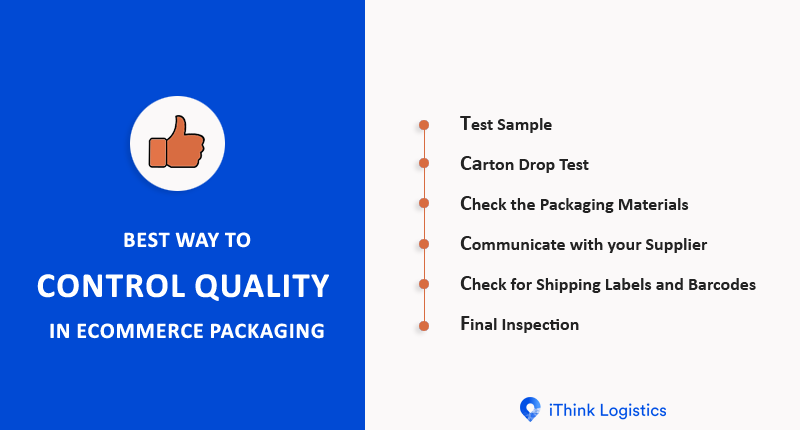
Here are some tips for the best way to control quality in eCommerce packaging. Take a look.

Test Sample

Firstly, you should start with a test sample. This is the initial step for quality control in eCommerce packaging. When you are launching a new product or just sending the parcel to customers, you are obviously excited by the reviews and how much they would appreciate the product. However, do not send them the shipment without running certain checks. Even though you are in hurry, you need to adhere to these steps. Buy one or two packaging materials from the supplier and run the tests on the boxes. 

Begin quality control with your test samples. Check how they can withstand several conditions.

Carton Drop Test

This is done to test the durability of a package. You should make it go through the stresses of shipping and handling. It basically mimics the rough handling of boxes that happens during the shipping process. From the time when the package leaves the factory until the time the customer gets the package, it goes through an entire process. 

Now the question is whether the package can sustain the pressure of such incidents on not. If it does, then you can continue with the material. Otherwise, you have to change the same. A series of drops would help you determine if the packaging is robust enough or not. 

However, the tearing of the carton is a red signal. This can mean that your package wouldn’t arrive at the destination in the same condition when it left the factory. Do not get fooled by the outer side of the shipment. It might happen that there is no wear and tear on the outside but the products inside have broken. You should open the package and check the same. 

You should aggressively test the samples and note down the changes in the packages. This would obviously help you make the right decision. You should communicate this to the supplier or manufacturer so that even they know what adjustments to make to your eCommerce packaging. You should have a clear conversation in order to make them understand what exactly you are looking for. The sample should be the best version of your product. You shouldn’t compromise when it comes to your brand image. 

Check the Packaging Materials

Here are some of the ways in which the packaging can get damaged during transit. Some of them are:

  • Temperature changes such as humid weather conditions
  • Mishandling of third parties
  • Multiple drops

You have to make sure that the sealing methods are in place when you are packing the items. Also, packing fragile belongings must be padded with the right materials and fillers so that they don’t get damaged or ruined. One can also use bubble wraps, packing paper, etc. 

You need to specify what you want as the inner packaging to the supplier. Notably, products can break or chip if there is excessive movement during transit and the inner packaging is flimsy. Proper sealing of the inner packaging is required as well.

Communicate with your Supplier

Your packaging standards do not have to match that of your suppliers.  This is the reason why you should tell them what you are looking for. Make sure that you keep everything is in writing so that there are no disputes later on. If you are having a face-to-face meeting, follow up with an email with everything that has been discussed during the time. You also need to ask the supplier to confirm the mail’s receipt. Do not miss out on points like preferred color shade for packaging, inner padding, etc.

Perform the Final Inspection

Lastly, perform the final inspection of the materials you receive from the supplier. You should tell everyone how important quality control is to you. You should also inform them that an inspection company will be checking the packaging.

Check for Shipping Labels and Barcodes

Checking labels and barcodes also come under quality control checks of eCommerce packaging. Missing labels or barcodes can delay the shipment of your package. Provide your packaging partner with shipping labels, etc. Other things to keep a note pf are poor printing of barcode, such as faded ink, low contrast between the information and background, missing bars, etc. The label should crease or peel as well. The wrong orientation of the barcode is another mistake to keep a note of.

They should be applied in a way so that they are readable. These are minute things you should consider. The buyer details, item description, and number, barcode, etc. should be readable. Improper packaging cam delays shipment by multiple days.

Conclusion

While you pay all the attention to your product, a lack of attention to packaging control can totally ruin your brand image. It can disappoint the customers in a very bad way. It can also delay transit.

Performing drop tests, asking an independent or third-party inspector to visit the supplier’s facility, etc. can save you from packaging blunders. A little bit of detailing or color coding can bring a smile on your customer’s face. This should be your end goal. The last thing you want is product return or customer complaints.

Some of the most protective materials such as Styrofoam peanuts, bubble wrap, air pillows, foam, etc. You should take special protection when it comes to fragile items, such as cutlery, wine glasses, mirrors, etc. It all depends on the kinds of products you manufacture.

Stress on your products is something unavoidable. Allow the box to freefall on a hard floor with no interference.

You should also check for compliance with brand packaging rules and regulations. Many people face issues with overcrowded warehouses. So these are a few tips that would ensure quality control for eCommerce packaging. Follow these tips and you are good to go. 

Categories
E-commerce Logistics

Importance of risk management in warehouses?

Warehouses are exposed to plenty of hazards and this is the reason why you should be extremely conscious of Warehouse Risk Management. Assessing the hazards that can arise and managing them is extremely important.

They are often the target of burglary, theft, pilferage, and various kinds of unforeseen risks. Wholesalers and suppliers lose millions of dollars due to improper systems in warehouses. 

If you have a warehouse or you are responsible for the same, you should make sure that you assess all the potential risks and problems involved with warehouses. If you hire risk managers, they should be able to effectively reduce the exposure to the hazards. 

Otherwise, it can have a direct impact on your company’s performance.

Here are some of the major issues that can arise in a warehouse along with possible solutions. In this blog, we are going to talk about how important risk management at warehouses is. 

Risks at warehouses

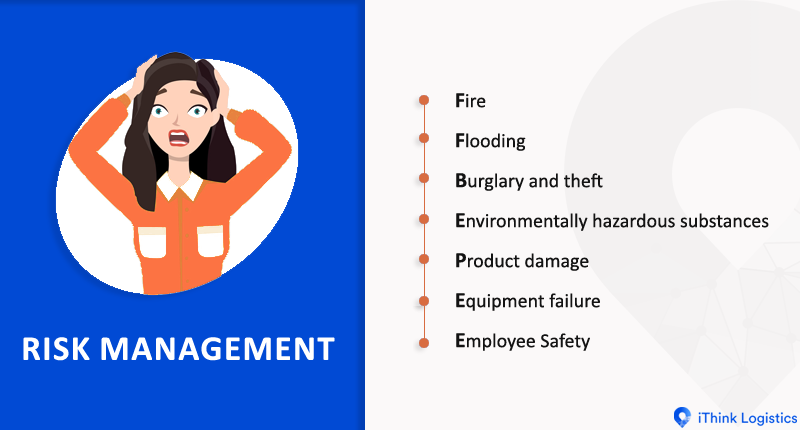
Fire

We often come across news where businesses lose millions of dollars due to warehouse fires. It is extremely unfortunate but sadly, not many people take the necessary actions to ensure that such incidents do not take place. Even if it does, a few measures can control the severity of the same. Warehouses are tightly packed spaces with plenty of goods in them. Even a small fire can destroy tons of cartons within a few minutes. It can even lead to employee injuries, etc. 

However, a few safety measures such as installing fire suppression systems like sprinklers or fire extinguishers make sense. 

We would also suggest you enhance your budget a bit and install fire detection systems like smoke alarms. You should run training programs to educate your employees on how to react if such incidents take place. 

These should be practised on a daily basis. For more information, read the other blogs in the thread. 

Flooding

Next, we would be talking about flooding, which again leads to huge losses for business houses. You should be more careful if you have a warehouse in an area that is low or is prone to natural calamities. 

Risk management in this case can decrease the severity of the loss. 

You should be aware of flood warnings and remove the materials at the earliest. Keeping a check on the weather forecast or asking an employee to do the same makes sense. 

Secondly, you should also conduct regular flood risk assessments and inspections. Check if there is any portion in the warehouse that is highly susceptible to flood hazards. 

Do not keep the goods on the floor. If you have documents, etc., keep them at a higher level where water wouldn’t reach most likely reach. You should also move machines, etc. for the same. 

You can stop water from entering the area by getting permanent or removable barriers to seal floors, doors, etc. Hire someone to regularly clean the draining systems and eradicate debris, etc. 

You should hire an electrician and raise electrical sockets and wiring above ground level. You should also train employees to understand flooding hazards. 

Burglary and theft

This is a very important reason why risk management at warehouses is extremely important. Because there are plenty of things stored in a warehouse, they are often the targets of theft and burglary. This is mainly because of the huge volume. But with a proper risk management system in place, things can be controlled to a huge extent.

There have been plenty of cases where employees have also been involved in such thefts. So you can understand that there are typically two types of threats you have to deal with. 

For controlling this, you should take measures like using separate areas for dispatching goods as well as receiving them. 

Audible alarms should be installed at all the doors. The gate should be kept close most of the time. You should give responsibility to your risk manager to take care of this. Only authorized access should be allowed. 

Visitors should be asked to sign before they enter the premise. In modern days, most warehouses have top-notch surveillance systems. Nothing can beat the power of electronic security systems. 

 Registers should be maintained as well. All of these fall under the warehouse management system. Delivery drivers shouldn’t be entertained inside the premises as well. If he at all goes inside the warehouse, then he should be accompanied. 

You can even install video surveillance systems to record activities so that you can always refer to the same. You should install them at the entrance points.

Cameras should be placed to view entrance points as well as interior areas to stay away from theft, vandalism, etc.

For staying away from internal thefts, you can set up an anonymous reporting system where people can complain without having to face repercussions or consequences. Conducting background checks is a must. 

Handling environmentally hazardous substances

 Sometimes, warehouses face losses due to hazardous materials. The warehouse should be following proper rules and regulations when it comes to storing or dealing with such harmful substances. 

The substances should be labelled and segregated as and when required. You should also use the right procedures when dispensing the items. You should use the right instruments for the same. If there are government guidelines related to the same, then you should also go through them. Abide by the law and you are good to go.

Employee Safety

A risk management system is also required for employee safety. If anything happens to any employee, the company has to take all kinds of liabilities. This is why you should take proper care of the same. Take the help of machines and eradicate manual labour as much as you can. 

You should also train your employees so that they know how to handle the equipment. 

Train employees to use all job-related machinery and equipment.

Product damage

Apart from damages from fire and flood, there are various kinds of other things from which products can get damaged. It could be a lot of things such as improper storage of items, manhandling of goods, wrong temperature, etc. 

For this, certain measures such as keeping lighter items at the top, training staff for proper handling, using other security measures, et al should be taken. 

Equipment failure

Warehouses are dependent on various kinds of machines and tools. This is important for seamless production. However, things can go wrong if machinery fails. Thus, you have to take preventive measures. 

Hire trained employees for dealing with the equipment. Also, beware of cyber threats, etc. You should also opt for effective incident management. 

Here are a few tips on WRM:

The first thing that you should do is eradicate the hazards and replace them with something better. You should substitute the hazard with something better. 

Conclusion

Through proper management controls, you should dilute the exposure to certain threats. 

People should be taught to stay away from forklifts. Hiring efficient risk managers may also help. The key is to identify the threats and work on them. 

If you have a warehouse, hazards surrounding it are inevitable because of its complex and dynamic environment. But with proper WRM, you can control it. 


Categories
E-commerce Logistics

9 Low Investment Business Ideas with High Profit

If you are a first-time entrepreneur, you might be looking for business ideas that would require a low investment but would provide good returns. Many young as well as old people are opting for businesses these days. If you aspire to become a business owner too but want to take it slow, then you need to read the rest of this blog.

In this blog, we would be talking about businesses that require low investment but provides greater ROI. You might be interested in starting a simple business and rightly so. An entrepreneur even struggles to get the capital he wants for a business. But there are several ideas you can work on, which promise good returns. Without delaying any further, kindly go through the rest of this blog.


Maybe you don’t have surplus capital or just not comfortable leaving your stable job at the moment for a business – no matter what your case is, you need to be very careful when you are picking a business type. Some people are extremely serious once they get into the business and yes, they eventually flourish. You need to be passionate about the line you are choosing as well.

If you have a busy schedule, then we think that these ideas will work for you. Take a look. 

Ideas that are worth trying

Partner with a Dropshipper

The first thing we are going to talk about is partnering with a drop shipper. This is quite easy and basic. All you need to do is stocking and shipping the items. Dropshipping is a famous model where a third party supplier is involved. You do not even require to handle the goods by yourself. However, you still need a solid idea and put some effort into marketing. In this case, investment is low and you do not even need to handle the goods by yourself. 

Since you will not have to manage the inventory by yourself, you won’t have to drop everything else and rush. You will be able to take care of your job as well as do your business at the same time. You just need to communicate with the suppliers by yourself. It is a good way to step into the business world without much fuss. It is absolutely okay if don’t want to risk a lump sum amount in the very beginning; after all, we cannot deny that businesses come with a lot of risks. 

Before you invest thousands of dollars on your own products, this is a smart way to establish a local dominance, interact with customers, etc. You can curate your own line by contacting with a couple of suppliers. You will have to also communicate with the clients. The supplier will fulfill the requirement on your behalf. Make sure that the marketing game is on point.

Do not go for a supplier that is not trustworthy. You should also choose suppliers that deliver on time so that your reputation is not hampered. However, it always makes sense to provide your audience with products that you yourself use and test. There should not be any compromise on quality even though the investment is really low. Take one step at a time and build a network that one could be envious of. You can eradicate various expenses such as startup costs, warehousing, etc.  

T-shirt Business

Quirky tees are in and how. Apart from the big brands, many people have started their own home business surrounding t-shirt printing. They are in demand and if you can come up with smart ideas, your products will surely be a hit. More and more people are turning into casual wear and they love tees with interesting prints and quotes. Just think and come up with smart ideas. 

Take the help of social media platforms and groups so that you can flourish without any hindrance. Create a page on Instagram and ask your friends to invite more friends. This way you can create a customer base. Also, no matter how less your investment is, make sure you invest in photography and take great pictures of your products. No matter how common most designs have become, brainstorm and create original ones.

You have to think out of the box. Since you will be customizing, make sure that you research well and study what exactly people are looking for. Coming up with the same old designs do not make any sense. You can also penetrate into the hoodies and tote bags markets. Other products that can become the canvases of your creativity are hats, phone cases, etc. Make sure that there is something for everyone – a cat lover, a doggo lover, the extrovert, the introvert, the LGBT community, etc. You should also be taking cues from whatever is going on in the outside world.

You can also work with freelance sites if you want to. The best part is that you are paying per product. That means you are risking very less. If you are getting bulk orders, then only you can scale up your business.

If you don’t want to spend on photos, take the help of mockup templates. 

Coaching Services or Freelancing

If you don’t want to invest at all, then taking up freelance projects directly from clients makes sense. All you need to do is creating profiles at the required places and pitch.

Similarly, you can start coaching services if you are good at teaching. You are actually get paid for your time and skill in both cases. But yes, you do need to advertise well so that people come across your services. Make sure you have something different to offer.

E-books

If giving coaching is not your cup of tea, then you can utilize your expertise by writing good e-0bvooks. This is in these days and plenty of people are actually paying for it. You should portray whatever you are good at and trust us, with proper effort and marketing, your e-book can be a huge success. If you have a graphic designer friend, then ask him to create a fancy cover for you. Give him credits for the same. The only cost you need is to create and sell it online. Otherwise, this is a business with low investment but has huge promise.

However, you need to pay for a few more tools such as recording and editing software or video equipment for higher production value. The funniest part is that people these days are buying books or courses for anything and everything –from how to crack interviews to how to be funny and date women, give tips on whatever you are good at. Do not underestimate your skills. 

Exercise Classes

If you have always been known for your fitness or if you already have a good number of followers on Instagram due to your exercise videos, then why don’t you start giving exercise lessons? It could be for beginners, for experts, for pregnant ladies, etc.

As more and more people are switching to better lifestyle, health and fitness, the demand for good, authentic yoga or exercise classes is increasing. It is not possible for you to open a gym in the very beginning and thus starting with something as simple as therapeutic exercises or exercises for pregnant ladies makes sense. 

Café or Food Business

A small little place with a good ambiance is always a hit. You can turn that extra room or garage to a nice, cozy café as well. All you need are good décor items, great ideas, and a fabulous menu. You can make huge profits if you do it right. 

We would always suggest you go for a themed café. You need to hire an interior decorator if you don’t have the ideas for the same, which can be pretty expensive. Again, you can take the help of social media to create a buzz. You can even invite your friends and family for the opening. 

But if you do not have the funds for the same, then what about a business where you can feed authentic food to people? Yes, we are talking about a home-based food delivery business. With plenty of restaurants out there, people these days crave ethnic food that is simple and tasty at the same time. No matter where you belong from, go back to what your grandmother used to cook for you. Ethic food always wins, if you cook it with love and care. 

Again, taking the help of Facebook and other platforms would help you. You will get the supply of veggies at reasonable rates from the local vendors. You might have to hire help if the demand is high. 

It is a good business if you have limited funds but are aiming for good returns at the same time. Trust us, people are extremely busy these days and hard, anyone cooks meals at home. Nothing can beat the warmth of home-cooked, authentic dishes. 

Print-on-demand posters

A print-on-demand business model is again a model that you could benefit from. You can print posters, cards, etc. This way, people will get to own a piece of your artwork. 

You can even make birthday boxes, Valentine’s day special boxes, etc. if you want to expand the genre. If you have an artistic thumb, then it is obvious that you would enjoy doing this. It really needs low investment! 

If you are a photographer or a cartoonist, then you might already have a fan base on social media. Take advantage of the same and turn your most-liked arts into framed arts, etc. Trust us, this could be a great business as more and more people want to gift customized products or items with a hint of personalization. Conduct your own photo shoots and you are good to go. 

Sell a service

If you want to sell a service, then this can also be done. Moreover, these days, more and more people are opting for home-based services given the current situation. If you have adequate knowledge about parlor services, then a home-based service can be provided to your clients. Time will be your inventory and so will be the skill. 

If you are a developer, then also you can go ahead with this plan.

You can even boost your profit by expanding your expertise area. If you add physical products to your services, then you will easily gain traction from this plan. You can use apps to let customers book a session or consultation with you. There are various freelance marketplaces as well that you can check. 

Online Fashion Store

You can even open an online fashion house where you can sell fashionable clothes, jewelry, etc. This one also promises heavy returns if your collection is noteworthy. You can take the help of Instagram for this. 

Make sure that your products have a story to tell. You can add swimwear, shoes, and even bags to the line. Pick trending clothes and you can easily gain a customer base. More people these days are ordering their clothes online, thanks to the Covid-19 pandemic. You can make the most of it by selling such items. 

So these are a few businesses that require really less investment. If you have a capital crunch, then you can move ahead with these ideas to add some extra money. 

Conclusion

Apart from all these, you can also provide accounting services to small firms, sell handmade goods, provide funeral services or party services, cleaning services, open a food truck, provide gardening services, etc. There are plenty of options out of three but you have to find out what you are passionate about.

You have to figure out ways to reach people and that can only be done through effective marketing. Know about the demand for the products before jumping in. Figure out your competitors and take a look at what they are offering.

The world is connected and it is time for you to monetize it. Once you have gained an audience, tie-up, get ads from Sponsored brands, become an affiliate, etc. It is always better to have two to three sources of income rather than relying on a single one.

Categories
E-commerce Logistics

Powerful Warehousing For a Better Shipping Operations

Based on verified reports, companies, or brands that are driving hard to offer responsive and brilliant customer experiences have gained 60% of the more profit share than the ones who completely missed out on the same. When the focus is on eCommerce business it becomes even more crucial to delivering accordingly to that of the customers’ expectations.


Many of the actions mostly involve meeting consumers’ needs and thus has to be performed accordingly. One of the most vital activities is the possession of a powerful order fulfillment center. It sometimes creates a stir of doubts that how a fulfillment center aids in boosting smooth customer interactions and engagement. As a time-tested fact, a perfectly well-equipped fulfillment center contributes to ruining the business smoothly and adding happy customers.

A strong, tech-enabled and powerful fulfilment centre brings in easy and hassle-free pre and post shipping operations. Going ahead this further helps you in building stronger customer relationships. If you are considering outsourcing to a third-party for order fulfilment, you have to first0hand information on the kind of activities that are taking place inside the fulfilment centres. Being well aware of the activities taking place in the third-party’s fulfilment centre helps you to make a well-informed decision of whether tieing with them or not. 

Before going any further, first, let’s understand the concept of a fulfilment centre in a much more detailed manner.

What is the Fulfilment Centre?

In simple words, fulfilment centre is a huge space which is used for storing inventories for a business. What makes a warehouse different from a fulfilment centre is its potential to rise above the single-use for storing inventory only. Apart from being highly useful and effective for storage uses, fulfilment centres also serve other purposes. One such important purpose is facilitating the entire order fulfilment process. A fulfilment centre deals in the storage of items for a limited period of time prior to the product goes out for shopping. This strikes a difference with warehouse in which items are stored for a longer time. eCommerce companies, retailers all run their business with fulfilment centre and aid them in fulfilling B2C or B2B orders.

Fulfilment centres operate in processing orders, packaging them, and sending them for shipping to the final customer for 24×7. There are so many things to mention when it comes to answering the question of what kinds of activities happen in a fulfilment centre.

Throughout the day, the activities keep buzzing in a fulfillment center where inventories are received by people, goods are being pocked, shipping labels are generated, and fulfilled orders are shipped out. Along with these, handlings of return orders are also taken care of in a fulfillment center. 

Understanding what a fulfillment center is and what kinds of activities goes on inside it on a daily basis, let us dig deeper into how a highly functional and equipped fulfillment center helps in a seamless flow of pre and post shipping operations.

Functions of a Warehouse

Receiving Inventory

The first step of a fulfilment centre is to receive the inventory from an eCommerce brand or the seller. Quite naturally, there shall be a couple of inventory errors like miscounts when it is first being received. A functional and robust fulfilment centre will be having a dedicated and separate dock area where it would be receiving the respective inventory. The dock area is a large space and used for properly sorting the inventories while preparing them for storage in their respective specified locations.  

Additionally, a well-equipped fulfilment centre has an inventory tracking system that tracks the inventories in real-time. This helps in avoiding any miscalculations which might take place while the inventories are received or evading missing inventory.  To guarantee utmost accuracy in the inventory process, it is highly recommended to have a quality control manager. A quality control manager will be of extreme help if for some reason there are technical faults or some mistakes have occurs by the employee.  

Smart Order Picking

According to a survey, almost 50% of the labour cost goes for order picking in a fulfilment centre and it is quite appalling indeed. An impactful fulfilment centre will always come with the right facilities which account for the most of order picking process. Growing eCommerce businesses across the world have made order picking prices even more critical. This gets vital because of the fact that the majority of the actions taking place inside a fulfilment centre can run on automation but not order picking which inevitably has to be done manually.

The results which are procured directly from order picking directly affects customer satisfactory levels. Quite obviously, it won’t be desirable for any customer to receive wrong products or less quantity from what they have purchased from your site. 

Furthermore, there are various ways of picking orders efficiently within a fulfilment centre. To name a few are zone picking, wave picking, batch picking and pick to order. As per your business needs, you can choose the best order picking method accordingly.  

Handling of Quick Returns

In an eCommerce business, facing return orders is very common and accounts to be an inevitable part of the business. However, if you have chosen the right fulfilment partner who is equipped with a reverse logistics system, it makes the handling of return orders seamless. A highly-function fulfilment centre can take care of handling returns, recalling and disposals in a much faster way in comparison to executing an in-house fulfilment.

When you have a returns management system in place, fulfilment centres gain absolute control over the complete process. You are empowered to choose how returned items would be sent for inspection or replacement.

Smooth Shipping

When it comes to discussing about the most important aspects of an order fulfilment process, shipping accounts to be one of the most crucial ones. Quite authentically, shipping to a respective destination makes a fulfilment centre unique from the rest. The site where the fulfilment centre is situated plays an important role which is critical in determining the shipping charges and the estimated time of delivery promised to the end customer.

Let’s understand this better with the help of an example. If a fulfilment centre is located near highways it enables the shipping or logistics companies in delivering the item in the time since most of the goods are released for transit via trucks. Additionally, if a fulfilment centre is situated closely to your consumers, it becomes a great choice for you. Invariably this will bring a reduction in the transit time and you can offer your consumers an on-time delivery which again elevates their shopping experiences.

Normally, a fulfilment business owner will tie up with several shipping carriers. Fulfilment centre executes their operational activities in order to satisfy direct-to-consumer orders once they are placed and thus require shipping carriers for daily shipment picking actions. This further ensures that orders are received by consumers in a faster and timely manner as committed.  

Proficient Products Packaging

Soon after the items are received inside a fulfilment centre, the next major step is to pack them up securely. A multifunctional fulfilment centre will be having high standards for eCommerce packaging materials. Such good quality packaging materials will safeguard the product from any kind of damage that threatens the entire order fulfilment process. 

Packaging with good quality materials also helps in bringing a significant reduction in product’s dimensional weight. Few of the most important and high-quality packaging materials are corrugated cardboard boxes, flyers, courier bags, packing tapes, bubble wraps, air fillers, etc. 

Fulfilment centres are always extra cautious and careful when it comes to product packaging. It ensures that the product is properly packaged with all safety materials while also taking care of saving up on costs. 

Few fulfilment centres are pretty much advance and provide custom packaging. It will be having your brand’s logo on the top of the box along with other relevant information you plan on wishing to offer to your consumers. Since a product’s packaging qualifies for being the first impression of your business brand for your consumers, it is important to consider this.

Final Words

Now that you have a complete idea about how fulfillment center can facilitate smooth pre and post shipping operations, make sure to partner up with an efficient and effective 3PL. Since the eCommerce industry is getting truly competitive and countless existing and onboarding businesses are getting into the same, only your seamless delivery and out of the box strategies to impress your consumers will keep your sales funnel sustained.  


Categories
E-commerce Logistics

Tips To Ensure Proper Packaging In For Every Order

According to research surveyed, it was revealed that consumers have considered the packaging of a product to be equally crucial as the brand. This clearly shows that the packaging of a product has to be good and on-point when it comes to enhancing customer experience, avoiding operational delays, and reducing shipping damage. 

Why focus on Proper Packaging?

As they say, the first impression is the last impression! Consumers receive their ordered item within packing and this creates the first impression of the logistics partner. If you deliver their product in a clumsy packaging it not only tarnishes your brand but also pushes you towards losing out on one potential customer.

Imagine a scenario, where you are selling out a smartphone, and packaged in a very undesirable manner in a ridged box without much of layers that add to the protective packaging. In such a scenario, it is quite possible that the phone will face threats of cracked screen, broken body or many other issues. Imagine how the delivery will have an impact on the buyer’s experience; quite disheartening right.

Thus, the packaging is a very important part of order fulfilment and becomes imperative for logistics partners to take care of this factor appropriately if the buyer receives their product in perfect condition with no-spill, leakage or damage hey would always retain in your customer base.

Here another factor becomes important too. Packages are handpicked from respective courier hubs and thus delivered to various destinations. If the product you are delivering has not been packaged properly, it is very likely that it can damage other shipments too carried by the delivery agent. 

Additionally, the importance of order packaging does not limit itself to consumer experience and safety norms. It furthermore helps in reducing weight discrepancies. It has been often found out that in a shipping company; most of the time is wasted on tackling weight discrepancies which stem out of improper packaging.

These kinds of errors can cause real-time trouble and bring a setback to your operations. They can be extremely annoying to deal with. However, when order is packaged properly and checked weight measurements, such challenges can be avoided effectively.

Best Ways to Ensure Proper Packaging for Every Order

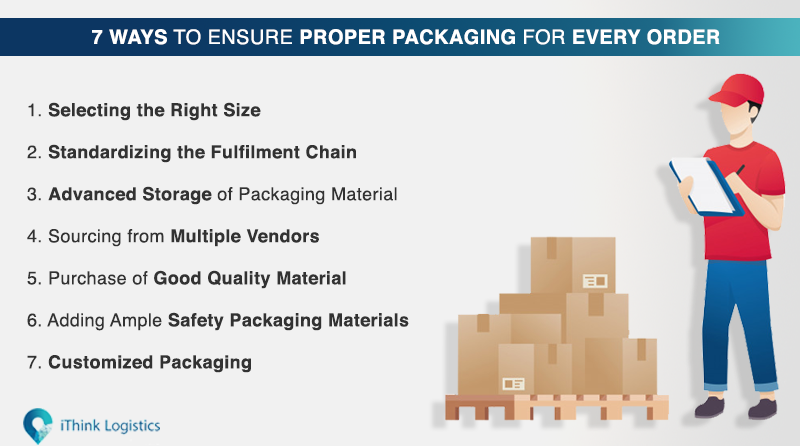
By now, there remains to be no room for doubt on why proper packaging is important. Now the question arises of how to ensure proper packaging for every order there are a lot of ways that have been time tested can be applied. Here are a few of the most important ways to ensure proper packaging for every order:

Selecting the Right Size

Never choose to pack the product in oversized packaging. You have to endure extra costs for space based on the volumetric weight which (Length x Breadth x Height) / 5000. Therefore, always make sure that you are choosing an appropriate size when it comes to packaging the order and place the product inside the packaging in a firm manner.

If you want to get the perfect fit, you may prefer testing with multiple boxes and evaluate which fits appropriately for your SKUs. It will definitely provide you with much more clarity on the packaging and also aid you in having set a standard for the process.

Standardizing the Fulfilment Chain

It is advised better not to add too much of steps and touchpoints which might end up in confusing your staff. Additionally, that will harm your process by increased consumption of time which in turn will lead to delayed delivery. According to research, slow shipping reduces consumers from buying by 40%. Thus, having a streamlined process which includes specific spots only which are assigned to different materials is vital. Specifying packaging material with respect to every SKUs is very important along with providing adequate packaging training to your employees. 

To make this even better, you can formulate checklists and SOPs to ensure that each of your members is following the specified guideline. This will not be just beneficial for carrying out the packaging process faster but will also speed up the overall delivery and fulfillment processes.

Advanced Storage of Packaging Material 

Start analyzing your forecast sales and inventory and start ordering the required packaging material in advance. This will assist you in staying prepared and deal with processing incoming orders rapidly. The action you carry for out for evaluating the levels and repurchases of your products, follow the same or packing materials too. 

Conduct inventory checks and buy packaging materials accordingly from your respective vendors. It is highly recommended to carry out this exercise prior to any major occasion or sale window where there is a significant rise in orders. To enhance this, adopt a practice of setting up a calendar and marking the dates in around which you would be requiring more packaging materials than the usual requirements. This will aid you in being equipped with a strategy much ahead in advance and have updated knowledge on the incoming orders.

Sourcing from Multiple Vendors

When you are having multiple shipments to fulfill, it is highlight advisable to not just rely on a single vendor. To manage bulk orders and shipments, it is ideal to have multiple vendors. However, two different schools of thought have their respective opinions about the same. The first school proposes that limiting to a single vendor might be useful since packing shall be uniformed which gives you the opportunity to skip the hackles of constantly coordinating with several vendors for the same thing. Additionally to this, having a single vendor gets you the competitive prices for the material. But if your vendor is unable to provide you with the material, you will be facing some series of unfortunate circumstances that will be difficult to manage.

Meanwhile, the other school brings the idea to have multiple vendors. Although this might get a little cumbersome because of various people being in the action and synchronize accordingly, yet in times of emergencies, you will always have a safety backup to depend on. 

Due to the packaging being a very crucial and integral part of the business, most experts recommend always go with several vendors to avoid undesirable and unfortunate circumstances.

Purchase of Good Quality Material 

Packaging can become an intrinsic part of your total fulfillment costs and become an important factor when they rise. However, costs associated with packaging cannot be cut down. Even if good quality packaging material comes at high costs, it is still a mandate to invest in it. If the quality of packaging materials is compromised, the items can end up in being damaged state while in transit. Worse, it not just damages the respective product but can also cause damage to other products as well. Thus, it is always desirable and smart move to invest adequately in purchasing quality material for packaging.

Generally, to assess a packaging material to be good, it is extensively tested for various qualitative parameters. Such parameters include environmental and mechanical parameters that determine the quality standards of the package. Some of the vital parameters that decide packaging material to be good are: 

  • Flexibility
  • Compression properties
  • Tensile Strength 
  • Barrier Properties

Adding Ample Safety Packaging Materials

Safety packaging materials safeguard the product and add to good practices of packaging. Such materials are, bubble wrap, foam caps, pellets, polystyrene peanuts, etc. and helps in sustaining friction while in the transit and absorbs any kind of shocks that might affect the package during the delivery process. Fragile items like bottles, glass, jewellery always need to be handled carefully and must be ensured that they are carefully packaged.

Having a lot of safety packaging will ensure the product to remain safe against any kind of damage which will furthermore save on the additional costs of embarrassment from delivering the item to the consumers in a damaged condition. 

It is most often recommended these days to use biodegradable products that encircle your responsibility to make use of sustainable materials for packaging. For instance, the use of polystyrene peanuts should be discarded and instead, biodegradable ones must be used that are made from composting material or starch. Many packaging brands are using corrugated bubble wrap in place of the conventional plastic bubble wrap.

Customized Packaging 

Although customization in the process of packaging has been considered to be not that impactful for shipping; however it can be very useful to elevate your consumer’s delivery experiences. Customizations like having respective consumer’s name on the package with their specialized products always create a special effect. To make this even better, consider adding a handwritten card or give coupons to encourage them for their next purchase. 

Final Thoughts

In simple words, eCommerce packaging can be considered to be an extension of an order fulfillment process. Thus, it is essential to carry out actions like analysis, packaging selection, and ensure it matches your shipping goals. If the packaging is done accordingly and properly, it will automatically help you to speed up the process of the fulfillment supply chain


Categories
E-commerce Logistics

How to Convert Customers from a Sold-out Product Page?

If your brand or business is involved in the eCommerce industry, you have likely faced a situation where some of your stocks have to diminish before your entire stock ran out. In this specific situation, a website will state that particular product as “out of stock”. Indeed, it is not an ideal situation, but it is quite normal and manageable. While running a huge business, it is very common that you run out of some of the specific stocks. The important thing here is that you need to communicate the specifics of the situation to your customers. Here we will discuss how “out of stock” product can improve the conversion rate by increasing more sales. 

What is the actual situation when a product goes out of stock?

Now the question is what happens when a customer finds out that their desired product is not available or has gone out of stock for some time. According to a study held by the “Global out of the stock crisis of GT Nexus”, almost 65 percent of disappointed customers result in a decrease in sales. Therefore, you must line up strategy for the customers when they land upon an out of stock product page. You need to retain the customers and do something so that the customer does not leave your site entirely. The most strategic move is to create an unexplainable situation that can happen at any time. For example, as soon as your customer clicks on an out of the stock product, you can direct them to the main product category page, or a 404 error page, or if you want to increase sales direct them to a similar product page. All these situations can happen anytime and do not need any explanation. 

Repercussions of the “out of stock” page

There are three major effects of an “out of stock” page. Every big marketer will understand the effects and act accordingly. The three effects that a website can have due to an ‘out of stock” situation are-

User experience

Every time a customer is disappointed or feels a sense of frustration on the site, you run at a risk of damaging the user experience of your site. Whenever a product is “out of stock” or is currently unavailable, a customer can revert on other sites out of frustration. In this way, either the user experience of your online store is damaged or you lose the customer entirely. Anyways both the situation can hamper your business.

SEO

Search engine optimization, more commonly known as search performances can also be hampered due to the “out of stock” product situations.

Sales

It is obvious that expired or “out of stock” products are bound to affect the sales. May be not all, but some of your customers would buy the product if it would have been in stock, and thus they will find some alternative site to complete the purchase of the product. This will ultimately affect the entire sales and maybe the profit margins too.

Optimizing the “out of stock” product page

  • Offer the customer to notify them as soon as the product comes back to stock. This is very important and you should not miss out on this. This provides a sense of reliability to the customers.
  • The next best thing to do is suggest the customer with the similar products that they have been looking for. 
  • Another thing that drives sale is to provide some sort of discount on similar products or the products which comes under the same category.

Business owners should carefully consider the most suitable alternative for their customers encountering the ‘out of stock” product page. Turning a disadvantageous situation into an opportunity is an excellent demonstration of the adaptability and agility that your business holds. If you can turn an expired product situation into something that can profit your brand, then you are a great marketer and your business is here for the long run. You should mainly focus on the fact that your customers should not abandon your site and go for some other alternative site. All you need to do is to keep your customer intact on your site no matter what is the situation. Let us discuss some ways in which you convert your customers when they land on a sold-out page.

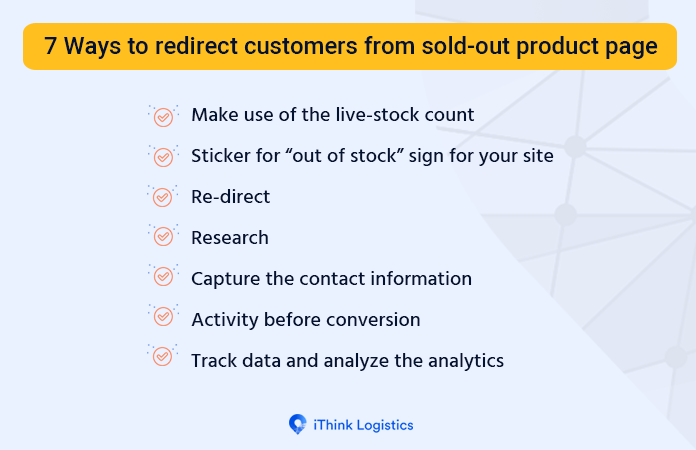
7 Ways to convert your customers when they land on a sold-out product page

Make use of the live-stock count

The main problem is that any “out of stock” product can be very confusing not only for the customers but also for the vendors. It is not that clear or simple for the merchants who experience the whole replenishing stock situation. There could be any reason for the stock out. Maybe your website is facing some technical issue or there has been some unexpected product demand. Whatever the problem is, consumers need a quick response to the situation. Therefore, providing customers with as much information about the restock is very important.

 A feature that has been very effective in such situations is the “live” stock count for products. This can be very helpful when the product is about to be out of stock. The feature will give a live count of the remaining product on the site when the number of the product left is 10 or less. These will create urgency or scarcity for the customers. These strategies are known as scarcity tactics. You should align the product count very carefully. If your site has 3 units of products left, then the customer should not be allowed to add 5 units of the same to their cart.

Make a sticker for the “out of stock” sign for your site

Websites don’t just use a single product page for advertising their product. Now many sites do integration of complex banners to show suggested or similar items throughout the entire site. When you are featuring your product through various contact points on the website, you should make sure that you are consistently marking the products that are going out of stock. One idea that could work out well in this situation is using certain text strip or stickers so that you can completely prevent any click through on the expired products. You can design a simple sticker that will read “SOLD OUT” for the products that have expired on the site. In this way, customers won’t even click on the products that have sold out.

Re-direct

For example, eBay is an excellent sight that redirects its customers very smoothly in case of any inconvenience or glitch on the website. eBay is so efficient that when a customer finds that certain product is not in the stock, eBay provides them with multiple relevant and similar products. They are very tactical in aligning their products according to their customer habits of shopping. They align their products according to the customers that browse on the websites which consist of single vendors. You can also do the same. If you can suggest more and more related products, then your customer retention game will be better than any marketer out there will. If you can offer multiple similar products in place of that one out of the stock item, then your customers are most likely to choose from a similar product rather than exiting your site completely. 

Research

When you are dealing with the “out of stock” product pages, you must do your research about the whole situation properly. You need to know every aspect and consequence of the situation. If you want to satisfy your customer, you must have all the knowledge before you make any adjustments. Conducting proper research is important when you can offer too many or too few alternatives for the expired product to your customers. You need proper assistance at every stay because extreme of any situation can end up into something problematic. You need to understand how your customers use your website before suggesting to them any alternatives. You need to know how the users use your website, that whether they browse by the category, size, color, or by the price. 

It is very useful for your business to be able to suggest similar products that your customers have already browsed earlier. Whatever the situation it is, always keep that in mind that you’re redirecting your customers according to their activity on the site. This is the best and the easiest way to offer what your customers are looking for. Lastly, when you are offering an alternative product which is costlier than the original product, make sure you are being generous enough to provide your customers with some sort of discounts and do some damage control for any bad experience your customers encountered on your site. 

Capture the contact information

When any of the products on the website is out of the stock, the best thing out of an unfortunate situation is that you will be able to capture your customer’s details. The consumer will likely hand over their details if you offer them to notify personally as soon as the product comes in stock. You need to be very efficient in the process. You will have to be very specific about the size and type of product that has gone out of stock. You can add a “notify me” option on each product as soon as they go out of stock. In this way, you will be providing a sense of reliability to your customers. Whenever a customer allegedly provides their details to you, it is a potential business opportunity that you can look forward to. Even if your customers find a substitute product on some other site, they will still be notified when your product is in stock. This includes other marketing materials: substitute product suggestions, similar items, alternative collections, and lastly a promotion code provided during the payment gateway. 

Activity before conversion

Presently, most organizations that practice inbound marketing follow this system. However, a lot of organizations that are new to this procedure tend to disregard it. Most groups focus more on acquiring new business and wind up dismissing the improvement of client unwaveringness. Following your client’s conduct and action on your site, and their social media engagement, and through email showcasing is as significant now as it was at the point at where they were just a lead. Along these lines, in a perfect world, you would prefer to see your present clients keep on drawing in with your substance and keep you at top of their preference list when it comes time to make another buy or allude a companion. Your client’s behavior discloses a great deal about their preferences and if they are satisfied with your brand or not. From there you can analyze whether your customers are willing to stay as a trusted client even in the future. Some of the major KPIs that should be tracked is: 

  • Pages viewed
  • Average time spent on the site
  • The rate of opening an email
  • The through rate of clicking an email
  • The rate of the number of items added to the cart

One reason that organizations have such a great amount of progress with Inbound Marketing is that it achieves client procurement and maintenance simultaneously. By estimating all that you can, as frequently as possible, you are continually gaining from your clients and improving your business. Over the long haul, there is no better method to make your clients more joyful and keep them around for quite a while.

Track data and analyze the analytics

Client inputs can be subjective sometimes. However, when it comes to numbers, they never lie. Regardless of whether it is perspectives, navigating rates, on-screen time, or transformation rates, incredible inbound advertising is information-driven. By contemplating the commitment of your clients, you can realize what qualified individuals are genuinely intrigued by and what made them convert. This information encourages you to distinguish patterns and holes and refine your procedure likewise to build transformations. You can likewise create a wide assortment of reports that are pertinent to various divisions of your association, so your whole group has understanding into what they can improve and where they’re now executing it.

What happens when a product is completely out of stock?

If you are running a business, you have to deal without stock pages no matter what. Until now, we discussed what alternative things could be done when a product is out of stock for a time being. However, when a product is permanently expired then you don’t have an option left. Here are some pages that you can put as an alternative:

The 404

The 404 gateway page can be recognized as a random error page that can occur at any time due to some technical issues. If you have a mid-size website, 404 is the best solution you can have. If the product is not at all returning to the store, you can create a 404 design page. However, there is a risk in using this that is you can lose your equity ink while using this.

The 301

It is a good solution, especially for search engine optimization. If you redirect your customers away from an expired product, you can use the 301 error page. This will demonstrate that your website is well maintained and you won’t lose your equity link by using this.

Meta tag

“unavailable after”: If you have a website that has a huge number of pages, then an “unavailable after” tag will prevent the expired pages from clogging up your website. If you are aware of the product pages that are going to expire soon, then notify Google with the information and Google will avoid showing pages that have expired. Google will also efficiently remove your product pages after 24 hours from the search results.

Conclusion

Customers are the most integral part of your or any business round the globe. Customers are the reason that the business industry still exists. Keeping your customers happy is one of the major aspects of your business. Your customers are the reason your business has an identity. Without your customers, your business has no value or meaning. Therefore, you must keep your customers happy and satisfied. This will not help you to generate repeat sales but also bring in huge amounts of profits to your organization. This will also help you expand your business in the market. As long as you have your customer’s back, your company is going to outshine the others.

Thus, if your customers face any inconvenience while visiting your site, your prime duty is to fix the bad situation and turn it into something that can benefit both your company as well as your customers. Whenever a customer lands on a sold-out page suggest to them as many options as possible that can satisfy them. make sure that your customer does not leave negative feedback on your website. this can impact your business to some extent.

Categories
E-commerce Logistics

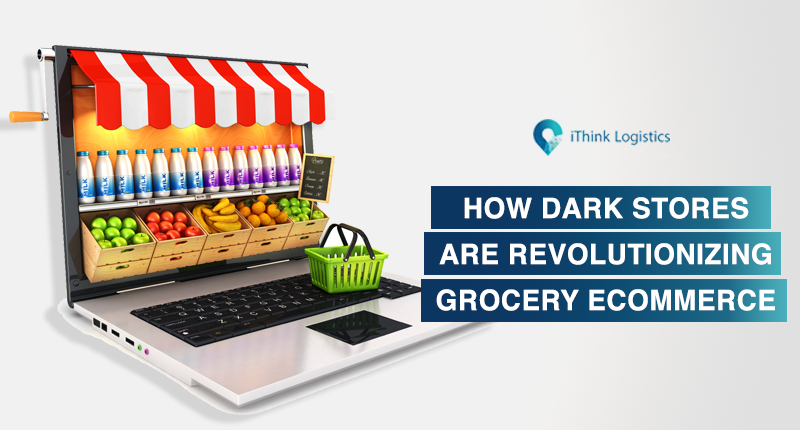
How Dark Stores are Revolutionizing Grocery eCommerce?

Modern suppliers have to consider various things for preparing themselves to pace up with the rapid growth happening in the digital world. The rise of the online grocery market is eventually mounting up. From a comparative view, rather than joining hands with brick-and-mortar retailers, the preference towards a newer form of the supply chain like darks stores is very much evident. This is due to the offerings provided by the dark stores from having a model that is way more advanced and focused to fulfil online grocery orders.

Before diving into much deeper contexts, let’s simplify the concept of dark stores.

What are Dark Stores?

The definition of dark stores can be elucidated in very simple language and is referred to as the retail distribution outlet or center catering itself dedicatedly to online shopping. It is characterized as a large warehouse that can be leveraged to use it for facilitating a collect-and-click service in which a consumer or a picker collects their respective item ordered online. 

Dark stores are not commercially open forth public; the interior look of a dark store appears to be similar to a conventional market with separate aisles of shelves containing various groceries items. However, unlike being located in big shopping malls, dark stores are generally established in a remote place that is well connected with a good network of roads.  

The buildings are quite and non-descript from the outside. Assistants are present inside the store to help consumers with point of sale displays, product advice and check-out counters. Once the orders have been processed online, they are sent to the shop floor next.  

The digitally generated orders are routed properly and sent for processing based on the store’s layout that helps in optimal picking. In a traditional store, a consumer or a picker walks around the aisles with a shopping cart and finds him or herself with the necessary items they wished to buy. However, in a dark store picking system, the picker remains in the single same spot and collects the item. A goods-to-person or mechanized system pick station deals with sending products that are lesser sold such as spices and cordials. These kinds of products are sent out from the storage to the picker via a conveyor belt. 

Fast selling out products such as cold beverages or fruits are kept on shelves in aisles which is in another segment of the dark store. In a dark store, multiple orders can be collected frequently at a simultaneous pace. Fulfilled orders are then taken out for delivering them to the consumers via the use of vans. 

Picking shifts generally occurs in two respective shifts; first shift starts from 8 PM to 4 AM and the second shift takes place from 4 AM to until midday. Mostly the shelves are restocked during the afternoon.

The concept of dark stores was first developed and initiated in the UK and with much more advanced implementations the rise of popularity is undeniable.

Why are dark stores getting popular for grocery eCommerce?

The grocery industry, specific to its category has various difficulties; such challenges are the requirement for a high number of SKUs and the constant threat of item perishability. Online grocery stores stand out effectively because of its being much more dispensable and offer doorstep delivery to their consumers. 

The real fight in grocery eCommerce is not just about getting online orders but also fulfilling it. This is directly linked to customer retention as well; the better will be the item delivery and fulfillment, the more the consumers will keep coming back.

As a scenario, eCommerce giants like Amazon and Flipkart have also got down in the game and takes a nice shot at an online grocery. Moreover, hypermarket eCommerce has become more competitive due to the involvement of key players like Reliance Smart and Spar.  

When the question of dark stores popularity comes under the spotlight, there are many associative challenges with online fulfilment that comes up. Not just speaking from a consumer’s benefitting point of view but also from a seller’s angle as well, dark stores addresses a few of the critical challenges very effectively. The popularity of dark stores, therefore, can be better understood by seeing deeper into how these critical challenges are being addressed.

Overcoming SKU Challenge

Imagine someone needs various kinds of bread which belong to different specified categories like multi-grain, gluten-free etc. In a grocery, there is a high chance or probability of having many SKUs which coincides with the same item as the count of consumers. This cannot be evaded since consumers would obviously prefer to have their choice of food.

Dark stores can play a vital here, by optimizing SKU management thereby having a focus on click-and-collect functionality and storage. Not just that they help in saving real-estate costs by clearing high traffic zones but also deal in catering to several online grocery stores in one go. Therefore, dark stores have accommodative features which allow them to have variety in items at low space costs. 

Additionally, SKU management elevates fulfilment accuracy and brings a significant reduction in mix-ups.

Overcoming Perishability Challenge

Items like dairy, pulses, vegetables, fruits, all come under perishable items and come with their respective expiry windows. In most cases, the majority of such items are packed and delivered together and expected to do so in their ideal fresh states. One of the basic thumb rules of fulfillment is to deliver the items to the consumer’s doorstep in their right and ideal state. When dealing with high numbers, this can become cumbersome. Special preservation and storage systems need to be brought in place to achieve the perfection of serving the perishable items to the customers in its right state. In a broader sense, when we talk about fulfilling online grocery orders it isn’t that simple as it looks to be. 

When speaking in respect to how dark stores overcome challenges of grocery eCommerce fulfilment, it comes to the rescue with its contribution of space, time and visibility for pickers and stock managers. Dark stores assist in managing order fulfilment along with maintaining the ideal freshness levels for the respective perishable items in the order. 

Overcoming Fulfilment Window Challenge

Especially pertaining to eCommerce orders, shoppers don’t expect or find it desirable to wait more days to receive their purchased items. In most cases, delivery is expected on the very same day or the consecutive day at the most. 

This considerably brings in a delivery speed challenge and makes things competitive. If there is a bulk of orders, things can get even more difficult for fulfilment. Here, dark stores can address in a much more better way due to an advanced and systematic of receiving and picking of items.

What are the Benefits of Dark Stores?

From having an advanced model to being characterized as highly beneficial, dark stores truly stand out to be exceptional. It does not just address critical challenges that are typical to grocery eCommerce but also shows positive prospects for the end consumers and the online stores. 

Here are a few of the legit benefits brought upon in the grocery eCommerce industry by dark stores:

Serves Large Areas

Dark stores have the potential of serving in several locations with high order capacities and thus it beats grocery retail stores undeniably that comes with volume and space limitations.

Greater Product Availability

One of the best features of dark stores is that it dedicates itself completely to online order fulfillment. Due to this, what becomes very beneficial is its ability to provide enhanced visibility into stock availability. This further helps e-tailers to strategize smartly and execute accordingly. 

Reduction in Operational Costs

To witness a visible reduction in operational costs, one must have associative benefits. The reason why dark stores are considered as a wise choice from an economical point of view is because of its offerings in time optimization, the efficiency of supply chain and real-time visibility. 

Enhancement of Customer Service

When it comes to fulfilling online orders one of the most elementary things to keep in mind is customer satisfaction. Unless you prove your worth to consumers, the entire structure of your business crumbles. Dark stores are equipped with better facilities and management systems which makes it so effective for eCommerce fulfilments. Be it picking accuracy, 24*7 order fulfillment, or maintaining quality promises, dark stores can be immensely beneficial. 

The Future

As per economy experts, it is predicted that there shall be more influx of dark stores in the future. Also additionally, it would empower retailers with the capability to establish new operations in various regions. They can dominate newer markets without being restricted to the challenges of having limited to physical operations.

Thus, the revolutionizing of grocery eCommerce via dark stores is quite evident and strongly commands future excellence as well. 


Categories
E-commerce Logistics

Common Terminologies of eCommerce Fulfilment

The eCommerce industry has grown massively since the last decade and as the demands of online marketing seem to be overflowing with each year, the growth is unstoppable. User behavior and shopping preferences are undergoing constant changes and pretty evidently inclined more towards online shopping.  

The term eCommerce fulfillment, therefore, becomes very crucial here. Right from the time a consumer-like product and purchases it online till the time it is being delivered at the doorstep, an extensive chain of processes links it all together. The seamless bandwidth of such various processes and stages includes multiple elements. These elements are crucial in the entire process of an eCommerce fulfillment.

Before understanding and knowing about the most widely used common terminologies of eCommerce fulfillment, it is essential to first brush up on what is eCommerce fulfillment. 

Defining eCommerce Fulfilment

When it comes to answering the definition of eCommerce fulfillment, it can be done in very simple words. It is defined as the part of eCommerce operation which deals in delivering the purchased product to their respective customers. In an eCommerce fulfillment process, there are several activities that go on; such actions include loading the product onto fulfillment center shelves.

Here are a few of the most common terminologies of eCommerce fulfillment with their brief definitions:

Common terminologies of eCommerce fulfillment

Third-Party Logistics or 3 PL

A third-party logistics or 3 PL providers permit eCommerce business in outsourcing either part of their logistics processes or all of it. The activities that mainly include here are warehousing, distribution, along with order fulfillment services. Few third-party logistics providers also deal with specialization in transportation and warehousing services, integrated operations. These kinds of activities can be added customization which aligns as per the needs of the customers. 

Fulfilment Centre

A fulfillment center is known to be a hub in which activities related to order fulfillment and inventory management of an eCommerce business are dealt with. Activities that are initiated from getting the inventory to shipping them to the end customers, all of it takes place inside a fulfillment center. 

Distribution Centre

Based on the consumer’s orders, activities like receiving of the items, storing the respective inventory temporarily, and redistributing good are common facility activities of a distribution center. Warehouse and distribution centers are very closely associated terms and are mostly confused. However, there is a significant difference between a warehouse and a distribution center. A warehouse is used for storing goods or inventory for a longer period of time as compared to a distribution center which is focused more on holding the inventory for less time thereby bringing in faster turnover of goods. 

Dropshipping

In very simple words, dropshipping can be defined as a process in which the order fulfillment is directly carried out by the manufacturer and not the seller. The seller will be receiving the orders from their respective customers and go ahead in forwarding them to the manufacturer for the action of fulfillment. In dropshipping, manufacturers directly produce and manufacture goods. 

Inventory Management

From the management of inventory levels, seeing the sales and deliveries, inventory management has a very precise set of activities and also comprise of tracking inventory levels which makes sure that there is adequate stock at all times. Few of the most common elements of inventory management are managing raw materials, their components along with finished products. It also takes care of warehousing and looks into the processing of such items.

Self-fulfillment

When the eCommerce merchant or seller takes care of each step that comes in an internal order fulfillment process without any help of a third-party logistics provider, it is known as self-fulfillment. It is very common in the eCommerce industry especially those who are just beginning to manage inventory and packing orders in their respective place of work or residence.

Barcode

Barcode can be defined as a machine-readable form of data which represents information that helps in the identification of the products faster. The data that is stored in a barcode contains information which relates to the respective purchase order. It can identify the order and also help in accessing various other information. Such information includes customer name, carton, mode of shipping or delivery address. Documents like return documents or purchase orders contain barcodes that fetch out precise record information from the server. 

SKU

SKU is an abbreviation that means Stock Keeping Unit and comprises a unique number that is associated with a specific kind of inventory for an eCommerce line of work. It is normally used for internal purposes for tracking the business inventory.  SKUs are distinct alphanumeric in type and gives information relating to the essential elements of a particular product such as color, style, price, size, brand, etc. 

WMS 

Warehouse Management System or WMS is defined as software that is commonly used in warehouses for controlling and automating warehouse operations. From increasing the efficiency of warehousing operations to looking after various other multifunctional activities, WMS is an effective tool in the eCommerce fulfillment process. Activities like organizing, day-to-day planning, staffing, controlling, and directing how the available resources must be used for moving the inventory inside a warehouse. Warehouse Management System also helps the staff to check the performance of storage and movement in a warehouse. 

SLA

SLA is known as a service legal agreement which is primarily known as a contract that is provided by a fulfillment service provider. It is an agreement that tells the owner of the business how the incoming orders are going to be handled, how the items are going to be shipped, and what will be the roles and responsibilities of the stakeholders involved in the overall management of the business. 

FIFO

First-in-first-out or better known as FIFO is a type of warehousing method in which the items are received first at a warehouse shall be the first to deport the facility as well. The conceptualization of FIFO can be understood quite simply; the items which shall arrive at the warehouse first will be the ones to be held for the longest time. 

This results in the items getting closer to expiry dates as the time goes on passing. Most often, business owners consider moving up the SKUs of similar items in the inventory. This is specially done so that the items can be sold off before they hit the expiry date or become perishable.

Storage Fees

The literal meaning of storage fees is similar to the phonetic meaning of the word. Storage fees can be understood as a process of charging fees to store inventory by the business owner in either the fulfillment center or in their warehouse. 

Cross Docking

When the goods reach the final customer from a supplier or a manufacturing unit, this logistics process is known as cross-docking. The process usually is seen to be taking place in a terminal or a distribution docking station which has the most minimal space of storage. Receiving of the products are done at the end of such a cross-dock and known as the inbound dock. It is then transferred onto the next segment which is called the outbound dock. Furthermore, the materials received are scrutinized and sorted as per their delivery destinations. 

Warehouse Kitting

Warehouse kitting can be defined as a process in which various associative SKUs are brought in to combine and create a new SKU. It involves fulfilling customer orders thereby gathering single items into consolidated kits that are good to go for shipping right away. It removes the necessity of picking and packing of individual items. 

To understand warehouse kitting in a simplified way, let’s take an example. If a consumer has ordered a mobile, he or she would also order for headphones, back cover or a mobile screen guard as well. Thus, in this case, a supplier will sit and assemble all of these associative products into one single and ship to the end customer. 

This brings the convenience of shopping and enhances a customer’s buying experiences.

Conclusion

Thus, these are the few of the most widely used common terminologies of eCommerce fulfillment. Each terminology mentioned here is a crucial part of the entire process and bonds it all together in a seamless stream of actions taking place each day.


Exit mobile version