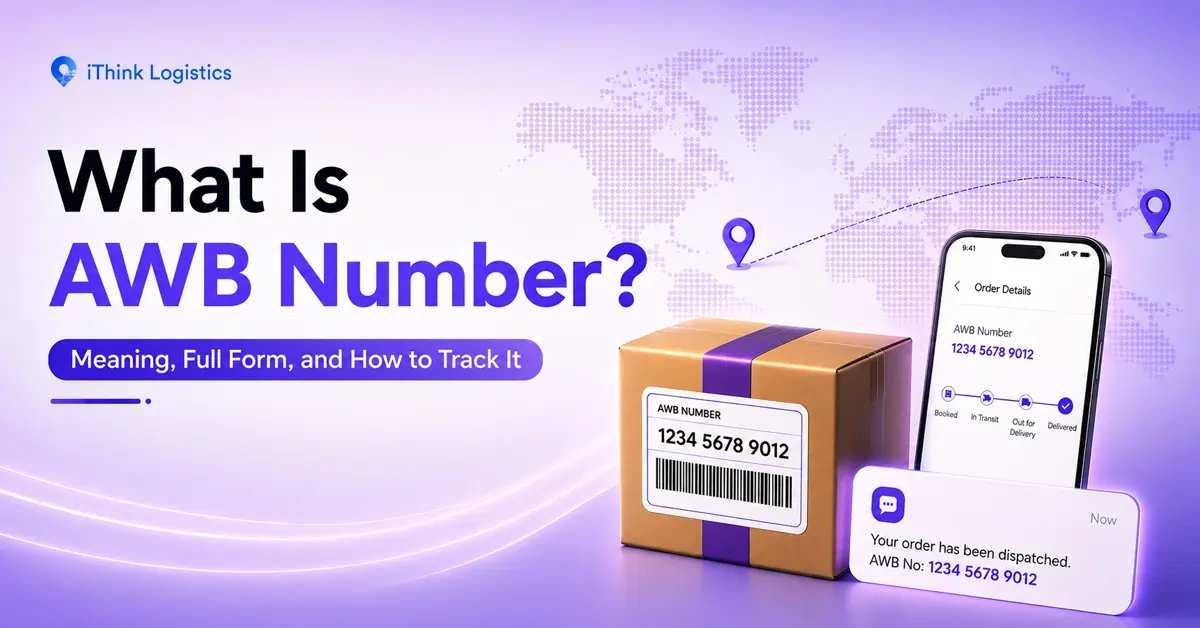
That number in your dispatch SMS, on the shipping label, or inside your order details page is your AWB number. AWB stands for Air Waybill. The AWB number is the unique tracking code a courier or airline assigns to your shipment the moment the booking goes through.
Every shipment gets one. It is your package’s ID from pickup to delivery. This guide covers what is AWB number, how to read it, where to find it, and how to use it to track your order.
What Is AWB? Full Form and Meaning
AWB stands for Air Waybill. The air waybill is a shipping document that the carrier issues when you book a shipment.
It travels with the consignment and carries all the key details: sender and receiver information, origin and destination, weight, and declared value.
Airlines issue it for cargo shipments. Courier companies like DHL, FedEx, Delhivery, and Blue Dart generate an electronic version of the booking the moment it is completed on their platforms.
The document looks different across carriers, but the AWB number on it works the same way everywhere. That number is what this guide is really about.
AWB Number Structure: How to Read Your Code
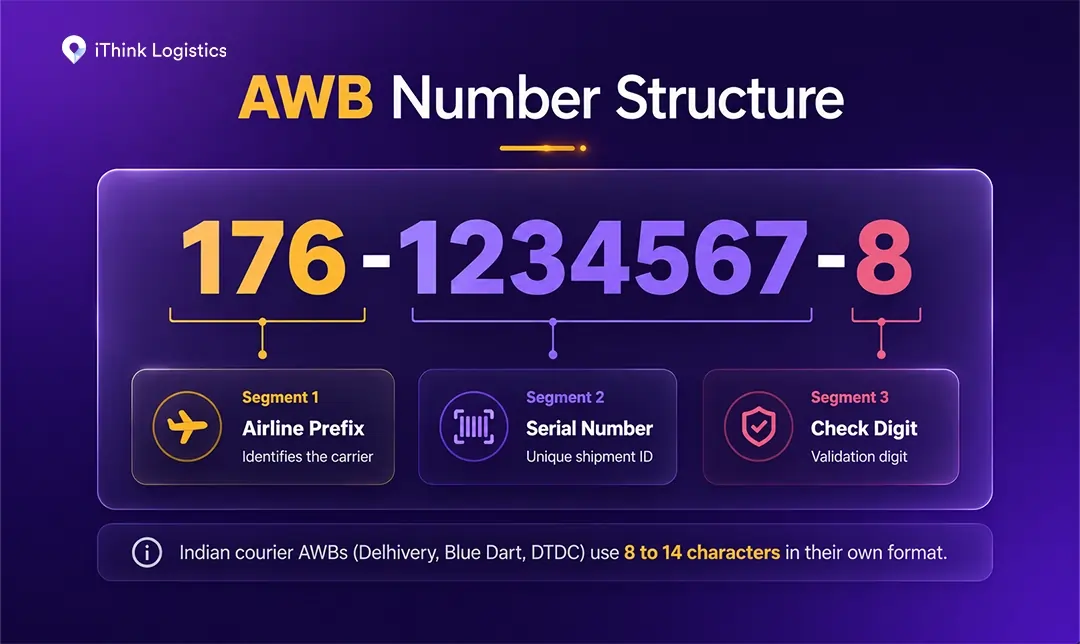
A standard AWB number follows the 11-digit format set by IATA (International Air Transport Association). The number splits into three parts:

| Part | Digits | What It Represents |
| Airline Prefix | First 3 | Identifies the airline (e.g., 020 for Lufthansa, 176 for Emirates) |
| Serial Number | Next 7 | The unique identifier for that specific shipment |
| Check Digit | Last 1 | A validation digit confirming the number was entered correctly |
So 176-1234567-8 reads as: Emirates, shipment serial 1234567, check digit 8.
For Indian sellers and customers: Delhivery, Blue Dart, DTDC, and Ecom Express do not follow this IATA format. They generate their own formats, which is why your courier tracking number may look completely different from the airline standard above. Here is what real AWB numbers look like across format types:
| Format Type | Example | Used By |
| IATA Airline AWB | 176-1234567-8 | Emirates, Lufthansa, international cargo airlines |
| Indian Courier AWB | 1323154012863 | Delhivery, Blue Dart, DTDC and similar domestic couriers |
| India Post / Speed Post | KB040034807IN | India Post Speed Post and registered mail shipments |
All three are valid tracking identifiers. Enter whichever number you have into the respective carrier’s tracking page, and it will work.
What Does an AWB Number Do?
The AWB number carries four jobs at once. It acts as proof of shipment, meaning the carrier formally records the handover the moment it accepts the package.
It functions as a contract of carriage, tying the legal agreement between shipper and carrier to this number. Customs authorities use the AWB along with commercial invoices and other shipping documents to identify and process international shipments.
And every hub scan throughout the journey logs against the AWB number, giving both sender and receiver live visibility into where the consignment is.
That is why the same number shows up across courier systems, customs documents, and tracking portals.
MAWB and HAWB: Two Types of Air Waybills
Shipping documents sometimes reference two AWB variations:
| Type | Who Issues It | What It Covers |
| MAWB (Master Air Waybill) | The airline | The full consolidated cargo shipment on the aircraft |
| HAWB (House Air Waybill) | The freight forwarder | An individual shipment within that larger consolidation |
For most D2C sellers shipping through a courier aggregator, neither applies. Your orders travel on a standard courier-generated AWB. MAWB and HAWB matter to freight forwarders handling bulk cargo, not to sellers dispatching parcels.
Is an AWB Number the Same as a Tracking Number?
Yes. In most courier contexts, they are the same number. Different carriers just use different names for it.
| Term | Who Uses It | What It Is |
| AWB Number | Airlines, logistics companies | Shipment identifier on the air waybill document |
| Tracking Number | Courier companies (Delhivery, DHL, FedEx) | Same AWB identifier, different label |
| Order ID | E-commerce platforms (Amazon, Flipkart) | Purchase reference, not a shipment identifier |
Your Order ID is generated by the platform when you place an order. Your AWB number is issued by the courier once the platform confirms your order. To track a package, you need the AWB or tracking number, not the Order ID.
How to Get Your AWB Number
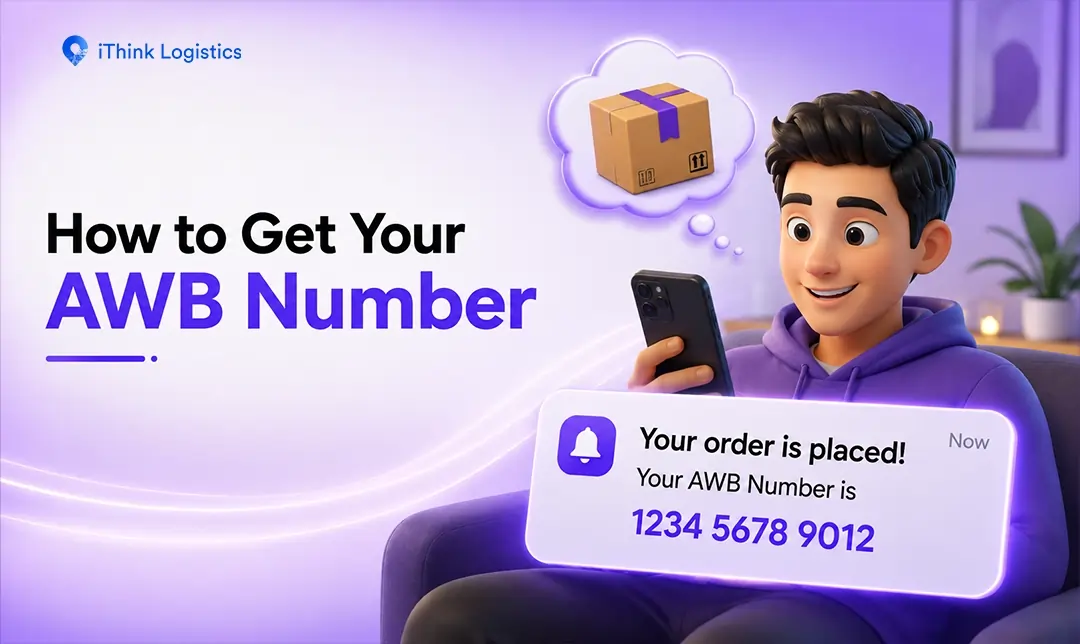
The AWB number generates automatically when a shipment is booked. Nobody creates it manually.
Sellers: When you manifest an order through your courier partner or aggregator platform, the system instantly assigns an AWB. It appears on the shipping label and inside your order management dashboard.
Customers: The courier/aggregator sends the AWB number in the shipment notification once the seller dispatches the order. You can also find it in the order details section on the platform where you made the purchase.
How to Track a Shipment Using Your AWB Number
1. Find your AWB number in the shipment notification or your order details page.
2. Go to the official website of the courier handling your shipment.
3. Enter the AWB number in the tracking field on the homepage or in the track order page.
4. Hit “track” to see live status, last scan location, and delivery estimate.
Not sure which courier holds the shipment? Universal tracking platforms automatically parse the AWB format and retrieve the latest status without you needing to identify the carrier.
But generally, you can find the carrier name in notifications you receive on your number and in your email.
AWB Tracking Statuses and What They Mean
| Status | What It Means |
| Shipment Booked | AWB assigned. Courier has not yet collected the package. |
| Picked Up | The courier collected the package from the seller’s location. |
| In Transit | The package is moving between courier hubs toward your city. |
| Out for Delivery | The package is on the delivery vehicle and arriving today. |
| Delivered | Package received at destination. Delivery confirmed. |
| RTO Initiated | Delivery failed. The package is returning to the seller. |
RTO (Return to Origin) is the status sellers need to monitor closely. It triggers a return shipping charge and means the order needs to be re-sent after the delivery issue is resolved.
Common AWB Problems and How to Fix Them
| Problem | Fix |
| AWB not found | Wait 24 hours. The number activates in the carrier system after booking, not instantly. |
| Tracking not updating | Check directly on the courier’s website. Third-party trackers sometimes lag by hours. |
| Invalid AWB error | Recheck for typos or spaces. Copy-paste from the SMS rather than typing manually. |
| Lost your AWB number | Find it in the shipment notification, confirmation email, or your order dashboard. |
If the AWB shows no results after 48 hours, contact the seller directly to confirm that the shipment was successfully dispatched.
Frequently Asked Questions
Q.1: What is the full form of AWB?
AWB stands for Air Waybill. It is a document that the carrier issues that accompanies every shipment and contains all key shipping details. The AWB number on the document is the unique identifier the carrier uses for tracking and identification throughout the shipment lifecycle.
Q.2: How many digits is an AWB number?
Standard airline AWBs use the 11-digit IATA format: a 3-digit airline prefix, a 7-digit serial number, and a 1-digit check digit. Indian courier companies like Delhivery, Blue Dart, and DTDC generate proprietary formats ranging from 8 to 14 alphanumeric characters.
Q.3: Is the AWB number the same as a tracking number?
Yes. In most courier contexts, they are the same code. Airlines call it an AWB number. Courier companies call it a tracking number or consignment number. Different labels, same identifier, same shipment.
Q.4: Where can I find my AWB number?
Customers will find it in the courier’s dispatch notification, the seller’s shipping email, or the order tracking page on the platform. Sellers will find it on the generated shipping label and in the courier or aggregator dashboard after the order is manifested.
Q.5: What is the difference between MAWB and HAWB?
The airline issues the Master Air Waybill (MAWB) for a full consolidated cargo shipment. The freight forwarder issues a House Air Waybill (HAWB) for each shipment in that consolidation. Most domestic courier shipments use a standard courier AWB rather than either of these.
Q.6: What should I do if my AWB number shows no results?
Wait at least 24 hours from the time of booking. If the issue persists after that, contact the courier directly using your AWB number, or check with the seller to confirm the order was dispatched successfully.
The Bottom Line
Your AWB number is the most useful reference you have once an order is on its way. It confirms the carrier accepted the shipment, shows you where it is at every stage, and gives you a concrete number to raise any courier query against. Save it when the dispatch notification arrives and keep it until the delivery is confirmed.
If you ship orders across multiple couriers, iThink Logistics puts AWB tracking for all your shipments in one dashboard so you never have to switch between carrier portals.