iThink Logistics | Blogs

Categories
Logistics Supply Chain Management

What Is Warehouse Management System & How It Works?

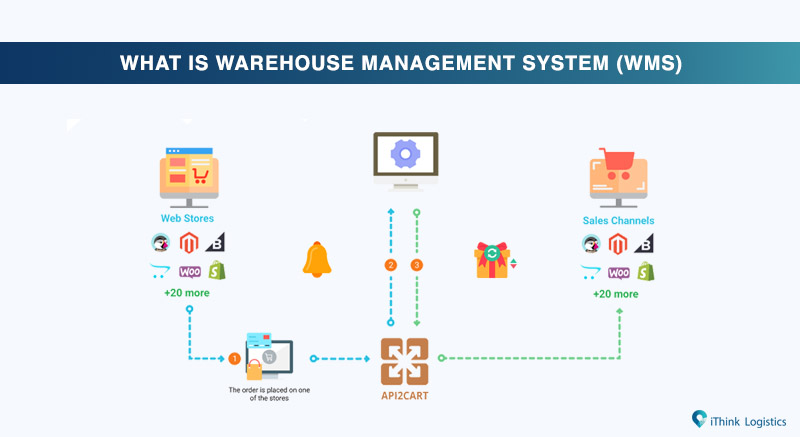
Warehouse management system WMS is known primarily as software and a set of pre-defined processes that enable organizations to authorize and supervise warehouse operations. This course of action happens from the arrival of goods or materials into the warehouse toil the time they are given the clearance to move out. This entire process of warehouse management includes inventory management, auditing, and picking processes. To understand what a warehouse management definition stands for, let’s clarify by stating an example.  

To gain maximum visibility into an organization’s inventory in its respective time and location (facility or in transit), the warehouse management system WMS is the chief action to execute. Talking about the warehouse management process, it goes through managing supply chain operations and different types of warehouses that initiate from either wholesaler or the manufacturer to the warehouse. After that, it moves to a distribution centre or a retailer.

Bifurcation of Warehouse Management Systems in Brief

Warehouse management systems can be segmented into multiple variations and implementation methods. Each of the types is distinctive in its size and the nature of the organization it belongs to. These can be independent modules or simply stand-alone systems in large WMS enterprise resource planning (ERP) system. These systems can also differ from each other based on complexities. Unlike small enterprises that normally work on a simple series of hard copy spreadsheet files or documents, large enterprises use complex WMS software. 

Bifurcation of the warehouse management system

Few of the warehouse management systems are designed in accordance with the size and stature of the organization. In other ones, the consideration parameters include other elements. Vendors use different versions of WMS products that can be scaled to various organizational sizes. In a few of the cases, few organizations have considered building a WMS from scratch while it is advised to implement a WMS from a reputed vendor.

Since a warehouse management system can be configured for a respective organization according to the specific requirements they want, vendors can add customizations effectively. For an eCommerce, the customizations added to its respective WMS will be varied from a brick-and-mortar retailer. Likewise, designs and configurations can be different based on goods the organization gives out to sell for e.g grocery chain WMS will be strikingly different from a sporting goods retailer. 

A warehouse management system has its own specific and devoted way of working and differs majorly from traditional warehouse operations. Here are detailed pointers on how a warehouse management system work and what does it includes:

Shipping & Receiving 

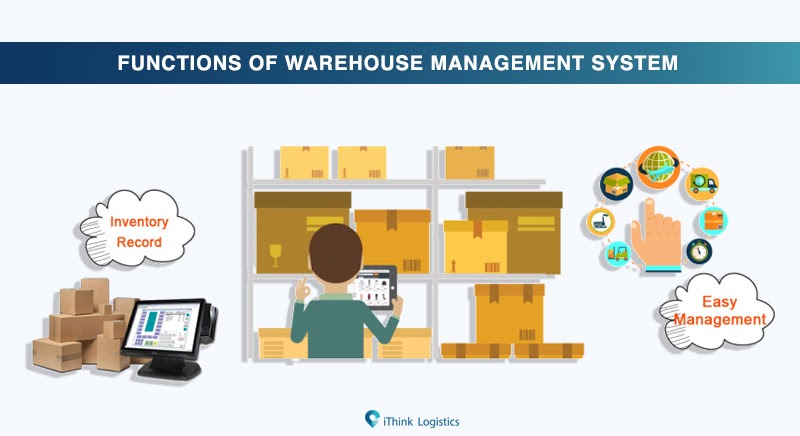
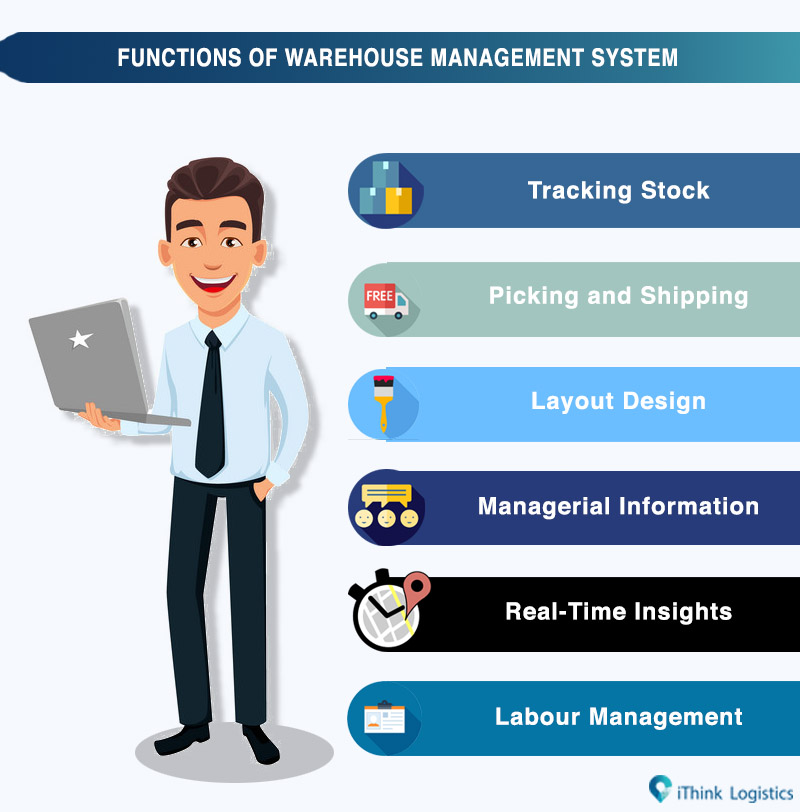
Being a warehouse at its core stage of existence, it is identified majorly as a place where goods are stored. A primary action under a warehouse management system would be tracking the goods that are coming into the warehouse. Each of the goods that are being received needs to be updated in the system and tracked with their time of arrival and the location from which it has been sent. The sub-part of this action includes tracking the goods that are going out for shipping. The number of goods received and the number of goods dispersed for shipping needs to be minutely tracked, measured and recorded in the system.

Inventory Management Systems 

An inventory management system is a term that is closely related to the warehouse management system but does not mean the same and is often been considered and confused as a result. An inventory management system is authorized for controlling inventories of the same warehouse and can use the same functions that are currently in operation.

For example, it can use actions like barcoding and space tracking. However, to spot the difference between an inventory management system (IMS) and a WMS, is that, the former can be a part of the latter one, but the vice versa is not possible.

Kitting and Pick Orders

Services in a warehouse sometimes stretch beyond simply storing goods and many significant actions need to be considered as part of its working systems. Parts or series of goods with their own designated storage keeping units are kitted together to formulate a new set of storage keeping units. When WMS is the kernel factor here, order management and fulfilment play a pivotal role in the creation and tracking of tracking pick and pack orders.

Warehouse Staff Management 

Warehouse staff management can be considered to be a primary action in the warehouse management system since it is counted amongst the influencing factors that affect the costs of managing a warehouse. If the warehouse staff management can be effectively monitored and checked, it can lead to a broader understanding of the performances of eh people working in the warehouse. This in-return will improvise on processes dealt with, along with the significant reduction of overall costs.  

Reporting 

Reporting comes as a vital point in any business; when it comes to warehousing, real-time reporting can be a boosting factor. With the digitalization of business operations, through comprehensive reporting as a feature of digital WMS, a lot of insights can help to improvise on current processes. Now, warehouse managers are competent to see and monitor a lot of data that is generated in the form of charts and graphs. These insights directly influence in making informed decisions about how effectively the warehouse can be managed to keep all factors on a prospective note.

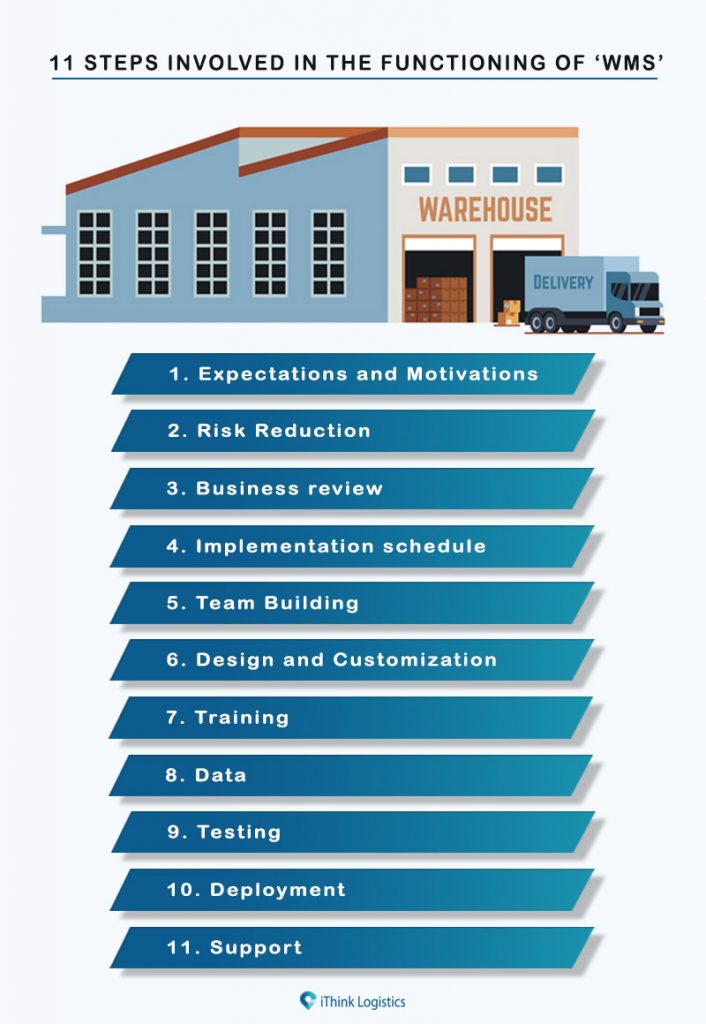
Now the actions of an effective warehouse management system being detailed above, it is necessary to understand what steps are involved in the same and what actions are designated for it. 

Steps Involved in the Functioning of Warehouse Management System

Stage 1: Expectations and Motivations

The first stage to get started with a warehouse management system is the involvement of varying sets of expectations and motivations collected from the various stakeholders’ perspectives. With the heightened expectations of speedy ROI and smooth implementation of WMS, company Directors and Operations / Logistics Managers expect maximum user-friendliness that accelerates job ease.
It also focuses on eradicating inefficient processes, along with eliminating bad warehouse practices and habits. As a result of having a WMS, warehouse staff looks forward to making their jobs easier with minimal errors recorded. However, at the same time, the automated version of WMS would not be threatening to their designated jobs. If the warehouse management system provider clarifies the potentials it would bring into warehouse operations clearly without the threat of job slack, the implementation of WMS can seriously ring a significant boost in the revenue.

Stage 2: Risk Reduction 

Since the reduction of risks is a pivotal factor in warehouse management system implementation, the core objective stands out to be an assessment of potential risks that might arise once the implementation is active and thus chalking out measures to either minimize or negate them completely. The more competent and experienced will be the client and the WMS provider, the less will be the probability of getting prone to further risks.

Stage 3: Business review

Business review sessions initiate at the beginning of the warehouse management system project. This enables the organization to assess, dissect and analyze the current ongoing set of warehouse functions. This also allows meeting the needs and requirements of the warehouse.

Stage 4: Implementation schedule

One of the biggest challenges that are met to implement a warehouse management system is the lack of scheduling properly. As per various surveys conducted, this challenge stands out as a reason for any kind of potential risks detected. As a result of unexpected obstacles and improper planning, a WMS implementation seems to fall out. Thus, only a realistic implementation plan allows you to schedule a successful WMS implementation. 

Stage 5: Team Building

On a general basis, two teams are to be involved in WMS implementation; the team who would be installing the system and the other team would be including client warehouse executives. At this stage, picking the right team is very elementary and can directly be the influencing factor for either the successor the failure of the WMS implementation. This is due to the actions executed will be influenced by communication flow between both the teams and the chemistry involved in it will decide for its own in the success of a WMS installation.

Stage 6: Design and Customization

Since the business review (afore-mentioned stage) is very important to the warehouse management system installation project, the same needs to be effectively customized to meet the client’s requirements. With more flexibility in the WMS, lesser customization is required.

Speaking from a perspective where making a WMS project successful in the least possible time is the priority, minimizing customization can be a key factor. Leveraging project management software can further streamline implementation by improving coordination, tracking progress, and ensuring teams stay aligned throughout the process. Even though the basic utility of WMS is to meet the industry standards, changes can be implemented in the ways a warehouse operates. Therefore, both the expectations and risks should be accordingly addressed. 

Stage 7: Training. 

Training is a part of any new technology implementation; as in consideration of a WMS being in operation, training is very critical for the application of future design and feature customizations. This also becomes important while the transition from a respective warehouse management system to another. Some WMS companies consider that training given on WMS operation can be a time-taking affair and negates its necessity.

However, it is highly advisable that a roper WMS training must be provided to each staff for complimenting the aptitude and compatibility of the users to handle the newly integrated system.

Stage 8: Data

This stage deals directly with the implementation of the warehouse engagement system. It includes the transferring procedure of warehouse data from one system to another. To understand this stage with more clarity, it suggests that the database that contains the existing data about the warehouse needs to update as per the newly integrated data scheme and terminology. Also with this, the addition of missing data and modified data needs to be done and adjusted with the new system requirements.

Find out how to Use Big Data in Freight Transportation.

Stage 9: Testing. 

Testing is done majorly on real warehouse data. This included the comparison of results of warehouse process execution that existed earlier before WMS installation and the pone that has been newly generated and integrated. Multiple warehousing systems are tested minutely and the bugs located in the design frame are corrected by the respective warehouse management system supplier or the WMS provider implementation team.

Stage 10: Deployment

Once the testing is being done and the modifications are added to the new system, the next immediate step is the deployment. A date is fixed and a close accurate data snap of the warehouse data is being uploaded to the database of the new WMS. As a course of action, the main work commences in the newly integrated warehouse management system. Although the new WMS stays in operation yet at times for data accuracy ensuring tasks, both the systems (existing and current) can be compared and evaluated.

Stage 11: Support

Due to a newly integrated system that has been implemented in warehouse management; it brings out many challenges that were not properly addressed while it was being dealt with at the implementation stages. The main reason why support is an integral part of a successful project was that the later stages’ complexities will demand quick resolutions.

While in its full fledge operation stage, resolving resolution can unnecessarily take a lot of time thereby delaying the immediate actions that need tsp be taken. Few of the large enterprises having a robust warehouse management system uses a cloud-based warehouse management system and works on the SaaS model (Software as a Service). For such enterprises, operations become super smooth with a minimal or negligible amount of errors located.

Conclusion

Thus, with such a detailed explanation of what is a warehouse management system and what potential power it holds once being successfully installed, the emergence of having it implemented for your warehouse operations becomes extremely essential. Each stage in its implementation procedure is extremely vital and needs to be followed with full attention and skilful supervision.

In today’s date, where competition has been so crushingly high, the necessity to stand out with cutting-edge technology is what you need to be updated with at the earliest. Although the warehouse management system has a lot of added advantages, yet the reduction of costs and seamless operations are two of its major highlights. Thus, get started with an advanced warehouse management system today.

Categories
E-commerce Logistics

The Best Way to Reduce Logistics Costs in Consumer Goods Distribution

Since the past few decades, there has been a significant battle recorded for the Consumer packaged goods (CPG) companies in regard to acquiring the market share and space on the retail shelves. For having the advantage of costing terms, companies are now heavily relying on CPG logistics operations and as per the course of such circumstances price pints are a key factor in this battle of market acquisition and different ways to reduce logistics cost. 

As a fortunate course of events, incremental improvements are being recorded these days in the existing distribution processes. The employable ways of managing logistics strategies and managing shipping strategies have been debunked and contribute to the current processes in regards to retail capture and targeting customers. To do, logistics cost management is an essential concept to understand here. The perfect balance of newly formulated strategies that are optimal, and offer the potential boost for gaining profits and cost savings have been now discovered effectively. 

These strategies are targeted especially for mid-tier suppliers who are struggling against the big brands. Before we go further on understanding multiple ways to reduce logistics costs in consumer goods distribution, let’s get the concept of consumer goods distribution and logistics costs involved in the same, clarified. 

What are logistics costs in consumer goods distribution?

Consumer distribution happens at various levels or tiers. There are multiple channels through such kind of distribution takes place. When it comes to bringing the two concepts of consumer goods and distribution and logistics, there is a significant course of activities that can be linked together. Any form of distribution will primarily have logistics as its basic activity.

Same for consumer goods distribution as well, logistics plays a very vital part. For small players in the market, logistics costs overlapping the costs of distribution or manufacturing have become a very big challenge. Logistics being a crucial procedural activity for distribution cannot be negated at the same time. Thus, finding ways to curb logistics costs have become very essential for small and middle distribution enterprises. 

6 Ways to reduce logistics cost

Here are a few of the most important ways or strategies on ways to reduce logistics cost:

Unite with Shippers on Loads for Logistics Costs Reduction

While missing out on large freight volumes, small enterprises can leverage using higher costs that are less in an amount in regards to truckload (LTL) shipments. Being one of the primary ways to ways to reduce freight costs, consumer products goods’ companies can be competently in the playing field of the market by having load consolidation with other CPG firms. 

In some cases, there have been instances of doing the same with competitors thereby targeting the same targeted customers. The smart shift from LTL (less than truckload) to lower costs, and full truckload initiates to move, it does not just contribute in reducing freight rate but also bears responsibility for your share of the lower-cost move. Considered to be a great strategy, many enterprises have deployed this and carry on handling consumer goods clients with an ideal position retained in the market. 

Data Integration from Sales and Fulfilment Systems

Specifying available inventory against the list of current orders leads to chaotic situations and troubles that are hard to manage. The problematic aspect of this situation is that even technological advancement, in terms of having an automated programmed algorithm, is also not existent to process the subjective decision. Leading to more errors, this decision-making process calls for personal bias since customer service executives and sales representatives may direct available inventory to their current set of in-house customers. To overcome this challenging situation, integration of data in regards to the sales and inventory is a great strategy. 

However, this can have some limited repercussions on small-sized companies since they are allocated with limited systems resources. Since this strategy has been one of the best ways how to optimize transportation costs, many companies have already leveraged in integrating data from multiple systems from experience and resources thereby expediting decisions that are to be made. 

Another vital thing to note under this context is that companies can combine valuable knowledge about their retail customers and can have decisions made based on customer priority. Doing this, the potential threats of disappointing key customers based on the “first-in, first-out” model can be simply avoided. 

Cross-Docking

Standing out effectively as a productive way of reducing logistics costs for small and mid-sized CPG companies, the cross-docking method can help in moving the just-in-time inventory model. Since it’s a proven strategy, multiple CPG companies have been using this and continue to do so to fetch some productive results. The cross-docking method requires three essential factors to be ticked; 

  1. Visibility must be given to inbound freight and factory production
  2. Advanced systems to combine orders with inbound freight
  3. Coordinate with carriers in an effective manner

Companies having the accessibility to insights and analytics can quickly deploy cross-dock strategy, thereby effectively knowing about the steps that can be taken to reduce cost in the transportation of inventory.

Product Packaging in Distribution Centre

As an obvious fact, retailers will never agree for the selling of products in its configured form before leaving the factory. Although, in respect to certain markets, factory finished products are required in various quantities in a pack, or with altered configuration altogether. Many of the currently exiting customer production goods companies ships their products directly from their respective distribution centers to firms handling the outside packaging, this is primarily done to get back the product to the same distribution center. 

However, doing this leads to an escalation of freight costs and can hamper the company to miss out on visibility to the product at its packaging stage. Eliminating these errors can be done by executing secondary packaging services and other related product configurations at the operating distribution center. As per an estimation is done on how much savings can be acquired from doing this, a revelation of 10%-15% savings was found out based on data showing reductions in inventory, freight costs and damage.

Reduction in Chargebacks

Big sized CPG companies have in-house departments who would look after the chargebacks and also monitoring them at the same time. However small and mid-sized enterprises lack the potential resources to cast their focus on chargeback reduction and compromises on accepting them at the cost of running the business. For such enterprises tying with big sized CPG companies can be a significant move in gaining chargeback reductions. 

Companies that are shipping out to multiple CPG manufacturers have knowledge about their retailers’ requirements and can monitor outbound shipments for assuring compliance. Such inputs can also contribute to gaining the data to validate the charge and support penalty challenges.

Virtual Logistics Capability 

With globalization in its full form, consumer product brands have partnered with multi-billion dollar companies who can provide them with the advantages of having use of supply chain synergies. This has led to stiff competition for small and mid-sized CPG companies. 

However, making agreements with the correct and credible logistics partner for consumer goods distribution can make a significant shift in your business dynamics. They can leverage you in playing safely in the market with facilities of a big company logistics without the overhead burdens. 

Conclusion

Thus, now that you have a broad idea on how to reduce logistics costs in consumer goods distribution, make sure to take the full advantage to help the business run fruitfully in the global market. In case you wish to know how to calculate logistics costs in India, you may refer to the supporting blog from here. Get all the details regarding logistics costs and how the calculations are redone today. 


Categories
E-commerce Logistics Logistics Supply Chain Management

How to Use Big Data in Freight Transportation?

“War is 90% information.” A quote well said by Napoleon Bonaparte in the 19th century that still holds the right judgment of truth. With businesses, enterprises and large MNC’s rushing to be the top players in their field, success holds to those who are well equipped with managed, organized and processed information. 
Big Data in freight transportation has been the current buzzword in the tech world and great industry minds have always welcomed the benefits of controlling their huge sets of raw information or data.

Be it analysis or integrating the statistical approach of harnessing the right information out of the raw data, Big Data and Data Analytics have curved the ways businesses have been since their inception. Organization leaders and senior corporate executives are able to learn more about their business, gather more insights and device better decisions based on facts and information. 

What is Big Data?

Big Data, is a field in Data Science that deals with various processes of organizing and analyzing large, random and complex data sets in order to extract information that is useful. The current trends in the application of big data in freight transportation are utilizing user behavior analytics, predictive analytics, and any other forms of data extraction that bring value.


The collection and accumulation of raw data are done in bulk as they are collected through different information sensing devices like mobiles, tablets, software logs, remote sensing, RFID readers and even wireless sensor networks. However, collecting build information and not being able to extract the needed information and at the right time can be rather considered as a waste. This is when the application of Big Data comes into the picture. 

Big Data revolutionizing logistics and freight transport the big way!

A colossal amount of data is generated every day as each shipper or customer prefers to ship their parcel or consignment through logistics. But it is not only about the amount of data that is being generated but also about the variety of data that needs to be organized. As defined by Gartner, Big Data is the analysis of the relation between high variety, high velocity and high volume information asset that intends to improve the decision making process with better insight and process automation. 

Now, logistics and freight transport companies are service providers that make them deal with not only a large set of data about every parcel or freight but also a variety of freight data. This makes the entire network for globally operating logistics and freight service companies more complex to deal with. The transportation management system is known to increase freight capacity. This is where Big Data & analytics come into the picture. With big data and data, analytics tool business leaders can now process the endless array of unorganized data into meaningful business insights adding more value and streamlining service development. It has now become much easier to decide on the pricing strategy, product placement, shipment tracking, order and delivery reports, risk management, and a lot more. 

Applications of Big Data in logistics

The conventional way of keeping records of important information like customer details, customer feedback, freight route details, review, and social media presence, etc were all maintained and calculated by human minds. With big data and data analytics making its strides into logistics, the industry has witnessed hordes of opportunities and room for further improvement.  Here are a few ways to utilize this gift of technology. 

  • Big data is used for predictive analysis for freight transportation. It helps the management to predict and estimate the volume of the freight according to days, weeks or months. This helps the business leaders to estimate and define and cost structure for future business operations. 
  • Routes, effective communication, cost, and facilities are important attributes in the logistics industry. Big data allows data scientists to analyze large collected data and bring out necessary insights for better decision making process. 
  • With all the valuable insights in hand, big data can be used as a tool to predict the time taken for each freight and therefore plan for further business accordingly.


  • Big data can also be used to track down the most rated or underrated feedback from the customer all across a huge market. This would also allow the logistics business to continuously develop their service to keep their customers satisfied. 

Benefits of having Big Data in freight transportation

When it comes to benefits, Big data makes the longest tide among the latest technologies that provide in-depth business insight and other benefits. 

Enhanced Knowledge 

With a judicious amount of capabilities to extract the right and needed information out of a large and complex collection of raw data, Big Data has equipped all the business leaders with an arsenal of enhanced knowledge. The greater analytical power and authority to extract targeted information or statistics helped the businessmen to derive perfect campaign reports. The more knowledge that was being extracted and utilized, the authenticity and quality of the service or offerings went high. 

Many standing logistics organization has already integrated the use of Big data into their business operations and have been sharing the amazing results. The technology has given a better insight into freight arrangements, current orders on a global range, cargo details, encrypt the entire routing network across every operating market.  Besides, Big Data has not only helped organizations improve their way of interacting with their clients but has also ensured to have enhanced knowledge on every shipment.

Improved customer service

Well, with better insights and the tool to convert any form of data into the right information about any customer or client, decision-makers can better serve the needs of their target audience. This is one of the most important benefits big data has brought to the world of logistics and transportation. Using the analytical tools, businesses are now able to draw out more relevant information regarding any freight or consignment at any point in time. 

At times, having more relevant information allows a business to respond promptly to customer queries, address any concern regarding the shipment and a lot more. The same goes for shippers or distributors. The logistics and freight transport industry can now keep a better track of the entire network and details of every shipper. Also, collecting and analyzing repetitive customer complaints to improve service and look into matters that need immediate attention. 

Efficient Operation 

As the flow of information helped business leaders to shape the course of their operations, Big Data added another benefit to them. In-depth analysis and thorough surveying of freights, consignments and parcels that are being dispatched to be transported reduce errors and chances of overlooks. This enhances the efficiency of business operations. 

Deciding the fate of Big Data in the logistics industry

Big data, a gift of technology does seem to have long term implications and impact on the logistics industry. However, it is important for businesses integrating big data for the first time into their logistics operations to keep up with certain know-how to get the best out of this technology. 

Another major concern that needs attention is data manipulation. With a large set of private and business data, and having access to all these data makes it easier for any data analyst to manipulate the data according to the needs of the company. This is mostly seen in terms of marketing and promotional activities. Businesses often use the power of big data to target marketing campaigns to people based on their own private data. 

Conclusion

As the logistics industry deals with information and data about their customers, the major concern that arises is of data privacy. It is important for the data scientist and the stakeholders to have a mutual agreement about extracting any related information that can be subjected to privacy issues. This disintegrates the authenticity of the service industry and resets a negative impact on customers. These terms need to be sorted out before integrating the process which would also assist in performing risk management surveys. 


Categories
E-commerce Logistics Logistics

How A Transportation Management Company Increases Available Freight Capacity?

Transportation or Logistics Management has a wide variety of aspects, but fundamentally it exhibits two basic function shipping spend and process. The data usually are fractured into pieces, and there is no translucent pipeline of how the money and time flow through these pipes. Transportation management company promises to bring down the cost and time, and also provide lucid accounts. 


As per the transportation management definition, it deals with the very aspect of control and functions on the pillars of transport management. They deal with shipping and spending processes and various other tributaries. The logistics are an integral part and circles around executing and planning. It starts at point A and ends at point B. Point A being the place of origin and B. ending the place of consumption. The main aim of this is to determine a smooth flow from point A to B, keeping in mind customer requirements.

Transportation Management System works via leveraging the shipments, negotiations with carriers, invoicing and many more. Doing this they almost stand immune to the fluctuating scenarios of the industry. Here we highlight detailed discussion on how a transportation management company escalates the freight capacity to add it to the advantage of the shippers and supply chain partners. 

Understanding Transportation Management

A transport management requires a system which logs, thus making it easier for people at the opposite ends to acknowledge, making the transaction smooth and efficient with, the information available on your screen one does not have to contact the driver or the person concerned ceaselessly, thus saving time. The person in charge can make necessary changes if he sees something incomprehensible along the way. The knowledge provided by the driver, which includes his location as well as the situation, can be handled more curatively when one has information.

Thus, transport management functions with logistics (inventory management and transportation) and customer service. A smooth flow among these decides the capacity of the freight. If these sectors, are managed efficiently the freight capacity increases. Technology plays a big part in these sectors. They network with each other and bring information which is used in turn to keep a clear knowledge about the intricacies of the management, making it easier to flow. It helps in running the company smoothly without much hassle. 

Components of Logistics Management

Customer Service

Customer Service has various dimensions and is a crucial part of logistics. The customer service deals with the various wants of the customers. So, they don’t have to play a role in the complexity of the work. 

Inventory Management

Inventory management comprises storing, ordering and using company inventory which includes raw materials, finished products, components, etc. 

Transportation

Transportation includes the movement of goods, whether it’s the raw material from the source or finished product being shipped out to customers. 

Technology is one of the most important elements which aid available capacity to a much larger extent. Technology helps to encapsulate various elements of transport management.

Clear knowledge about loading and tracking brings a drastic change in this process. These technologies have been used by large carriers for a large period of time, but what brings a change is the information from the surroundings, that provides information to the broker and the shipper. The customers might not be interested in where the object will arrive but they do show interest in when it will arrive and how it will arrive.

Why Securing Available Capacity is a Challenge for Shippers?

The situation originates from the basic circumstances of struggling in safeguarding the limited source of capacity across all the platforms by the shippers. On the other hand, freight consolidation and deconsolidation programs have contributed in helping shippers to have returned from the value of additional modes. However, the basic solution of capacity remains rigid and tight and additionally, the crushing force of expectations of having an escalated demand in e-commerce pushes to the edges of the current system. 

As the demand kept on increasing with each passing year, the rise in the number of trucks was equally more as per the last year. Coming as part of the consequences, shippers kept on investing their money in buying private fleets. Apart from that, they are also open to partner with the transportation management company

As per the Logistics management statistics, the data as of 2018 is pretty much server and noted to be having a significant crunch due to lack of capacity however, the picture is quite much the opposite as of 2019; however the productive need of increasing capacity remains the same and estimated to be so in the coming future as well. 

Expanding Available Vendor Choices with TMC Partnership

Although the conceptual fact of tying up with a third party vendor such as a sounded and reputed transportation management company is not new, yet the prospective aspects of leveraging services and technology verticals are not deniable. As per one of the very well-known and famous logistic management case study, it was found out that the higher demands for TMS collaborations was happening and growing at twice the rates it used to be. This was analyzed to be an obvious outcome for getting lowered freight rates.

Implementing this has also brought in various other benefits including enhancements and efficacies of order tendering. Shippers these days turn to their partnered transport management companies in need of more capacity and secure the same. However, there is a significant dispute as a consequence of this. With TMS growing at such a mushrooming rate, carriers have realized that they are losing out on money.  

To explain this in a few more words, shippers were in no more direct collaborative terms with carriers after the inception of Transportation Management Companies. Quote, obviously carriers faced the challenge of putting in money for the middle players and eventually it was unacceptable. Stating data from a survey done for the last two years, carriers have got their rates increased by a meager value amount of 4% in a year. But the current year is re-shaping the potentials of setting new records due to the growth in e-commerce.

Shippers are somewhere forced to re-evaluate their prevailing partnerships with transportation management companies due to the market estimation of hike in carrier rates in the coming next three years. For increasing spot market freight rates they will turn towards robust a platform that benefits them in a much broader sense than the simple transport management system integration. These benefits are primarily all kinds of value-add-ons services and include freight invoice auditing, managing inbound logistics, after-hours scheduling and much more. 

Benefits of Partnering with a Transport Management Company

Under this context there are multiple ways of why partnering with a TMC adds shippers’ benefits:

Increase of Capacity

One of the primary advantages of working with a transport management company is the basic goal of obtaining more capacity. Considered as the best option by so far of increasing freight capacity, shippers always look out for this benefit by partnering with a transportation management company. 

Expanding Vendors’ Reach

The second most optimal advantage is increasing the vendor base. With the freight capacity being increased, the streamlining of business comes on naturally and therefore reaching out to more vendors is a prospective result for partnering with TMCs. 

Streamlining Formal Actions

The necessary legal actions like enhancing the recordkeeping process get much better with an improved agreement that has a strict formulated list of regulations.  

Digitized Approach

The transportation management companies have the privilege of engaging with the latest model of technologies and therefore add benefits to the shippers in having less hassle with managing operations manually.

Tender Shipments

Shippers nowadays spend less on freights due to their partnered advantages. Additionally with this, getting an easy hold of tender shipments has come into the scene with the minimal amount of reduction in the errors. 

Access to Analytical Data

As a consequence of transportation management companies having access to the latest technological advancements, they will leverage shippers with important insights are known as analytics to give them the scope to evaluate the current progress and errors. As a result, this will automatically empower shippers to gain the full authority of their business operations.

Freight Enhancement

Shippers partnering with the leading transportation management companies will allow them to make their freight more attractive. 

Third-Party Benefits

One of the most crucial elements of partnering with TMCs is that shippers not just have guaranteed better services but also gain on having good rates through corporate or volume buying capacity of third parties. 

Supply Chain Effectuality 

Increasing supply chain efficiency is one such benefit of being partnered with a transportation management company since the access to track drivers; inventory is all that you gain productively. This will boost production and reduces inefficiencies.

Expert Inventory Management

Transportation management companies are capable of helping shippers with enhancing warehouse efficiency and productivity. Accommodating with the continua flow of the incoming as well as the outgoing process of inventory, a well-organized warehouse is something very crucial. This action also denotes being an integral part of the logistics process.

When in collaboration with a transportation management system, you can formulate a registered record of orders and track their geo-location in the warehouse or the transit or even at the time of their arrival. This will empower users to go through the processes of their respective logistics and have an escalated amount of credibility already identified.

Enhancing Customer Service

A sounded transportation management company contributes to improving customer service levels with the accessibility to scrutinize and monitor the performances happening currently. Due to the potential of locating the geo-location of the shipments and mapping the distance from its destination source, the assurance from the customers’ point of view raises automatically.

To understand the technicality of this situation, this happens due to the set up of an online portal on which customers can view their shipments’ progress updates and can be well-informed about the same. As a result, it elevates customer services efficiently.

Real-Time Tracking

With the transportation management system leveraging shippers to track drivers and shipments, this must be noted here that all of it happens in real-time. Providing end to end details to managing it up all real-time tracking is something that can be phenomenal for every logistics company. 

At the crux of operations, the safety and security of each shipment getting delivered to their destination source is the primary objective that needs to designate. Such minute details like the amount of time taken on a route are taken into consideration for analyzing the efficiency of a route schedule.

Amongst the multiple advantages that can be listed out here in support of transportation management companies being partnered with shippers, the above-mentioned are the most significant ones. All of these play a pivotal role to gain worthy returns in a competitive logistics and transportation industry competition and empower business continuity. However, what is vital for shippers to always make a note is the identification, evaluation, and analysis of the right and successful ready-to-partner logistics partner.

Expanding Capabilities with Right Partner 

One of the most kernel points that must be admitted is to bring on an upsurge in freight management which is essential tough. In this growing age of competition with countless brands struggling at the global platform, the scenarios have become more rigid. Here the important thing to implement is to get partnered with the right and leading transportation management company. 

Many logistics brands would invest in assessing or reviewing vendors based on recommendations or from some random reviews on the internet. Instead of doing these, what can be much more effectively done is to look for the potential and capability in such companies that are competent to take up the initiatives voluntarily.

Assess the information that has been put up on the public domain and also leverage from blogs that debunks the current statuses and the tricks on avoiding the pitfalls. Along with this, seek for opportunities that are easy to integrate and has an end to end solution provided.

Conclusion

Thus, with such prospective aspects of getting partnered with a transportation management company, take your logistics brand to the next level and gain the best befits existing in the market. 


Categories
Logistics Supply Chain Management

How Does A Transportation Management System (TMS) Work?

What Is TMS- Transportation Management System?

A Transportation Management System (TMS) is a software solution designed to optimize the logistics of transporting goods. It helps businesses plan, execute, and track shipments in real-time, ensuring cost-effective and efficient movement of products. With a transportation management system, companies can select the best carriers, streamline routes, and monitor the status of shipments, all while reducing expenses and improving customer satisfaction.

What Is Transportation Management?

At its core, transportation management in logistics refers to the process of organizing and overseeing the movement of goods. It involves coordinating the various elements of shipping, from choosing carriers to managing delivery schedules and optimizing routes. Effective transportation management in logistics ensures timely and cost-efficient delivery, reducing delays and improving supply chain performance.

Why A Transportation Management System Is Essential?

A transportation management system is essential for businesses looking to streamline their logistics. By automating key processes and providing real-time visibility, it enables companies to manage their shipping needs more effectively. Overall, having a strong transportation management strategy, supported by a TMS, can enhance operational efficiency, reduce costs, and improve the overall customer experience.
Growing steadily as technology progresses, Transportation Management Systems seemingly flourished as one of the most helpful transportation solutions in supply chain management. Transportation Management System (TMS System) is a platform designed to streamline the transportation process, a subpart of the supply chain. It deals with monitoring, organizing, managing, and handling any matter related to the transportation of the products right from placing the order until the final delivery.  

Growing steadily as technology progresses, Transportation Management Systems seemingly flourished as one of the most helpful transportation solutions in supply chain management. Transportation Management System (TMS System) is a platform designed to streamline the transportation process, a subpart of the supply chain. It deals with monitoring, organizing, managing, and handling any matter related to the transportation of the products right from placing the order until the final delivery.    

Various eCommerce giants, logistics companies, distribution businesses have been looking for fine solutions to minimize the overhead spending and bring fluency into their business operations. Thus, being able to track their freight and consignments proved to be a meaningful way to devise the potholes in the process that can be shaped to perfection. 

In addition to this, Transportation Management Systems has also brought other most useful ways of tracking shipments, reducing unnecessary costs, understanding the needs of the customers, and also gathering real-time information about the entire shipping process.

Also Read: How A Transportation Management Company Increases Available Freight Capacity?

How Does The Transportation Management System Operate?

The popularity of the TMS platform can be based upon recent studies that indicate almost 35% of the businesses are now using the platform for managing their transportation network. With the increasing complexities of logistics and transportation as the business grows, the need for Transportation Management Systems can never be exaggerated. 

Technically, the Transportation Management system (TMS System) enables a better transactional and communication system that allows the users to leverage vast real-time data and make easier decisions, plan and strategize for optimal transportation solutions. 

The most effective TMS platform works in collaboration with the Supply Chain Management platform, and the ERP platform facilitating the entry of customer orders and integrating that with the warehouse management system and inventory management system, creating a loop in the network.

Here are the best features that can be leveraged from an advanced Transportation Management system;

Planning And Decision-Making

With all the instant data and business insights, the TMS platform devices the most relevant reports and presents them under a single dashboard for better visibility. Business leaders and Transportation Management Companies now have a tool that could ground the decision-making process much more effectively. Some of the major attributes that are benefited include fewer road stops saving time, following through shorter routes, and ultimately lowering the transportation cost.    

Execution Of Transportation Plans

Transportation Management systems make it easier for management to frame better strategies and transportation plans. The platform addresses the major functions like dispatching, carrier rate acceptance, and EDI by automating most of its functioning staying away from much lesser human intervention. As the management is now able to plan better, it becomes much easier to successfully execute them.

Visibility

A TMS platform makes it much easier for shippers to track and keep close visibility of the entire shipment process. This allows the business leaders to have freight visibility including all the team members in the same loop. The logistics manager deals with a clearer view of the freight or consignment from point A, delivered to point B with all insights on invoicing, customs clearance and booking.

Measurement

Every Transportation Management system provides various reports on the Key Performance Indicators (KPIs) for e-commerce logistics for every aspect taking place in the transit. This makes it convenient for the shippers and distribution units to measure and keep a record of all major attributes. The final reports are presented through a single dashboard view.

Transportation Management systems are considered as one of the core disciplines of supply chain management and deal with creating a bridge between supply chain planning and enterprise resource planning. In the world of the logistics and transportation industry, it becomes subjective to the validity of the platform for all kinds of logistics, shippers, manufacturers, eCommerce businesses, retailers and third-party logistics management providers. 

Also Read: How to Use Big Data in Freight Transportation?

Benefits Of Transportation Management Systems

Empowering Leaders With Technological Capabilities

Transportation Management Systems equips the shipper with all necessary and advanced tools that play a vital role in monitoring, organizing and managing the shipment process. The platform can be leveraged to handle several types of shipments all under a single dashboard allowing control from a centralized location. It resolves and mitigates all unnecessary stress and doubts that might occur due to unknowingness.

Simplifying The Entire Process

Technology intervening in a complex process makes it simpler. It simplifies all the hectic and mind-puzzling ways of managing the logistics, Freight Capacity, maintaining the order, freight rates, and delivery records, tracking shipments, understanding the demand in the market and the ways customers buy. Transportation Management Systems makes it easier for shippers to bring fluency into their business process and therefore easily manage the entire network under one dashboard. Another usefulness of simplifying the entire network comes with effective ways of making decisions. With more data and real-time tracking,  

A Better Way Of Tracking Freight

Transportation Management Systems allows you to track the movement of your shipment through air, water or road and answer to any transit situations, unexpected delays and a lot more just from one single location. This can be considered as one of the easy ways to say goodbye to the traditional ways of taking risks of not having real-time information about the consignment. 

The best part of it is to, adhering and relying on technology scales down the human error at the same time. With less human intervention on gathering real-time data and tracking the exact location of the shipment, business leaders find it much more convenient to make better and more effective decisions.

Gathering And Developing Better Business Insights

Here’s another major advantage that business leaders enjoy with Transportation Management Systems in terms of having access to a large set of real-time data and in-depth insights about the complete shipment process and better innovations in Logistics management. This feature becomes tremendously helpful to a business that deals with thousands or lakhs of orders on a single day. 

A TMS platform records and saves every detail related to a particular order, and its successful delivery. Certain robust and advanced TMS platforms have efficient reporting capabilities that bring important analytical reports and important insights right to the user. This majorly helps during any decision-making process and allows the business leaders to make effective decisions while having quick access to a vast information pool.

Enhanced Customer Satisfaction

As a shipper starts making better decisions and keeps a track of the real-time data about the shipment, many important attributes become visible. The use of TMS System makes it easier for shippers to understand the trend of the customers while placing orders and comprehend better ways of answering all queries from the customer. It seemingly contributes more towards customer satisfaction and therefore customer retention.

Challenges Associated With Transportation Management Systems

Undeniably, with technology come certain challenges that need to be resolved before getting completely involved with it. A TMS System has its limitations that must be kept in mind while integrating the platform to take care of the entire transportation network. The major challenges that are still faced by many managers and operators responsible for transportation management include:

Keeping Organized Quotes

For businesses dealing with varied shipping and logistics companies, it becomes difficult for them to track quotes from different carriers and derive the best quote for just one shipment out of the entire network. Most of the time a TMS platform fails to organize the different quotes and details from different carriers. Thus the varying options and the inability to form a proper comparison make it more challenging for the shippers dealing with multiple shipment types thus failing to save time and effort at such times. 

Selection Of The Best Carrier

With shipments varying based on locations, customers or products, it is impossible for a basic TMS System to track and organize all the carriers and form a comparison among them.  Such a limitation restricts the shipper from selecting the best out of the lot and dealing with the dilemma of selecting the best suited for a particular consignment. This demands an increase in the complexity of the software that further leads to other consequential failures. 

Also Read: How IoT is helping Transport and Logistics Industries

Tracking Several Shipments

With several shipment types varying based on time, location, and customer, keeping the exact tracking record of the freight becomes difficult. The TMS platform does not allow the user to efficiently track all shipments for international shipments and abroad transits under a single dashboard. This makes it more clumsy and confusing for the user.    

Cost Of Integration

As business deals with all the above challenges and makes their TMS software capable of handling multiple shipments, it only makes the software heavier and the cost of integration therefore increases. Furthermore, every TMS System is not able to perform the best for multiple shipment types. This acts as a challenge for businesses with regulated budget options.

Conclusion

Despite the challenges that remain, businesses are in a steady state to welcome transportation in logistics as one of the most helpful and beneficial for managing their overall transportation needs. Though the platform is best suited for businesses dealing with a single logistics unit or own shipping arrangements. The latest Transportation Management Systems comes with many advanced features of data collection and utilizing the data to form efficient reports helpful for the management to make effective decisions at critical times.

A TMS in logistics plays a crucial role in streamlining the entire supply chain process. A Transportation Management System (TMS) helps businesses plan, manage, and optimize the movement of goods efficiently. With TMS in logistics, companies can automate processes like carrier selection, route optimization, and real-time shipment tracking, which improves operational efficiency.

Utilizing a TMS in logistics is essential for maintaining a competitive edge. By integrating a TMS in logistics, companies can reduce transportation costs, enhance delivery performance, and ensure a smoother flow of goods through their supply chains.


Categories
Supply Chain Management Logistics

What Are Spot Market Freight Rates and Contract Rates?

Every company relies majorly upon its logistics network and supply chain to ensure optimal functionality and production efficiency. These reasons to outsource transportation is strong enough to decide the success of the business in the competitive market. However, among all the major attributes, business leaders often find themselves questioning leveraging from the spot market freight rates or deal with the contract pricing for the freight.

Freight Spot Rate definition

It is the price offered by the freight service provider to the shipper right on the spot or at a particular point of time, to ship the products from one place to another.

Freight Contract Rate definition

It is the rate offered by the freight service providers, logistics service provider, and freight brokers to shippers for a fixed set of lanes and a set period of time.

While both types of accord offer a different and unique value proposition to business, not every enterprise could suffice with both options. The spot rates are a leading driver of the contract rates direction, but might not be enough to determine the current contract rate. 

They differ in their needs and requirement and are mostly chosen based on situational needs. Thus the only work to be done by the shippers and business leaders is to select from the right type of contract to ship a consignment. The basic understanding of spot price rates and contract rates can better paint the picture.

Basics of Freight Spot Rates

The logistics network is well connected with several tie-ups and partnerships across various economic and transportation models. The spot rates mark up to be the key indicators of directing the economic standards in the logistics industry. However, spot rates for freight are market-driven and depend mainly on the state of competition in the market, route of transit, and the location of delivery. 

The factor majorly influencing the spot rates is the fluctuation in the market that demands a rise in the value of certain products that there along with results in increased cost. Consequently, as the product value rises, the price rate for logistics and transportation also increases.

Another way of explaining the concept is that in a supply chain, the cost calculation for logistics and transportation depends directly on the price and demand of the commodity. That means at times when supply chain takes a hit onto lower prices without being accompanied by increasing demand, the balance between an increased supply also gets disrupted.

Relation of supply chain equilibrium with transportation rates and prices 

Spot rates are defined with the price that is set on an immediate settlement on any consignment. They are best suited for freight that is sudden, less in amount and is sent over a limited location. It is based on the value of the asset or commodity that is to be shipped. That being said, as every product varies in its value at certain times, it only increases the diversity in shipment types. This diversity results in the volatility of the spot rates or the price that is settled on the spot for shipment.

Limitations of Spot rates

It must be clear by now that shippers choosing over spot market freight rates are bound by situational needs and are no way putting their foot for a long term contract. This carries its limitations for shippers.

  • Small and medium scale businesses might end up transporting commodities under spot rates for weeks. On the contrary, the overall investment to the transit over weeks can turn out to be more expensive than signing a contract for the same period of time.
  • The shipper is abided by small quantities without having the assurance for a long term business relationship. 
  • Eliminating of Inherent risk to several unknown factors are not well associated with agreeing upon spot rates. 

Basics of Contract rates

Having a long term business relationship does bring in some perks to both the organizations. Contract Rates for freight is the most optimal and cost-effective way for a company’s logistics and shipment operations. Binding through a contract with the logistics or transportation providers brings a guarantee of long term service and loyalty based upon terms agreed by both parties to the best of their interest. The overall cost of transportation comes down significantly in comparison to spot rate settlements.

The commitment put in by the shipper and the transportation provider rips the limitations and risks of loyalty or optimal service during the transit further strengthening the position of the company over the competitive market. This concept provides better stability and a clear vision of a transportation network that is easy to comprehend and manage. 

Optimizing Spot Market Freight Rates and Contract freight rates

Every consignment shipped overseas or to the local market are subject to various fluctuations in the market, weather conditions, time and even to the acceptance of the receiver. The rates fixed on the spot or agreed upon on an accord are all inclined towards a good negotiation that can bring the best rates for a company. 

Conclusion

Thus, the best way of dealing with the situation is understanding the value of the product and its capabilities to hold its current value for a sufficient period of time upon which a contract can be drawn. According to many economists, a major focus should lie on target for a long term business contract to get a stable and a known rate of transit. However, based on situational demands, market freight rates can be the best choice to get over a haul. 


Categories
E-commerce Logistics

Key Areas that will Drive Significant Growth in India’s Logistics Sector 2020

As time progresses, the definition of logistics in the industrial world and the global market keeps evolving continuously. The growth rate of logistics in India has shown tremendous improvement in the last decade, starting from scratch and reaching a level where the Indian logistics industry is competing with the top dogs of the most affluent countries. Since there is potential for unlimited improvement, the Indian logistics reports will always highlight areas where improvement could be implemented for better performance in the next year. The key areas for logistics growth in 2020 are as follows.

Logistics Sector In India Overview And Challenges

There is no doubt that the Indian logistics industry is the backbone of our economy. Our world logistics index rankings have come a long way since the beginning of its slow ascent to success. In 2014, the Indian logistics industry ranked 54th globally in the Logistics Performance Index. Moving to 2018, the ranking jumped to 35th and showed a massive improvement in the logistics system. Today, the growth rate of the logistics industry in India is interlinked to every industry and has amalgamated itself with technology, recently emerging service providers and infrastructure. The Indian logistics industry in 2019 is officially the most promising industry along with the quickest growth seen.

 Currently, the value of the Indian logistics Industry in 2019 is said to be around $160 Billion and the world anticipates this to grow to at least $250 Billion in the year 2020. This growth can be attributed to the increasing number of e-commerce retailers and their stellar services to the citizens of the country. So, why is logistics growth important? People already rely on e-commerce for their needs and till the year 2020, there will be a huge online-shopping market for the logistics industry to tap into. The entrance of several MNCs into the FMCG sector of the country also creates new avenues of opportunity for the Indian logistics industry to grow. These new and upcoming sectors’ progress has a direct impact on the growth of the Indian logistics industry’s inventory management and effective warehousing solutions for the retail industry.

Several companies from various industries are heavily relying on the Indian logistics industry to help them in serving the customized demands of the customer base. This will help the logistics industry to reach a CAGR of over 7% by the end of the year 2022.

While it is doing substantially well, there are areas that definitely call for a review and improvement. The ideas to improve the logistics industry in India currently revolve around reducing the costs of logistics for customers while providing top-notch services with the given budget is one of the constant challenges the Indian logistics industry faces. Increasing affordability encourages corporates to heavily invest in logistics services through tie-ups or outsourcing help. A lack of proper storage and stockpiling training has also been experienced in the logistics industry. By such companies establishing training and development centers, the industry can create trained professionals meant for the logistics industry rather than employing semi-skilled or skilled labor.

Trained personnel to monitor automatic stockpiling, proper storage and cargo safety will increase the profits since the losses will marginally be cut down. Creating an inventory stock portfolio, stock removal and maintenance system, the Indian logistics industry in 2019 can gain efficiency in cost-cutting for more retained earnings.

Since the warehousing system plays an important role in the manufacturing industry in aspects like global procurement and new models of sales and distribution. Improving the current technology by investing in recent research and development using indigenous and domestic technology will boost the economy by pushing other industries like tech to perform better as well. Making constant changes and upgrades in the operations system of the logistics companies will bring the benefit to the customers since this creates an environment of healthy competition while bringing the best services forward.

In 2020, we expect to see substantial changes and development in these key growth factors for growth of logistics in India.

Infrastructure Development

The Indian Government keeps reaffirming its aim to improve the logistics industry in India by making attempts to modernize the functionality starting with infrastructure development. The administration has introduced key infrastructural development projects to increase access to the untapped rural markets in the country. These projects will focus on bringing more efficiency to the supply chain and improve connectivity issues faced due to the geographical vastness of the country and the different terrains present. We’d think that infrastructural development pilot projects may bring about all the change necessary but there are also other factors. Logistics education, training, and an understanding of the framework are very important for the overall progress of the logistics industry just as hardcore infrastructural development is.

Boost In Policies And Regulations

Revolutionary policies and reforms rolled out by the Indian government such as the Goods and Services Tax (GST), granting of the infra status, and relaxing the FDI policies will play a major role in 2020 with the boost of the Indian logistics industry received. GST changed the face of the way Indian logistics worked. Since then, the logistics industry shifted towards creating logistics with multi-modals and large formats, Industrial centers that can act as goods distribution and aggregation hubs were also encouraged to expand due to the introduction of GST.

The point of advantage GST gave to logistics companies was saving on their organization and capital. Where they had to run several warehouses all over the country that attributed to a huge overall expense in the storage department, they can now use a few but huge capacity warehouses that save them the costs of maintaining multiple warehouses and transportation. This system improved the model of freight and cargo movement that the logistics companies used for transportation from manufacturing units to the warehouses, wholesale market, retail market and the points of sale. The growth of the e-commerce industry and the FMCG industry’s expansive policies.

This will help logistics companies increase the amount of load they carry in single trips, the way they move goods from small manufacturing units in order to save on transportation costs while keeping a great service quality for customer satisfaction.

The Advantage Of Adopting The Latest Technology

The advent of technology in the logistics industry has spelled loads of progress in the operations and various systems. Technology such as artificial intelligence, machine learning and the internet of things are meant to move the foundations of traditional and old-school logistics operations in the country.

Though it may take some time, it shows promising results to make better improvements in productivity than any other means while streamlining the operations systems of the Indian logistics sector. When such modern technology can replace a system that is prone to error, we expect great things to happen.

The backbone of the economy will turn stronger and in return strengthen the other sectors of the industries. Even though many might debate that adopting these technological advancements is expensive, it is in the best interest of the logistics industry to integrate their organization with them before the gap between their current and the future technology becomes vast.

That will backfire their attempts to cost-cut and increase their expenditures at least three-fold. Integrating such technology calls for initial investments like installation, test runs and training the personnel to run these programs, but once completely set up, the companies will experience a new world of streamlined processes that the older technology could never compete with. In 2020, technology will make space for logistics industries to make space to handle bigger clients because of powerful management tools.

The Future Perspective

Looking at the big picture, on the global level, Indian logistics as an industry has come a long way and is expected to keep a significant upturn in performance on the world’s platform. Companies and International Corporations joining hands with the various logistics companies of India will create a mutually beneficial relationship by reducing their logistics costs, increasing transportation abilities for the customers while bringing much-needed income to make the logistics industry the biggest industry of the country.

In the future, we can expect specialized operations for logistics and delivery to be in high demand from clients of all walks. Be it technological spare parts, automobile equipment or food delivery, everyone will soon bank on the efficiency of a streamlined logistics industry to fulfill all the transportation, storage and delivery needs of all industries. The advancement of e-commerce will soon reach a new high, resulting in more opportunities for the logistics industry to make a mark on express deliveries and round the clock services apart from the company’s in-house logistics system.

Conclusion

While the Indian logistics industry was once considered to be a service provider, now it is classified as an end to end solutions provider for multiple sectors of the industrial realm. In 2020, the worth of the logistics industry will expand to roughly $250 Billion due to the key areas bringing a substantial improvement to operations and overall management. Apart from improving global rankings, it is safe to say that anticipating the Indian logistics industry to become the dominant industry in the country.


Categories
Supply Chain Management Logistics

Importance of Supply Chain Visibility (SCV) and Supply Chain Management (SCM)

Businesses cannot ignore the importance of supply chain management. Effective supply chain management is critical for smooth operations. It maximizes value and competitive advantage by streamlining the supply chain visibility. 

So, what is supply chain management?

Supply Chain Management involves managing and improving each step of the supply chain. From getting raw materials to delivering the final product to customers.

Importance of Supply Chain Management

Effective supply chain management has several benefits. Some are

  • Cost Reduction
  • Reduced Quality Issues
  • Improved profitability
  • Competitive advantage
  • Better Risk Management
  • Improved Customer Satisfaction

Now, we know the importance of logistics and supply chain management. Let’s understand what makes it even better.

Any guesses?

Improving supply chain visibility is the top priority of 55% of manufacturing-based businesses. (Source)

Interesting, isn’t it? Let’s discuss the benefits of SCV in detail. 

What is Supply Chain Visibility?

Supply Chain Visibility is the ability to track a Product or Order or Shipment.

From its source to its destination.

What does Supply Chain Visibility do?

SCV strengthens the supply chain process. (in simple words)

But here’s what it actually does.

SCV is a powerful tool that helps businesses manage all tiers of the supply network. It allows companies to keep an eye on each stage of their supply chain. It provides real time and user-specific data to the manufacturers. 

Why should you consider integrating Supply Chain Visibility?

The increasing importance of supply chain management makes integrating supply chain visibility essential.

Doubtful? The next section will convince you. 

Benefits of Supply Chain Visibility

Here are five ways Supply Chain Visibility can be beneficial.

1. Manage complex supply chain networks

Today, businesses operate globally. They may follow one of many models of logistics and supply chain management.

Bigger business = Bigger supply chain network.

As your market grows, the network becomes complicated. It could even lead to losing track of your products, their supply, demand, and processing. 

Enter Supply Chain Visibility!

With the advanced technology of SCV you can supervise your entire network. You can keep close track of your products, supplier network, and market demand. 

2. Stay up to date with policies and regulations

Business owners know that Government policies and regulatory demands are always changing. You have to follow the regulations of the country where you’re selling to. The more countries you operate in, the more rules you need to be aware of. Keeping track of changing regulations can be difficult. It may even lead to huge penalties in case of non-adherence to the policies.

Well, not anymore. Supply Chain Visibility to the rescue.

With Supply Chain Visibility, you can track the changing government policies. Even the regulatory demands of all the countries you operate in. Organizations can manage complex shipments across countries with knowledge of their regulatory demands. SCV is particularly helpful when dealing with changing government tariffs and trade agreements. Supply Chain Visibility can solve major issues like compliance failure and stagnant shipments. 

3. Plan inventory 

Each product follows a supply chain process. Businesses have lakhs of products. Tracking each product can be quite tedious. Without proper tracking, it is impossible to manage the inventory.

However, with Supply Chain Visibility, you can understand and predict the demand. You can manage your inventory in advance! SCV provides real-time data on products. It helps in fetching analytics like “most popular” and “best rated” products.  

With the accurate data of every product, you can track and optimize your inventory. You can adopt an inventory model that suits your market, whether domestic or foreign.

Here are 13 tips to optimize inventory management for your business.

4. Gather Customer Feedback

You can get important customer insights and feedback with supply chain visibility. It lets you know what tools or information would be helpful to your customers.

How?

Simple. Email them a simple survey after product delivery. The survey can ask customers how satisfied they are with the delivery process. It can also get feedback about how your company can offer more support to your customer post purchase. 

5. Minimize Supply Chain Risks

With supply chain visibility, it becomes easy to identify threats and mitigate them. Problems flagged to the relevant teams early on, can ensure timely interventions. 

A transparent supply chain enables frequent and positive communication with purchasers and suppliers. This helps reduce risks and possibility of minor issues escalating to major problems.

Final Thoughts

Supply Chain Visibility has a range of benefits and is essential even with an in-house logistics team.

Every company must develop software to track their products throughout the supply chain. However, implementing it may pose a few challenges. These are solvable with better collaboration, responsiveness, optimization, and connectivity. 

iThink Logistics understands the importance of logistics and supply chain management. That’s why we ensure maximum supply chain visibility for our clients. With advanced technologies and expertise in the field, we ensure a smooth integration. Sign up and experience it yourself!  

Categories
E-commerce Logistics

Why supply chain visibility is not enough?

Visibility is an important aspect of logistics’ surroundings. It provides the status of supply chain processes. A well-known consultant from Columbus namely Nancy Marino believes that supply chain visibility is not enough and it should consider having full transparency. 

It is a fact that customers are not always satisfied with just visibility. They want to know the absolute status of their orders. Customers always tend to know the status of their orders at every instance in a supply chain process. This particular tendency requires more than just supply chain visibility.

Supply chain visibility is table stakes today. It wasn’t too long ago that visibility was a “nice to have”. Now it is “a must-have”. It is important to know what is going on inside the supply chain at all times. At times, there are potential disruptions in the supply chain; there are market opportunities, and things keep on changing with time. 

Therefore, it is very important to have visibility on both the upstream and down streams. This gives you the feeling of comfort to see all those processes taking place and you have full control over everything. This helps you to respond to potential disruptions or opportunities that might arise when a shipment is in transit. 

What is supply chain visibility? How does it work?

The supply chain is all about getting the right product in the right place and at the right time along with suited quality and cost. Supply chain management is the management of the complete flow of goods and their particular services. This gives full information on the movement of raw materials, and their respective work in progress inventory. This is a very basic definition. 

However, if you see clearly, the supply chain is a fascinating topic because it is present all around us. It is everywhere whether it is building, or restaurant, or any product, supply chain works wholesome for everything.

Every company regardless of how small or big they are, visibility is important. If you are an importer or exporter or even have a multi-national shop, you still have all the same fundamental components involved in your supply chain. You got a lot of things that can happen and go wrong when a shipment is in transit. The smaller companies are a lot easier to communicate internally. They have fewer people involved in the supply chain in servicing your customers. 

Bigger companies have more stakeholders and more finance groups. They also have many buyers and several logistics people are involved. Overall, it is a big crowd. Therefore, internal communication becomes difficult. This is the reason why a good visibility tool is required to not only manage shipments and supply chains effectively but also it gives all those stakeholders insides the visibility of your company. This latter part is important too as it makes the internal flow of communication much easier to manage. 

The major aspects of supply chain visibility

When visibility is concerned, there are certain things you need to focus on:

Functionality

In functionality, there are two dimensions. One is the real-time web-based environment where you can see what is going on with your supply chain and manage all of the moving parts inside your supply chain. The second part is reporting where you can pull data out of a system so that you can see what is going on inside your supply chain. This allows you to measure suppliers, manage vendors, and manage on-time delivery. Therefore, real-time functionality and reporting are the two critical components that you should be focusing on. Thus, if you are thinking about which visibility tools you should use, this is the real deal.

Ease of use

Somebody can provide you with the best system with all the components available, but if it is too hard to implement or if it is not user-friendly then you know you are not going to use it. Then you lose the real value that a good visibility tool represents.

Make it cost-effective

One other value of having good visibility to the solution is the ability that it can create for a company to help drive efficiencies internally and manage costs taking place inside companies. This helps the company to manage all those moving parts.

Therefore, a good visibility tool with good automation is certainly going to give an organization a much better opportunity to be lean.

Lack of supply chain visibility and the need for transparency

There is no doubt that supply chain visibility is one of the major aspects of the supply chain process. However, with time and advancement consumers expect more. Moreover, the supply chain processes of many companies are conserved and they fail to serve the customers right. 

In addition to this, the supply chain provides access and knowledge to just shipments and deliveries but transparency on the other provides a lot more. Moreover, the available visibility tools are not good enough or efficient enough to satisfy the customers and at the same time decreases the company’s credibility. 

Consumers want to know where the product originated and what their actual reviews are. This not only maintains the company’s credibility to stay crystal clear with its consumers but also increases its brand value at the same time. So if a company goes from providing only shipment visibility to total transparency, they will find that consumer engagement on their product has increased considerably.  

Why transparency is at high stakes?

Supply chain visibility only provides you with information about the product’s position in the supply chain. The information is shared among suppliers, shippers, customers and lastly business partners. It also deals with three particular supply chain flows is Information, material, and capital. 

The universal concept of supply chain visibility is that everyone has become familiar with over the years. It includes activities in sourcing, storing, planning, and lastly delivering products. However, when we consider the supply chain globally, then the visibility involved expands.

Transparency is way beyond visibility. Transparency does not simply give the information about the orders or shipments. It takes you a deeper insight into the supply chain processes and all the critical analysis of all the ongoing activities. The effectiveness of every process and system cannot be measured separately. This requires exact metrics that can reflect the total performance of the corporate sector.

The supply chain management of every company is so dispersed that it creates risk and the transition of transparency form visibility becomes critical. The only way is to gather accurate data from the demand and supply sides and analyze the supply chain using the corporate KPIs. 

This can then be used for planning, operative forecasting, and risk management. Indeed, supply chain transparency is not an easy thing to achieve, but once achieved it gives you that secure foundation that provides continuous improvement and efficient management. 

Why it is so important to have transparency?

When consumers become completely aware of the origin of the product, they become more and more interested in it. If the companies are not able to give the full disclosure of their supply chain processes, the consumers can fill in their place. For instance, Google Guide is a very famous platform that is well known for giving out pieces of information on anything that is asked. 

An individual can easily get or share information on social and health impacts on any product. It is impossible to create positive product images without having an open supply chain platform. Allowing customers to have full access and knowledge on the product details increases a company’s credibility and creates strong brand value. 

 Supply chain transparency provides the following:

  • It helps to achieve the optimal level of the inventory.
  • Restore the healthy bond between inbound supply and outbound demand.
  • Makes sure that the vendors are selling only approved components,
  • Analyze the products of the company and its environmental footprint.
  • It helps to identify invalid supply chain elements and ensures operational improvements.

Conclusion

Companies opting for transparency in the supply chain process are most likely facing problems while accumulating data. Problems like what exact data they need to collect, how can they be verified, and how the data should be stored and analyzed. It is been years that companies have been struggling to get data access to external suppliers and managing dispersed data. 

Supply chain visibility is not enough to get the customer’s full attention. As the customers are paying for the products in full amount, it is justified that they get every information they require. Therefore, only supply chain visibility is not enough. Complete transparency is necessary. 

Only knowing things is not good enough anymore, people demand to foresee much deeper. This not only prevents problems but also helps to avoid any unforeseen difficulties, which is why people tend to rely on many predictive platforms. The biggest example is google maps, google guide, and ok google. Therefore, only supply chain visibility is not enough; complete transparency of it is necessary.

Categories
E-commerce Logistics

E-Commerce SEO Strategy that works (2020)

The best ways of marketing your eCommerce in the online world are endless. However, you might be tricked into using some of the backdated techniques that won’t fetch you any good results. Considered to be one of the primary digital marketing strategies, e-commerce SEO strategy comes as your best fitting choice to market and promote your eCommerce. 

Thus, this further becomes quite essential to implement current SEO tactics for your eCommerce brand. 


Here are a few of the most vital SEO tactics that are hand-picked to skyrocket your eCommerce business without risking your hard-earned money:

Getting your Website Architecture on Point!

The very first thing to ensure is to see whether your eCommerce store is present on HTTPS. This aids you in protecting your customer’s valuable information and at the same time is proves its credibility on Google. To make it even better, being an HTTPS link also enhances your SEO functionalities. 

When it comes to understanding user experience, one of the most important things is the speed or the loading time of the website. If your eCommerce website takes a lot of time to load, it will repel your customers thereby increasing bounce rates massively. You can check your site loading speed from Google Page Insight.

With smartphones becoming an integral part of modern customers, making your eCommerce completely mobile-friendly and optimized is inevitable. You can check your site mobile friendliness from mobiletest.me

As mentioned above, SEO tactics are very important to boost your eCommerce brand. Backlinking is something that you just cannot afford to ignore. Building high quality and high domain authority links during the sale season is something that can actually bring you results worth every time and money invested. 

Meta descriptions are used to augment CTRs on organic search. So, alone meta descriptions cannot rank your eCommerce website on Google but enhancing the click-through rates definitely can. 

As an eCommerce brand, it is obvious that your website must have a lot of images, especially the maximum of them to be high-resolution images. Each of these images must have an alt tag that permits the bots to scan the alt text, and improves your SEO ranks.

Another very interesting and effective way of optimizing your eCommerce website architecture is the addition of breadcrumbs. Defining breadcrumbs would suggest them to be a secondary navigation scheme that enables user’s location in a site or web app. Showing breadcrumbs within the search index has proven to enhance visibility on Google. 

Sometimes, the errors on an eCommerce website can get really disturbing for the buyers. This happens when you have a discontinued or an expired product. To avoid this, 301-redirecting the URL to a newer product page can be leveraged and will transfer the existing SEO values to the respective new page as well.

Structuring the URLs in a manner that is user-friendly is very important. While doing so, keep in mind that it must be Google friendly as well.

As an obvious element of eCommerce, images speak for your business and have to be of very high quality. This can lead to making your website slow and loading time also increases. To help this situation never arise, compressing your website’s images has to be a mandated action.

Make sure your title tag is optimized and is no more than 60-70 characters each. While executing this, keep the keyword in the beginning to grab the attention of your targeted users’ search terms. 

Talking about user experience, one of the latest trends is to implementing live chat on your website. A live chat not just compliments your inclination of response towards your customers but also helps them to get their searches sorted with your assistance. It has also been proven, that with the implementation of live chat, the conversion rates have soared to a maximum of 50%.

As an SEO fundamental, do not miss to engineer and submit a robust sitemap and Robots.txt file to Google. The purpose of indexing properly Google gets quite sorted with this step.

One of the major challenges of any website is the issue of bounce rates irrespective of being an eCommerce or a simple brand presence website. For eCommerce, this even becomes much more relevant due to the sales factor being integrally embedded. With the proper mechanism of having internal linking done on your website, you can have loading time increased thereby making your ranking higher and better. This can also further aid in suggesting related products and services that have been purchased by other users in order to drive sales effectively. 

Using keywords as a replacement for anchor texts is a smarter way to rank your page for a few of the specific terminologies. 

With a few of the most notable SEO tactics explained above in regards to your website’s structure, there are more to know about further. With SEO being a broad and vast topic, it is important to know about the tactics in respect to it its core branches. When we talk about SEO, we speak, the primary two divisions that are set forth are on-page and off-page. Both on-page and off-page SEO plays an extremely vital role to help your eCommerce get maximum visibility and better ranking on any web page, primarily Google.

On-Page SEO Tactics for eCommerce Website

Let us first take proceed with few of the most effective e-commerce SEO strategies for on-page that will enhance your eCommerce brand on Google.

Keyword Listing

The foremost and most important action of SEO tactics for your eCommerce would be the extensive formulation of the keyword list. Keywords are defined as common search terms which the users or customers input in a web search page to get their desired results in respect to that. Keywords are vital elements and stand out as base components for any SEO activities.

The formulation of the keywords list will take through research involving the knowledge of a few of the most common terms used by customers with respect to your eCommerce industry. For example, if the common term is ‘best Indian spices’, you can take this keyword and use it as ’best Indian spices online sale’. Get relevant terms with regards to the products and services you offer on your eCommerce website. 

With the use of any paid or free SEO tool, you can check the demand and search frequency of these keywords. Make sure to have at least 40 – 150 keywords listed for each product or services. Once your keyword list is ready for implementation, evaluate the variations of those being long keywords and add to each main page including the product and category pages.

Un-traditionalizing SEO search terms

Customers these days are very smart and with frequent use of the web they can predict your moves quite well. In terms of using SEO search terms or rather keywords while formulating product descriptions, consider having a very conversational tone. Phrases like, ‘I want to buy, ‘I want to do, ‘Where can I buy…’ can be very smartly used. 

Landing Pages 

The use of landing pages is like a ritualistic action when it comes to ticking the SEO checklist. Speaking of eCommerce, landing pages becomes very crucial. ECommerce giants will invest heavily in building highly responsive and robust landing pages and use for its multiple promotional activities. This not only fetches you higher rankings on various search engines but also gives productive results during peak sales time. You can also leverage landing for specific promotions as well.  

The best part about creating and having landing pages is that it does not have an expiry limit. It will exist and remain for eternity even after the promotional activity is over and continue to gain your essential important link juice from being an old and authoritative link. This phenomenon is often regarded as Trust Flow (TF), and Page Authority (PA). 

Product Descriptions

Ensuring optimized content for each product page is a very vital step to keep things on the right track while executing SEO tactics for your eCommerce website. To do this in the right way, there are a few sets of instructions that need to be followed principally. Each product description is written must be within the word limit range of 300-800 only.  If the product is listed under the high-selling category, the description can stretch till 1000 as well.  

Important specifications or features must be separated in multiple columns and must be placed in accordance with a significant place within the product page. Ensuring internal links between category and product pages must be also checked simultaneously and addition of at least 3-5 links within the product description must be on executed.

Off-page SEO Tactics for eCommerce Websites

To accelerate off-page SEO tactics of your eCommerce website, initiate the basic level link building activities for the offers you are providing currently. This can include blog comments, citations, web 2.0 links, posting on a question and answer forums and mandatorily social bookmarking.  

Such submission sites might not give you the desired link juice you are looking out for, but at the same, these mandated to gain high rankings for your eCommerce website. When you assess your website’s search rankings, it will give you noticeable impacts for sure.  

One of the critical points to keep in mind here is that Google algorithms are subjected to frequent fluctuations and can affect the authority of your website. In order to sustain good rankings, here are points that you can follow:

Try linking the third-party websites with your main landing pages and can consider embedding codes to get your products linked by bloggers who will be writing about your brand.

Try to formulate separate blogs each of which will be subjected to reviewing your website’s products. This will lead to the creation of a Private Blog Network (PBN).

Paid Partnerships

Affiliate marketing is one of the coolest trends in digital marketing. Paid partnerships with noted affiliates in the market can fetch you a real boost for your eCommerce business. The affiliates will work you in terms of very minimal charges or commission and help to get your products or services sold. Leveraging affiliate marketing during peak sales window will not burden you with thoughts of revenue or sales returns. Affiliates can do their job pretty well with an encouraging percentage of ROI for your brand.  

Blogger Collaborations

One of the primary components of off-page SEO is e-commerce content marketing. Be it article submissions, or guest blogging the venture of content marketing serves very productively for eCommerce brands. To do this in an accelerated way, you can consider reaching out to bloggers who are writing niche content for the industry you deal with. 

Collaborations with the bloggers will help your products and services included in their blogs that are read by countless people on the web. The most prospective part about outreaching to blogger sand leveraging from content marketing is that you can ask for backlinks. At times, few bloggers won’t be agreeing to mention your brand but will be fine with giving out backlinks to your website.

Now that you have quite a bit of transparency on how to manage on-page and off-page tactics for your eCommerce website, you need to stretch further to know the technical aspects of SEO. As the term SEO is not a definite concept and belongs to a cluster of technicalities, you must cover all the aspects in order to leave no stones unturned for skyrocketing your eCommerce website. 

Simply putting the keywords and follo9wing the do’s and don’ts of SEO won’t fetch you your desired results. All factors once determined to be on their right track, will get you results that will exceed your expectation bars. After all, you would be looking forward to giving your users the best experience on the eCommerce website. And, that’s what Google eventually cares about too!

Technical SEO Tactics for eCommerce Websites

Execution of SEO Audit

One of the primary actions of doing technical SEO is a thorough audit. To do an SEO audit, you can use the Google Analytics and Google Search Console primarily. This will help you to get a complete overview of the current standing and quality of your eCommerce website. 

Further, this will also help you to leverage in creating a task list that outlines the focus areas of on-page and off-page SEO. From result determination to locating the error spots, you get it all done swiftly with extensive insights from executing an SEO audit.

In order to do a spotless SEO Audit, there are few mandatory steps to follow. Consider the below mentioned critically:

Website Crawl

The primary action of executing technical SEO is putting your eCommerce website on a crawl. Crawling your website will reveal insights that show if any broken links are present on your website, locate missing alt text or metadata and encircle out duplicate or thin content. While doing SEO for your eCommerce website you must have knowledge of the things mentioned above to be unhealthy for your website. 

Ensuring single browsable version of your eCommerce Website 

To make it certain that your website has a single browsable version (which is legally accepted by Google) is one of your primary objectives for executing technical SEO. Multiple ways can be used to link or browse through your site. However, only one domain must be browsable and the rest can be 301 redirected to the canonical version. It is advisable to select the HTTPS version since it is an encrypted and secured version.

Also, this will be essential for enhancing user experience along with Google’s ranking algorithm. Since it’s an eCommerce that has direct bridging with payment gateways, making your website encrypted and secured is very vital. Your users will automatically have confidence in buying from your website along with having faith in your brand credibility. 

Evaluating Website’s Home Page’s SEO

Going back to verifying your home page’s technicalities is a vital step while doing technical SEO. For this, the first thing to evaluate is to see whether the home page includes well-formulated and clickable titles. Next, you must ensure the meta descriptions to be customized and optimized for maximising click-through rates. While doing this, keep a check on H1 tag and sub-headers (H2, H3, etc.).

Crawl Report Analysis

By the time, your crawl report is almost finished; you must take a trip back to ensuring all the things have been properly implemented. Be it, Client Errors (4xx)” (aka broken links), missing or duplicate content, duplicate URLs, missing alt text and missing or duplicate meta descriptions.

Verification of Unique Content 

Placing duplicate content on Google is considered to be serious misconduct for your ECommerce website. This can also have the legal repercussion of facing a penalty ever since Google’s Panda algorithm update. Check the uniqueness of your content from any paid SEO Tool and analyse the same. Once you are done with the analysis, you will a complete list of URLs containing duplicate content along with a risk factor percentage. Clicking on the URLs will take you to the sites where the duplicate content exits and you can also charge the concerned person for the same

This is a very important step to consider. On priority search the Google web page with your brand name. If you are not a brand new business, your name should pop up first on the search results page. In case, it does not, it might be considered there are few things that haven’t gone the right way. In other cases, if your name is not on the first few result links, consider doing the below-mentioned steps:

  • Crafting a few strong, branded links
  • Listing some citations on business directories
  • Listing on Google My Business is mandatory
  • Social media coverage of your website must be present and active

The next step of self-conducting a Google search of your brand is to initiate a search by typing “site” before your domain name. For example, “site:besteCommercebrand.com”. this will give instant results on how many pages of your eCommerce website are indexed so far.

One vital point to note here is that the URLs count must be fewer than shown in your crawl report. If the number is exceeded this might be a sign for junk pages being categorized. Such as blog category pages, product or site searches or tag pages.

Ideally, these pages should be noindexe and will have no content present on them.

Search Traffic Analysis

With the site being updated and crawl reports run properly, one of the essential action element is to have a comprehensive look at the Google Analytics report from day one. Thus will give you clarity on what potential your existing eCommerce website is having on the web and what is the traction happening.  

After the Google analytics being critically analysed with in-depth information being pit under scrutiny, the next step is to run the website on Google Search Console (formerly Webmaster Tools). To do this, step one would be going to Crawl -> Crawl Errors to locate any errors that Google indexing robots might be having while crawling your website. 

The backlink profile is all about the links that are being currently pointed to your website. Doing this is vital to make sure that no spammy links are coming to your website for which your site can get penalized. While conducting an in-depth analysis for your backlink profile, you must pay attention to three crucial elements of, anchor text (the text that is linked to your site), sleazy links and broken backlinks.

Improving Site Speed

Additionally with crawl speed, comes another very important action of site speed. It is something that has a direct relation with a site’s competence to rank and have a robust UX. As per a study on eCommerce websites, site speed has been accountable for 60-70% of annual purchases. This clearly demarcates that if your eCommerce website is way too slow or buffers more than 1-2 mins on each page, the cut down rate of your purchases grows massively. 

To help your website gain adequate speed and to know what errors causing to increase the load time, consider going to Google’s PageSpeed Insights Tool and insert in your URL. This will give you an average score, based on smartphone and desktop devices and would also suggest countable steps in order to enhance your site’s speed. As a general note, compressing high-resolution images can help to speed up your website’s loading time alone. 

The Bottom Line

Thus, with such a comprehensive and thorough detailed explanation of the latest eCommerce SEO tactics to follow 2019, it is expected to not leave any room for doubts. All the above-mentioned pointers in regards to site structure, on-page and off-page SEO and technical SEO are in alignment with Google’s latest algorithm and thus are subjected to bring you productive results if followed properly. So why wait anymore, get on with the SEO tactics and let the revenue scores of your eCommerce soar high!


Exit mobile version