What is FTL in logistics? FTL stands for full truckload. One business books an entire truck, and no other shipper shares the space.
Have you got a bulk order arriving late, damaged, or mixed up with someone else’s cargo? FTL cuts that risk by giving your goods their own truck.
That truck drives straight from pickup to delivery, and that single choice shapes everything else about FTL.
What is FTL in Logistics?
Full truckload (FTL) is a freight service where one shipper books an entire truck for a single consignment. The truck carries only that shipper’s goods from pickup to destination, whether or not the cargo fills the whole vehicle.
The truck is dedicated to you, but it doesn’t need to be full. Many sellers book a full truck for a part-filled load to avoid shared handling. Others book without checking how much cargo fills the space, and pay for empty room.
Knowing how an FTL booking works helps you avoid that, so let’s walk through it.
How Does FTL Shipping Work?
FTL shipping works in five steps: truck assignment, loading, documentation, direct transit, and delivery. Here is what happens once you confirm a booking:

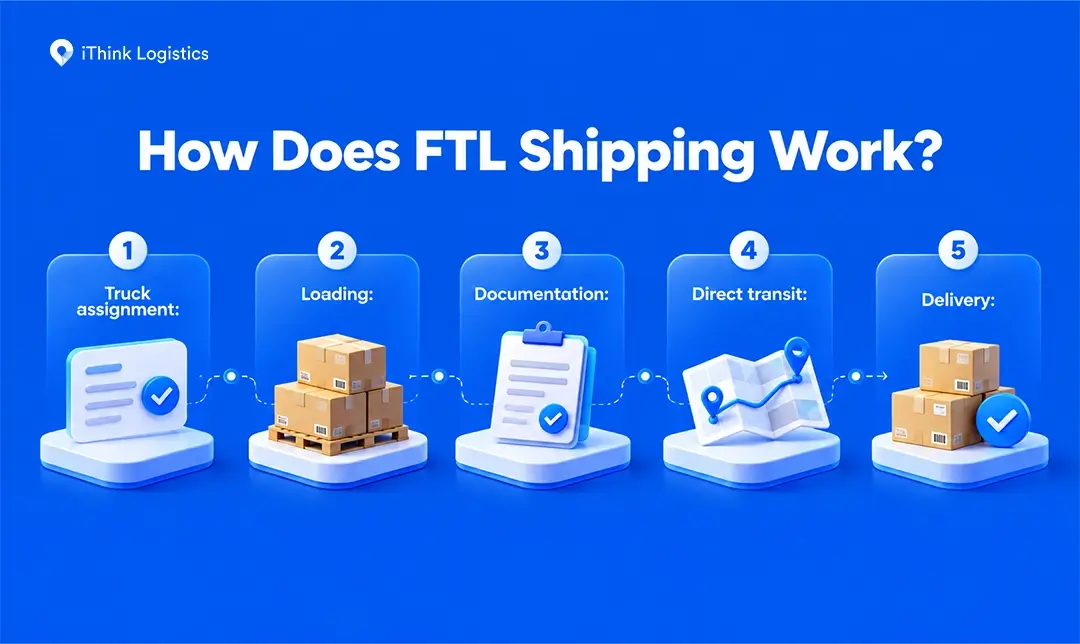
- Truck assignment: iThink Logistics assigns a truck that suits your cargo, route, and delivery details.
- Loading: Goods are loaded once at the pickup point.
- Documentation: The consignment moves with its invoice, Lorry Receipt (LR) / Goods Receipt (GR), transport document, Delivery Challan, consignment notes, Purchase Order (PO), and e-way bill for transactions for transaction rupees.
- Direct transit: The truck runs straight to the destination. No other shipper’s cargo is added, and there are no terminal transfers.
- Delivery: The goods are unloaded at the destination, and the receiver inspects them and confirms receipt.
Paperwork matters in India. Under GST rules, goods worth more than Rs 50,000 generally need an e-way bill before they move. It also needs a transport document number, such as a goods receipt or lorry receipt number.
Notice what is missing from those steps: no hub stops, no transfers, no reloading. That is where the benefits come from.
7 Benefits of FTL Shipping
FTL gives businesses direct transit, lower handling risk, and more control over how their cargo moves. Each benefit works best when you set up the shipment correctly. This list shows what you gain and how to get it:
Faster, direct transit
The truck travels directly from pickup to the delivery address without picking up or dropping off other customers’ shipments along the way, as it’s an FTL booking.
Less Handling and Lower Damage Risk
Your goods are loaded at pickup and unloaded at the destination, reducing transfers and opportunities for mix-ups. Secure cartons properly and check the load before dispatch.
Better Cargo Security
Ask the transporter to seal the loaded truck and record the seal number. The receiver can check that the seal is intact and the number matches before unloading.
More Control Over Delivery Timelines
With no other shippers’ deliveries to coordinate, scheduling is simpler. Confirm the expected arrival time with your transporter and share it with the receiver.
Suitable Trucks for Special Cargo
Bulky machinery, fragile goods, and temperature-sensitive products may need specific truck types. Share your cargo’s dimensions, weight, and handling requirements before booking.
Simpler paperwork and tracking
One consignment means one transport booking and a single shipment to track. Keep the transport documents, vehicle number, and driver’s contact details handy.
Potentially Lower Cost per Unit
When your cargo uses most of the truck, FTL can cost less per unit. If you ship regularly on the same route, ask the transporter about repeat-shipment rates.
The benefits depend on your shipment. Fragile goods may benefit from fewer transfers, while time-sensitive orders may benefit from direct transit. For smaller loads, compare FTL rates with PTL or LTL before booking.
FTL vs LTL vs PTL: What is the Difference?
FTL works well when you have enough goods to book an entire truck. For smaller loads, PTL and LTL let you share truck space with shipments from other businesses. Here’s how the three options compare.
| Parameter | FTL (Full Truckload) | PTL (Part Truckload) | LTL (Less Than Truckload) |
| Truck usage | The entire truck is reserved for one shipper | A fixed portion of the truck is booked for your goods | Your small consignment is combined with other shippers’ goods |
| Pricing | Priced per truck | Priced for the space you book | Priced for the weight or space you use |
| Transit | Direct from pickup to delivery, with no stops for other cargo | Follows the truck’s route, so timelines depend on the load plan | Can take longer because of extra pickups and consolidation |
| Handling and damage risk | No other shipper’s cargo is on board, so handling stays minimal | The truck is shared, so handling depends on how the load is planned | Goods may be loaded and unloaded several times between pickup and delivery |
| Control over truck and loading | You choose the truck type and set your loading needs | Limited, because other shippers use the same truck | Limited, because the provider plans the shared load |
| Best for | Large, bulk, fragile or time-sensitive consignments | Shipments too big for a courier but too small for a full truck | Small consignments with flexible delivery dates |
Providers define PTL and LTL differently, so confirm the terms before you book.
When Should You Choose FTL?
Choose FTL when your shipments are in quantity to fill the truck, need minimal handling, or must arrive on a fixed date. FTL usually fits these situations:
- Your consignment is large or heavy enough to use most of a truck.
- Your goods are fragile or high value.
- You need pickup and delivery on a fixed schedule.
- You move stock regularly on the same route, such as factory to warehouse.
- You have a bulk B2B order headed to a single delivery address.
- You need to dispatch goods without waiting for other shipments to fill a shared truck.
- You transport palletized, bulky, or oversized goods that need dedicated loading space.
- You replenish warehouse or retail inventory against a planned delivery schedule.
Picture a garment manufacturer in Surat with a large wholesale order for a Delhi distributor. One truck, one pickup, and one drop suits that order better than splitting it across several bookings.
Smaller loads are different. If your cargo uses only a small part of a truck, part truckload or LTL usually costs less. iThink Logistics offers both part-load and full-truck options so you can match the mode to your cargo.
Say you have chosen FTL. The next question is which truck.
What Types of Trucks Are Used for FTL?
FTL trucks in India fall into four main types: open body, closed or container, trailer, and refrigerated. Each type suits different cargo:
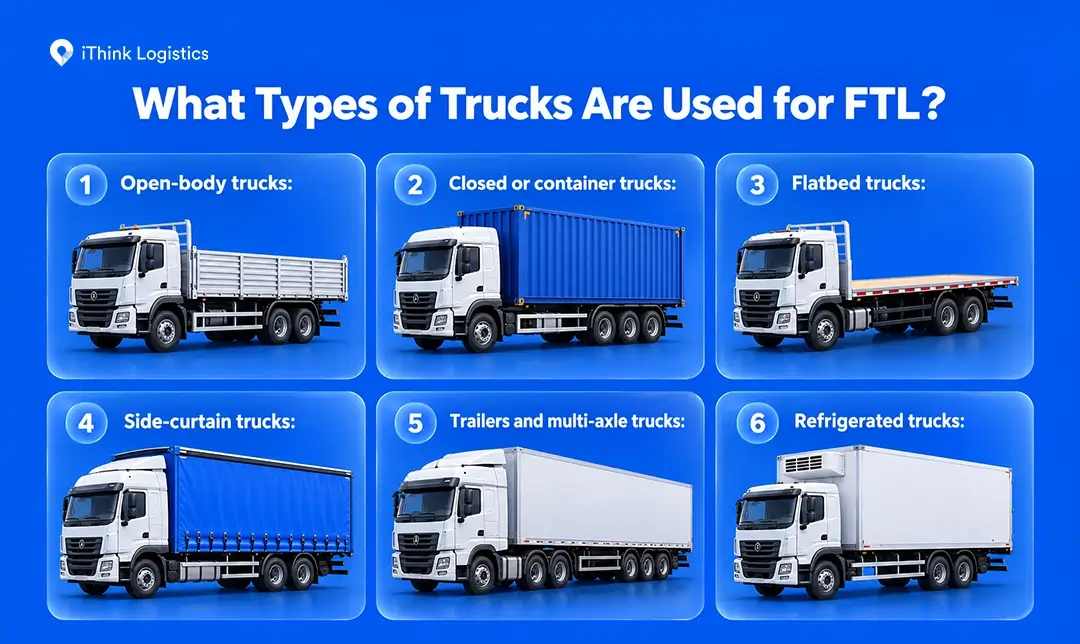
- Open-body trucks: Carry construction materials, agricultural produce, and general cargo that can be loaded from above or the sides.
- Closed or container trucks: Protect packaged goods from weather and provide an enclosed cargo space.
- Flatbed trucks: Useful for transporting steel beams, long pipes, and machinery that is difficult to load into a closed truck.
- Side-curtain trucks: The curtains can be opened from the sides, making it easier to load and unload palletized goods at warehouses.
- Trailers and multi-axle trucks: Businesses use these for heavy machinery, large industrial equipment, and container movement. The right option depends on the load’s weight and dimensions.
- Refrigerated trucks: These are used for goods such as dairy products, frozen food, and temperature-sensitive medicines that need to stay within a specified temperature range.
Truck length and payload vary by model. Common lengths include 14 ft, 17 ft, 19 ft, 20 ft, 22 ft, 24 ft, and 32 ft.
The 32 ft container comes as single axle (SXL) or multi-axle (MXL). Ask your provider for the exact payload of the truck you book.
Your truck choice also affects your quote.
What Affects FTL Freight Cost in India?
Two businesses can book the same truck type and still receive different quotes for their shipments. The route, cargo, truck availability, and booking terms all influence the final price.
Here are the main factors to check before booking FTL transport.
- Distance and route: A longer trip generally costs more. Routes with difficult access, restrictions, or limited return-load opportunities may also attract higher rates.
- Truck type and capacity: The price depends on the vehicle you need. A standard container truck and a refrigerated or multi-axle truck have different operating costs.
- Cargo weight and dimensions: Your goods must fit the truck’s available space and legal payload. Oversized or unusually heavy cargo may require a specialized vehicle.
- Fuel prices: Diesel is a major trucking expense. Fluctuations in fuel prices can affect the rate a transporter quotes, which is currently shifting mainly due to the West Asia (Middle East) conflict.
- Tolls and other route charges: Highway tolls and applicable permits or route-specific charges can affect your total. Confirm whether these are included in the quote.
- Return-load availability: Transporters consider whether they can find another shipment after delivering your goods. Routes with fewer return loads may cost more.
- Truck availability and demand: Rates can increase when fewer suitable vehicles are available. Festive demand, seasonal movements, and booking dates can all affect pricing.
- Loading and unloading: The time, labor, and equipment needed to handle your goods can add to the cost, particularly when special arrangements are required.
- Waiting time: If a truck spends hours waiting at your factory or delivery location, the transporter may charge detention fees under the agreed terms.
- Special cargo requirements: Temperature-controlled transport, security arrangements, and specialized handling can increase the price compared with standard dry cargo.
Wondering what FTL costs in India? No single average rate exists, because every quote depends on these factors. Ask for a written quote for your exact route and truck type, so you know what is included.
Our freight charges guide explains how freight pricing works in more detail.
With the cost drivers clear, now lets see how you can book FTL with ease.
How to Book FTL Transport for Your Business
To book FTL transport, share your route, cargo details, and truck type with a logistics provider. Then compare quotes and confirm pickup. Follow these steps:
- Note your pickup and delivery addresses and your preferred dates. For the Surat order, that means the factory, the distributor’s warehouse, and a delivery date.
- Prepare your cargo details: goods, total weight, volume, and packaging.
- Choose the truck type, or ask your provider to suggest one.
- Request quotes and compare what each includes, such as loading help, tolls, and tracking.
- Ask how each provider handles delays and damage claims.
- Confirm the booking, and keep your invoice and e-way bill ready before pickup.
FAQs on FTL in Logistics
What is FTL in logistics?
FTL stands for full truckload, a freight mode in which one shipper reserves a whole truck. It carries only that shipper’s goods straight to the destination. Businesses use it for large, fragile, or time-sensitive consignments that need minimal handling and direct transit.
Does FTL mean the truck has to be full?
No, FTL means you reserve the whole truck, not that it is physically full. You pay for the truck’s dedicated capacity, so a partially filled load raises your per-unit cost. Before booking, make sure your shipment requires a full truck; otherwise, you will just pay more.
What is the difference between FTL and LTL?
FTL books an entire truck for one shipper, while LTL combines smaller consignments from several shippers on one truck. FTL offers direct transit and less handling. LTL costs less for small loads but usually involves more stops and handling along the route. There are many other differences between them.
What is the difference between FTL and PTL?
FTL books the whole truck, while PTL (part truckload) books a portion of it. PTL suits bulkier cargo that doesn’t need a full truck.
How is FTL freight cost calculated?
FTL freight is usually quoted per truck rather than by weight. The quote depends on distance, truck type and size, route and tolls, fuel, loading time, demand, and other factors. Ask your provider for a written quote that lists every charge for your exact route.
How much does transportation cost in India?
FTL rates in India vary widely by route, truck type, and season. A short trip in a small truck costs far less than a long haul in a large container.
When is FTL cheaper than LTL?
FTL may cost less per shipment when you have enough goods to justify booking a dedicated truck. With a smaller load, sharing truck space through LTL may be more economical. If your shipment falls between the two, compare quotes for the same route, cargo, and delivery requirements before deciding.
How do I book FTL transport for my business?
Start by sharing your route, cargo details, and truck preference with a logistics provider, then compare quotes. Keep your invoice and e-way bill ready before pickup. With iThink Logistics, you can arrange bulk shipments, including full truckloads, on one platform.
Final Thoughts: Is FTL Right for Your Shipment?
FTL makes sense when your shipment justifies booking a dedicated truck. For smaller loads, PTL or LTL may be a better fit. Compare total cost and service terms before you choose.
Planning your next bulk dispatch? Explore iThink Logistics’ bulk shipping services to find the right option for your shipment.