


A customer requests a return. Two days pass. No agent shows up, and the seller is left explaining a delay they can’t fully account for. This is where most online sellers actually meet reverse pickup, not as a glossary term, but as a support ticket.
Reverse pickup is the courier process that brings a returned product back from the customer to the seller. Here’s what it means, how it runs, and why it stalls so often.
What Is Reverse Pickup (RVP) in Ecommerce?
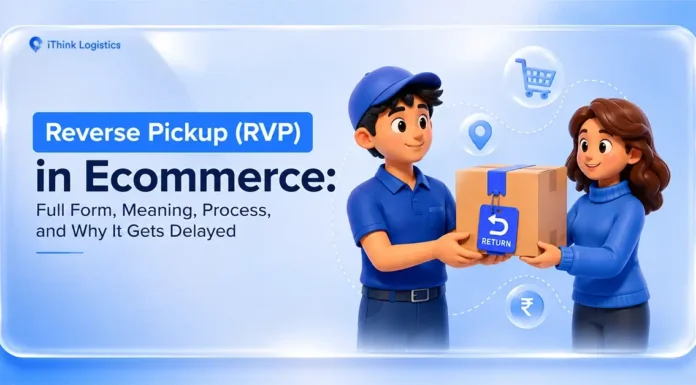
Reverse pickup, also called return pickup in India, is the process where a courier partner collects a product from the customer’s address and brings it back to the seller, warehouse, or fulfillment center. It covers returns, exchanges, damaged items, and failed deliveries.
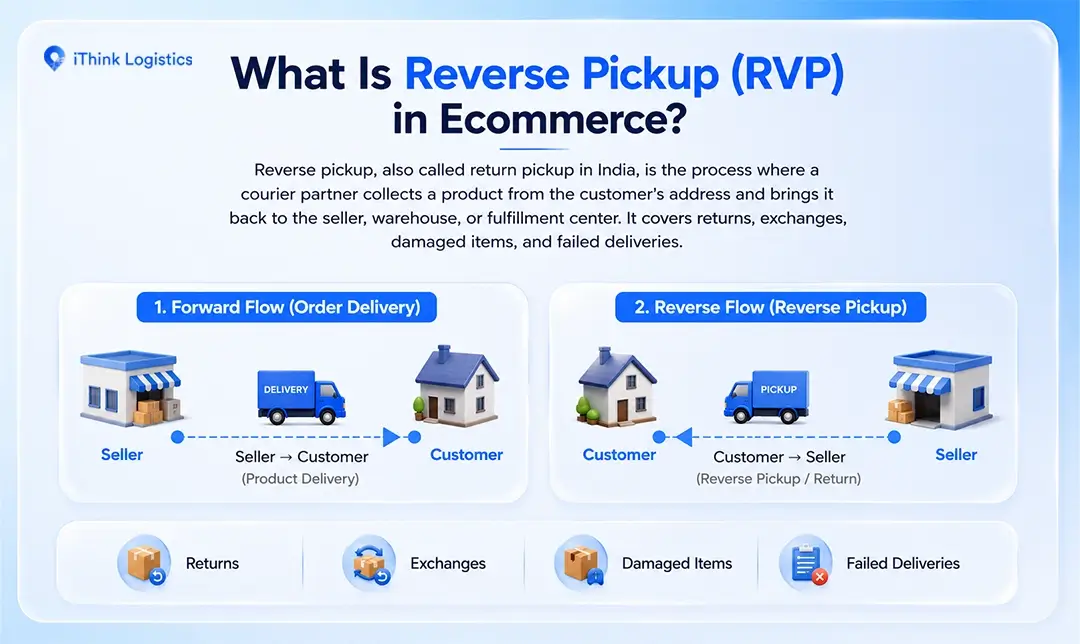
A forward delivery moves a product from seller to customer. Reverse pickup moves it the other way.
RVP Full Form
RVP stands for Reverse Pickup. In ecommerce, it specifically means the courier-arranged collection of a returned product from a customer’s location, not a general pickup request.
Reverse Pickup vs RTO: What’s the Difference?
Both terms send a package backward through the supply chain, but they start at different points in the journey.
| Reverse Pickup | RTO | |
| When it happens | After successful delivery | Before delivery is completed |
| Who triggers it | Customer requests a return | Courier fails to deliver |
| Typical cause | Wrong size, damage, wrong item, change of mind | Wrong address, customer unavailable, COD refusal |
| What moves | A delivered product, collected back | An undelivered product, sent back automatically |
A reverse pickup only starts once the customer already has the product and decides to send it back. An RTO means the product never reached the customer at all.
Sellers who lump both under one label often end up misdiagnosing where their return costs are actually coming from, and here’s what actually happens once a genuine reverse pickup gets raised.
How the Reverse Pickup Process Works
The process runs through a few consistent stages, though exact steps and terminology can vary by courier.
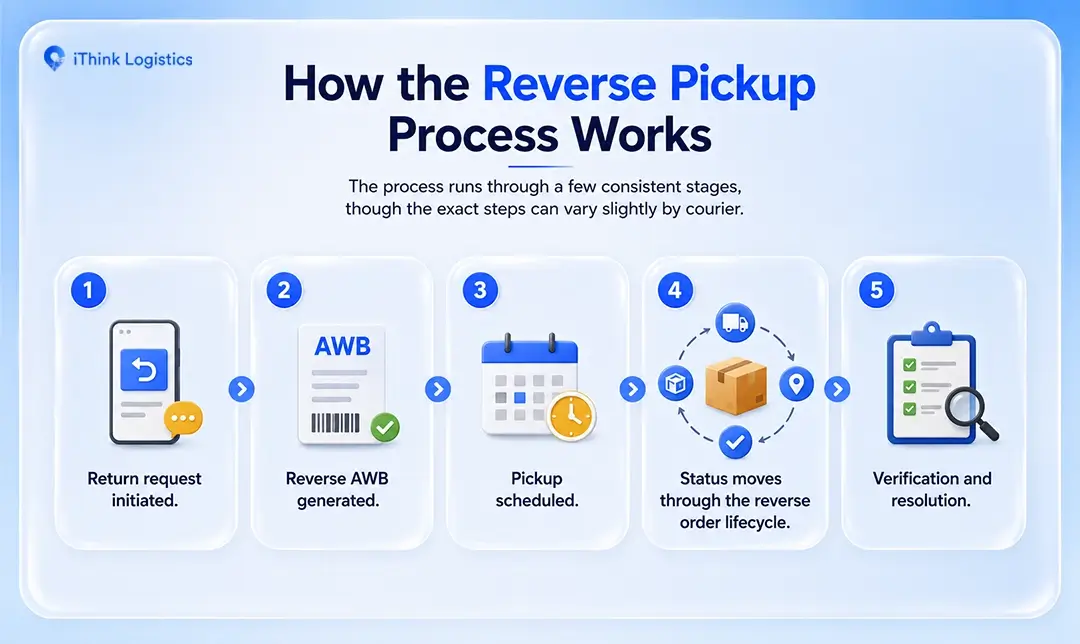
- Return request initiated. The customer raises a return or exchange request through the seller’s app, website, or support, and selects a reason.
- Reverse AWB generated. Once the return request is approved or automatically accepted, the platform generates a reverse AWB (Air Waybill) and assigns a courier partner.
- Pickup scheduled and verified. The courier schedules the pickup, and depending on the partner, the customer may receive timing updates. At the doorstep, the agent checks the package against the return request before collecting it. Some couriers also use OTP verification to confirm the handover.
- Shipment moves through tracking. The package travels back through the courier’s network. Reverse tracking statuses vary by courier, but commonly include Pickup Scheduled, Out for Pickup, Shipment Picked Up, Return In Transit, Return Delivered, and Return Closed.
- Seller inspects the returned item. Once it reaches the warehouse, the product is checked for damage, completeness, and return eligibility.
- Return is resolved. Based on that inspection, the seller issues a refund, sends a replacement, provides store credit, or rejects the return if it doesn’t meet eligibility requirements.
That tracking step is worth its own look, since it’s usually the first thing a worried seller checks.
How to Track a Reverse Pickup
A reverse pickup can be tracked using the AWB number generated for the return. Depending on the courier, the seller or customer can track the shipment’s latest available status and movement through the network.
Tracking only matters this much because so many pickups stall somewhere along that path.
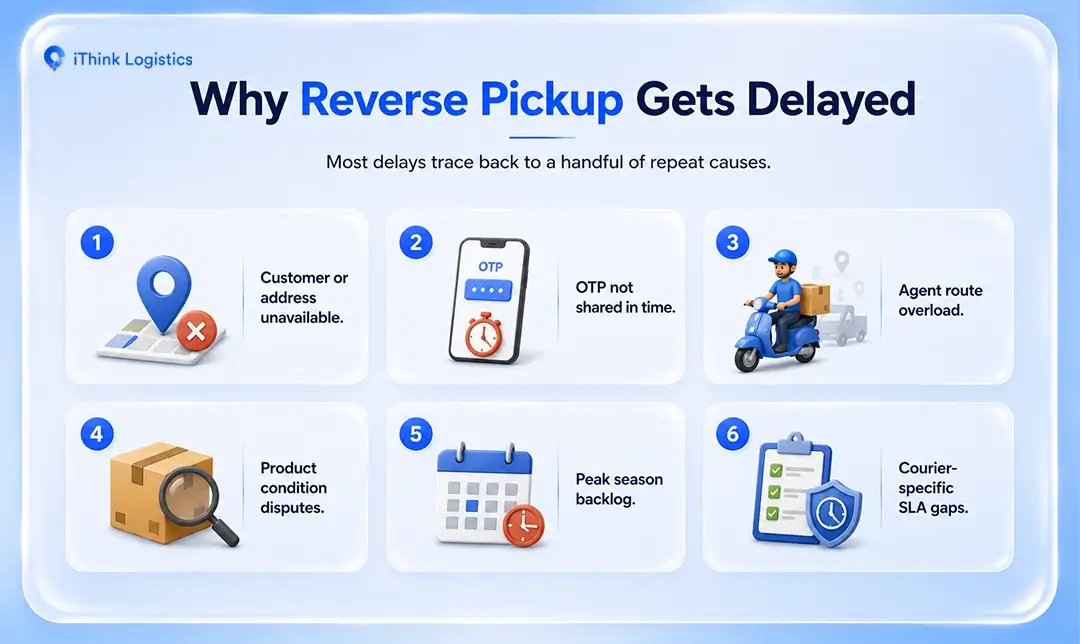
Why Reverse Pickup Gets Delayed
Most delays trace back to a handful of repeat causes.
- Customer or address unavailable. The agent arrives, but the customer isn’t home, or the address on file is incomplete.
- OTP not shared in time. Where the courier uses OTP verification, the pickup may get rescheduled if the customer can’t provide the code.
- High volume or route capacity constraints. During peak periods, courier capacity can fall short of scheduled pickup volume, delaying collection.
- Return eligibility disputes. The pickup may be delayed or rejected if the item doesn’t meet the seller’s or marketplace’s return conditions.
- Peak season backlog. Festival sales and end-of-season returns push volume up faster than reverse logistics capacity can absorb.
- Turnaround differences between couriers. Reverse pickup timelines vary between courier partners and serviceable pin codes.
A few habits cut down on most of these without much added overhead.
How to Reduce Reverse Pickup Delays
Most delays trace back to a handful of repeat causes.
- Confirm the pickup address and availability window before scheduling, not after the agent is already assigned.
- Where the courier uses OTP verification, share the code with the customer in advance through SMS or WhatsApp.
- Choose courier partners based on reverse pickup performance in a specific pin code, not just forward delivery speed.
- Build in buffer time during known peak periods instead of promising standard turnaround.
- Set clear photo and condition guidelines upfront, so agents and customers agree on expectations before the pickup happens.
Reverse Pickup Across Major Indian Couriers
Delhivery, DTDC, Ecom Express, Shadowfax, Xpressbees, and Blue Dart all offer reverse pickup services, although service availability, turnaround times, and coverage can vary by PIN code and service type.
A seller relying on just one courier ends up with reverse pickup delays tied entirely to that network’s capacity on any given day. Spreading pickups across multiple partners softens that risk, as long as the process gets tracked from one place instead of chased courier by courier.
[We’ve covered this in more depth here: our guide to the top courier partners for reverse logistics.]
iThink Logistics manages reverse pickup and NDR resolution across multiple courier partners, giving sellers one place to track returns instead of following up with each courier on its own.
FAQ
What is meant by reverse pickup?
Reverse pickup is the process where a courier collects a delivered product from a customer’s address. It returns it to the seller, warehouse, or fulfillment center, typically for a return, exchange, or replacement.
What is the reverse pickup process?
It generally involves a customer return request, return approval or acceptance, reverse AWB generation, courier pickup, shipment tracking, and product verification before the seller completes the refund, replacement, or repair.
What is a refund with reverse pickup?
Many sellers process the refund after the returned product is received and verified at the warehouse, although some marketplaces offer faster refunds for eligible orders.
What is RVP full form?
Reverse Pickup.
What does RVP mean?
It’s the courier-arranged collection of a returned product from a customer’s location in ecommerce shipping.
What is RVP full form in Flipkart?
Same meaning as anywhere else: Reverse Pickup, the courier collecting a returned item from the customer as part of Flipkart’s return workflow.



Leave a Reply