

Introduction
India’s quick commerce market crossed ₹64,000 crore in 2025, and it’s racing toward ₹1 lakh crore by 2030.
Quick commerce means getting everyday essentials delivered to your door in 10 to 30 minutes. Not next-day. Not same-day. Minutes.
And the companies making this happen are reshaping how your products should be on these platforms, how Indians shop, eat, and run out of things at midnight.
But here’s what most guides on quick commerce companies in India skip: what this speed actually means for e-commerce brands trying to keep up. Higher customer expectations. Faster return cycles. Logistics that can’t afford a single missed delivery.
This guide covers the meaning of quick commerce, how the model works, which companies and apps lead the space, and what sellers need to know before jumping in.
What Is Quick Commerce? (Quick Commerce Meaning)
Quick commerce (also called q-commerce) is a model of online retail where everyday essentials, groceries, medicines, snacks, and personal care items are delivered to the customer’s doorstep within 10 to 30 minutes of placing an order, using a network of hyperlocal dark stores.
That speed isn’t coming from a warehouse sitting 50 km outside the city it comes from dark stores, neighborhood-level micro-warehouses stocked with 2,000–3,000 high-demand SKUs, positioned within 2–3 km of where you live.
When you place an order, the nearest dark store (usually within a 2–3 km radius) picks, packs, and hands it to a delivery partner. The entire cycle from order to doorstep stays under 20 minutes in most metro cities.
There’s no storefront, no browsing aisles just a fulfillment setup built entirely around getting the right product out the door in under 20 minutes, using real-time inventory tracking and route-optimized delivery.
Here’s how it compares to traditional e-commerce at a glance:
| Factor | Traditional E-Commerce | Quick Commerce |
| Delivery speed | 1–7 days | 10–30 minutes |
| Product range | Unlimited catalog | Limited — daily essentials, groceries |
| Avg. order value | ₹1,580 – ₹1,650+ | ₹200–₹600 |
The difference isn’t just speed. It’s a completely different logistics architecture as Q Commerce is built around density, not distance.
So who’s actually building this in India? Here are the companies leading the space.
Top Quick Commerce Companies & Apps in India (2026)
The q-commerce race in India isn’t a two-player game anymore. From Zomato-backed Blinkit to Reliance’s JioMart Express (Jio’s pilot program is now closed), the biggest names in Indian tech and retail are fighting for the same 10-minute window.
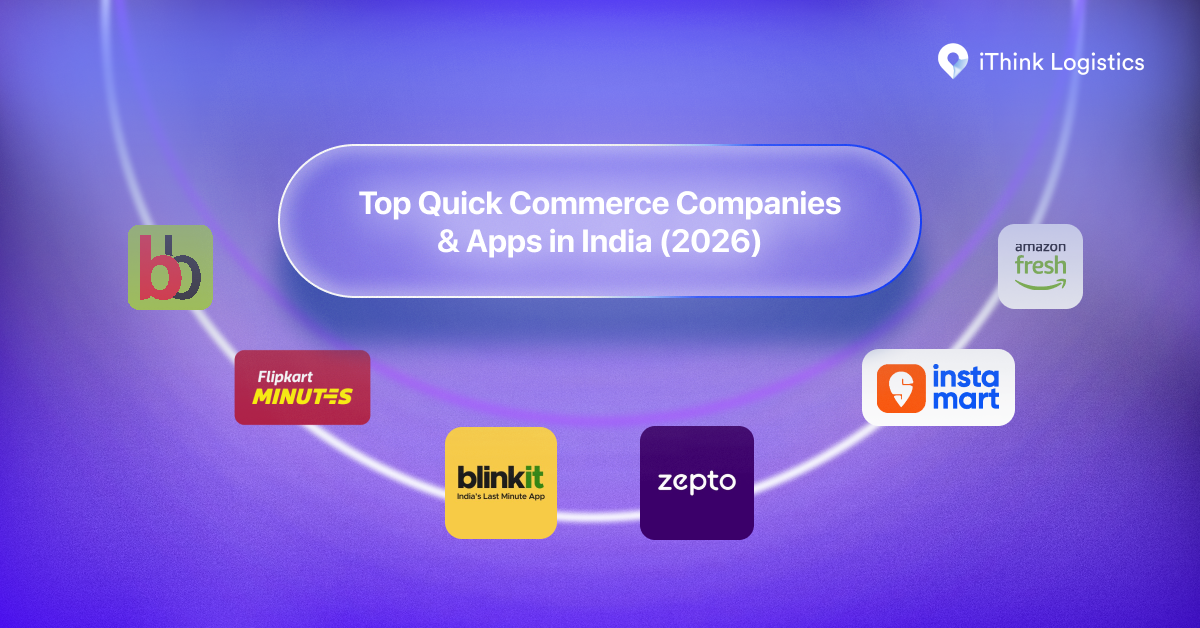
The top quick commerce companies in India are Blinkit, Zepto, Swiggy Instamart, BigBasket BB Now, Flipkart Minutes, and Amazon Now.
Here’s how the major players stack up:
| Company | Parent / Backer | Founded | HQ | Delivery Speed | Key Strength | Best For |
|---|---|---|---|---|---|---|
| Blinkit | Zomato | 2013 | Gurugram | 10–15 min | Largest dark store network, cluster-level profitability | FMCG brands with high-frequency SKUs |
| Zepto | Independent (IPO-bound) | 2021 | Mumbai | 10 min | Metro density, Gen Z brand loyalty | D2C brands targeting impulse buyers |
| Swiggy Instamart | Swiggy | 2020 | Bangalore | 15–25 min | Swiggy One cross-platform ecosystem | Brands wanting food + grocery bundled visibility |
| BigBasket BB Now | Tata Group | 2011 | Bangalore | 15–30 min | Grocery depth, Tata supply chain | Grocery-first brands, staples, bulk essentials |
| Flipkart Minutes | Walmart / Flipkart | 2024 | Bangalore | 10–20 min | Non-grocery play — electronics, home | Sellers with electronics, accessories, home SKUs |
| JioMart Express | Reliance | 2022 | Mumbai | 15–30 min - discontinue express service in 2023 | Mass-market scale, kirana integration | Brands targeting Tier-1 + Tier-2 mass adoption |
| Amazon Fresh/ Amazon Now | Amazon | 2021 | Hyderabad (India ops) | 15–30 min | Deep pockets, 1,000+ dark store target | Sellers already in Amazon's ecosystem |
Now, a closer look at each.
Blinkit
Founded: 2013 (as Grofers) | HQ: Gurugram, India | Market Share: 46–50%
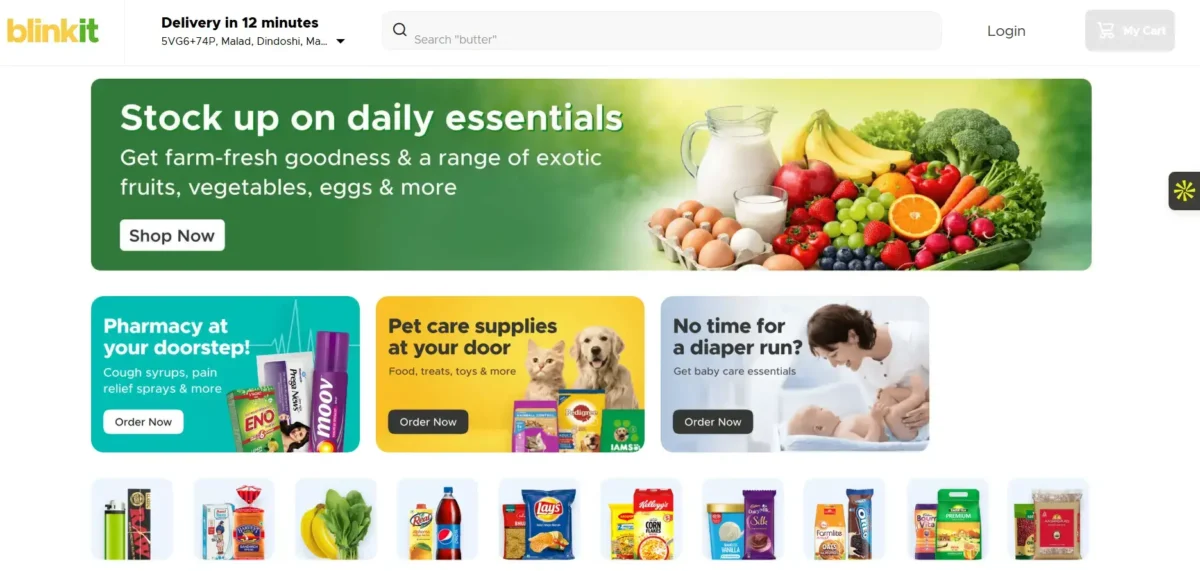
Blinkit is India’s q-commerce market leader. Acquired by Zomato in 2022, it operates the largest dark store network across Indian metros and is the only player to publicly claim EBITDA positivity at the cluster level.
Average delivery sits around 12 minutes in top cities. If your brand sells high-frequency FMCG products, snacks, beverages, or personal care products. Blinkit is where the volume lives.
Zepto
Founded: 2021 | HQ: Mumbai, India | Market Share: ~20–30%
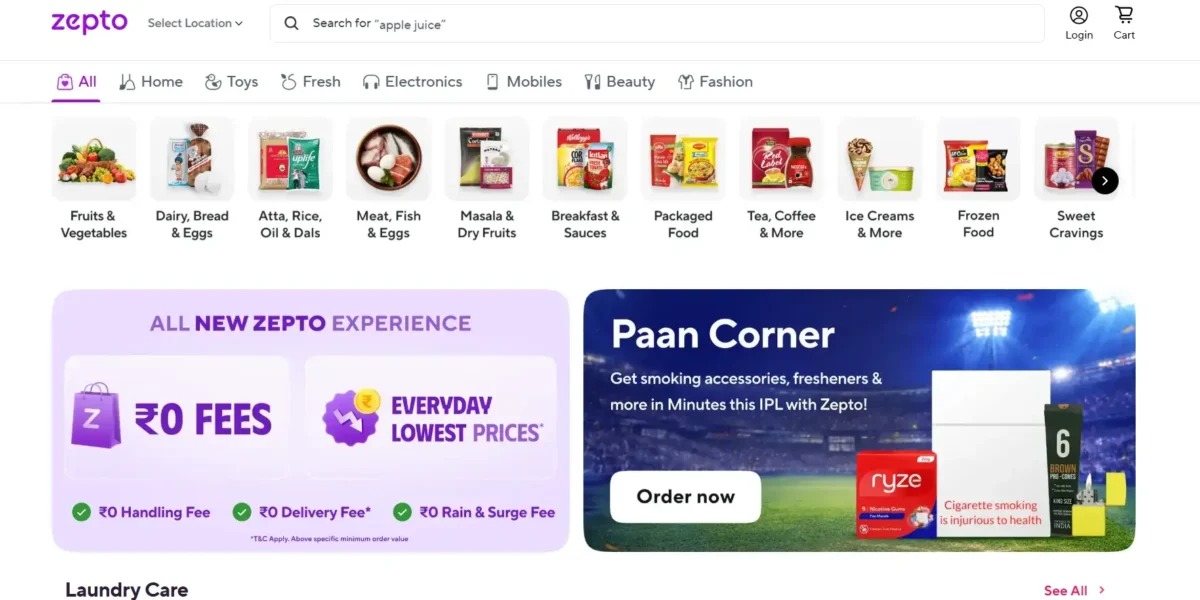
Built by two 19-year-old Stanford dropouts, Zepto made the 10-minute promise its entire identity. It runs dense, high-performing dark stores concentrated in metros and is preparing for an IPO. Urban Gen Z and millennials are its core user base.
For D2C brands with impulse-friendly price points (₹100–₹500), Zepto’s audience is a natural match.
Swiggy Instamart
Founded: 2020 | HQ: Bengaluru, India | Market Share: 18–22%
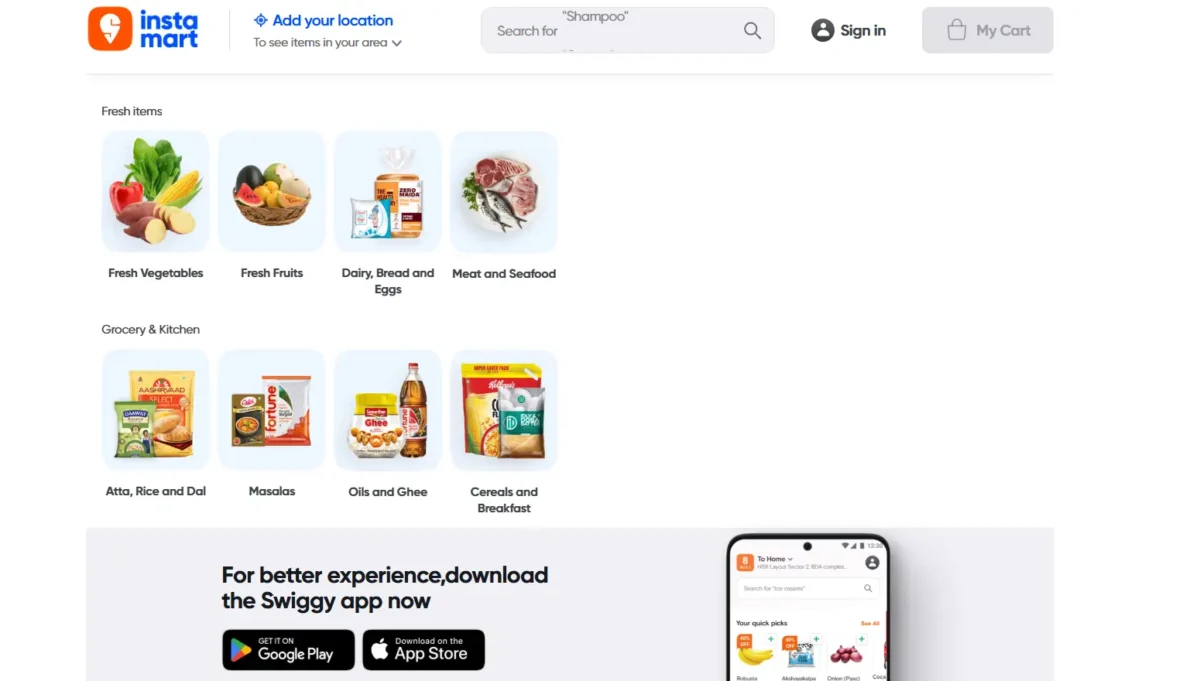
Swiggy’s grocery arm benefits from something no standalone Q-commerce player has: an existing ecosystem of 24.3M+ monthly transacting food users.
The Swiggy One subscription bundles food, grocery, and dining discounts, driving repeat orders across platforms. Instamart is also the most aggressive on Tier-2 city expansion.
Brands wanting visibility across food and grocery under one platform ecosystem land here.
BigBasket BB Now
Founded: 2011 (BB Now launched: 2022) | HQ: Bangalore, India, Market Share: 5-7%
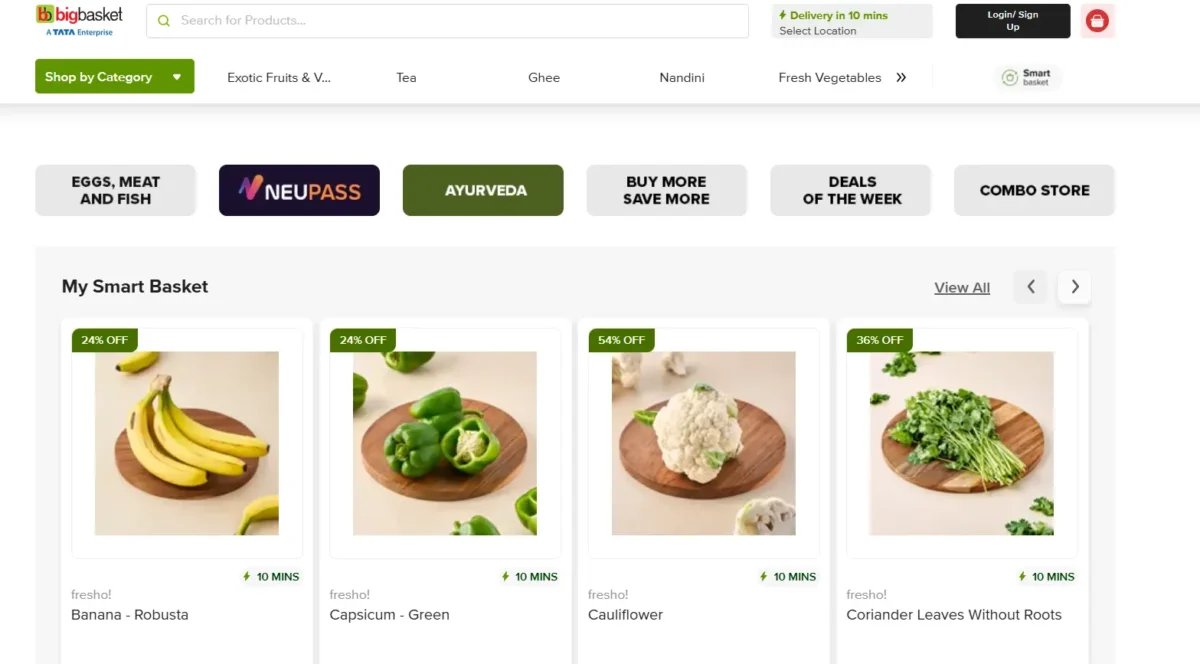
Tata-owned BigBasket pivoted from scheduled grocery delivery to a quick-first model with BB Now. It won’t beat Blinkit on speed, but it goes deeper into grocery staples, fresh produce, and household bulk packs.
The Tata supply chain gives it sourcing muscle that others don’t have. For grocery and daily essentials brands, BB Now’s audience is high-intent and repeat-driven.
Flipkart Minutes
Founded: 2024 | HQ: Bangalore, India, Market Share: <3% (Emerging)
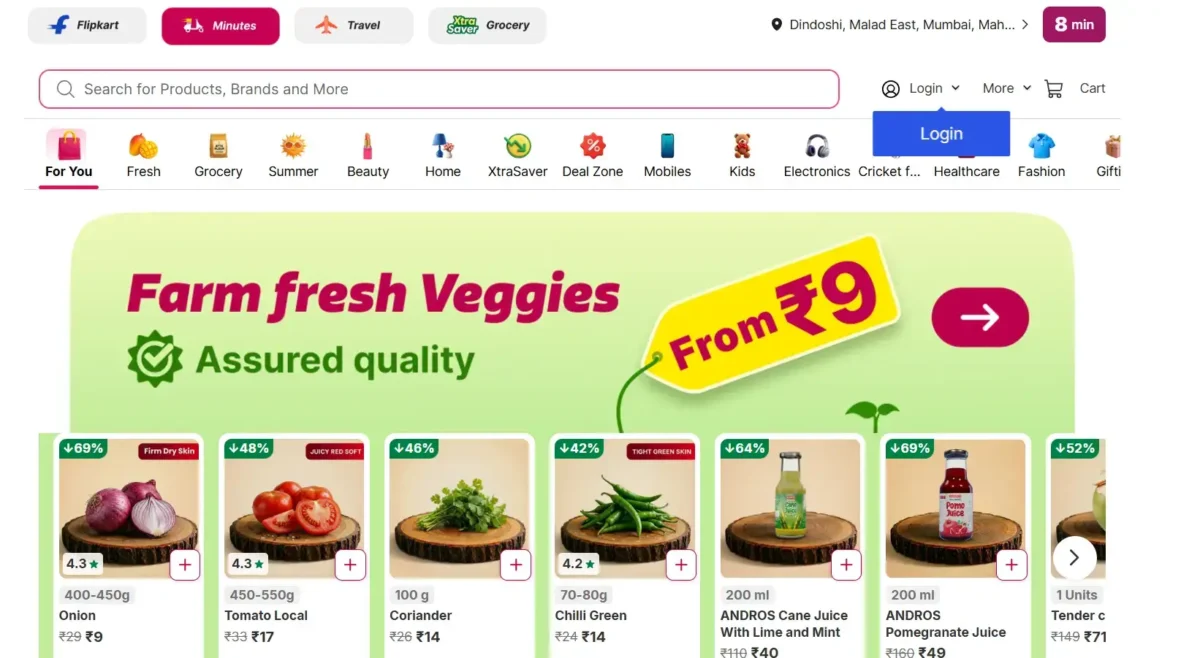
Flipkart’s answer to the q-commerce wave and the most interesting non-grocery play in the space. Flipkart Minutes uses dark stores to deliver electronics, phone accessories, chargers, and home essentials in 10–20 minutes.
Backed by Walmart’s supply chain muscle and Flipkart’s existing seller base. If your SKUs go beyond groceries, this is the platform to watch.
JioMart Express
Founded: 2022 | HQ: Navi Mumbai, India,
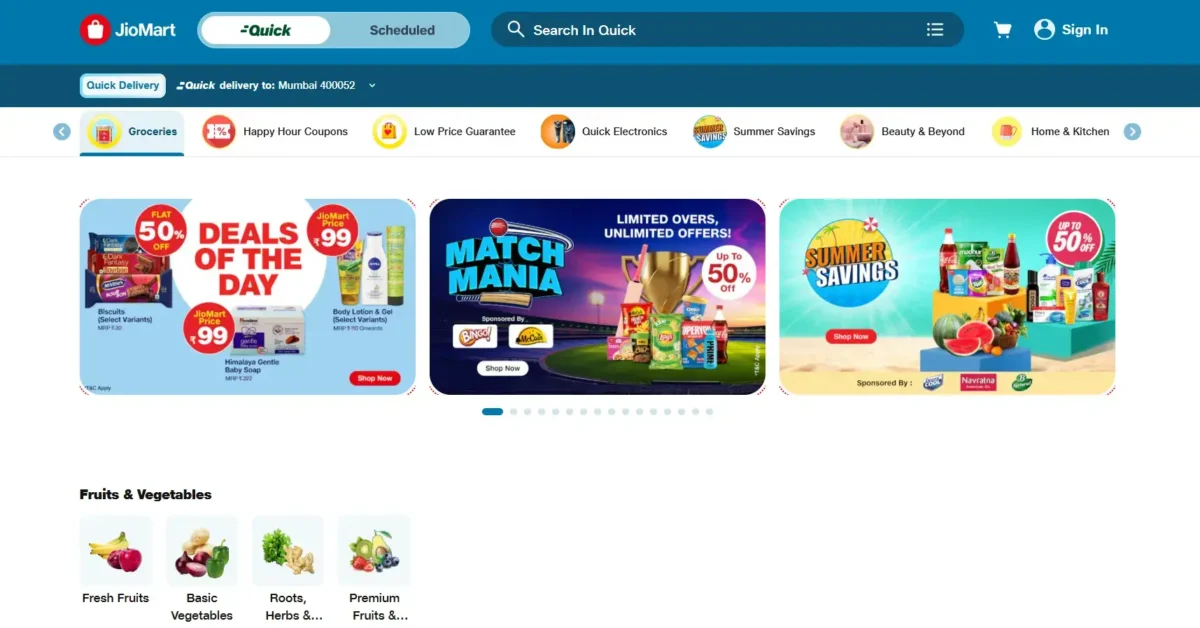
Reliance launched JioMart Express in 2022 as a 15–30 minute delivery service. It shut down in 2023.
JioMart still operates with 30-minute to a few-hour delivery, leaning on kirana integration rather than dark stores. Whether Reliance re-enters q-commerce remains to be seen.
Amazon Now
Launched 2021 (India) | Amazon Now: Launched 2025 | HQ: Hyderabad, India (Indian operations)
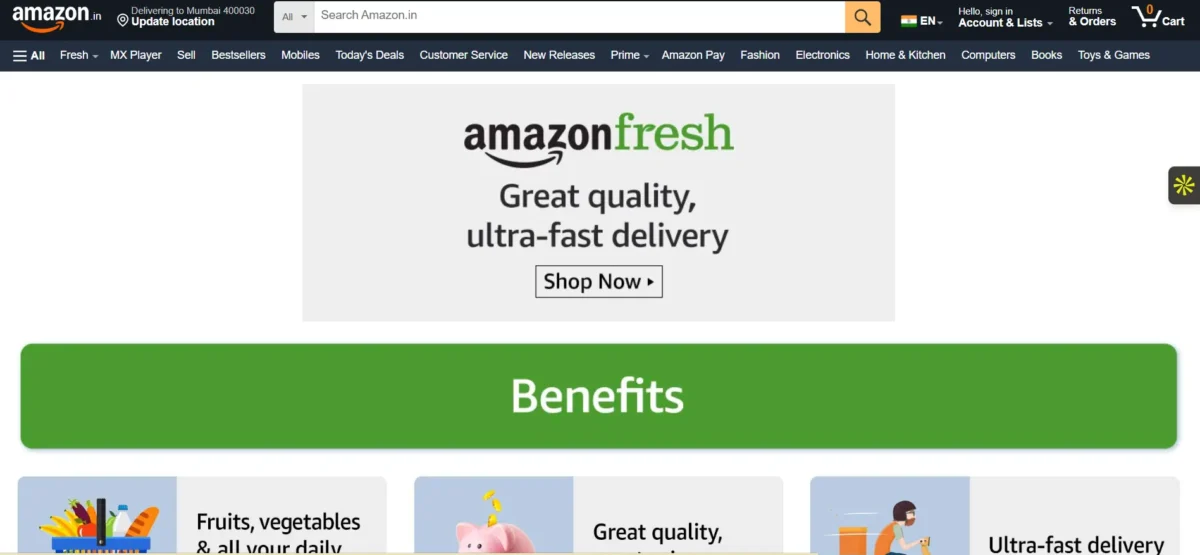
Amazon’s q-commerce story in India is a pivot, not a launch.
Amazon Fresh has been operating in around 120 cities, delivering groceries and essentials in a 2–4 hour window.
That model couldn’t compete with Blinkit, doing 12 minutes. So Amazon launched Amazon Now in 2025, its direct q-commerce play, starting with Delhi and Mumbai.
Dark store-powered, 10–20 minute delivery, built to go head-to-head with Instamart and Zepto.
The plan: Amazon Now replaces Amazon Fresh in the top 10–15 Tier-1 cities, while Fresh continues serving smaller markets. Amazon is reportedly targeting 1,000+ dark stores by the end of 2026 to make this work.
Deepest pockets in the room, late to the race, but building fast. For sellers already in Amazon’s ecosystem, Amazon Now becomes a natural Q-commerce extension without the need for Amazon Fresh onboarding.
What Quick Commerce Means for Ecommerce Sellers & Brands
If you’re running an ecommerce brand and watching this space grow, the real question isn’t “is q-commerce big?” It’s “Should my products be on these platforms?”
For ecommerce sellers, quick commerce means faster fulfillment expectations, higher refund rates on impulse purchases, and the need for automated NDR management across multiple carrier networks.
The short answer: yes, if you fit.
Q-commerce platforms are actively onboarding D2C and FMCG brands. Products that work best are high-frequency, impulse-friendly, and priced between ₹100 and ₹600, like snacks, beverages, personal care, baby essentials, and pet food.
Non-grocery categories are growing 1.6x faster than groceries on these platforms. If your product solves an “I need it now” moment, there’s a slot for you.
But here’s what nobody on the Internet is telling you.
Speed creates expectation. Impulse purchases, on which q-commerce thrives, also have higher refund and cancellation rates than planned orders.
A buyer orders a ₹299 snack box on impulse, gets it in 12 minutes, and raises a return request the same evening product already opened, packaging gone.
Most platforms won’t even send a delivery partner to collect the item; reverse logistics on a ₹200 product costs more than the product itself. The customer gets refunded and keeps the item. The platform absorbs the loss.
You might think that’s not the seller’s problem. Technically, you already got paid at wholesale when the dark store stocked your SKU. But here’s the catch: if your product’s refund rate runs higher than the category average, platforms deprioritize or delist you from dark stores.
You don’t pay the return cost. You lose the shelf. And less shelf space on these platforms means less volume, less visibility, and less growth.
Now flip to your D2C channel because most brands don’t sell only through Q-commerce.
You’re running your own website, shipping directly through courier partners. That’s where the full RTO and NDR burden hits you directly.
Every “customer not available,” every incomplete address, every refused delivery, you’re paying for the forward shipment, the return shipment, and the repackaging. At scale, this bleeds margins fast.
NDR management becomes non-negotiable. At q-commerce speed, you don’t get a second chance to reattempt delivery three days later.
The window is minutes, not hours, not days. And when customers are conditioned to expect everything in 10 minutes, even your D2C shipments get judged by that standard.
And it gets more complicated when you’re selling across channels.
Your brand is on Blinkit, Instamart, and Zepto for Q-commerce. You’re also shipping D2C orders through three different courier partners. Six tracking systems. No unified view of what’s failing and where.
A failed delivery on Delhivery doesn’t translate into a return on BlueDart, and the return doesn’t sync with your Blinkit seller dashboard.
This is why brands operating across Q-commerce platforms and their own D2C channels use logistics aggregators like iThink Logistics that automate NDR workflows, unify tracking across carriers, and catch failed deliveries before they become returns.
The opportunity is real. But so are the cracks underneath. And they aren’t limited to sellers; the model itself has pressure points.
Challenges of Quick Commerce in India
For all its speed, quick commerce isn’t running without friction.
Key challenges facing quick commerce in India:
- Profitability: dark store unit economics remain unproven at scale
- Limited reach: Reach is still concentrated in metro cities.
- Kirana disruption tension between partnership and replacement
- Sustainability: high delivery frequency increases environmental cost
Profitability is still the biggest question mark. Dark stores are expensive with rent, refrigeration, staffing, and inventory holding. Blinkit has hit cluster-level EBITDA positivity.
No other competitor has. The race now is to make the average order value high enough that the math actually works.
Reach stays limited. This is still a metro story. Delhi, Mumbai, Bangalore, and Hyderabad. Cities like Jaipur and Lucknow are next, but dark store economics in lower-density cities remain unproven.
Kirana stores feel the squeeze. Quick commerce puts direct pressure on neighborhood kiranas. Some platforms partner with them as fulfillment points. Others replace them entirely. That tension isn’t going away.
Sustainability gets ignored. More riders, more packaging, more fuel, all for a ₹300 order delivered in 10 minutes. As the market scales, the environmental cost of hyperlocal speed gets harder to sideline.
Still, the model is fundamentally different from traditional e-commerce, and understanding that difference matters whether you’re choosing convenience or choosing channels.
Quick Commerce vs Traditional E-Commerce
Two models. Same Customers. Very different logistics.
| Factor | Quick Commerce | Traditional E-Commerce |
| Delivery speed | 10–30 minutes | 1–7 days |
| Product range | Limited — essentials, groceries, impulse buys | Unlimited catalog |
| Avg. order value | ₹500–₹600 | ₹500–₹2,000+ |
| Return/RTO complexity | High impulse purchases, refund-without-pickup model. | Moderate as planned purchases, standard return windows |
| Logistics model | Dark stores, hyperlocal, 2–3 km radius | Centralized warehouses, hub-and-spoke |
| Best for | Urgency, daily needs, “I need it now” moments | Variety, planned purchases, high-value items |
They’re not replacing each other. A customer who orders a phone case on Flipkart Minutes in 15 minutes is the same customer who spends 40 minutes comparing laptops on Amazon and Flipkart before buying. Different moment, different model.
For sellers, the real challenge is managing both instant-delivery expectations and 7-day shipping windows, often with completely different carrier networks.
Where is all of this headed?
Key Future Trends and Projections of Quick Commerce in India
Three shifts are already underway.
Key trends shaping quick commerce’s future in India:
- Expansion beyond groceries into electronics, fashion, and accessories
- Dark store rollout in Tier-2 cities like Jaipur, Lucknow, and Coimbatore
- Shift from growth-at-all-costs to profitability and AOV optimization.
Groceries got Q-commerce started, but it’s no longer the whole story. Non-grocery categories phone accessories, cosmetics, and sneakers are growing 1.6x faster than food on major platforms.
Flipkart Minutes is already delivering electronics and home essentials in 10–20 minutes. Myntra is testing same-day fashion through M-Now.
The 10-minute window is expanding well beyond what fits in a grocery bag, and that opens the door for a much wider range of sellers.
Beyond metros. Jaipur, Lucknow, and Coimbatore are the platforms for scouting Tier-2 cities for dark store expansion. Swiggy Instamart is the most aggressive here. Whether unit economics holds outside the top-8 cities is the open question.
Beyond growth-at-all-costs. Blinkit’s proving cluster-level profitability changed the conversation. Every player is now optimizing for average order value (AOV), trimming low-margin SKUs, and tightening dark store operations.
The next 12 months are less about who delivers fastest and more about who survives longest.
Here are the most common questions people ask about quick commerce, answered directly.
FAQs
Q.1: What is meant by Quick Commerce?
A: Quick commerce is an online retail model in which everyday essentials like groceries, medicines, snacks, and personal care products are delivered within 10 to 30 minutes. It runs on hyperlocal dark stores, small micro-warehouses located within 2–3 km of the customer, instead of centralized warehouses used in traditional e-commerce.
Q.2: Which Is the Biggest Quick Commerce Company in India?
A: Blinkit is the biggest quick commerce company in India, holding approximately 46–50% market share. Owned by Zomato, it operates the largest dark store network across Indian metros and is the only player to have reported cluster-level EBITDA positivity.
Q.3: Is Zomato a Quick Commerce?
A: Zomato itself is a food delivery platform, not a quick commerce company. However, Zomato owns Blinkit, India’s largest q-commerce player. Zomato acquired Blinkit (formerly Grofers) in 2022. So while you order food on Zomato, your 10-minute grocery delivery comes through Blinkit, which Zomato fully owns and operates.
Q.4: Is Amazon Quick Commerce?
A: Amazon recently entered the quick commerce market in India with Amazon Now, which was launched in 2025. It currently operates in Delhi and Mumbai, offering 10–20-minute deliveries through dark stores.
Amazon Fresh, its older grocery delivery service operating in around 120 cities with 2–4 hour delivery windows, is expected to be replaced by Amazon Now in top-tier 1 cities.
Q.5: Is Flipkart in quick commerce?
A: Yes. Flipkart launched Flipkart Minutes in 2024, its direct entry into quick commerce. What sets it apart from Blinkit or Zepto is its product mix.
Flipkart Minutes focuses on electronics, phone accessories, chargers, home essentials, and groceries. Backed by Walmart’s supply chain, it delivers in 10–20 minutes through local dark stores.
Q.6: Is Meesho Quick Commerce?
A: No. Meesho is a social commerce and e-commerce platform focused on affordable products for Tier-2 and Tier-3 buyers. It operates on a standard delivery model (3–7 days) through third-party logistics partners.
Meesho does not use dark stores, does not promise delivery in minutes, and does not operate in the quick commerce space. The business models are fundamentally different.
Q.7: What Products Are Best for Quick Commerce?
A: Products that sell best on quick commerce platforms are high-frequency, impulse-friendly, and priced between ₹100 and ₹600. Top categories include daily groceries, snacks and beverages, personal care, baby essentials, pet food, and OTC medicines.
Non-grocery categories like phone accessories and emergency electronics are growing fast, 1.6x faster than food items on major platforms.
Q.8: How Do Ecommerce Sellers Manage Logistics on Quick Commerce Platforms?
A: On q-commerce platforms like Blinkit and Zepto, the platforms handle last-mile delivery from their own dark stores. Sellers supply inventory at wholesale. But most brands also run D2C channels alongside shipping directly through courier partners.
Managing both means juggling multiple carrier networks, separate tracking systems, and different return workflows. This is where logistics aggregators help automate NDR workflows, unify multi-carrier tracking, and catch failed deliveries before they turn into returns.
Conclusion
Quick commerce is no longer an experiment. It’s a ₹64,000 crore market led by Blinkit, Zepto, and Swiggy Instamart, expanding beyond groceries, beyond metros, and beyond the “growth at all costs” playbook.
Which quick commerce app do you use most and why? Tell us in the comments.
If you’re an e-commerce brand shipping across multiple carriers and platforms, explore how iThink Logistics automates NDR management and unifies tracking in one dashboard.
And if you have read this far, let us know whether you have ever used iThink Logistics services and what your experience with us was!
Author





It’s interesting to see how quick commerce isn’t just about faster delivery but also about meeting changing customer expectations. The reliance on hyperlocal dark stores really highlights the operational challenges brands face when trying to keep up with these speed standards.
The breakdown of how quick commerce is reshaping consumer expectations really hit home—especially the part about logistics needing to be flawless given the 10-30 minute delivery window. It’s not just about speed, but about building trust through consistency, which is something every seller needs to keep in mind as this space grows. Thanks for highlighting the practical implications for brands trying to stay relevant in this fast-evolving market.
That’s good to hear
That’s good to hear
nice post