The best payment gateway for an ecommerce website in India in 2026 is Razorpay for most stores, because it combines strong UPI success rates, clean documentation, and broad payment method support at a standard 2% domestic fee. The right choice depends on your business model: Razorpay suits new and growing D2C stores, Cashfree wins on the lowest published fees and marketplace payouts, PayU leads on EMI and international transactions, and CCAvenue serves enterprise and bank-heavy use cases.
This guide explains what an ecommerce payment gateway actually does, the types of electronic payment systems available, current fees, and how to pick the gateway that fits your store.
What Is an Ecommerce Payment Gateway?
An ecommerce payment gateway is a service that securely authorizes and processes online payments between a customer and a merchant. It encrypts the customer’s card or UPI details, routes the transaction to the bank for approval, and confirms whether the payment succeeded, all within a few seconds.
In simple terms, the gateway is the digital equivalent of a card machine in a physical shop. It sits between your website’s checkout and the banking system, making sure money moves safely from the buyer’s account to yours.
How Does an Ecommerce Payment System Work?

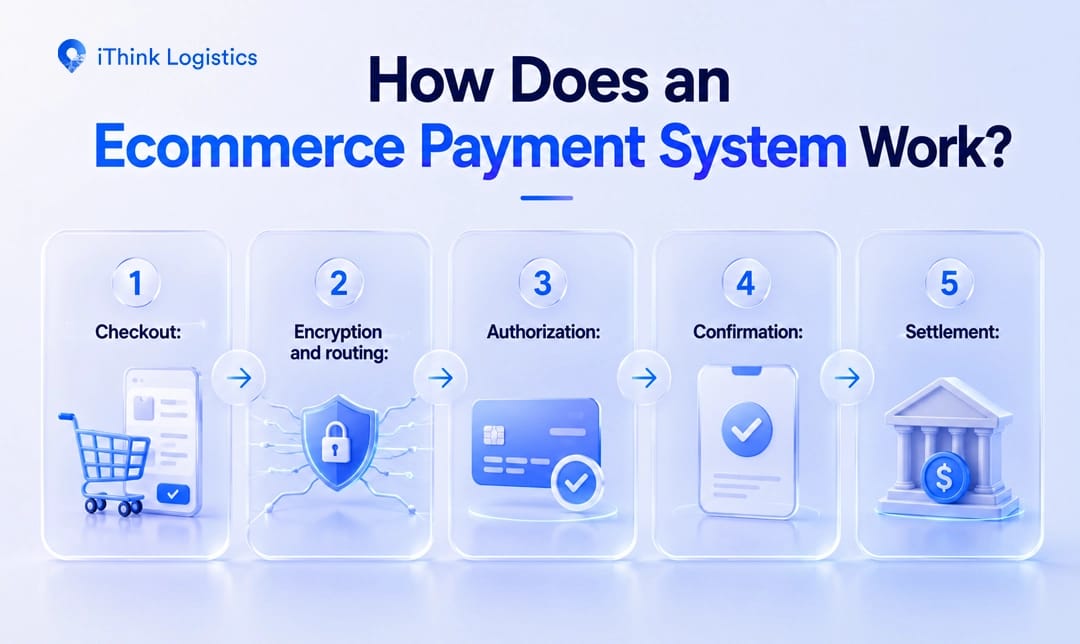
An ecommerce payment system works by passing a transaction through five steps, from checkout to settlement. Understanding this flow helps you diagnose where payments fail and why some gateways convert better than others.
- Checkout: The customer selects a payment method (UPI, card, net banking, or wallet) and enters their details on your site.
- Encryption and routing: The payment gateway encrypts the data and sends it to the payment processor and the customer’s bank.
- Authorization: The bank verifies funds and either approves or declines the transaction.
- Confirmation: The gateway returns the result to your website, and the order is created.
- Settlement: The gateway transfers the collected funds to your bank account, typically within one to three business days (T+1 to T+3).
A misconfigured webhook at step four is the most common cause of “silent” payment failures, where the customer pays but the order never appears in your system.
Types of Electronic Payment Systems in Ecommerce
There are six main types of electronic payment systems used in Indian ecommerce. A good payment gateway supports most or all of them, since a shopper may prefer UPI today and EMI tomorrow.
| Payment Type | How It Works | Best For |
| UPI | Instant bank-to-bank transfer via apps like PhonePe, Google Pay, Paytm | Most Indian transactions, especially mobile |
| Credit and debit cards | Visa, Mastercard, RuPay processed through the gateway | Higher-value purchases |
| Net banking | Direct transfer from the customer’s bank account | Customers without cards or UPI |
| Mobile wallets | Prepaid balance in Paytm, PhonePe, MobiKwik | Small, fast transactions |
| EMI and Pay Later | Splitting payment over time, or BNPL via LazyPay, Simpl | Big-ticket items, conversion lift |
| Cash on Delivery (COD) | Customer pays in cash when the order arrives | Buyers who distrust online payment |
UPI dominates the Indian e-commerce payment landscape. UPI processed 228.3 billion transactions in 2025 with over 500 million unique users, which means a gateway without strong UPI support turns away a large share of buyers.
Why UPI Matters Most for Indian Ecommerce Transactions
UPI is the single most important payment method for Indian ecommerce because it has the highest success rate and the lowest cost to merchants. UPI accounted for 75% of India’s digital payments in 2025, and its instant, app-based flow reduces checkout drop-offs compared to card entry.
There is also a cost advantage built into the rules. On UPI, banks bear the merchant discount cost (not the merchant) up to ₹2,000 per transaction as per RBI rules. For stores with low average order values, this can make a meaningful share of transactions effectively free to process.
Best Payment Gateway for Ecommerce Website in India: 2026 Comparison
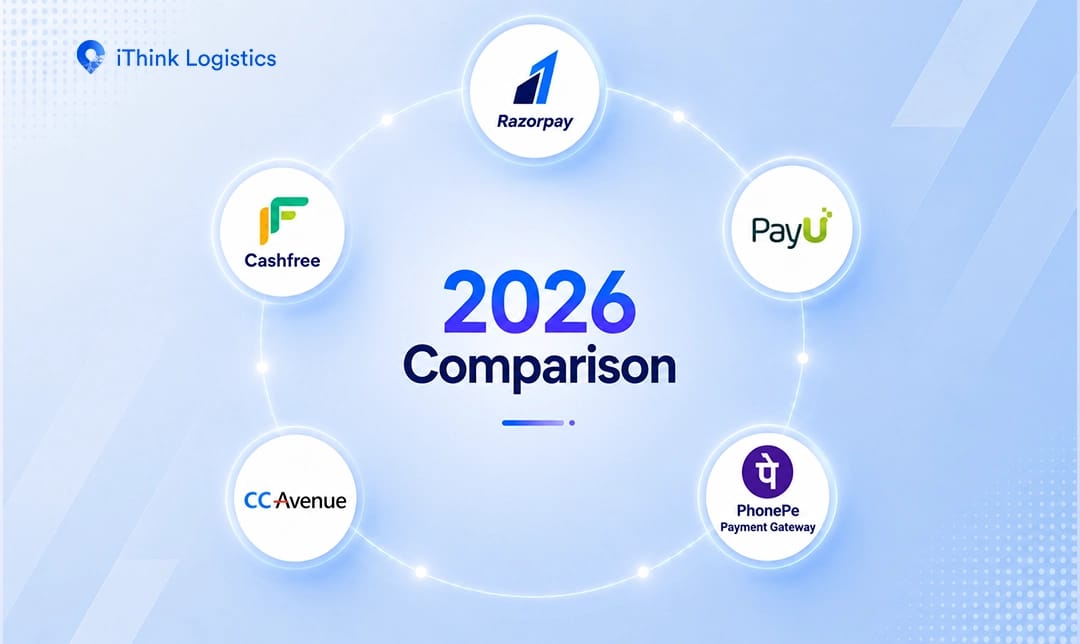
The five most widely used payment gateways for ecommerce websites in India are Razorpay, Cashfree, PayU, CCAvenue, and PhonePe Payment Gateway. Each leads in a different area, so the “best” one depends on your specific needs.
| Gateway | Standard Domestic Fee | Strongest For | Watch Out For |
| Razorpay | ~2% per transaction | New and growing D2C stores, developer experience | Standard pricing until you negotiate at scale |
| Cashfree | ~1.75% to 1.95% | Lowest published fees, marketplace payouts | Newer player, smaller brand recognition |
| PayU | ~2% (negotiable) | EMI, BNPL, international payments | Onboarding can take longer |
| CCAvenue | ~2.5% standard MDR | Multi-currency, bank acceptance breadth, enterprise | Poor developer experience, negotiate the MDR |
| PhonePe Payment Gateway | Competitive, UPI-focused | UPI-heavy, mobile-first customer bases | Best when most customers use UPI |
Razorpay: Best Overall for Most Stores
Razorpay is the most recommended gateway for new Indian ecommerce stores in 2026. Its transaction fee is around 2% per transaction across domestic cards, UPI, and net banking, and it offers strong documentation, recurring billing, and RBI-compliant UPI AutoPay for subscriptions.

Cashfree: Lowest Fees and Best for Marketplaces
Cashfree has carved out a clear niche on price and payouts. It has the edge for marketplace payouts and the lowest published transaction fees at 1.75%. If you run a marketplace that needs to split and distribute funds to multiple sellers or vendors, its payout API is purpose-built for that.

PayU: Best for EMI and International
PayU leads on flexible payment options. Its EMI tie-ups and BNPL integrations are the strongest among the major gateways, and the conversion lift from offering these on big-ticket items often outweighs any small fee difference. It is also a strong choice for stores selling internationally.

CCAvenue: Best for Enterprise and Multi-Currency
CCAvenue is one of the oldest gateways in India and supports a very wide range of payment options and currencies. It suits enterprise, government, and education use cases. The trade-off is a dated developer experience, so it fits traditional businesses more than developer-led startups.

How To Choose a Payment Gateway for Your Ecommerce Website
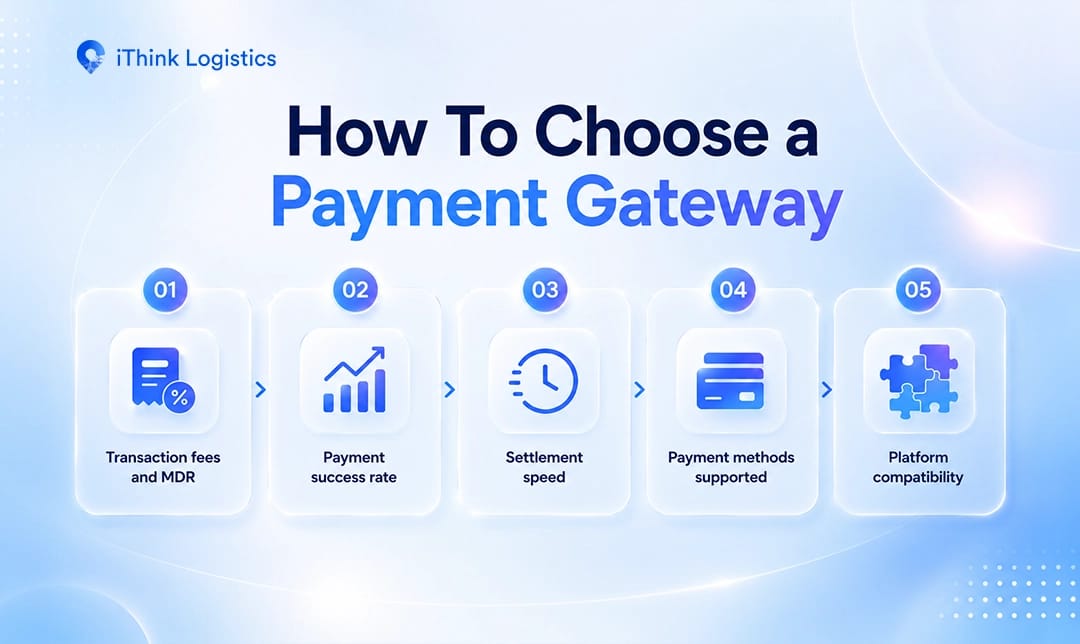
To choose a payment gateway for your ecommerce website, weigh five factors against your business model rather than chasing the lowest advertised fee. The cheapest sticker price is often not the cheapest gateway once hidden costs are included.
- Transaction fees and MDR: Even a 0.25% difference adds up. On ₹1 lakh of monthly sales, 0.25% is ₹250 per lakh, which compounds across a year.
- Payment success rate: A higher success rate directly recovers lost sales. This is the cost most founders overlook.
- Settlement speed: Faster settlement (T+1 versus T+3) improves your working capital, which matters most for growing stores.
- Payment methods supported: Confirm UPI, all major cards, net banking, wallets, and EMI or BNPL are covered.
- Platform compatibility: Make sure the gateway integrates cleanly with your platform, whether Shopify, WooCommerce, or a custom site.
The Shopify India Consideration
If you sell on Shopify in India, factor in an extra cost. Because Shopify Payments is not available in India, Shopify charges an extra 2% transaction fee on every order on top of your gateway’s 2%, so Indian Shopify sellers effectively pay around 4% per order unless they use a platform without that surcharge.
Cheap vs. Best: Why the Lowest Fee Is Not Always the Cheapest
A gateway with a lower percentage fee can cost more once fixed charges are included. The right goal is the best net return per rupee at checkout, not the lowest headline rate.
Consider a real comparison. A gateway at 1.8% with a ₹4,999 annual maintenance charge costs a startup processing ₹1 lakh per month a total of ₹26,599 per year, while a gateway at 2% with zero AMC costs ₹24,000 per year, making the “cheaper” 1.8% option actually 11% more expensive. Always calculate total annual cost, including setup and maintenance fees, before deciding.
Should You Use More Than One Payment Gateway?
Many Indian ecommerce stores use two gateways, and this is a sound strategy past a certain scale. A common setup is one domestic gateway like Razorpay or Cashfree for Indian customers, plus a second gateway like PayU or Stripe for international buyers or EMI.
A practical rule: start with a single well-supported gateway, and add a second once you cross roughly ₹50 lakh per month or need a specific capability your first gateway handles weakly, such as marketplace payouts or USD settlement.
Frequently Asked Questions
What is the cheapest payment gateway for ecommerce in India?
At standard pricing, Cashfree (around 1.75% to 1.95%) and similar low-fee gateways are among the cheapest for domestic transactions. However, the true cost depends on annual maintenance charges, setup fees, and your payment success rate, so calculate the total yearly cost rather than comparing percentages alone.
Is UPI free for ecommerce merchants?
UPI is effectively free to the merchant on transactions up to ₹2,000, because banks bear that cost under RBI rules. Above ₹2,000, or on cards and net banking, the gateway’s merchant discount rate applies and comes out of your revenue.
How long does it take to receive money from an ecommerce payment gateway?
Most Indian gateways settle funds to your bank account within T+1 to T+3 business days. Some gateways offer faster or instant settlement options, often for an additional fee.
Which payment gateway is best for a Shopify store in India?
Razorpay is the most commonly recommended gateway for Indian Shopify stores because of its official integration and reliable UPI support. Remember that Shopify adds its own 2% transaction fee on top of the gateway fee for Indian sellers, so factor in the combined cost.
What is the difference between a payment gateway and a payment system?
A payment gateway is the specific service that authorizes and processes a single transaction at checkout. An ecommerce payment system is the broader setup that includes the gateway, the payment methods you accept, the bank settlement process, and the security and reconciliation around it.