One missing document, and your truck does not cross the border. Exporters sending goods overland to Nepal or Bhutan run into this every week.
A bill of export is the customs form used to clear this movement. Without it, customs will not let your goods leave India.
What Is a Bill of Export?
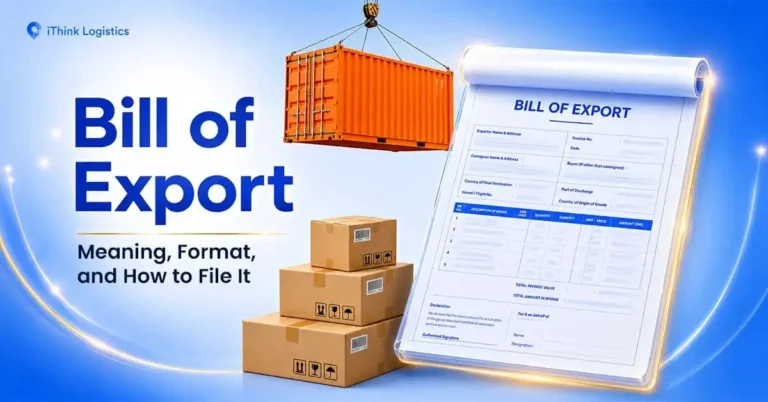
A bill of export is a customs document that exporters file to get official permission to send goods out of India.
It is most commonly used for exports through land customs stations. Different Bill of Export formats are also prescribed for various export categories under customs regulations.
Both the bill of export and shipping bill follow the same 1991 regulations. The form asks for your details, buyer info, invoice value, and what you’re shipping.
The Bill of Export follows the format prescribed under the Shipping Bill and Bill of Export (Form) Regulations, 1991, for the applicable export category.
For sea and air shipments, you file a shipping bill instead.
Bill of Export vs Shipping Bill vs Bill of Entry vs Bill of Lading
Exporters mix up these four terms more often than any other customs paperwork. Each one controls a different movement, and confusing them is the fastest way to file the wrong form.
| Document | Controls | Filed By | Used For |
| Bill of Export | Land, SEZ and postal exports. | Exporter or Customs Broker | Land Customs Station exports, SEZ, postal |
| Shipping Bill | Export by sea or air | Exporter or Customs Broker | Port and airport exports worldwide |
| Bill of Entry | Import into India | Importer or CHA | Customs duty assessment and IGST credit on imported goods |
| Bill of Lading | Carrier’s receipt of cargo | Shipping line | Proof that goods were handed to the carrier for sea transport |
Only the first two are export documents. A bill of entry works in the opposite direction, for goods coming into India.
A bill of lading is not a customs form at all. It is issued by the shipping line, not by customs, and it proves the carrier received your cargo.
If you see fields for more than one of these while filing GST returns, check the direction first. Export goes out, entry comes in, and lading is about the carrier, not customs.
Bill of Export Format: What It Includes
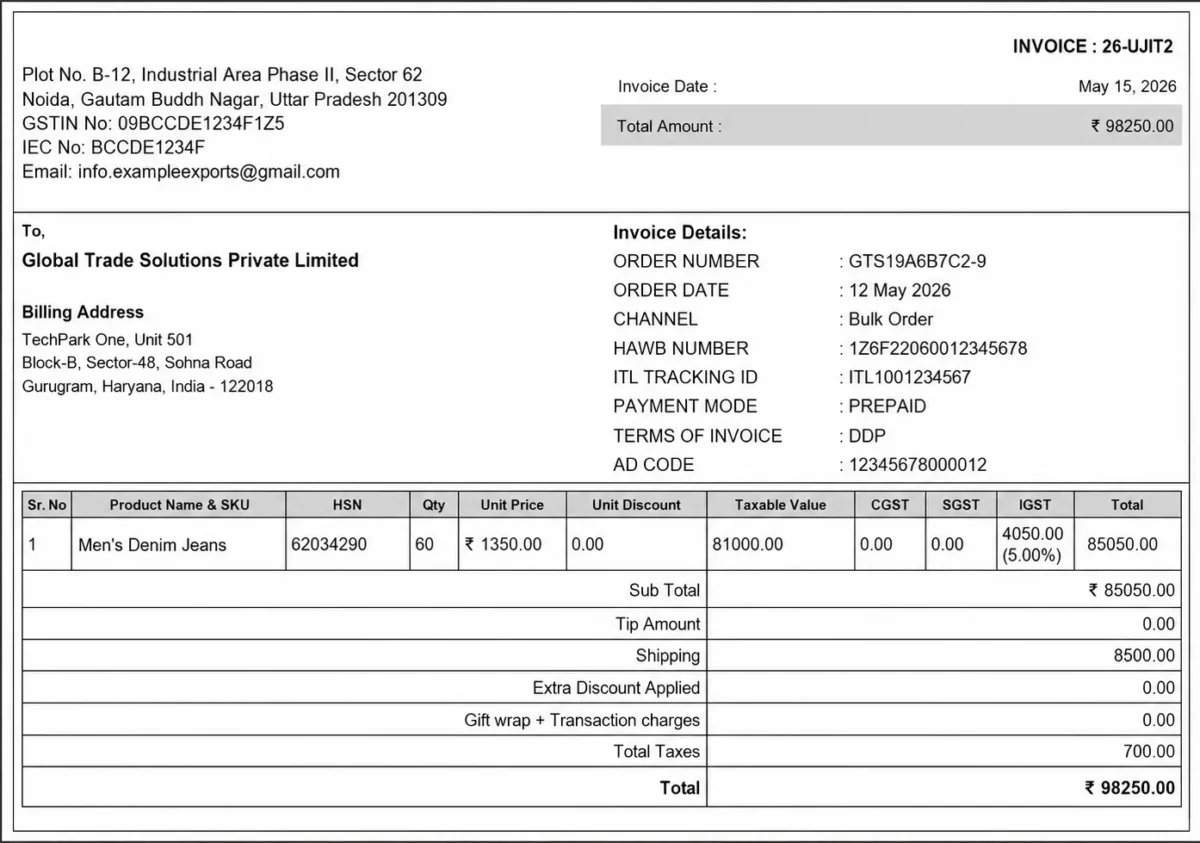
The bill of export format follows the same basic structure as a shipping bill, but is adjusted for the export route rather than a port or airport. The standard fields cover:
- Exporter name and Customs House Agent details
- Import Export Code (IEC) or license number
- Invoice number and date
- Description, quantity, and value of the goods
- The bill of export number assigned by customs once filed.
Customs uses Annexure V, VI, VII, and VIII of the 1991 Regulations to prescribe the Bill of Export format depending on the export category.
Different Bill of Export formats are prescribed under the Regulations for different export categories, including duty-free, dutiable, and drawback shipments.
How to File a Bill of Export
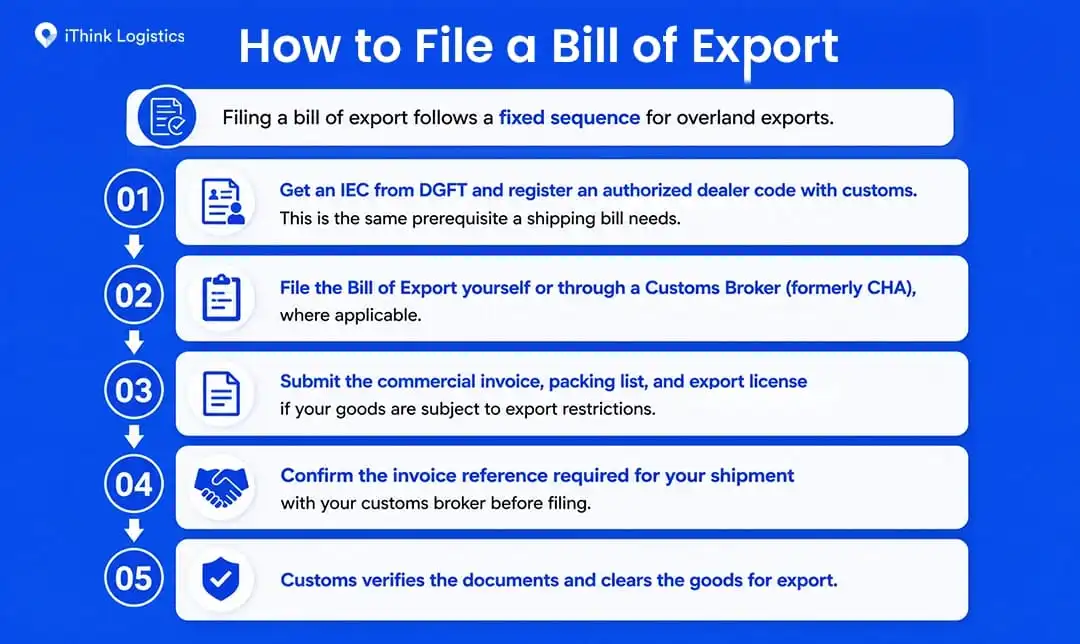
Filing a bill of export follows a fixed sequence for overland exports.
- Get an IEC from DGFT and register an authorized dealer code with customs. This is the same prerequisite a shipping bill needs.
- File the Bill of Export yourself or through a Customs Broker (formerly CHA), where applicable.
- Submit the commercial invoice, packing list, and export license if your goods are subject to export restrictions.
- Confirm the invoice reference required for your shipment with your customs broker before filing.
- Customs verifies the documents and clears the goods for export.
The GSTR-1 Question Every Nepal Exporter Asks
Exporting to Nepal by road and filing GSTR-1? Section 6A asks for your “Shipping Bill No./Bill of Export No.” Most first-time filers assume this means the Lorry Receipt number from their transporter. It does not.
The number you enter is the Bill of Export number. After Customs assesses and clears the filing, a Bill of Export number is generated for the shipment. Use this Bill of Export number while filing GSTR-1, and confirm any invoice reference requirements with your Customs Broker before filing. GST refund and drawback claims trace back to this number.
When Do You Actually Need One?
You need a bill of export, not a shipping bill, in these situations:
- Trucking goods from India into Nepal or Bhutan
- Any export cleared through a designated Land Customs Station
- Supplying goods to an SEZ unit as a zero-rated supply under GST
- Re-export situations where Customs requires a Bill of Export
- Postal exports where Customs requires a Postal Bill of Export
If your shipment leaves by sea or air instead, file a shipping bill on ICEGATE. That single decision, land versus sea or air, determines your entire paperwork trail for drawback and GST refund claims later.
Getting this document right at the border saves you weeks of delay when your export benefits come up for review. Chasing land customs station paperwork for a cross-border shipment gets old fast. iThink Logistics works with exporters on this exact compliance step, alongside courier and freight execution.
FAQs
Q.1: What is a bill of export?
A: It is a customs document that exporters file to obtain clearance for goods leaving India via routes other than the standard sea or air routes, most commonly for exports through land customs stations for trade with Nepal or Bhutan.
Q.2: What is the difference between a shipping bill and a bill of export?
A: Both are subject to the same 1991 regulation. A shipping bill covers sea and air exports filed on ICEGATE. A bill of export covers overland, SEZ, and postal exports.
Q.3: Is a bill of export the same as a bill of entry?
A: No. A bill of entry is filed for goods imported into India. A bill of export is filed for goods leaving India.
Q.4: Is a bill of export the same as a bill of lading?
A: No. A bill of lading is issued by the shipping line as proof it received your cargo for sea transport. A bill of export is a customs clearance document, not a carrier document.
Q.5: How do you get a bill of export?
A: Register an IEC and AD code with Customs. File the Bill of Export yourself or through a customs broker, then submit your invoice and packing list. Customs clears the goods after verification.
Q.6: Is a bill of export needed for SEZ shipments?
A: Yes, in most cases. Supplies from a Domestic Tariff Area unit to an SEZ unit are treated as zero-rated supplies under GST and generally require the prescribed customs documentation. Confirm the exact process with your jurisdictional customs office, since documentation can vary slightly by SEZ.
Q.7: Does a bill of export apply to postal exports?
A: Yes. Postal exports use a dedicated variant, the Postal Bill of Export, designed for goods moving through the postal network rather than by truck or rail.
Before Your Next Overland Shipment
Check your export route before you touch any form. Sea or air, file a shipping bill on ICEGATE. Overland into Nepal or Bhutan, an SEZ supply, or a postal shipment, file a Bill of Export yourself or through a Customs Broker, as applicable.
Filed a bill of export recently, or hit a snag at a land customs station? Drop your experience in the comments. It helps other exporters read this figure and figure out their own filing before they hit the same wall.
Author